

5 Side Effects of Coconut Oil to Know
Coconut oil sits in millions of kitchen cabinets and bathroom shelves, praised for everything from cooking to skin care. But saturated fat content that rivals butter, digestive reactions that can hit within hours, and skin breakouts that appear overnight tell a different story for many people.
This article walks through five documented side effects – spanning digestion, cardiovascular risk, skin reactions, hair texture changes, and calorie load – so you know what to watch for before making it a daily habit.
Key Takeaways
- Coconut oil is highly concentrated in saturated fat, and cardiologists frequently caution people with cholesterol concerns to limit or avoid it.
- Digestive upset – cramping, diarrhea, nausea – is common when starting coconut oil or consuming it on an empty stomach.
- Applied to the face overnight, coconut oil can clog pores and trigger breakouts, especially for oily or acne-prone skin types.
- Hair reactions vary widely: some people experience protein buildup or increased dryness rather than the moisture boost coconut oil promises.
- Despite claims about fat-burning properties, coconut oil delivers the same calorie density as any other oil, and adding it without adjusting portion sizes elsewhere can stall weight loss.
- Anyone managing high cholesterol, digestive conditions, or chronic skin issues should consult a healthcare provider before incorporating coconut oil into their routine.
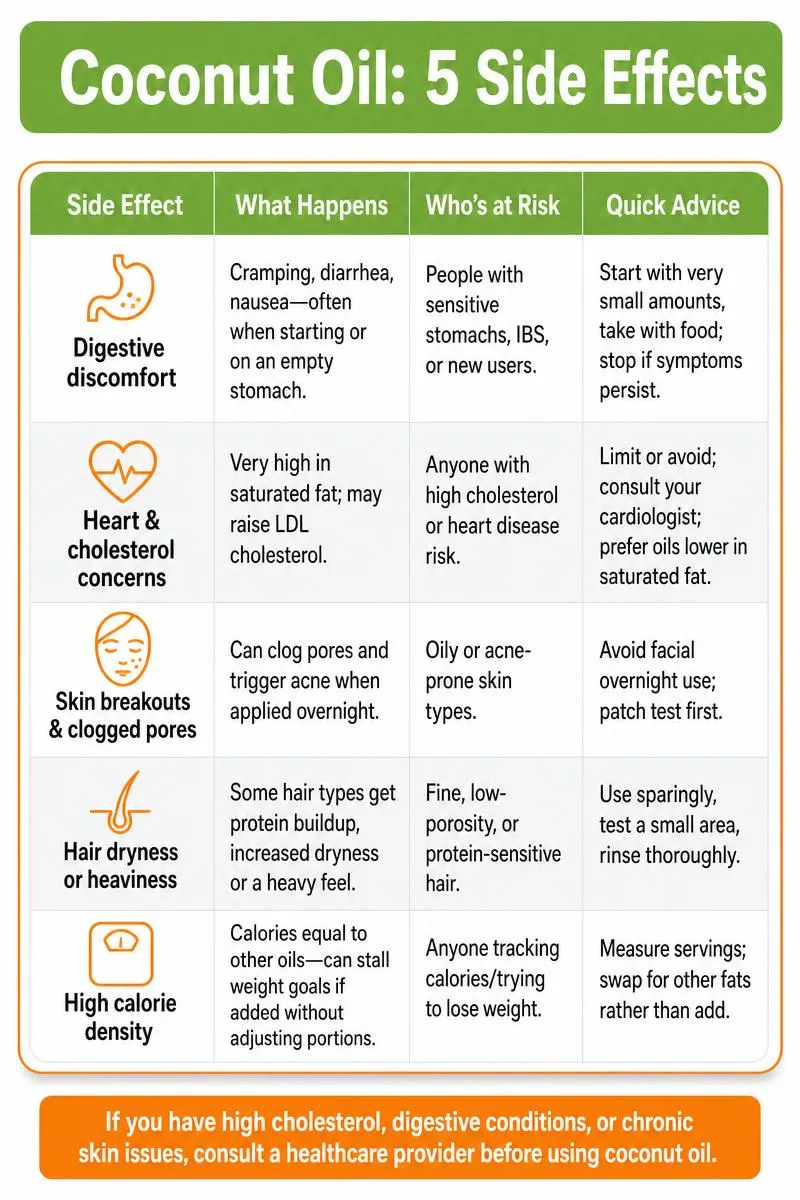
Side Effects Of Coconut Oil Side-by-Side
| Side Effect | What Happens | Who’s at Risk | Quick Advice |
|---|---|---|---|
| Digestive discomfort | Cramping, diarrhea, nausea—often when starting or on an empty stomach. | People with sensitive stomachs, IBS, or new users. | Start with very small amounts, take with food; stop if symptoms persist. |
| Heart & cholesterol concerns | Very high in saturated fat; may raise LDL cholesterol. | Anyone with high cholesterol or heart disease risk. | Limit or avoid; consult your cardiologist; prefer oils lower in saturated fat. |
| Skin breakouts & clogged pores | Can clog pores and trigger acne when applied overnight. | Oily or acne‑prone skin types. | Avoid facial overnight use; patch test first. |
| Hair dryness or heaviness | Some hair types get protein buildup, increased dryness or a heavy feel. | Fine, low‑porosity, or protein‑sensitive hair. | Use sparingly, test a small area, rinse thoroughly. |
| High calorie density | Calories equal to other oils—can stall weight goals if added without adjusting portions. | Anyone tracking calories/trying to lose weight. | Measure servings; swap for other fats rather than add. |
5 Side Effects of Coconut Oil
1. Digestive Discomfort and Stomach Upset
Coconut oil can trigger cramping, diarrhea, and nausea, especially when you first introduce it or take it on an empty stomach. The medium-chain triglycerides move through the digestive tract faster than long-chain fats, and that speed can overwhelm your system if you start with too much too quickly.
Some people report greasy stools or urgent bathroom trips within a few hours of consuming a tablespoon or more. Starting with a teaspoon and gradually increasing the amount over several days reduces the likelihood of these reactions.
Taking coconut oil with food – rather than straight from the jar – also helps buffer the digestive response.
2. Heart Health and Cholesterol Concerns
Coconut oil is highly concentrated in saturated fat. That concentration raises low-density lipoprotein cholesterol in many people, and elevated LDL is a known risk factor for arterial plaque buildup and cardiovascular disease.
Cardiologists routinely advise patients with high cholesterol or heart disease to replace saturated fats with unsaturated options like olive or avocado oil. The American Heart Association has specifically recommended limiting coconut oil for this reason.
Some research points to lauric acid – the dominant saturated fatty acid in coconut oil – raising both LDL and high-density lipoprotein cholesterol, but the net effect on heart disease risk remains debated. If you monitor cholesterol levels or have a family history of heart disease, tracking your lipid panel after adding coconut oil is the clearest way to see how your body responds.
3. Skin Breakouts and Clogged Pores
Coconut oil ranks high on the comedogenic scale, meaning it has a strong tendency to block pores. Applying it to your face overnight can trap dead skin cells, sebum, and bacteria, leading to whiteheads, blackheads, or inflamed acne.
People with oily or combination skin report breakouts more frequently than those with dry skin. Even if coconut oil feels moisturizing initially, the occlusive layer it creates can prevent skin from breathing and shedding cells normally.
Using coconut oil as a makeup remover and washing it off immediately causes fewer problems than leaving it on as an overnight treatment. If you do test it on your face, patch-test on a small area first and watch for congestion over the next few days.
4. Hair Dryness or Heaviness for Some Types
Coconut oil penetrates the hair shaft thanks to its low molecular weight, but that same property can cause protein overload or stiffness in some hair types. Fine, low-porosity, or protein-sensitive hair often becomes stiff, dry, or brittle after repeated coconut oil treatments.
Thick, coarse, or high-porosity hair tends to handle coconut oil better, absorbing it without the buildup that weighs down finer strands. When buildup does occur, hair can look greasy at the roots and feel heavy or limp even after washing.
If your hair feels drier or harder to manage after using coconut oil, switching to a lighter oil like argan or jojoba usually reverses the effect within a few washes.
5. Calorie Density That Can Offset Weight Goals
Coconut oil contains the same calorie load as any other fat. Adding it to coffee, smoothies, or cooking without reducing calories elsewhere creates a surplus that can stall or reverse weight loss.
Some sources suggest that medium-chain triglycerides may slightly increase energy expenditure or reduce appetite, but those effects are modest and easily outweighed by overconsumption. If you’re using coconut oil for its flavor or cooking properties, measure portions and account for them in your daily intake.
Replacing another fat source with coconut oil keeps total calories stable, but simply adding it on top of your usual diet makes weight management harder, not easier.
A closer look at how MCT oil compares to coconut oil for digestion and metabolic side effects.
Who Should Be Cautious About Coconut Oil
- People with high cholesterol or a history of cardiovascular disease should consult a cardiologist before using coconut oil regularly, as the saturated fat content can worsen lipid profiles in susceptible individuals.
- Anyone with irritable bowel syndrome, Crohn’s disease, or other digestive sensitivities may find that the rapid digestion of medium-chain triglycerides triggers flare-ups or worsens symptoms.
- Those with acne-prone or oily skin should avoid applying coconut oil to the face, especially overnight, and patch-test on a less visible area first to gauge whether your skin tolerates it without breaking out.
- People with fine or low-porosity hair should use coconut oil sparingly, if at all, and rinse thoroughly to prevent buildup that leaves hair stiff or greasy. If you’re managing weight, measure portions carefully and subtract equivalent calories from another source to avoid unintended weight gain.
Coconut Oil vs Olive Oil and Palm Oil
Olive oil contains mostly monounsaturated fats, which have been shown to lower LDL cholesterol and reduce cardiovascular risk. Coconut oil’s saturated fat content works in the opposite direction for many people.
For everyday cooking and heart health, olive oil – especially extra virgin – is the safer choice based on decades of research linking it to lower rates of heart disease. Coconut oil works well for high-heat cooking due to its stability, but that advantage doesn’t offset the cholesterol concern for regular use.
Palm oil also contains saturated fat, though less than coconut oil. It raises LDL cholesterol to a lesser degree than coconut oil but more than olive oil. Environmental and ethical issues around palm oil production add another layer of consideration that coconut and olive oil don’t carry to the same extent.
If heart health is your priority, olive oil outperforms both coconut and palm oil. If you need a high smoke point for frying, avocado oil offers heat stability without the saturated fat load.
Fractionated coconut oil vs coconut oil
Explains absorption and topical-use differences that clarify why some people experience skin irritation or…
FAQs About Coconut Oil
Why do cardiologists say to avoid coconut oil?
Coconut oil raises LDL cholesterol in many people due to its high saturated fat content, and cardiologists recommend unsaturated fats like olive or canola oil instead, especially for anyone with cholesterol concerns or cardiovascular risk.
Is a spoonful of coconut oil a day good for you?
It depends on your cholesterol levels and overall diet. For some people, a daily spoonful raises LDL cholesterol noticeably.
If your lipid panel is healthy and you account for the calories, moderate use is less likely to cause problems, but it’s not a universal health booster.
What does coconut oil do to your stomach?
Coconut oil can cause cramping, diarrhea, or nausea, especially on an empty stomach or when you first start using it. The medium-chain triglycerides digest quickly, which can overwhelm your system if you take too much at once.
Starting with small amounts and taking it with food reduces these effects.
Who should not consume coconut oil?
People with high cholesterol, heart disease, or a family history of cardiovascular issues should avoid regular consumption or talk to a doctor first. Anyone with digestive conditions like IBS or Crohn’s may also experience worsening symptoms from coconut oil.
What are the bad side effects of coconut oil?
Digestive upset, elevated LDL cholesterol, skin breakouts, hair buildup or dryness, and unintended weight gain from excess calories are the most commonly reported side effects. Individual responses vary, so monitoring how your body reacts is key.
Should I take coconut oil in the morning or at night?
Taking it with a meal – morning or night – reduces the chance of digestive discomfort. Some people prefer taking it with breakfast for routine consistency, but there’s no strong evidence favoring one time over the other.
Is coconut oil healthier than olive oil?
No. Olive oil lowers LDL cholesterol and has been linked to reduced heart disease risk in long-term studies.
Coconut oil raises LDL cholesterol for many people, making olive oil the better choice for heart health and everyday use.
Which is better, coconut or palm oil?
Neither is ideal for heart health, but palm oil contains less saturated fat than coconut oil and raises LDL cholesterol to a lesser degree. Environmental concerns around palm oil production complicate the comparison, so olive or avocado oil is a cleaner choice for most uses.
Can applying coconut oil on your face overnight cause breakouts?
Yes, especially for oily or acne-prone skin. Coconut oil is comedogenic, meaning it can clog pores and trap bacteria, leading to whiteheads, blackheads, or inflamed acne.
Patch-testing on a small area first helps you avoid a full-face breakout.
Can coconut oil have side effects on hair?
Yes. Fine or low-porosity hair can become dry, stiff, or weighed down by coconut oil due to protein overload or buildup.
Thick, high-porosity hair usually tolerates it better, but reactions vary widely depending on hair texture and protein sensitivity.
Compares dietary and heart-health effects to help readers weigh the nutritional risks of using coconut oil for cooking.
Final Thoughts
The main risks center on saturated fat, digestive reactions, and individual skin or hair sensitivities. If you have cholesterol concerns or digestive conditions, talk to a healthcare provider before making coconut oil a daily habit.
Start with small amounts – a teaspoon rather than a tablespoon – and watch how your body responds over the first few weeks. That approach keeps side effects manageable and gives you real data on whether coconut oil works for you or against you.
External References