

Coconut Oil vs Olive Oil for Dogs: Which Is Better?
Dog owners hear strong cases for both coconut oil and olive oil, and the advice often points in opposite directions. One friend swears coconut oil cleared up their dog’s itchy paws. Another drizzles olive oil over kibble every morning and says their dog’s coat has never looked better. Both can be right, because the oils do different things well.
The choice comes down to what you are trying to do: soothe skin, support digestion, or add dietary fat. The dog’s current condition, the intended use, and the quality of the oil all shape which one makes sense.
Key Takeaways
- Coconut oil is the go-to topical pick for itchy skin and dry paws, and some sources suggest it soothes mild irritation.
- Both oils work as small food additions, but neither is essential for every dog.
- Digestion depends on the specific problem; what suits one stomach issue may not suit another.
- Plain, unrefined coconut oil from a regular grocery store is fine to use.
- Not all cooking oils are appropriate for dogs, so check before sharing anything from the pantry.
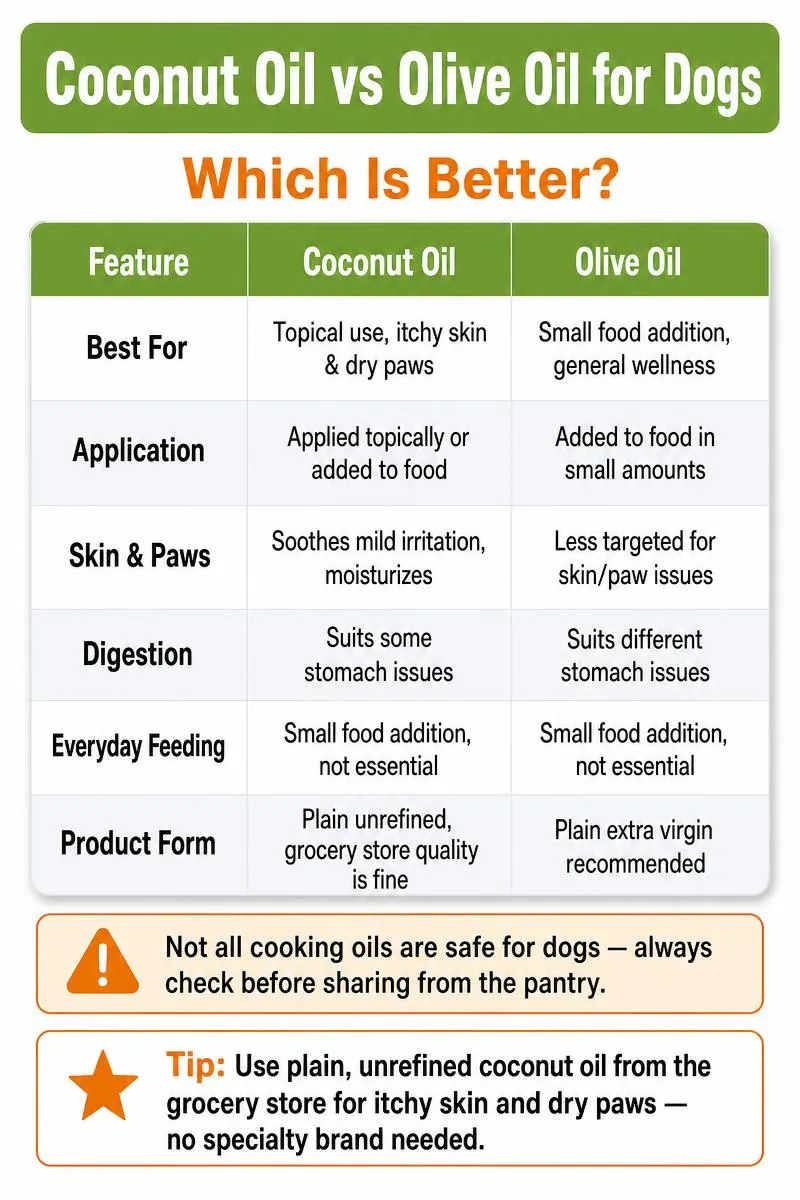
Quick Comparison: Coconut Oil Vs Olive Oil For Dogs
| Feature | Coconut Oil | Olive Oil |
|---|---|---|
| Best For | Topical use; itchy skin & dry paws | Small food addition; general wellness |
| Application | Topical or added to food | Added to food in small amounts |
| Skin & Paws | Soothes mild irritation; moisturizes | Less targeted for skin/paw issues |
| Digestion | Suits some stomach issues | Suits different stomach issues |
| Everyday Feeding | Small addition; not essential | Small addition; not essential |
| Product Form | Plain unrefined grocery-store quality | Plain extra virgin recommended |
What Is Coconut Oil?
Coconut oil is pressed from the meat of mature coconuts. It is solid at room temperature, which makes it easy to scoop and spread. You will find refined and unrefined versions on store shelves; unrefined (often labeled virgin) retains more of the coconut scent and flavor, while refined is neutral.
For dogs, coconut oil’s best uses are topical skin and paw care, plus occasional small additions to food. Its solid texture makes it easy to rub into paw pads or patches of dry skin without making a mess. The medium-chain fatty acids in coconut oil, particularly lauric acid, are the compounds most often associated with its soothing reputation.
The main weakness is fat content. Coconut oil is almost entirely fat, so adding too much to a dog’s meals can add calories fast and cause stomach upset. Coconut oil is also not a fix for every skin problem – if a dog has a persistent or spreading skin condition, topical oil alone is not a treatment plan.
Keep Reading
A product page for coconut-derived MCT oil you can consider as a supplemental oil option for dogs.
What Is Olive Oil?
Olive oil is pressed from olives and stays liquid at room temperature. It is one of the most common pantry staples in households, and most dog owners already have a bottle. Olive oil comes in several grades; extra virgin is the least processed and most flavorful.
For dogs, olive oil’s best use is adding dietary fat to meals. A small drizzle over kibble or homemade food is the most common approach. Olive oil contains oleic acid, a monounsaturated fatty acid that makes up most of its fat content.
The weakness is topical use. Olive oil is liquid and runny, so applying it to a dog’s skin or paws gets messy fast and can leave oily spots on furniture and bedding. The calories also add up with daily feeding, which matters for dogs that are already overweight or on portion-controlled diets.
Coconut Oil vs Olive Oil: Skin and Paws
For itchy skin and rough paw pads, coconut oil is the stronger pick. Its solid texture lets you apply a thin, controlled layer exactly where the dog needs it. You can rub a small amount directly onto dry, cracked paw pads before a walk or at night, and the oil stays put long enough to absorb.
Olive oil can technically go on skin too, but it runs and drips. Most of what you apply ends up on the floor rather than the dog. If you have ever tried to rub a liquid oil into a dog’s paw, you know the difference.
For itchy skin, some sources suggest coconut oil may soothe mild irritation. Lauric acid, the dominant fatty acid in coconut oil, is the compound most often credited. That said, if a dog is scratching because of allergies, infection, or fleas, topical oil addresses the symptom – not the cause. Persistent itching needs a look from your vet.
On fur, coconut oil can leave a light residue that some dogs do not mind. Olive oil tends to make fur look greasy and attract dirt more quickly. Neither oil should be applied heavily, and both can prompt licking, which removes the oil before it can do anything.
Coconut Oil vs Olive Oil: Digestion
There is no universal winner here. The specific stomach issue decides which oil, if either, makes sense.
For dogs with mild constipation, a small amount of oil added to food can help lubricate the digestive tract. Olive oil is commonly used this way, and coconut oil may have a similar effect. The key word is small – too much triggers diarrhea rather than helps.
For dogs already dealing with diarrhea, adding oil is more likely to make things worse. Both coconut oil and olive oil are pure fat, and a dog with an upset stomach does not need extra fat in the mix. If diarrhea lasts more than a day or two, that calls for a vet visit, not an oil.
Slow introduction matters with either oil. Start with a very small amount mixed into food and watch how the dog responds over a day or two. If the stool stays normal, you can gradually increase. If it loosens, back off or stop.
You Might Also Like
A balanced breakdown of coconut oil’s benefits, dosing tips, and potential side effects specifically for dogs.
Coconut Oil vs Olive Oil: Everyday Feeding
Some owners add oil to their dog’s food daily, and both coconut oil and olive oil are used this way. Whether daily feeding makes sense depends on the dog’s condition and the overall diet.
Olive oil is the more common choice for daily dietary fat. A small drizzle over meals is simple, and the liquid consistency mixes into food easily. Dogs on dry kibble may benefit from the added fat, particularly in winter months when skin tends to dry out.
Coconut oil can also go into food, but the solid texture means you need to soften or melt it first. It mixes well into warm food but can clump in cold kibble. Some dogs like the taste; others do not.
Watch for signs that daily oil is too much. Weight gain is the most obvious signal, and loose stool is another. If either shows up, reduce the amount or stop.
For dogs on vet-managed diets, do not add any oil without checking with your vet first. A weight-management or medical plan may not have room for the extra calories.
Coconut Oil vs Olive Oil: Safety and Oils to Avoid
Both coconut oil and olive oil are reasonable for most dogs in small amounts. The main caution with both is added fat and calories. A dog that is already at a healthy weight does not need a daily oil supplement unless a vet recommends it.
Not all cooking oils are appropriate for dogs. Oils with added seasoning, garlic, onion, or other flavorings are not safe. Anything labeled as a cooking spray with propellants or additives is also not appropriate.
Some oils are outright harmful:
- Macadamia nut oil – macadamia nuts are known to be toxic to dogs, and the oil carries the same risk.
- Avocado oil – may cause stomach upset in some dogs.
- Essential oils – highly concentrated and not the same as food-grade oils; never give internally or apply topically to a dog.
If your dog has a chronic condition like pancreatitis, liver disease, or a sensitive stomach, run it by your vet before adding any oil to the diet. These conditions can make added fat risky, even in small amounts.
Which Should You Choose?
- For a dog with itchy skin or rough paws: Coconut oil, applied topically. Its solid texture and lauric acid content make it the better fit for direct application to skin and paw pads.
- For adding fat to meals: Olive oil, in small drizzle amounts. It mixes easily into food and is simpler to portion than solid coconut oil.
- For a dog with ongoing digestive issues: Talk to your vet before adding either oil. Diarrhea, chronic stomach upset, or pancreatitis all change the calculus.
- For one multipurpose product: Coconut oil covers both topical and food use. You can rub it on paws and mix a small amount into meals from the same jar.
- For an overweight dog or vet-managed diet: No added oils without vet approval. The calories in both oils add up quickly, and a weight-management plan may not have room for them.
Keep Reading
A direct comparison of coconut oil and fish oil for dogs that examines fatty acids, skin and joint benefits, and when…
FAQs About Coconut Oil and Olive Oil
Should I give my dog coconut oil or olive oil?
It depends on the purpose. For topical skin and paw care, coconut oil is the better choice. For adding dietary fat to meals, olive oil is easier to use. Neither is essential for every dog.
Can I give my dog coconut oil or olive oil every day?
Some owners do, but daily use calls for small portions and vet input for dogs with weight or digestive concerns. Watch for weight gain and loose stool as signs to cut back.
Is coconut oil safe for dogs’ itchy skin?
For most dogs, yes, when applied topically in a thin layer. Watch for redness or increased irritation after the first application. If the itching persists or worsens, the underlying cause may be allergies or infection – a vet should evaluate it.
Can I put coconut oil or olive oil on my dog’s paws?
Both work, but coconut oil has the texture edge. Its solid form stays on the paw pads long enough to absorb, while olive oil tends to run off and make a mess.
How do I apply coconut oil to my dog’s skin?
Soften a small amount between your fingers, then rub a thin layer onto the dry or itchy area. Limit licking afterward, since the dog ingesting the oil removes it from the skin and adds calories. A walk or a chew toy can distract the dog while the oil absorbs.
Can I use coconut oil from the grocery store on my dog?
Yes, plain unrefined coconut oil from a regular grocery store is fine. Skip any oil with added flavors, scents, or preservatives.
Is coconut oil good for dogs’ teeth?
Some owners rub coconut oil on their dog’s gums or use it as part of a brushing routine, but the evidence supporting dental benefits is thin. Regular brushing with dog-safe toothpaste is more reliable.
What oils are not good for dogs?
Avoid macadamia nut oil, avocado oil, any oil with garlic or onion flavorings, and essential oils. If your dog has a health condition or is on medication, ask your vet before adding any new oil to the diet.
Final Thoughts
For topical skin and paw care, coconut oil is the clear choice. Its solid texture, lauric acid content, and ease of application make it practical for the things owners reach for oil to do most often. For adding dietary fat to meals, olive oil is simpler to portion and mixes into food without preparation.
Dogs with existing skin conditions, ongoing digestive problems, or weight concerns need a specific plan – a pantry swap is not a substitute for that. Pick the use case that fits your dog, start with a small amount, and watch how they respond over the first few days.
External References