

6 Benefits of Coconut Yogurt Worth Knowing
Coconut yogurt is one of those foods that sounds healthier than it might actually be. It is dairy-free, yes, and it does contain probiotics. But it also has more saturated fat than regular yogurt and far less protein. Whether it is worth adding to your routine depends on what you are actually looking for.
Key Takeaways
- Supports gut health with live cultures similar to dairy yogurt
- Completely dairy-free, making it suitable for lactose intolerance and vegan diets
- Higher in saturated fat than dairy yogurt; moderation matters
- Lower in protein than Greek or regular dairy yogurt
- Versatile substitute for sour cream, mayo, and dairy yogurt in recipes
- Unsweetened varieties are best for blood sugar management
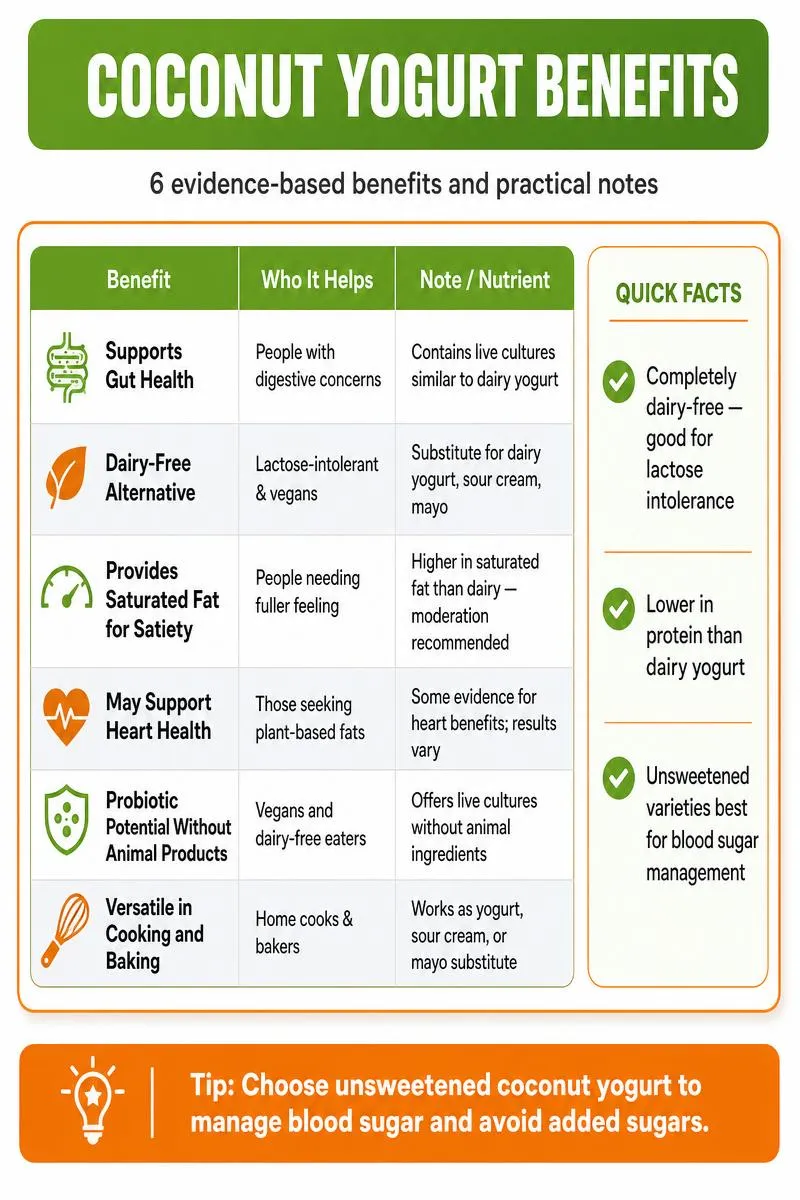
Quick Comparison: Benefits Of Coconut Yogurt
| Benefit | Who It Helps | Note / Nutrient |
|---|---|---|
| Supports Gut Health | People with digestive concerns | Contains live cultures similar to dairy yogurt |
| Dairy-Free Alternative | Lactose-intolerant & vegans | Substitute for dairy yogurt, sour cream, mayo |
| Provides Saturated Fat for Satiety | People needing fuller feeling | Higher in saturated fat than dairy — moderation recommended |
| May Support Heart Health | Those seeking plant-based fats | Some evidence for heart benefits; results vary |
| Probiotic Potential Without Animal Products | Vegans and dairy-free eaters | Offers live cultures without animal ingredients |
| Versatile in Cooking and Baking | Home cooks & bakers | Works as yogurt, sour cream, or mayo substitute |
What Is Coconut Milk Yogurt?
Coconut yogurt is made by fermenting coconut cream with live bacterial cultures. The base is the thick, white cream extracted from mature coconut meat, not coconut water. This distinction matters because coconut cream is where the fat lives, giving the yogurt its rich texture.
The fermentation process works similarly to dairy yogurt. Live cultures consume the natural sugars and create that characteristic tang. The result is a thick, creamy product that looks and functions like traditional yogurt but contains no milk, lactose, or animal products.
Do not confuse this with coconut milk sold in cartons for drinking. That product is thinner and typically diluted. Coconut yogurt uses concentrated coconut cream, which explains its calorie density and higher fat content.
Keep Reading
Coconut nutrition and benefits
An in-depth look at coconut’s nutritional profile to help readers understand the macro- and micronutrients behind…
6 Benefits of Coconut Yogurt
These matter most if you are avoiding dairy, but several apply to anyone comparing yogurt options.
1. Supports Gut Health
The live cultures in coconut yogurt can contribute to microbiome balance. These beneficial bacteria of the same types found in dairy yogurt, many of these cultures survive fermentation and can reach your gut, where they support a healthier microbial environment.
This matters if you are trying to include more fermented foods in your diet but cannot tolerate dairy. Probiotic benefits are not exclusive to milk-based products.
2. Dairy-Free Alternative
For people with lactose intolerance or milk allergies, coconut yogurt provides a straightforward substitute. It offers the same creamy texture and tangy flavor without the digestive consequences.
Vegans and those following plant-based diets also gain access to probiotic foods that might otherwise be off-limits.
3. Provides Saturated Fat for Satiety
Coconut yogurt contains significantly more fat than dairy yogurt, and that fat can help you feel full. The medium-chain triglycerides in coconut fat digest differently than other saturated fats, providing quick, sustaining energy that some people find useful between meals.
The richness means smaller portions can feel substantial. That makes it a reasonable option for those managing appetite.
4. May Support Heart Health
Some research suggests that the specific type of saturated fat in coconut, particularly lauric acid, might affect cholesterol profiles differently than saturated fat from animal sources. Studies have shown mixed results, with some indicating potential improvements in HDL cholesterol.
That said, the evidence is not strong enough to recommend coconut yogurt as a heart health strategy. It should not replace medical guidance or proven dietary approaches for cardiovascular health.
5. Offers Probiotic Potential Without Animal Products
Fermentation produces beneficial bacteria regardless of the starting material, which is what makes coconut yogurt a viable choice for people avoiding animal-based foods for ethical, environmental, or health reasons. The probiotic content is real, not a workaround.
The key is checking for live cultures on the label. Not all coconut yogurts are properly fermented.
6. Versatile in Cooking and Baking
Coconut yogurt works as a one-to-one substitute for sour cream, mayonnaise, or dairy yogurt in most recipes. Its thick consistency holds up in baked goods, and the mild coconut flavor complements both sweet and savory dishes.
Try it in smoothies for creaminess, in dressings for tang, or as a topping for spicy foods to balance heat.
How to Use It
A typical serving ranges from half a cup to one cup, depending on how you are using it. Check the label specifically for “live and active cultures” to ensure you are getting probiotic benefits. Some products are cultured while others are simply thickened coconut cream with no bacterial content.
Choose unsweetened varieties when possible. Many coconut yogurts contain added sugars that turn a healthy option into something closer to dessert. The natural fat provides plenty of flavor without sweeteners.
Store coconut yogurt in the refrigerator and use it within the expiration date. Live cultures gradually diminish over time, so fresher products offer more probiotic potential.
Guidance on using coconut sugar as a natural sweetener—useful for readers who want to sweeten coconut yogurt without…
Who Should Be Cautious
- Monitor total saturated fat: Coconut yogurt’s higher fat content contributes significantly to daily saturated fat totals, so account for it alongside other fat sources in your diet.
- Avoid with coconut allergies: Anyone with a coconut allergy must skip this product entirely, and those with severe tree nut allergies should check labels carefully for cross-contamination warnings.
- Watch portion size: The high fat content makes coconut yogurt more calorie-dense than it appears, and it is easy to overeat what feels like a light snack.
A product page to buy coconut flakes and shreds that readers can use as crunchy toppings for coconut yogurt.
FAQs
Is coconut yogurt healthier than Greek yogurt?
It depends on your priorities. Greek yogurt contains significantly more protein, which supports muscle maintenance and satiety. Coconut yogurt offers a dairy-free option with probiotic benefits. Neither is objectively better; they serve different dietary needs.
Is it good to eat coconut yogurt every day?
Daily consumption is reasonable for most people, but watch your total saturated fat intake from all sources. Coconut yogurt can fit into a balanced diet, but it should not be your only source of dietary fat.
Is coconut yogurt anti-inflammatory?
Fermented foods support gut health, and gut health connects to inflammation regulation. However, direct evidence is limited specifically linking coconut yogurt to reduced inflammation. The potential benefit comes from the probiotics, not the coconut itself.
Does coconut yogurt have protein?
Yes, but much less than dairy yogurt. A typical serving contains only a few grams of protein compared to the higher amounts found in Greek or even regular dairy yogurt. Do not rely on it as a protein source.
Is coconut yogurt good for diabetics?
Unsweetened coconut yogurt has minimal impact on blood sugar due to its low carbohydrate content. The fat slows digestion. Avoid sweetened versions, which can spike glucose levels significantly.
What is the healthiest yogurt you can eat?
The healthiest choice is unsweetened yogurt with live cultures and minimal additives. Whether that means dairy or coconut depends on your specific dietary needs, allergies, and health goals. There is no universal best option.
Final Thoughts
Coconut yogurt fills a genuine gap for people who want fermented foods without dairy. It offers real probiotic benefits and works well in cooking, but it is not nutritionally superior to dairy yogurt, just different.
Start with an unsweetened variety and pay attention to how your digestion and energy respond over a week or two. That direct feedback matters more than any health claim.
External References