

7 Benefits of Coconut Water, Based on Research
Coconut water has earned a reputation as a natural sports drink, but does it live up to the hype? The short answer: it helps with hydration and offers real nutritional advantages over sugary alternatives. It’s not a miracle cure, and the benefits depend on how you use it.
Key Takeaways
- Coconut water replaces lost electrolytes with less sugar than most sports drinks and sodas.
- It works best for rehydration after exercise, illness, or heat exposure, when you need fluid and minerals at once.
- The high potassium supports cardiovascular function but poses real risks for people with kidney disease.
- Plain varieties matter, since added sugars cancel the calorie advantage.
- It’s not a replacement for medical treatment, balanced meals, or plain water as your daily hydration default.
Related Reading
Pure coconut water sourcing guide
Our complete guide to pure coconut water products including sourcing, varieties, and what to look for when buying.
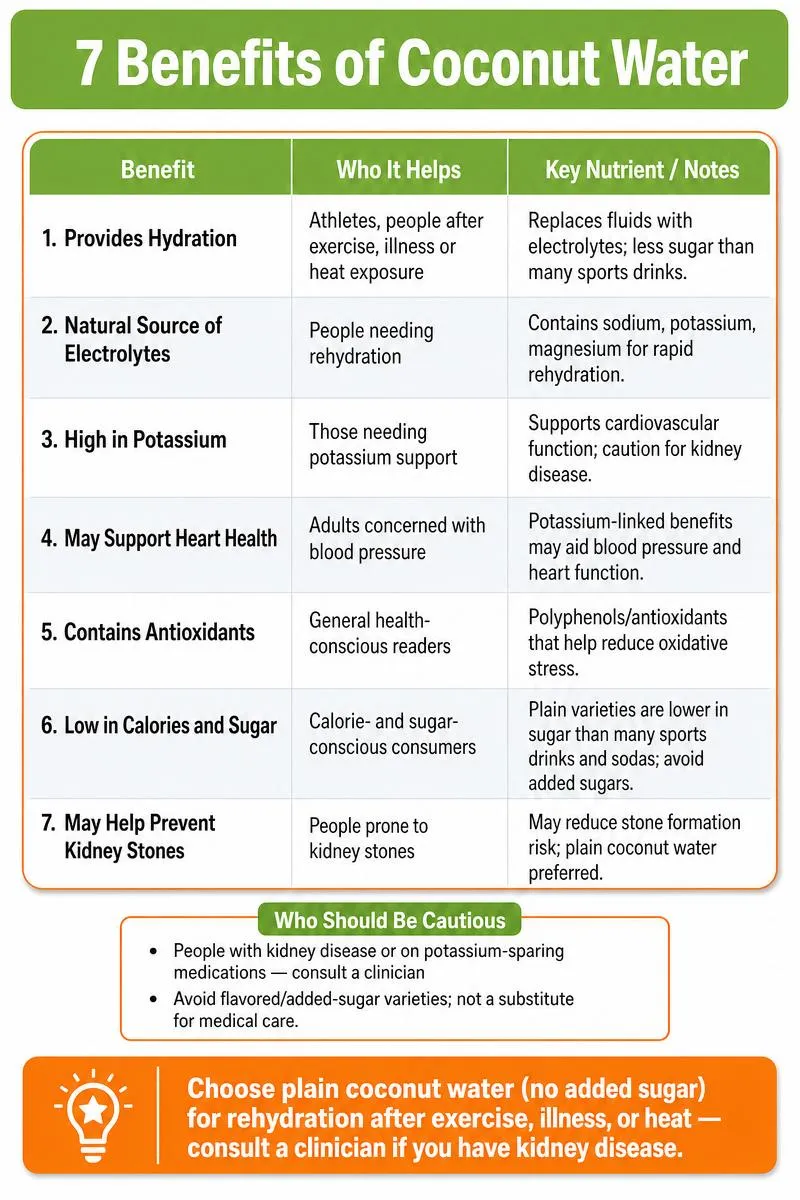
Quick Comparison: Coconut Water Benefits
| Benefit | Who It Helps | Key Nutrient / Notes |
|---|---|---|
| Provides Hydration | Athletes, people after exercise, illness or heat exposure | Replaces fluids with electrolytes; less sugar than many sports drinks |
| Natural Source of Electrolytes | People needing rehydration | Contains sodium, potassium, magnesium for rapid rehydration |
| High in Potassium | Those needing potassium support | Supports cardiovascular function; caution for kidney disease |
| May Support Heart Health | Adults concerned with blood pressure | Potassium-linked benefits may aid blood pressure and heart function |
| Contains Antioxidants | General health-conscious readers | Polyphenols/antioxidants that help reduce oxidative stress |
| Low in Calories and Sugar | Calorie- and sugar-conscious consumers | Plain varieties are lower in sugar than many sports drinks and sodas; avoid added sugars |
| May Help Prevent Kidney Stones | People prone to kidney stones | May reduce stone formation risk; plain coconut water preferred |
What Is Coconut Water?
Coconut water is the clear liquid found inside young, green coconuts. It’s not the same as coconut milk, which blends flesh with water.
The water forms naturally as the coconut matures. Young coconuts hold more water and less of the white meat found in the mature brown coconuts at most grocery stores.
Nutritionally, it contains potassium, sodium, magnesium, and a small amount of natural sugar. The taste is mild and slightly sweet, with fewer calories than juice.
7 Benefits of Coconut Water
Some of these benefits have stronger evidence than others, and your payoff depends on your health status and how you use it.
1. Provides Hydration
Coconut water is mostly water with added electrolytes, so it works well for fluid replacement. The water tackles dehydration, and the minerals aid fluid retention.
Who benefits: anyone needing fluid replacement after sweating, illness with fluid loss, or heat exposure.
2. Natural Source of Electrolytes
Coconut water contains potassium, sodium, and magnesium without the artificial colors and flavors in processed sports drinks. These minerals support nerve function, muscle contraction, and fluid balance.
Who benefits: people who want a sports drink alternative with fewer artificial ingredients.
3. High In Potassium
Coconut water contains more potassium per serving than most sports drinks. Potassium helps regulate fluid balance, nerve signals, and muscle contractions.
Who benefits: people with healthy kidneys who want mineral support, including adults watching their blood pressure.
4. May Support Heart Health
Some sources suggest adequate potassium intake supports cardiovascular function. Potassium helps counter sodium’s effects on blood pressure.
Who benefits: adults managing blood pressure through lifestyle changes, not as a standalone treatment.
5. Contains Antioxidants
Some sources suggest coconut water contains compounds that may reduce oxidative stress. These antioxidants may protect cells from damage caused by free radicals.
Who benefits: people adding variety to the antioxidants they already get from fruits and vegetables.
6. Low In Calories And Sugar
Coconut water has fewer calories and less sugar than fruit juice or soda. That makes it a lower-sugar flavored option when you want something more interesting than water.
Who benefits: people watching their calorie intake who still want a flavored drink.
7. May Help Prevent Kidney Stones
Some sources suggest that hydration combined with mineral content may support kidney health. Staying well-hydrated helps prevent certain kidney stones from forming.
Who benefits: anyone with a history of stones who’s using it to support, not replace, medical guidance.
Related Reading
A detailed breakdown of coconut oil’s nutritional profile and how it compares to coconut water’s hydrating benefits.
How to Use It
A typical serving is one cup, ideally cold and fresh. Coconut water straight from a young coconut tastes best, but packaged versions work fine for convenience.
- Pick plain varieties with no added sugars or concentrates, because sweetened versions cancel the calorie advantage.
- Read the label before buying, since some brands add sugar and flavorings you don’t need.
- Drink it after exercise or during illness, when it replaces fluid and minerals at the same time.
- Reach for it as an afternoon pick-me-up when plain water won’t cut it.
Who Should Be Cautious
Coconut water is safe for most healthy adults, but three groups should think twice.
- People with kidney disease have kidneys that can’t filter excess potassium, so the high potassium content becomes dangerous.
- Certain blood pressure medications require potassium monitoring, and coconut water may interfere with monitoring. Ask your doctor or pharmacist first.
- Coconut allergies are rare but real. If you’ve reacted to coconut products before, avoid coconut water entirely.
Related Reading
How coconut cream stacks up nutritionally and delicious ways to incorporate it into your diet.
FAQs
Is coconut water good to drink every day?
For most healthy adults, yes. It still adds sugar and calories, so count it toward your daily intake. If you have kidney issues or take medications that affect potassium, ask your doctor first.
What happens if I drink coconut water every day for 30 days?
You’ll stay well-hydrated and get a steady supply of potassium and other minerals. Don’t expect dramatic health changes. You may notice better hydration, though, especially if it replaces soda or juice.
What is the best time to drink coconut water?
It helps most after exercise or during illness, when your body needs fluid and minerals replaced. A morning glass works as a light start. Skip large amounts right before bed if nighttime fluids bother you.
What is the downside of coconut water?
The potassium content is risky for people with kidney disease. It also costs more than water and contains sugar, so the calories add up if you drink it all day.
Can coconut water reduce belly fat?
No. No drink targets belly fat directly. Swapping it for soda or juice cuts your sugar intake, which may support weight management. It won’t shrink your waistline on its own.
Is coconut water anti-inflammatory?
Some sources suggest it contains compounds with potential anti-inflammatory properties, but the evidence is limited. Don’t use it to replace proven treatments.
What organ is coconut water good for?
Mainly the kidneys and heart, through hydration support and potassium. That said, the same potassium becomes a risk for anyone with existing kidney disease.
Is coconut water more hydrating than regular water?
For everyday hydration, no. Plain water does the job. After heavy sweating or illness, its electrolytes may speed up rehydration compared with water alone.
Final Thoughts
Coconut water works best as a targeted tool: after workouts, during illness, or as a swap for sugary drinks. It’s not a daily necessity, and it’s not medicine.
Grab a plain, unsweetened carton after your next workout and see how you feel compared with your usual drink. Have kidney disease or take potassium-affecting medications? Talk to your doctor first and stick with water.