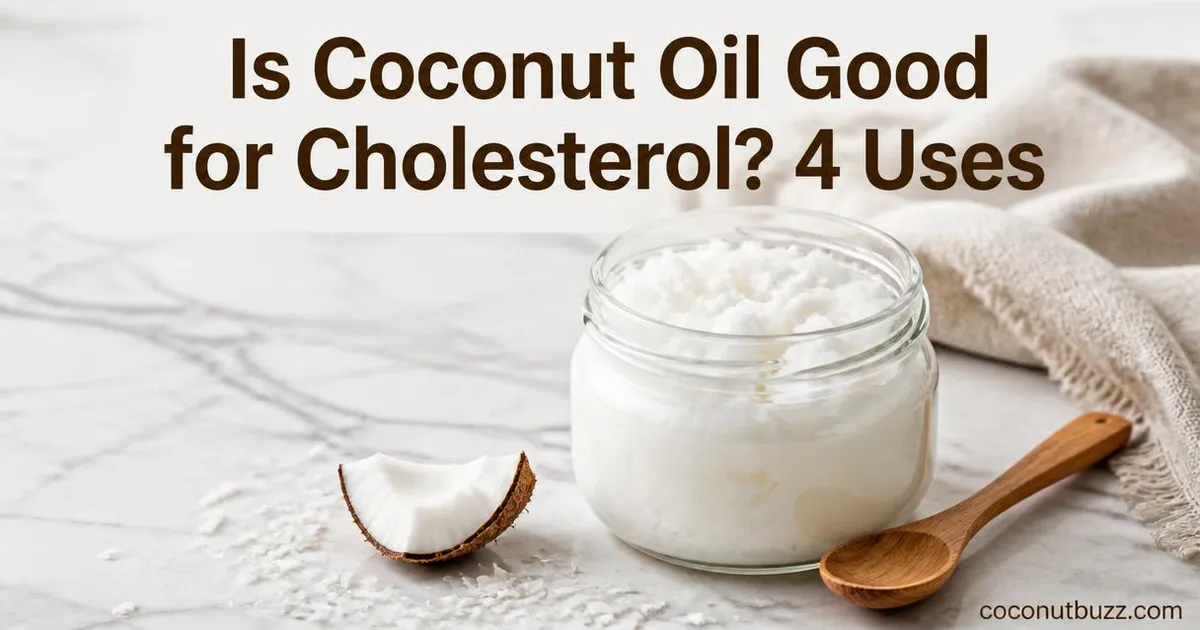
Is Coconut Oil Good for Cholesterol? 4 Uses
Coconut oil carries a health halo, but it’s almost entirely saturated fat – the type most often linked to higher LDL cholesterol. That puts it in an awkward spot when people ask whether it helps or harms cholesterol levels.
The answer depends on what you’re comparing it against. Coconut oil might raise HDL slightly more than butter, but it doesn’t lower LDL as effectively as olive oil. If you already have high cholesterol, the saturated fat content matters more than the marketing claims.
Key Takeaways
- Coconut oil contains lauric acid and other saturated fatty acids that raise LDL cholesterol in most people.
- Unsaturated oils like olive oil lower LDL more effectively than coconut oil does.
- Replacing butter with coconut oil doesn’t improve LDL – only switching to olive oil does.
- Topical application of coconut oil doesn’t affect cholesterol levels because it doesn’t enter the bloodstream.
- People with elevated LDL should use coconut oil sparingly and prioritize monounsaturated or polyunsaturated fats instead.
Also Worth Checking Out
Explore coconut butter’s fatty profile and health benefits to help readers compare how different coconut fats affect…
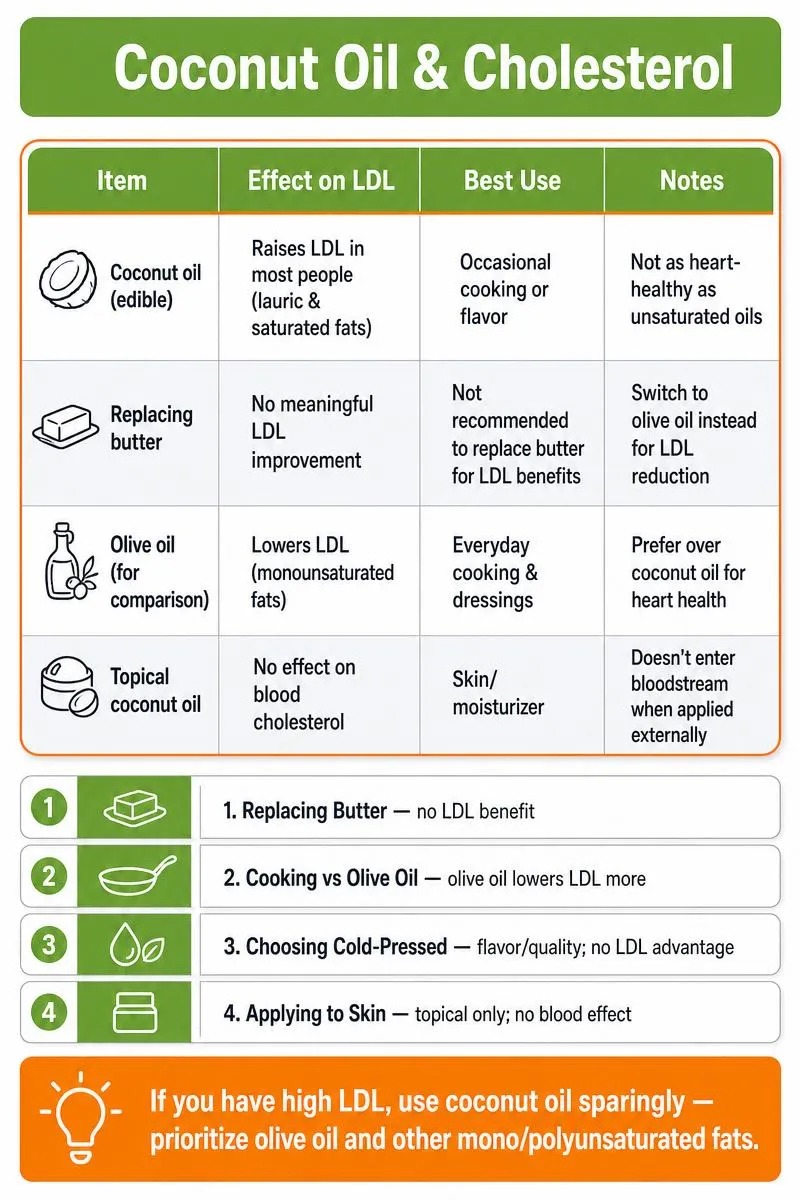
Is Coconut Oil Good For Cholesterol at a Glance
| Item | Effect on LDL | Best Use | Notes |
|---|---|---|---|
| Coconut oil (edible) | Raises LDL in most people (lauric & saturated fats) | Occasional cooking or flavor | Not as heart-healthy as unsaturated oils |
| Replacing butter | No meaningful LDL improvement | Not recommended to replace butter for LDL benefits | Switch to olive oil instead for LDL reduction |
| Olive oil (for comparison) | Lowers LDL (monounsaturated fats) | Everyday cooking & dressings | Prefer over coconut oil for heart health |
| Topical coconut oil | No effect on blood cholesterol | Skin/moisturizer | Doesn’t enter bloodstream when applied externally |
Can Coconut Oil Lower Your Cholesterol?
No, coconut oil does not lower LDL cholesterol compared to unsaturated oils. A trial comparing coconut oil, butter, and olive oil found that coconut oil raised HDL more than butter did, but it didn’t reduce LDL as much as olive oil.
The lauric acid in coconut oil raises both HDL and LDL. Some sources suggest this dual effect makes it less harmful than other saturated fats, but that doesn’t mean it actively lowers total cholesterol. If you’re trying to bring down LDL, swapping coconut oil for olive oil delivers better results than swapping butter for coconut oil.
4 Uses of Coconut Oil
How you use coconut oil changes what it means for your cholesterol. Here are the four most common scenarios.
1. Replacing Butter
Butter contains palmitic acid and myristic acid; coconut oil contains lauric acid. Lauric acid appears to raise HDL more efficiently, but all three are saturated fatty acids that increase LDL.
If you’re choosing between the two for baking or sautéing, coconut oil might give you a small HDL boost. But if lowering LDL is the priority, replacing either one with olive oil or avocado oil will move your lipid panel in a better direction.
2. Cooking Versus Olive Oil
Olive oil contains oleic acid – a monounsaturated fatty acid that lowers LDL without dropping HDL as much. Coconut oil raises both because of its saturated fat profile. When researchers directly compare the two, olive oil consistently improves LDL levels more than coconut oil does.
For everyday cooking, olive oil is the better choice if cholesterol management is part of your goal. Coconut oil works well for high-heat roasting or recipes where you want its flavor, but treating it as a daily staple instead of olive oil means accepting higher LDL over time.
3. Choosing Cold-Pressed Coconut Oil
Cold-pressed or virgin coconut oil retains more polyphenols and antioxidants than refined versions, but the fatty acid profile stays nearly identical. Lauric acid, capric acid, and other saturated fats remain the same regardless of processing method.
Some sources suggest that the polyphenols in virgin coconut oil may offer cardiovascular benefits beyond the fatty acid content, but current evidence doesn’t show that cold-pressed coconut oil lowers LDL more than refined coconut oil. If you prefer virgin coconut oil for taste or minimal processing, that’s fine – the cholesterol impact is the same as refined coconut oil.
4. Applying to Skin
Coconut oil used as a moisturizer or hair treatment doesn’t enter your bloodstream in amounts that affect cholesterol. Topical application delivers medium-chain fatty acids and lauric acid to skin cells, where they work as emollients and antimicrobial agents, but they don’t circulate through your digestive system or liver.
If you eat food prepared with coconut oil and also use it on your skin, only the ingested portion influences your lipid panel.
Worth Reading Next
Details on coconut cream’s uses and nutritional profile, including saturated fat and culinary applications relevant to…
Who Should Be Cautious About Coconut Oil
People with high LDL cholesterol should limit coconut oil intake because saturated fatty acids raise LDL in most individuals. If your lipid panel already shows elevated LDL, adding coconut oil to your diet works against the goal of lowering it.
Prioritize oils rich in monounsaturated or polyunsaturated fats instead – olive oil, avocado oil, or oils containing alpha-linolenic acid like flaxseed oil. These options lower LDL without the HDL tradeoff that coconut oil introduces. Save coconut oil for occasional use in recipes where its flavor or high smoke point matters, rather than making it your default cooking fat.
FAQs About Coconut Oil
Should I avoid coconut oil if I have high cholesterol?
You don’t need to eliminate it completely, but you should use it sparingly. Coconut oil raises LDL cholesterol because of its saturated fat content, so treating it as a staple instead of an occasional ingredient can push your levels higher.
Which oil is best for lowering cholesterol?
Olive oil and other oils high in monounsaturated fats lower LDL more effectively than saturated fats do. Oils containing polyunsaturated fats, like sunflower or safflower oil, also improve LDL levels when they replace saturated fats in your diet.
Which is better for high cholesterol, butter or coconut oil?
Coconut oil raises HDL slightly more than butter, but both raise LDL because they’re saturated fats. If you’re choosing between the two, coconut oil has a small edge on HDL, but switching to olive oil delivers better LDL outcomes than either option.
Is a spoonful of coconut oil a day good for you?
A daily spoonful of coconut oil adds saturated fat without lowering LDL cholesterol. If your cholesterol levels are already in a healthy range and you enjoy the taste or use it in specific recipes, moderate intake is fine. If you’re trying to lower LDL, that spoonful works against you.
Can coconut oil lower your cholesterol?
No. Coconut oil raises both HDL and LDL – it doesn’t reduce LDL like unsaturated oils do.
What oil should you avoid with high cholesterol?
Avoid oils high in saturated fats, including coconut oil, palm oil, and palm kernel oil. These raise LDL cholesterol more than oils rich in monounsaturated or polyunsaturated fats.
Is cold pressed coconut oil good for cholesterol?
Cold-pressed coconut oil has the same fatty acid profile as refined coconut oil, so it raises LDL and HDL in similar ways. The polyphenols in virgin coconut oil may offer other benefits, but they don’t change the cholesterol impact compared to refined versions.
Can using coconut oil on skin raise cholesterol?
No. You can safely use it as a moisturizer regardless of your cholesterol status – topical application doesn’t influence your lipid panel.
Is coconut milk bad for cholesterol?
Coconut milk contains the same saturated fatty acids as coconut oil, so it raises LDL cholesterol when consumed regularly. Light coconut milk has less fat and a smaller effect, but full-fat coconut milk contributes significant saturated fat to your diet.
What flushes cholesterol out of your body?
Your liver processes cholesterol and removes it through bile, which eventually leaves your body in stool. Soluble fiber from oats, beans, and certain fruits binds to bile acids in your digestive tract, prompting your liver to pull more cholesterol from your blood to make new bile. Eating foods high in soluble fiber supports this process.
Explore More
A direct comparison of coconut cream and heavy cream, highlighting differences in saturated fat that influence…
Final Thoughts
If your cholesterol levels are elevated or borderline, treat coconut oil as a saturated fat and use it sparingly. Olive oil and other unsaturated fats lower LDL more effectively, so make those your everyday choice and save coconut oil for recipes where it adds something you can’t get elsewhere. Track your lipid panel and talk to your healthcare provider before making big changes to your fat intake.
External References