

5 Benefits of Coconut Flour (and How to Use It)
Coconut flour is worth keeping around if you bake gluten-free or want more fiber in your diet. It behaves nothing like wheat flour, so you can’t swap it cup for cup. But once you understand its quirks, it opens up options for grain-free pancakes, muffins, and bread that actually hold together.
This article covers what coconut flour actually is, five specific benefits, how to use it without ruining your recipe, and who should skip it.
Key Takeaways
- Gluten-free and grain-free: safe for celiac disease, paleo, and low-carb diets
- High in fiber: supports digestion but can cause discomfort if you eat too much too fast
- Lower glycemic impact: fiber slows carbohydrate absorption
- Requires recipe adjustments: use less flour and more liquid than wheat flour recipes call for
- Not for everyone: avoid if you have coconut allergies or sensitive digestion
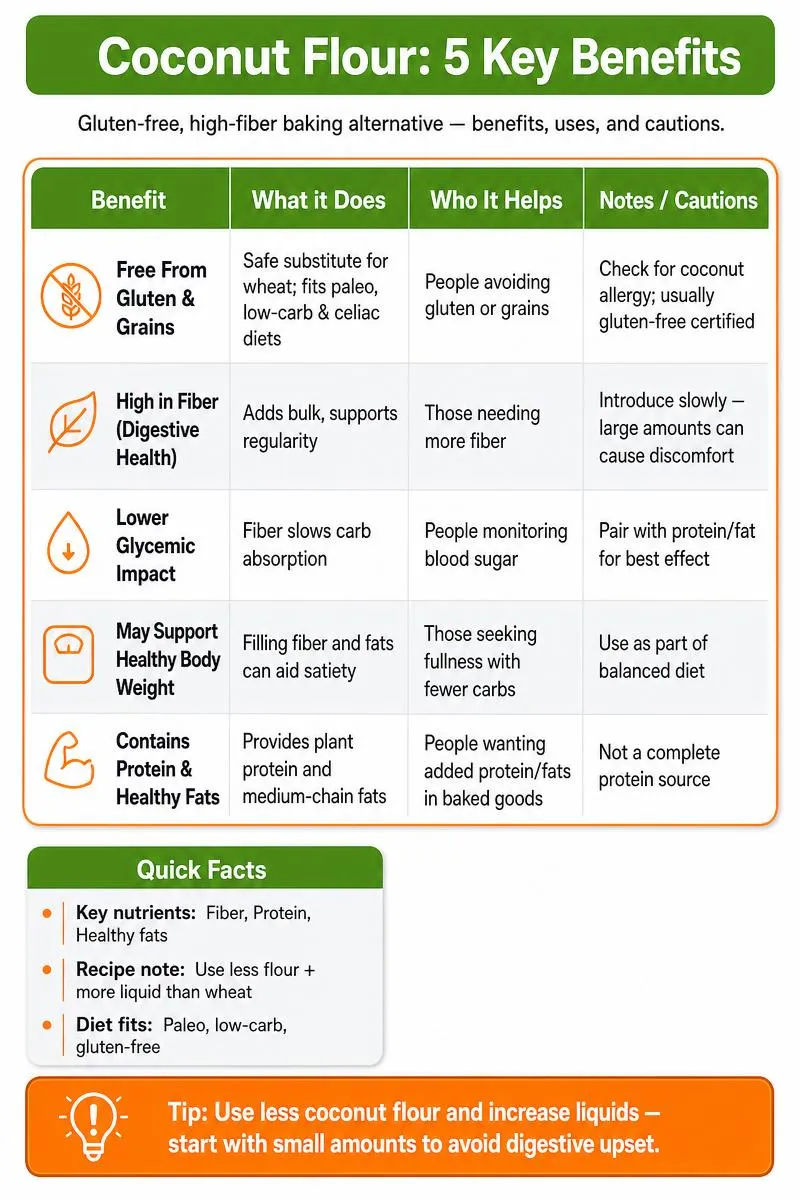
Benefits Of Coconut Flour Compared
| Benefit | What it Does | Who It Helps | Notes / Cautions |
|---|---|---|---|
| Free From Gluten & Grains | Safe substitute for wheat; fits paleo, low-carb & celiac diets | People avoiding gluten or grains | Check for coconut allergy; usually gluten-free certified |
| High in Fiber (Digestive Health) | Adds bulk, supports regularity | Those needing more fiber | Introduce slowly — large amounts can cause discomfort |
| Lower Glycemic Impact | Fiber slows carb absorption | People monitoring blood sugar | Pair with protein/fat for best effect |
| May Support Healthy Body Weight | Filling fiber and fats can aid satiety | Those seeking fullness with fewer carbs | Use as part of balanced diet |
| Contains Protein & Healthy Fats | Provides plant protein and medium-chain fats | People wanting added protein/fats in baked goods | Not a complete protein source |
What Is Coconut Flour?
Coconut flour comes from dried coconut meat that’s been ground into a fine powder. The meat gets pressed first to extract coconut oil, leaving behind a defatted, high-fiber residue that gets milled into flour.
This is different from coconut flakes or desiccated coconut. Those keep more of the fat and come in larger pieces. Coconut flour is finer, drier, and behaves more like traditional flour in baking, though with major differences in absorbency.
Explore More
Product listings and buying options for coconut sugar to sweeten recipes using coconut flour.
5 Benefits of Coconut Flour
These benefits matter most if you eat gluten-free, grain-free, or low-carb.
1. Free From Gluten and Grains
Coconut flour contains no gluten, wheat, barley, or rye. This makes it safe for people with celiac disease or gluten sensitivity. It also fits paleo, low-carb, and some autoimmune protocols that exclude all grains, not just gluten-containing ones.
Unlike some gluten-free flours that rely on rice or other grains, coconut flour comes from a fruit, not a grass or cereal.
2. High in Fiber for Digestive Health
Coconut flour contains significantly more fiber than wheat flour. Most of this is insoluble fiber, which adds bulk to stool and supports regular digestion.
The trade-off: this same fiber can cause bloating, gas, or cramping if you’re not used to high-fiber foods. Start with small amounts and drink plenty of water.
3. May Help Keep Blood Sugar Stable
The high fiber content slows carbohydrate absorption into your bloodstream. This gives coconut flour a lower glycemic impact than refined wheat flour.
For people monitoring blood sugar, baked goods made with coconut flour may produce smaller glucose spikes than those made with white flour. The effect varies by individual and what else you’re eating.
4. May Help Support Healthy Body Weight
High-fiber foods tend to be more filling. Coconut flour’s fiber content means recipes using it may satisfy hunger longer than refined flour alternatives.
It’s also lower in calorie density than nut flours like almond flour. You use less coconut flour per recipe because it’s so absorbent, which naturally reduces calories in the finished product.
5. Contains Protein and Healthy Fats
Coconut flour has more protein than most grain flours. While not a complete protein source, it contributes to daily intake in a way most grain flours don’t.
It also retains some medium-chain fatty acids from the coconut, though less than coconut oil or coconut meat since most fat gets pressed out during processing.
How to Use It
Coconut flour cannot replace wheat flour using a 1:1 ratio. It absorbs liquid like a sponge and needs extra binding ingredients.
Basic substitution guidelines:
- Use about 1/4 to 1/3 cup coconut flour for every 1 cup wheat flour a recipe calls for
- Add extra eggs. The batter needs more binding than wheat flour recipes typically require
- Increase liquid significantly; the batter should look too wet before baking
- Let batter rest a few minutes so the flour fully hydrates before it goes in the oven
Buying tips:
- Choose finely ground flour for smoother texture
- Look for unsweetened varieties with no added ingredients
- Store in an airtight container in a cool, dry place
Practical cooking ideas and usage tips that pair well with incorporating coconut flour into recipes.
Who Should Be Cautious
- Coconut allergies: If you react to coconut, avoid coconut flour entirely.
- Sensitive digestion: People with IBS or those new to high-fiber diets may experience bloating, gas, or diarrhea. Introduce gradually and pair with adequate hydration.
You Might Also Like
An overview of potential downsides and cautions around coconut products readers should consider when changing diets or…
FAQs
Why use coconut flour instead of regular flour?
For gluten-free or grain-free baking, or to increase fiber intake. It won’t produce identical results to wheat flour, but it creates baked goods with a different nutritional profile.
Is coconut flour good for weight loss?
It may help with satiety due to high fiber content, and you use less of it per recipe than wheat flour. But it’s not a magic weight loss ingredient. Total calories and portion sizes still matter.
Is coconut flour healthy for you?
It offers more fiber and less refined carbohydrate than white flour. Whether it’s “healthy” depends on your specific dietary needs and how you use it. It’s a tool, not a cure.
Should coconut flour be refrigerated?
Not required, but refrigeration extends shelf life, especially in humid climates. It can go rancid over time due to residual fat content. Smell it before using, as rancid flour smells off or soapy.
Is coconut flour good for the kidneys?
Not necessarily. The potassium content may be an issue for people with kidney disease or those on potassium-restricted diets. Ask your doctor before adding it if you have kidney concerns.
Coconut flour vs almond flour: which is better?
Depends on your needs. Coconut flour is lower in calories and higher in fiber, but harder to work with and can cause digestive issues. Almond flour is more forgiving in recipes and produces moister results, but contains more calories. Many bakers use a combination.
Final Thoughts
Coconut flour works well for specific situations: gluten-free diets, grain-free baking, and adding fiber to your diet. It demands recipe adjustments and patience. Start with tested recipes from reliable sources before attempting your own substitutions.
External References