
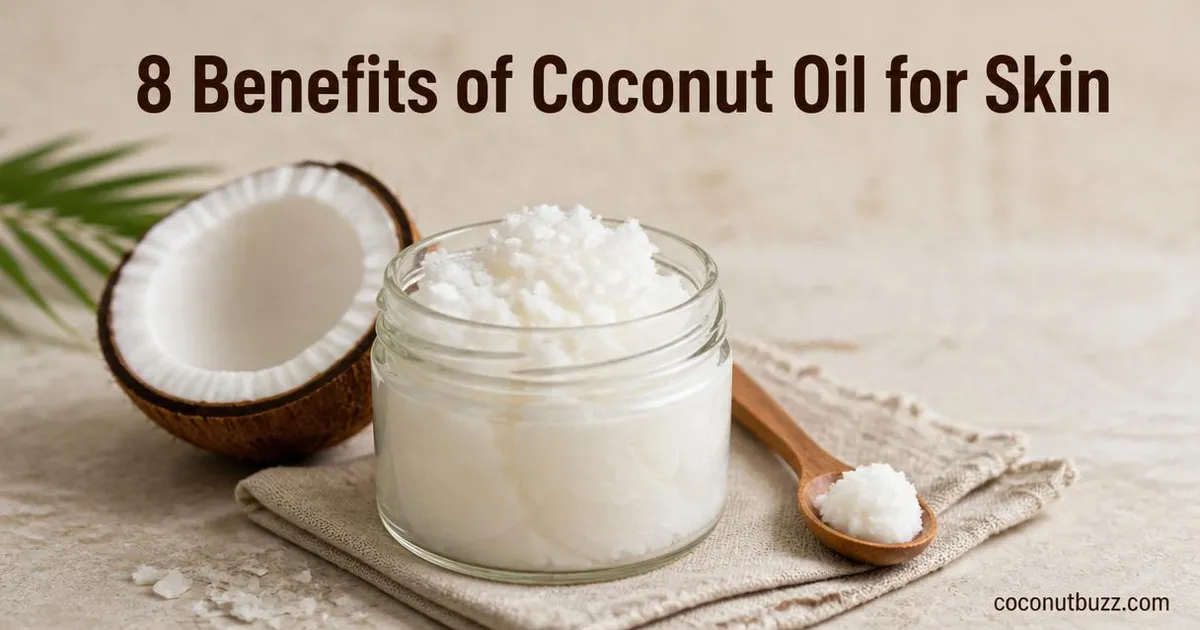
8 Benefits of Coconut Oil for Skin
Coconut oil gets positioned as a skin care miracle in some corners of the internet, but the reality is narrower. It excels at heavy-duty moisturizing and forming a protective layer over irritated or wounded skin, but it can also trigger breakouts if you slather it on your face without considering your skin type.
Eight benefits stand out when you look at how coconut oil interacts with skin, plus the practical side of using it – when it works, where it fails, and who should skip it entirely. If you have dry patches on your body or need a natural barrier for minor scrapes, coconut oil delivers. If you have acne-prone skin or an oily T-zone, it’s often the wrong tool.
Key Takeaways
- Coconut oil works best as a heavy moisturizer for dry skin and can help soothe minor irritations or mild wounds.
- Some sources suggest it has antibacterial and anti-inflammatory properties that may support skin health.
- Facial use is a mixed call: it works as a makeup remover or lip balm for some, but it can clog pores on acne-prone or oily skin.
- Side effects are generally mild, though overnight application on the face increases the risk of breakouts for some people.
- It can be used daily on the body, but doing a small patch test first is smart if your skin is sensitive.
Also Worth Checking Out
A quick comparison of coconut oil and cocoa butter for moisturizing, texture, and stretch-mark care.
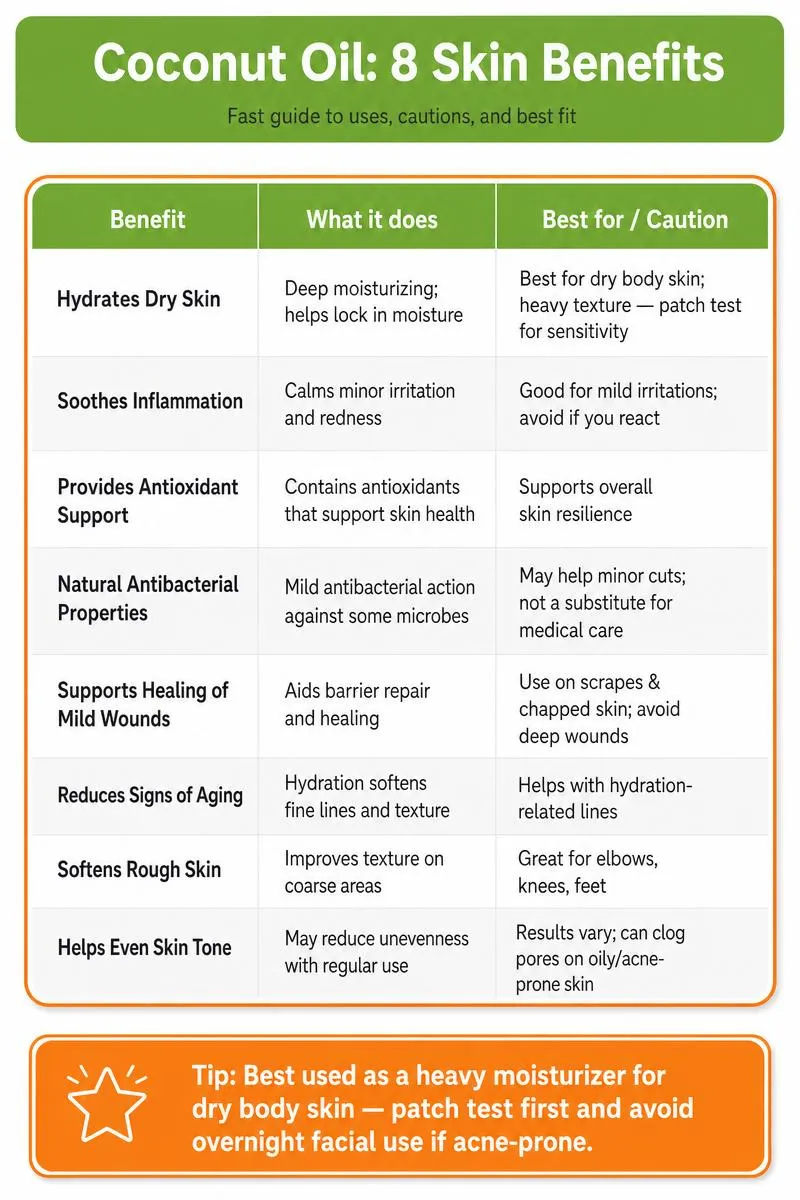
Comparing the Top Benefits Of Coconut Oil For Skin
| Benefit | What it does | Best for / Caution |
|---|---|---|
| Hydrates Dry Skin | Deep moisturizing; helps lock in moisture | Best for dry body skin; heavy texture — patch test for sensitivity |
| Soothes Inflammation | Calms minor irritation and redness | Good for mild irritations; avoid if you react |
| Provides Antioxidant Support | Contains antioxidants that support skin health | Supports overall skin resilience |
| Natural Antibacterial Properties | Mild antibacterial action against some microbes | May help minor cuts; not a substitute for medical care |
| Supports Healing of Mild Wounds | Aids barrier repair and healing | Use on scrapes & chapped skin; avoid deep wounds |
| Reduces Signs of Aging | Hydration softens fine lines and texture | Helps with hydration-related lines |
| Softens Rough Skin | Improves texture on coarse areas | Great for elbows, knees, feet |
| Helps Even Skin Tone | May reduce unevenness with regular use | Results vary; can clog pores on oily/acne-prone skin |
8 Benefits of Coconut Oil
1. Hydrates Dry Skin
Coconut oil creates an occlusive barrier that traps moisture against the skin rather than letting it evaporate. The medium-chain fatty acids in coconut oil – primarily lauric acid – fill gaps in the outer skin layer, which is why it works well on flaky elbows, knees, and shins.
People with chronically dry skin or conditions like eczema often see improvement when they apply coconut oil to skin that’s still moist from bathing. The oil doesn’t add water to your skin, but it locks in whatever moisture is already there.
2. Soothes Inflammation
Lauric acid and capric acid in coconut oil may calm redness and irritation when applied topically. Lauric acid and capric acid may reduce inflammatory markers in skin tissue, though the effect is mild compared to prescription anti-inflammatory treatments.
This benefit is most relevant for people with sensitive or reactive skin who experience occasional redness from environmental triggers. Coconut oil won’t treat serious inflammatory conditions, but it may ease minor flare-ups.
3. Provides Antioxidant Support
Coconut oil contains polyphenols and vitamin E, both of which neutralize free radicals that accumulate from sun exposure, pollution, and everyday metabolic processes. These antioxidants help protect skin cells from oxidative stress, which contributes to premature aging.
The antioxidant content is modest compared to dedicated serums, but coconut oil offers baseline protection for people who spend time outdoors or in urban environments. It’s not a replacement for sunscreen, but it adds a layer of defense against environmental wear.
4. Natural Antibacterial Properties
Lauric acid converts to monolaurin when it contacts skin enzymes, and monolaurin disrupts the lipid membranes of certain bacteria, including some strains of Staphylococcus aureus. This gives coconut oil mild antibacterial activity that may help keep skin clean between washes.
The effect is subtle and works best for preventing minor bacterial buildup rather than treating active infections. If you have a small scrape or want to reduce bacteria on your hands during the day, coconut oil offers a gentle option.
5. Supports Healing of Mild Wounds
Coconut oil forms a protective film over small cuts, scrapes, and abrasions, shielding them from dirt and bacteria while the skin repairs itself underneath. Lauric acid may also stimulate collagen production, which speeds tissue regeneration.
This benefit applies only to superficial wounds – shallow cuts, minor burns, or chafed skin. Deep or infected wounds need medical treatment, not coconut oil. For everyday scrapes, applying a thin layer after cleaning the area helps create a barrier without suffocating the tissue.
6. Reduces Signs of Aging
Regular use of coconut oil can soften the appearance of fine lines by plumping the skin with moisture and supporting the lipid barrier that weakens with age. The medium-chain fatty acids in coconut oil mimic some of the natural oils that decrease as skin matures.
This benefit is most noticeable on dry, aging skin on the body – arms, legs, and hands – rather than the face, where heavier oils often cause congestion. Coconut oil won’t erase deep wrinkles or replace retinoids, but it improves texture and suppleness over time.
7. Softens Rough Skin
Coconut oil excels at smoothing calloused or thickened skin on heels, knees, elbows, and hands. The occlusive nature of the oil traps moisture in the thickened outer layer, gradually softening it until it becomes pliable again.
For best results, apply coconut oil to rough patches after exfoliating or soaking in warm water, when the skin is already hydrated. The oil seals in that moisture and prevents the callus from reforming as quickly.
8. Helps Even Skin Tone
With consistent use, some people see improvement in uneven patches or discoloration, particularly when the discoloration stems from dryness or irritation rather than hyperpigmentation. The moisturizing effect plumps dehydrated areas, which can make uneven texture look smoother.
Coconut oil does not lighten melanin or treat melasma. If your skin tone is uneven due to sun damage or post-inflammatory hyperpigmentation, coconut oil alone won’t address the root cause, though it may improve overall texture.
How to Use Coconut Oil for Skin
Apply coconut oil to damp skin right after showering to lock in moisture while your pores are still open. Use a small amount – about a quarter-sized dollop for each limb – and rub it in until it no longer feels greasy on the surface.
As a makeup remover, massage a teaspoon of coconut oil onto dry skin to dissolve cosmetics, then wipe away with a warm, damp cloth. Follow with your regular cleanser to remove any oily residue.
For chapped lips, dab a tiny amount of coconut oil on your fingertip and apply it as needed throughout the day. Coconut oil melts at body temperature, so it absorbs quickly on thin lip skin.
Overnight use works well on dry body areas like heels or hands, but avoid leaving it on your face unless you have extremely dry skin and no history of acne. The prolonged occlusion increases the chance of clogged pores.
Daily body use is fine for most people if your skin tolerates it. Start with once a day and watch for any breakouts or irritation before committing to a routine.
Also Worth Checking Out
Practical comparison showing which fat performs better as a topical balm and how to apply each for skin care.
Side Effects of Coconut Oil on Skin
Coconut oil is comedogenic, meaning it can clog pores, especially on the face. People with acne-prone or oily skin often see an increase in blackheads and breakouts when they use coconut oil as a facial moisturizer.
Leaving coconut oil on your face overnight amplifies this risk because the prolonged contact gives the oil more time to seep into pores and trap dead skin cells. If you wake up with new blemishes after an overnight coconut oil treatment, your skin likely can’t handle the occlusive layer.
The oil leaves a greasy residue that can transfer onto pillowcases, sheets, and clothing, leaving stains that require hot water and detergent to remove. If you apply coconut oil before bed, wear old pajamas and use sheets you don’t mind marking.
Some people experience mild irritation or allergic reactions, though coconut allergies are relatively rare. If you notice redness, itching, or a rash after applying coconut oil, wash it off and skip further use.
People with very oily skin, active acne, or a history of sensitivity to heavy oils should avoid coconut oil entirely or use it only on the body, away from the face and chest.
FAQs About Coconut Oil
What does rubbing coconut oil on your skin do?
Rubbing coconut oil on your skin creates a moisture-trapping barrier and delivers fatty acids that soften dry or rough areas. It also provides mild antibacterial protection and may calm minor irritation.
Is it okay to use coconut oil on your skin every day?
Yes, for body skin that’s dry or normal. Apply it after showering to lock in moisture. If you notice breakouts or greasiness, scale back to every other day or use it only on specific dry patches.
Can you use coconut oil on your face every day?
Only if you have very dry skin and no history of acne. Most people with normal, oily, or combination skin will see clogged pores and breakouts from daily facial use.
What are the side effects of coconut oil on skin?
The main side effect is clogged pores and breakouts, especially on the face. Other issues include greasiness, stained fabrics, and occasional allergic reactions in sensitive individuals.
Can you leave coconut oil on your skin overnight?
Yes, on dry body areas like heels, knees, or hands. Avoid overnight facial application unless your skin is extremely dry and not prone to acne, since prolonged contact increases the risk of clogged pores.
Is coconut oil good for an aging face?
It can soften fine lines if your facial skin is very dry and doesn’t clog easily, but most aging faces do better with lighter oils or dedicated anti-aging serums. Coconut oil works better on aging skin on the body.
Is Vaseline or coconut oil better for your face?
Vaseline is more occlusive and less likely to clog pores because it sits on the surface without penetrating. Coconut oil hydrates slightly better but increases breakout risk. For most faces, Vaseline is the safer choice.
How do you use coconut oil for skin whitening?
Coconut oil does not whiten or lighten skin. It may improve uneven texture caused by dryness, but it has no effect on melanin production or hyperpigmentation.
What should you expect before and after using coconut oil on your skin?
Before using coconut oil, your skin may feel tight, flaky, or rough. After consistent use, dry areas should feel softer and more hydrated. If you’re using it on your face and breakouts appear, discontinue use.
What type of coconut oil is best for skin?
Virgin or unrefined coconut oil retains more lauric acid, polyphenols, and vitamin E. Refined coconut oil works as a moisturizer but offers less antioxidant support.
Explains how coconut oil compares to palm oil on comedogenicity, sustainability, and cosmetic uses.
Final Thoughts
Coconut oil is a practical, affordable option for body moisturizing and mild wound care, but it is not the right choice for every face. If you have dry body skin, start with a small amount after bathing and see how your skin responds.
External References