
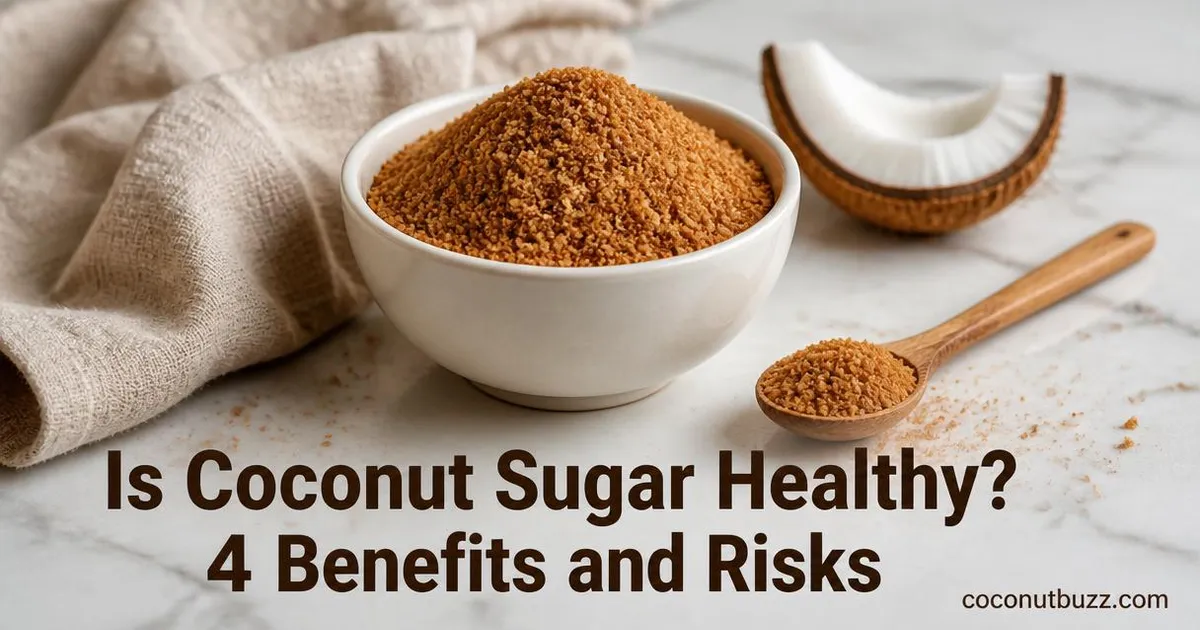
Is Coconut Sugar Healthy? 4 Benefits and Risks
Coconut sugar shows up everywhere lately, positioned as the smarter choice next to white sugar in grocery aisles and wellness blogs. But is it actually healthier, or just another sweetener with better marketing?
It does offer a few modest practical differences. You get trace nutrients that white sugar refining strips away, a potentially lower glycemic response, minimal processing, and a straightforward swap ratio in recipes. That said, it’s still sugar – around the same calories and impact on your body when you overdo it. How it stacks up to honey, date sugar, and brown sugar depends on what you’re optimizing for, and whether those trace nutrients matter enough to switch.
Key Takeaways
- Coconut sugar keeps trace minerals – potassium, magnesium, and zinc – that white sugar processing removes, though the amounts remain modest per serving
- Some sources suggest it may raise blood glucose more slowly than table sugar thanks to a lower glycemic index, but it still delivers a similar sugar load
- It stays minimally processed and swaps one-to-one with white or brown sugar in recipes without adjusting measurements or technique
- The metabolic risks of excess sugar apply equally – treat it like any other sugar when tracking daily intake
Keep Reading
Cooking-friendly coconut sap product options and where to purchase them — useful if you want a coconut-derived…
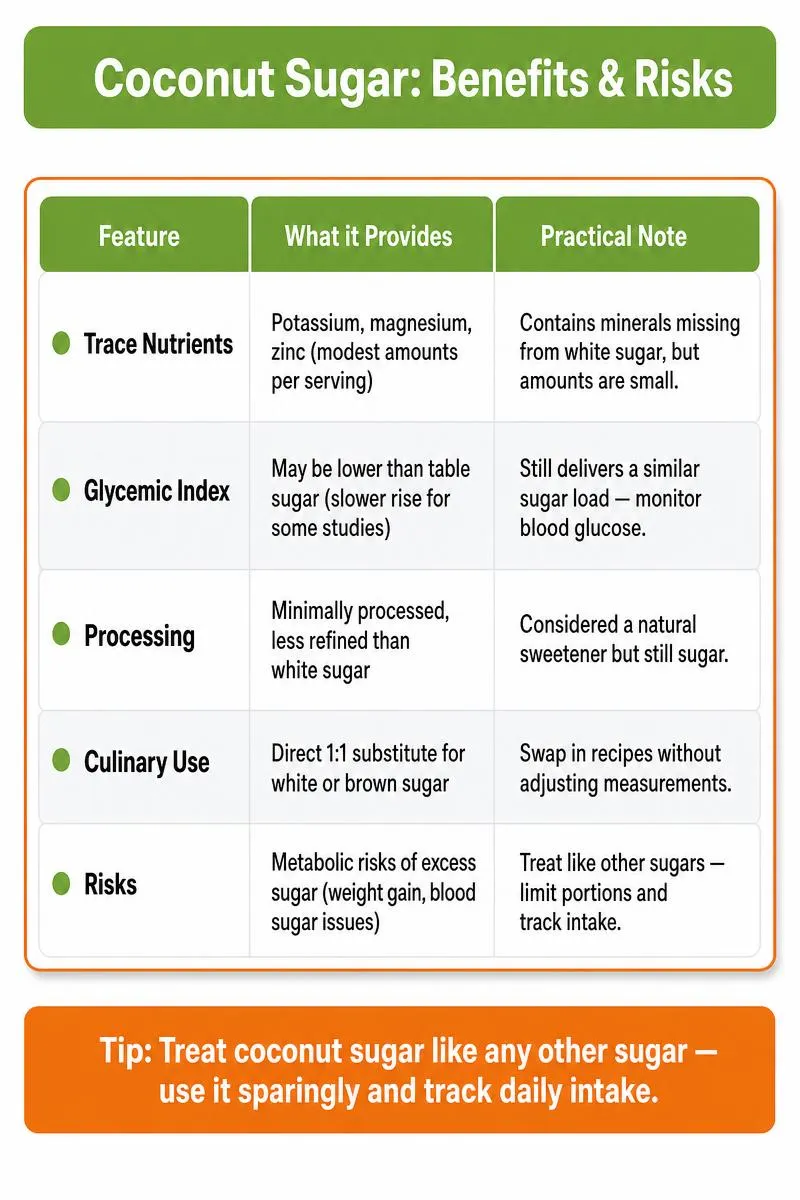
Benefits Of Coconut Sugar Quick Comparison
| Feature | What it Provides | Practical Note |
|---|---|---|
| Trace Nutrients | Potassium, magnesium, zinc (modest amounts per serving) | Contains minerals missing from white sugar, but amounts are small. |
| Glycemic Index | May be lower than table sugar (slower rise for some studies) | Still delivers a similar sugar load — monitor blood glucose. |
| Processing | Minimally processed, less refined than white sugar | Considered a natural sweetener but still sugar. |
| Culinary Use | Direct 1:1 substitute for white or brown sugar | Swap in recipes without adjusting measurements. |
| Risks | Metabolic risks of excess sugar (weight gain, blood sugar issues) | Treat like other sugars — limit portions and track intake. |
What Is Coconut Sugar and How Is It Made?
Coconut sugar comes from the sap of coconut palm flower buds, not the coconut itself. Farmers make shallow cuts in the buds and collect the liquid that drips out, which looks like thin maple syrup.
The sap gets heated until most of the water evaporates, leaving behind thick syrup that crystallizes into granules as it cools. Some producers stop at syrup stage and sell it as coconut nectar. The whole process skips the bleaching, chemical filtering, and multi-stage refining that turns cane juice into white table sugar.
That minimal handling is why it’s often marketed as natural or unrefined. The sap goes from tree to granule with heat as the main intervention, keeping its caramel color and some of the minerals present in the original liquid.
4 Benefits of Coconut Sugar
None of these make coconut sugar a health food, but they do explain why some people prefer it over heavily refined options.
1. Contains Trace Nutrients That Refined Sugar Lacks
Coconut sugar retains potassium, magnesium, zinc, and iron that survive the evaporation process. White sugar goes through multiple refining stages that strip out nearly everything except sucrose, leaving it nutritionally empty.
The mineral content stays modest – you’d need to eat unrealistic amounts to meet daily requirements. But if you’re already using sugar in coffee, baking, or cooking, switching to coconut sugar means you pick up trace nutrients instead of zero. Inulin, a type of soluble fiber, also appears in small amounts and may slow sugar absorption slightly.
This matters most if you view your overall diet as a collection of marginal gains. Swapping one empty-calorie ingredient for one with any micronutrients tilts the balance, even if the shift isn’t dramatic.
2. May Have a Lower Glycemic Index
Some research suggests coconut sugar has a lower glycemic index than table sugar, meaning it may trigger a slower, less sharp rise in blood glucose. The inulin content and the mix of sugars in the sap – sucrose, fructose, and glucose in slightly different ratios than cane sugar – could explain the difference.
That said, the evidence remains limited and not all studies agree. The total sugar load per serving stays similar to white sugar, so the caloric and metabolic impact over time doesn’t change much.
This potential benefit matters most for people monitoring glucose response or looking for sweeteners that don’t spike blood sugar as aggressively. It’s not a free pass, but it may offer a gentler glucose curve compared to refined alternatives.
3. Considered a Natural, Less Processed Sweetener
The production process keeps coconut sugar closer to its source than white sugar ever gets. No bone char filtering, no chemical bleaching, no separation of molasses from crystals – the sap heats, thickens, and dries.
For people avoiding heavily processed foods, that simplicity counts. The granules keep their tan color and subtle caramel flavor because natural compounds stay intact. It’s not raw in the way some honey is raw, but it skips the industrial refining pipeline.
This appeals most to consumers who read ingredient lists carefully and prefer foods that look and taste closer to their original form. If minimal processing sits high on your priority list, coconut sugar delivers on that front.
4. Works as a Direct Substitute in Baking and Cooking
Coconut sugar swaps one-to-one with white or brown sugar in nearly every recipe. Same volume, same sweetness level, no formula adjustments needed. The granule size matches standard sugar closely enough that it dissolves and blends the same way in batters, doughs, and sauces.
The light caramel flavor adds a subtle molasses note, which works well in chocolate desserts, spice cakes, and marinades. It can shift the flavor profile slightly in delicate recipes like vanilla sponge cake, but most baked goods absorb the difference without issue.
This makes it the easiest natural sugar swap for home cooks. Measure and use it exactly as you would the sugar it replaces.
Also Worth Checking Out
Benefits of coconut oil in coffee
Tips on using coconut ingredients in coffee — a natural follow-up for readers curious about sweetening and flavoring…
Potential Risks and Side Effects of Coconut Sugar
Coconut sugar is still sugar. The trace nutrients and possibly lower glycemic index don’t change the fact that it delivers roughly the same calories and simple carbohydrates as white sugar, gram for gram. Eating too much contributes to weight gain, blood sugar spikes, insulin resistance, and increased risk of chronic conditions like type 2 diabetes and heart disease.
People managing diabetes, prediabetes, or weight should treat coconut sugar with the same caution they’d apply to any sweetener. The marginally slower glucose response doesn’t justify using more of it – track it the same way you would table sugar when counting carbs or monitoring daily intake.
Related Reading
Explores how coconut-derived ingredients interact with weight and metabolism — helpful for readers weighing the calorie…
FAQs About Coconut Sugar
Is coconut sugar healthier than white sugar?
Slightly, but not by much. It keeps trace minerals – potassium, magnesium, and zinc – and inulin that refining removes from white sugar, and some sources suggest a lower glycemic index. The calorie and sugar content stay nearly identical, so the metabolic impact over time is similar.
What are the disadvantages or side effects of coconut sugar?
It’s still sugar, so overconsumption leads to the same risks – weight gain, blood sugar issues, and increased risk of metabolic disease.
Can people with diabetes eat coconut sugar?
Yes, in controlled amounts as part of their overall carbohydrate budget. Some research suggests it may raise blood glucose more slowly than table sugar, but it still impacts blood sugar and should be tracked like any other sweetener.
Is coconut sugar good for weight loss?
No. It has the same calorie density as white sugar and doesn’t promote fat loss. If you’re cutting calories or sugar to lose weight, coconut sugar counts the same as any other added sugar.
Which is healthier, honey or coconut sugar?
Honey contains enzymes, antioxidants, and trace vitamins that coconut sugar lacks, but it’s also higher in fructose and can spike blood sugar similarly. If you want more bioactive compounds, honey edges ahead. If you prefer lower fructose and a more neutral flavor, coconut sugar makes sense.
Is date sugar healthier than coconut sugar?
Date sugar is ground whole dates, so it keeps all the fiber, potassium, and antioxidants from the fruit. That makes it nutritionally denser than coconut sugar, though it doesn’t dissolve well in liquids. If you’re baking and want maximum nutrient retention, date sugar wins. For beverages or recipes needing full dissolution, coconut sugar works better.
What is the healthiest sugar to use?
There’s no universal answer – it depends on what you’re optimizing for. Date sugar and blackstrap molasses deliver the most nutrients. Coconut sugar and raw honey offer moderate nutrient retention with better versatility. Stevia and monk fruit avoid the sugar load entirely but taste different. The healthiest option is whichever you use least.
How is coconut sugar made?
Farmers cut coconut palm flower buds and collect the sap that flows out. The liquid gets heated until water evaporates, leaving syrup that crystallizes into granules as it cools. No chemical refining or bleaching happens – just evaporation and drying.
Is coconut sugar natural?
Yes, in the sense that it comes directly from coconut palm sap with minimal processing. It’s not raw, since heating is required to concentrate the sap, but it avoids the chemical treatments and multi-stage refining used to make white sugar.
Final Thoughts
Coconut sugar offers modest practical differences over white sugar – potassium, magnesium, and zinc that refining strips away, a potentially slower glucose response, and a simple one-to-one swap in any recipe. It’s not a health food, and no amount of minimal processing changes how your body handles excess sugar.
If you’re already using sugar and want a less refined option, it’s a reasonable choice. Keep portions in check and treat it like what it is: sugar with a few small extras.
External References