

4 Benefits of Coconut Oil Pulling
Does swishing coconut oil around your mouth actually improve oral health, or is the practice mostly hype?
Coconut oil pulling has roots in Ayurvedic tradition and has resurfaced as a home remedy for everything from plaque buildup to bad breath. The oil contains lauric acid, a compound with known antibacterial properties, which gives the practice some biological plausibility. Still, the clinical research remains limited, and many claims circulating online outpace what studies have actually demonstrated.
Before you replace your toothbrush with a jar of oil, it helps to separate what the evidence supports from what it doesn’t. Here is a look at four possible benefits of coconut oil pulling, plus the honest limits of current research and what doing it actually involves.
Key Takeaways
- Coconut oil pulling may reduce harmful oral bacteria, plaque, and bad breath, though most studies are small and short-term.
- The practice works as an add-on to brushing and flossing, not as a replacement for professional dental care.
- Claims about whitening, detoxing, or curing disease lack scientific support.
- Nausea, jaw discomfort, and minor aspiration risk are real downsides for some people.
You Might Also Like
Top butter-flavored coconut oil picks
Product page for butter-flavored coconut oil you can buy for oil pulling and everyday use.
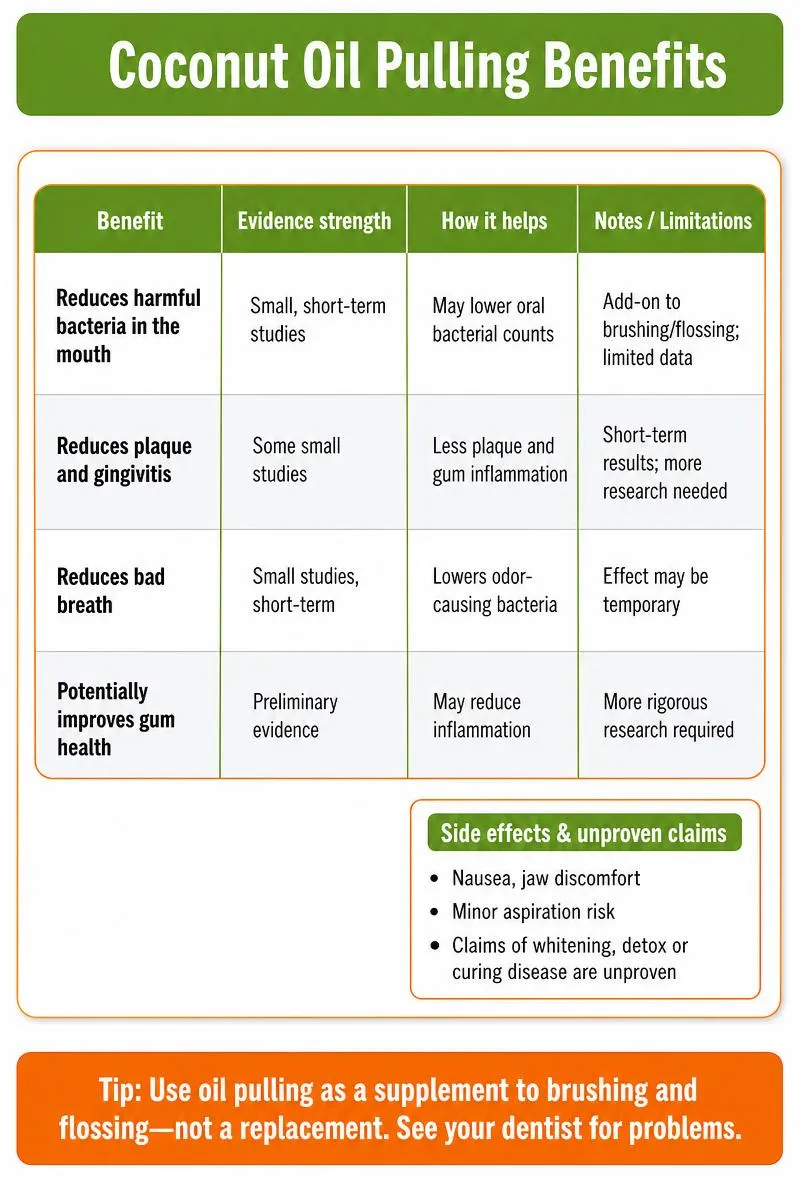
Benefits Of Coconut Oil Pulling at a Glance
| Benefit | Evidence strength | How it helps | Notes / Limitations |
|---|---|---|---|
| Reduces harmful bacteria in the mouth | Small, short-term studies | May lower oral bacterial counts | Add-on to brushing/flossing; limited data |
| Reduces plaque and gingivitis | Some small studies | Less plaque and gum inflammation | Short-term results; more research needed |
| Reduces bad breath | Small studies, short-term | Lowers odor-causing bacteria | Effect may be temporary |
| Potentially improves gum health | Preliminary evidence | May reduce inflammation | More rigorous research required |
4 Benefits of Coconut Oil Pulling
Swishing the oil around the mouth may mechanically reduce bacterial populations by trapping microbes in the oil, which you then spit out.
1. Reduces Harmful Bacteria in the Mouth
Lauric acid, a medium-chain fatty acid in coconut oil, can disrupt bacterial cell membranes and inhibit the growth of Streptococcus mutans – a primary contributor to tooth decay. Oil pulling may lower the overall microbial load in saliva by mechanically trapping bacteria in the oil, which you then spit out.
Research on this effect is limited to small clinical trials, so the degree of bacterial reduction remains unclear. For people specifically targeting oral microbial load, coconut oil pulling offers a plausible but unproven adjunct strategy.
2. Reduces Plaque and Gingivitis
Some small studies suggest that regular oil pulling can reduce plaque accumulation and improve gingival index scores, which measure gum inflammation. The mechanism ties back to bacterial reduction: less Streptococcus mutans and related species means less biofilm formation and irritation along the gumline.
Results appear most relevant for people with early or mild gum concerns rather than established periodontal disease. If your gums bleed occasionally, oil pulling may offer mild support, but it should not replace conventional treatment.
3. Reduces Bad Breath
Halitosis often stems from volatile sulfur compounds produced by anaerobic bacteria on the tongue and in gum pockets. Oil pulling may lower the bacterial counts that generate these compounds.
For people dealing with persistent bad breath despite regular brushing and tongue scraping, coconut oil pulling represents a low-risk technique worth trying alongside conventional methods.
4. Potentially Improves Gum Health
Some sources suggest that coconut oil pulling supports gum health through its anti-inflammatory and antibacterial effects, though high-quality clinical evidence is sparse. If the practice reduces gingival inflammation even modestly, it could theoretically benefit people prone to irritated gums.
Still, no study has demonstrated regeneration of gum tissue or reversal of periodontal damage. Consider oil pulling a supplementary habit rather than a therapeutic intervention, especially if you have diagnosed gum disease.
How to Do Coconut Oil Pulling
Use the right amount, avoid swallowing, and choose an unprocessed oil to minimize exposure to additives.
Step-by-Step Instructions
Place a small spoonful of solid or liquid coconut oil in your mouth. Let it melt if solid, then swish gently between your teeth and around your gums.
Traditional practice involves extended swishing, but beginners should start with a few minutes and build up as jaw endurance improves. Spit the oil into a trash can rather than a sink to avoid clogging pipes, then rinse your mouth with warm water and brush as usual.
Choosing the Right Coconut Oil
Opt for virgin or unrefined coconut oil, which retains lauric acid and skips the bleaching, deodorizing, and chemical extraction steps used on refined varieties. Organic labeling reduces pesticide residue risk, though the direct impact on oil pulling efficacy is unstudied.
Avoid oils with added flavors, preservatives, or stabilizers, since you will hold the product in your mouth for an extended period.
Explore More
An overview of coconut’s nutrition and health benefits that complements oral-care uses like oil pulling.
Side Effects and Unproven Claims
Swishing oil for an extended period can trigger nausea or jaw fatigue in some people, particularly at first. The gag reflex poses a real problem too – if oil slips toward the back of the throat, minor aspiration into the airway is possible, though reports of serious incidents are uncommon.
Coconut oil pulling cannot remove tartar that has already hardened below the gumline, and it does not deliver fluoride or the mechanical abrasion that brushing provides. Skipping professional cleanings or daily flossing in favor of oil pulling leaves plaque and calculus untouched.
Systemic claims about detoxifying the body, curing cavities, or dramatically whitening teeth lack support in peer-reviewed literature. The evidence covers minor improvements in oral bacteria and inflammation, not broad health transformations.
FAQs About Coconut Oil Pulling
What does coconut oil pulling actually do?
It swishes oil around the teeth and gums to trap bacteria and potentially reduce bacterial load through lauric acid’s antimicrobial properties. The mechanical action may help dislodge debris from soft tissue crevices.
What it does not do is detoxify your body, whiten enamel dramatically, or heal existing cavities.
Do dentists recommend oil pulling?
Dental professionals generally do not recommend oil pulling as a replacement for brushing, flossing, or professional care because the clinical evidence remains insufficient. If you are considering it, bring it up at your next cleaning so your dentist can assess whether it fits your specific oral health needs.
Can you do coconut oil pulling every day?
Yes, daily practice appears safe for most healthy adults. Consistency matters more than intensity, so daily practice is standard among people who maintain the habit.
Stop if you experience persistent nausea, jaw soreness, or any signs of aspiration.
Should you brush your teeth before or after oil pulling?
Brush after oil pulling. The oil leaves a fatty film on enamel and gum tissue that brushing and flossing remove more effectively than rinsing alone.
Starting with a clean mouth is optional but not required, since oil pulling is not a substitute for mechanical cleaning.
How soon will you see results from oil pulling?
Some people notice fresher breath relatively quickly, while changes in plaque or gum inflammation tend to emerge more gradually. The timeline depends on your baseline oral health and whether you maintain regular brushing and flossing alongside the practice.
No study has established a definitive results window.
What kind of coconut oil should you use for oil pulling?
Use virgin, unrefined coconut oil to maximize lauric acid content and avoid chemical residues from processing. Refined oils undergo bleaching and deodorizing that strip some compounds and may leave trace solvents, while virgin oil comes from fresh coconut meat without those steps.
Organic options are preferable if pesticide residue is a concern.
What are the side effects and dangers of coconut oil pulling?
Nausea and jaw fatigue are the most common complaints, especially for beginners or those sensitive to texture. There is a minor risk of oil entering the airway if the gag reflex triggers during swishing, so lean forward slightly and keep the swishing motion gentle.
The practice also poses a risk if it delays professional treatment for cavities, gum disease, or persistent pain.
Keep Reading
A comparison of coconut oil and ghee covering uses, smoke point, and topical applications readers may be curious about.
Final Thoughts
Coconut oil pulling is a low-cost experiment with a plausible mechanism but an incomplete evidence base.
Before changing anything, ask your dentist whether oil pulling makes sense given your specific gum health, cavity risk, and current hygiene regimen. Your dentist can spot conflicts with your existing treatment plan that online articles cannot.
External References