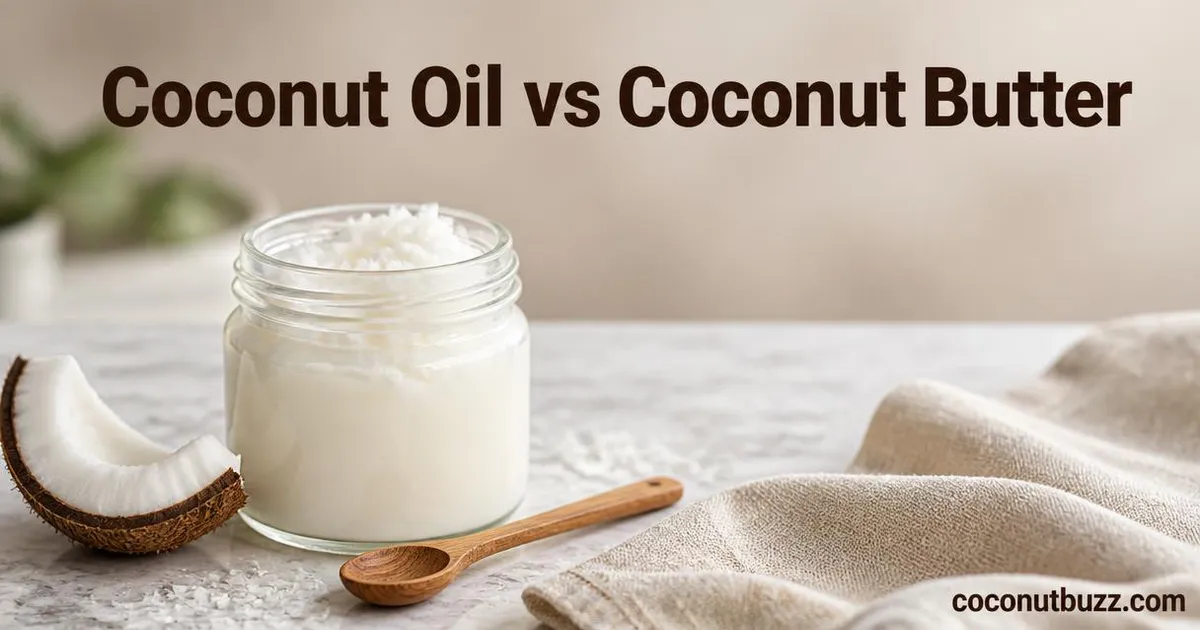
Coconut Oil vs Coconut Butter
Coconut oil and coconut butter both come from the same coconut, but they’re built differently and behave differently in your kitchen and your skincare routine. One is extracted fat. The other is the whole meat ground into a paste. Confusing the two leads to burnt food, greasy toast, or a skincare texture you didn’t sign up for.
Your choice depends on what you’re actually doing – frying, spreading, baking, or moisturizing.
Key Takeaways
- Coconut oil is extracted fat; coconut butter is ground whole coconut meat that still contains fiber.
- They are not interchangeable in most recipes because butter adds bulk and fiber that oil simply lacks.
- Oil tolerates higher heat; butter is best for spreads, smoothies, and no-bake desserts.
- Oil is lightweight for daily skin and hair use; butter is thicker and better for very dry areas.
- Both are high in saturated fat, and some heart health experts advise moderation with both.
Coconut Oil Vs Coconut Butter at a Glance
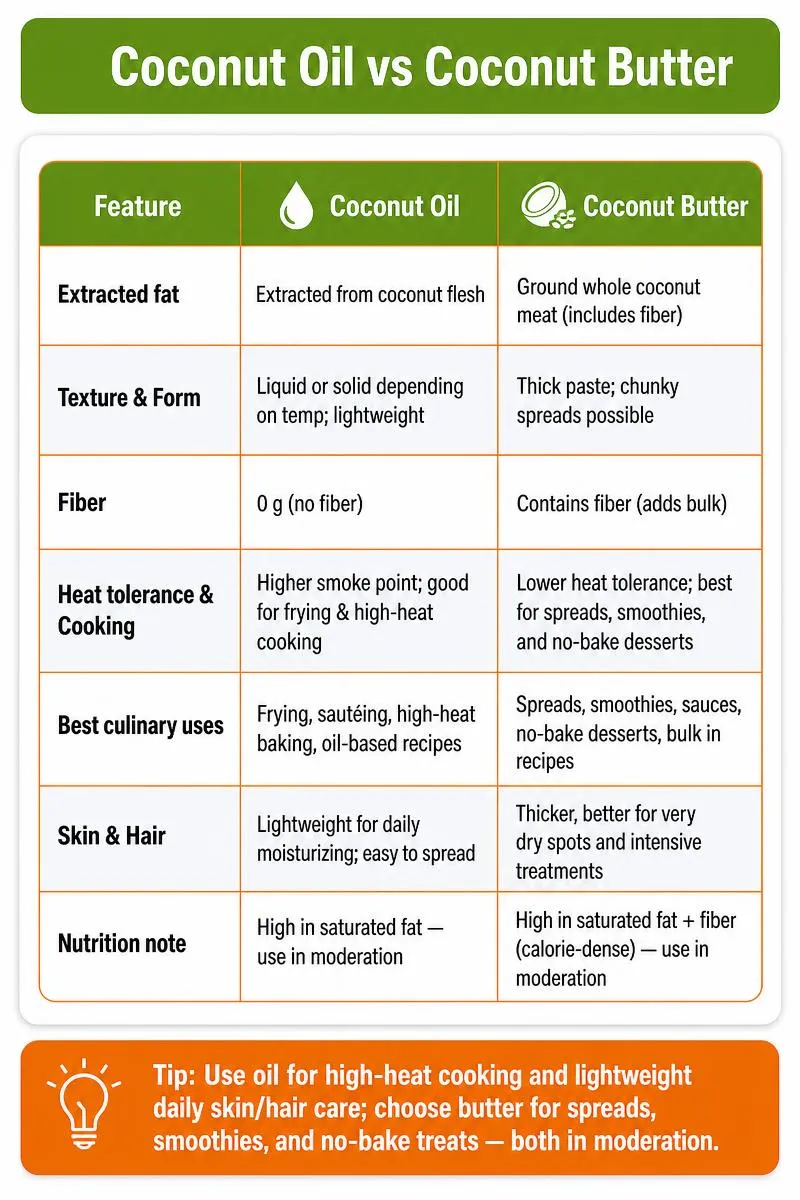
| Feature | Coconut Oil | Coconut Butter |
|---|---|---|
| Source | Extracted from coconut flesh | Ground whole coconut meat (includes fiber) |
| Texture & Form | Liquid or solid depending on temp; lightweight | Thick paste; chunky spreads possible |
| Fiber | 0 g (no fiber) | Contains fiber (adds bulk) |
| Heat tolerance & Cooking | Tolerates higher heat (choose refined) | Lower heat tolerance; best for spreads, smoothies, and no-bake desserts |
| Best culinary uses | Frying, sautéing, high-heat baking, oil-based recipes | Spreads, smoothies, sauces, no-bake desserts, bulk in recipes |
| Skin & Hair | Lightweight for daily moisturizing; easy to spread | Thicker, better for very dry spots and intensive treatments |
| Nutrition note | High in saturated fat — use in moderation | High in saturated fat + fiber (calorie-dense) — use in moderation |
What Is Coconut Oil?
Coconut oil is fat pressed or extracted from the meat of mature coconuts. It’s liquid when warm and solid when cool – which means the jar on your counter changes consistency depending on your kitchen temperature.
You’ll get the most use out of coconut oil for frying, sautéing, baking, and lightweight topical use on skin or hair. Refined coconut oil has a neutral flavor and a high smoke point, making it practical for stovetop cooking. Unrefined (virgin) coconut oil tastes like coconut and works better in lower-heat applications or recipes where you want that flavor.
Strengths: High smoke point (especially refined), neutral flavor when refined, and some sources suggest the medium-chain fatty acids in coconut oil may support skin barrier function and metabolism. Lauric acid – the dominant fatty acid in coconut oil – has been studied for its antimicrobial properties.
Weaknesses: Coconut oil is 100% fat with no fiber, no protein, and no carbohydrates. The saturated fat content raises concerns among some cardiologists, who point to elevated LDL cholesterol levels associated with high intake.
Also Worth Checking Out
Top coconut oil capsules on amazon
A product option for readers who want a convenient coconut oil supplement rather than culinary butter or oil.
What Is Coconut Butter?
Coconut butter is whole coconut meat ground into a thick, spreadable paste. Think of it like peanut butter – the oil and the solids stay together because nothing is extracted. You’re getting the fat plus the fiber and small amounts of protein from the coconut meat itself.
Coconut butter shines as a spread on toast, blended into smoothies, or used in fat bombs and no-bake treats. The texture is creamy when warm and firms up when cool, similar to natural nut butter.
Strengths: Rich, full coconut flavor and creamy texture. Because coconut butter retains the whole meat, it contains dietary fiber – mostly in the form of insoluble fiber from the coconut flesh. That fiber content is the main nutritional difference between butter and oil.
Weaknesses: Coconut butter burns easily under high heat. It’s not suitable for frying or sautéing because the coconut solids scorch before the oil reaches cooking temperature. The texture also separates in the jar – you’ll need to stir it before use.
Coconut Oil vs Coconut Butter: Nutrition and Health
Coconut oil is nearly pure fat – almost entirely saturated fat, with lauric acid being the dominant fatty acid. Coconut butter contains the same fats but also includes fiber and small amounts of protein from the whole coconut meat.
Both products are high in saturated fat. The difference is that coconut butter offers more nutrients per serving because the fiber and protein from the meat remain intact. Coconut oil gives you concentrated fat without those extras.
The overall saturated fat content keeps cardiologists cautious about both products.
Winner: Coconut butter if you want fiber and a more nutrient-dense product. Coconut oil if you want pure fat for cooking or topical use.
Coconut Oil vs Coconut Butter: Cooking and Baking
Coconut oil handles medium to high heat without breaking down – especially refined coconut oil, which has a higher smoke point than virgin. That makes it a practical choice for frying, sautéing, and roasting.
Coconut butter burns easily because the coconut solids in the paste scorch at lower temperatures than the oil alone. Keep coconut butter off the stovetop and reserve it for no-bake recipes, smoothies, spreads, and dessert toppings.
These two products are not 1:1 substitutes. Coconut oil adds moisture and fat to a recipe. Coconut butter adds thickness, texture, and fiber. Swapping one for the other changes both the consistency and the flavor profile of what you’re making.
Winner: Coconut oil for cooking and high-heat applications. Coconut butter for spreads, no-bake recipes, and smoothies.
You Might Also Like
A practical comparison showing how coconut oil performs versus common cooking oils – perfect for the cooking and baking…
Coconut Oil vs Coconut Butter: Skin, Hair, and Beauty
Coconut oil absorbs quickly into skin and hair, which makes it a practical everyday moisturizer. Lauric acid in coconut oil has been studied for its antimicrobial properties, and some sources suggest it may help support the skin barrier. The lightweight texture works for all-over body use and as a hair treatment.
Coconut butter is heavier and thicker because the coconut solids remain in the paste. That density makes coconut butter better suited for very dry patches – elbows, heels, cuticles – or for thick balms where you want a heavier barrier. It sits on the skin longer and feels richer than oil alone.
Winner: Coconut oil for daily all-over use on skin and hair. Coconut butter for targeted deep moisture on rough or very dry areas.
Which Should You Choose?
For frying or roasting: Coconut oil. It handles heat without burning, and refined versions stay neutral in flavor.
For spreading or no-bake desserts: Coconut butter. The creamy texture and coconut flavor are what you want here.
For daily skin or hair care: Coconut oil. It absorbs fast and works head to toe without feeling heavy.
For very dry skin or balms: Coconut butter. The thickness stays where you put it and provides a richer barrier.
If your recipe calls for one specifically, do not swap blindly. Coconut oil and coconut butter behave differently – adjusting for texture and moisture content matters more than matching the quantity.
FAQs About Coconut Oil and Coconut Butter
Can you substitute coconut oil for coconut butter?
Not as a 1:1 swap. Coconut oil is pure fat; coconut butter contains fiber and solids that add bulk and texture. Substituting changes the consistency of your recipe.
Which is better, coconut oil or coconut butter?
It depends on your use. Coconut oil is better for cooking and everyday skincare. Coconut butter is better for spreading, smoothies, and no-bake desserts.
Why do cardiologists say to avoid coconut oil?
Coconut oil is high in saturated fat, which can raise LDL cholesterol. Some heart health experts recommend limiting saturated fat intake, including from coconut sources.
Is there a downside to coconut oil?
Coconut oil is 100% fat with no fiber or protein. The high saturated fat content is the main concern, especially for people monitoring cholesterol levels.
Is eating a spoonful of coconut oil good for you?
Some sources suggest the medium-chain fatty acids in coconut oil may support metabolism, but the evidence is mixed. The saturated fat content means moderation is a reasonable approach.
Is coconut oil or coconut butter better for skin?
Coconut oil for daily all-over use – it absorbs quickly. Coconut butter for very dry areas where you want a heavier, longer-lasting barrier.
Is coconut oil or coconut butter better for hair?
Coconut oil is the better choice for hair. It absorbs into the hair shaft more easily than coconut butter, which contains solids that can leave residue.
Explore More
Creamed coconut vs coconut cream
A close look at creamed coconut (a form similar to coconut butter) and coconut cream, useful for readers deciding…
Final Verdict
Pick coconut oil if you want one versatile product that handles cooking, baking, and daily skincare. Pick coconut butter if you want a fiber-rich spread or a dessert ingredient with real coconut flavor and texture.
Try both in your usual recipes and routines to see which texture and behavior you actually prefer. The differences become obvious the moment you open the jar.
External References