Beef Tallow vs Coconut Oil: Skincare and Cooking
Beef tallow and coconut oil are both solid fats at room temperature, both stable under heat, and both used in skincare. That’s about where the similarities end. One is rendered from cattle, the other pressed from coconut meat – and their fatty acid structures make them behave very differently on your skin and in your pan.
The right choice depends on your skin type, your budget, whether you eat animal products, and what you actually plan to do with the fat. There’s no universal winner here. A face balm for acne-prone skin calls for one answer; a budget body moisturizer calls for another.
Key Takeaways
- Tallow absorbs slowly and suits dry or compromised skin barriers. Coconut oil spreads more easily but some sources suggest it offers quicker, shorter-lived hydration.
- Coconut oil is more likely to clog facial pores than beef tallow, making tallow the safer choice for most face routines.
- People with eczema or reactive skin often tolerate tallow better, while coconut oil can sting or worsen already inflamed areas.
- Both fats handle high heat well. Coconut oil adds subtle sweetness; tallow brings a neutral, savory profile to cooking.
- Grass-fed tallow costs more for marginal fatty acid differences. Standard tallow works fine for most budgets.
- Coconut oil is plant-based and fits vegan lifestyles. Tallow is an animal product and is not vegan.
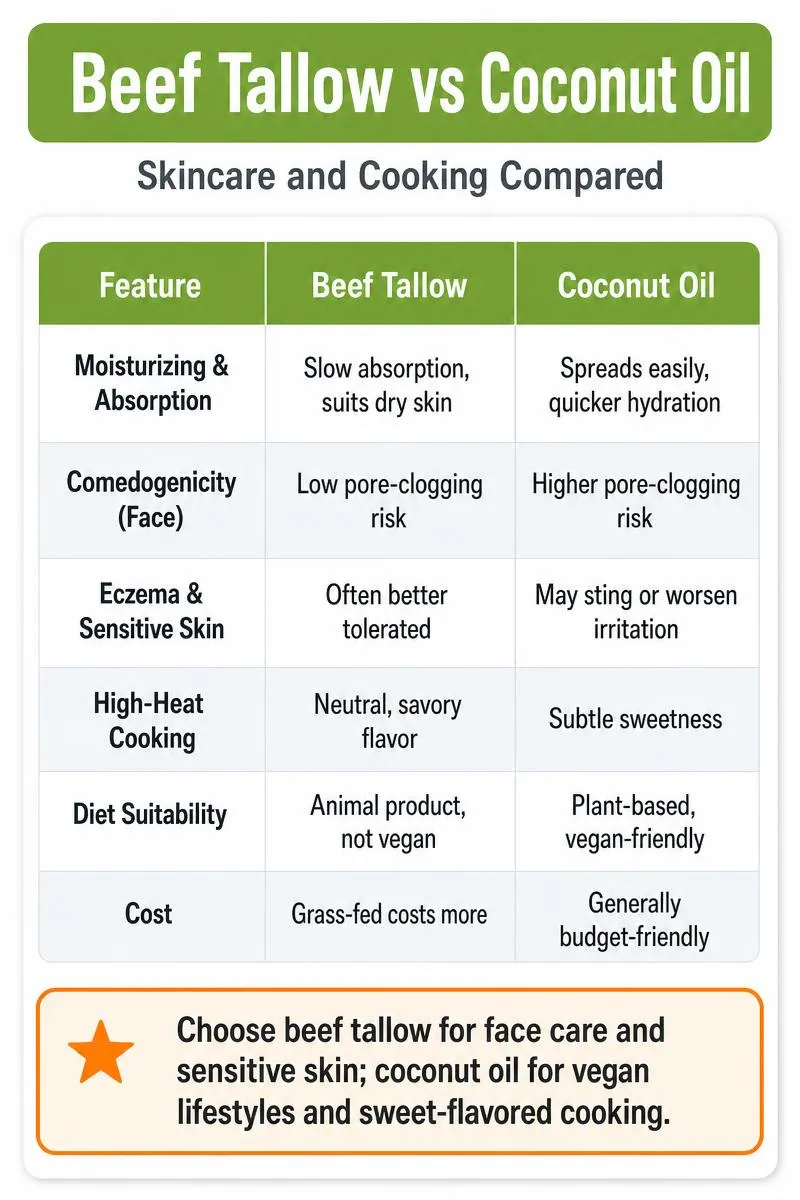
Quick Comparison: Beef Tallow Vs Coconut Oil
| Feature | Beef Tallow | Coconut Oil |
|---|---|---|
| Moisturizing & Absorption | Slow absorption, suits dry skin | Spreads easily, quicker hydration |
| Comedogenicity (Face) | Low pore-clogging risk | Higher pore-clogging risk |
| Eczema & Sensitive Skin | Often better tolerated | May sting or worsen irritation |
| High-Heat Cooking | Neutral, savory flavor | Subtle sweetness |
| Diet Suitability | Animal product, not vegan | Plant-based, vegan-friendly |
| Cost | Grass-fed costs more | Generally budget-friendly |
What Is Beef Tallow?
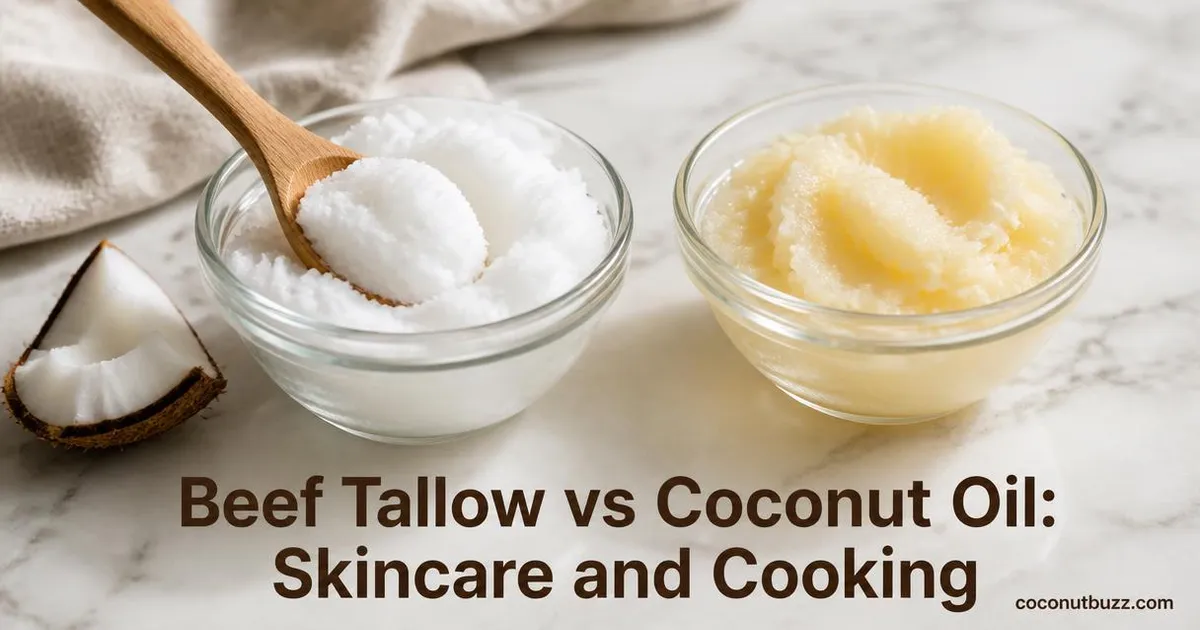
Beef tallow is rendered fat from cattle – slowly melted down to separate the pure fat from connective tissue and water. Traditionally, cooks used tallow for frying and roasting. More recently, tallow has turned up in skin balms and moisturizers, often blended with a liquid oil to soften the texture.
The main strength of tallow for skincare is its fatty acid profile. Tallow contains palmitic acid, stearic acid, oleic acid, and linoleic acid in ratios that closely resemble human sebum. That similarity means tallow integrates with the skin barrier rather than sitting on top of it. Tallow also has a long shelf life thanks to its saturated fat content, and it forms an occlusive layer that slows water loss through the skin.
Tallow is animal-derived, so it’s out for anyone avoiding animal products. The texture can feel heavy, especially if applied generously.
The aroma depends on how thoroughly the fat was rendered – poorly rendered tallow carries a noticeable meat scent, while well-rendered tallow smells neutral or faintly waxy.
Grass-fed tallow differs from grain-fed tallow mainly in sourcing and price. Grass-fed cattle produce fat with slightly different fatty acid ratios, but the practical difference for most skin and cooking uses is marginal. Grass-fed commands a higher price mainly because of the farming methods behind it.
Explore More
Refined vs unrefined coconut oil
A clear breakdown of how refined and unrefined coconut oil differ for cooking and topical use, including smoke point…
What Is Coconut Oil?
Coconut oil is pressed from the meat of mature coconuts. You’ll find two main forms: refined and unrefined (also called virgin). Unrefined coconut oil retains a distinct coconut scent and flavor. Refined coconut oil is processed to remove that scent and flavor, producing a more neutral fat that still performs the same way under heat.
Coconut oil’s strengths include affordability, wide availability, and a pleasant tropical scent in its unrefined form. The oil is rich in medium-chain triglycerides – primarily lauric acid – which give it solid stability at high cooking temperatures. For frying, roasting, and baking, coconut oil holds up well without breaking down quickly.
The weaknesses show up most clearly in facial skincare. Coconut oil is widely considered comedogenic, meaning it tends to clog pores. On the face, that often translates to breakouts.
Coconut oil can also feel greasy without absorbing fully, especially on skin that’s already well-hydrated. People with reactive or inflamed skin sometimes report stinging or increased redness after applying coconut oil.
For cooking, the choice between refined and unrefined comes down to flavor. Refined coconut oil works when you don’t want a coconut taste in your food. Unrefined coconut oil adds a mild sweetness that pairs well with certain dishes but can clash with savory recipes.
Beef Tallow vs Coconut Oil: Moisturizing and Absorption
The fatty acid structures of these two fats tell you a lot about how they behave on skin. Tallow’s saturated fats – palmitic and stearic acid – plus its oleic and linoleic acids mirror the composition of human sebum. Coconut oil is dominated by medium-chain triglycerides, especially lauric acid, which have smaller molecular structures but don’t match sebum as closely.
Tallow penetrates slowly, building an occlusive layer that holds moisture in over hours. This makes tallow well suited for overnight use or for skin that’s very dry, cracked, or dealing with a compromised barrier. Coconut oil spreads easily and feels lighter at first, but it can sit on the surface and feel slippery rather than sinking in deeply.
For some people, coconut oil’s lighter initial feel is exactly what they want – a quick hand or body application that doesn’t require a long massage. The trade-off is that the hydration doesn’t last as long as what tallow provides.
Tallow wins for overnight use and very dry skin. Coconut oil works for quick body application if your skin tolerates it without irritation.
Beef Tallow vs Coconut Oil: Comedogenicity and Face Use
Comedogenicity refers to how likely a substance is to clog pores. Coconut oil ranks high on comedogenic scales – multiple dermatology sources place it near the top. Tallow scores lower, though it’s not zero.
The reason coconut oil triggers breakouts on the face but often not the body comes down to pore density and sebum production. Facial skin has more sebaceous glands and smaller pores that clog more easily. Body skin – on your arms, legs, or torso – has larger pores and lower oil production, so coconut oil is less likely to cause problems there.
If you want to use tallow on your face, a thin layer applied to damp skin helps it spread without feeling heavy. Blending tallow with a few drops of jojoba or olive oil can make application easier. If you want to use coconut oil on your face and you don’t break out easily, a small amount at night is the lowest-risk approach – but anyone with acne-prone or combination skin should skip it entirely.
Tallow is the better choice for facial use. Coconut oil belongs mainly on the body or on skin that’s confirmed not to react to it.
Benefits of coconut oil for skin
A focused list of coconut oil skin benefits, application tips, and moisturizing effects relevant to face and body use.
Beef Tallow vs Coconut Oil: Eczema and Sensitive Skin
Eczema and dermatitis-prone skin need an occlusive barrier without irritation. Tallow’s fatty acid profile – particularly its linoleic acid and palmitic acid content – supports the skin barrier in a way that compromised skin tends to accept well. People with eczema often report that tallow reduces dryness and flaking without the stinging that some plant oils trigger.
Coconut oil is a different story on reactive skin. Some people with eczema use coconut oil without issues, but others experience increased redness, stinging, or warmth after application. The lauric acid in coconut oil can feel harsh on skin that’s already inflamed or broken.
Individual reactions vary widely, and both fats call for a patch test before you apply them broadly. Try a small amount on the inner forearm and wait a day to see how your skin responds.
Tallow is the safer pick for eczema and sensitive skin. Coconut oil only belongs in your routine if your skin already tolerates it without reaction.
Beef Tallow vs Coconut Oil: Cooking and Nutrition
Both fats handle high heat without breaking down quickly. Tallow has a smoke point that makes it suitable for searing, deep frying, and roasting. Coconut oil – especially refined – also holds up well under high heat, though unrefined coconut oil has a slightly lower smoke point than the refined version.
Flavor is where they diverge. Tallow brings a neutral, savory character that works with meats, vegetables, and potatoes without announcing itself. Coconut oil adds a mild sweetness in its unrefined form, which suits baked goods, curries, and tropical-flavored dishes but can fight against savory or acidic recipes.
Diet-wise, tallow fits paleo, keto, and whole-food approaches that include animal products. Coconut oil fits those same frameworks plus vegan diets, since it’s entirely plant-derived. Neither fat is a clear winner for heart health – opinions on saturated fat intake remain mixed, and the research doesn’t give a definitive answer that applies to everyone.
Which Should You Choose?
Dry, mature, or eczema-prone facial skin: Choose beef tallow. The sebum-like fatty acid profile and low comedogenicity make it the better match for skin that needs barrier support without pore congestion.
Affordable body moisturizer for normal skin: Choose coconut oil. It’s cheaper, widely available, and spreads easily over large areas where comedogenicity is less of a concern.
High-heat cooking with neutral flavor: Choose beef tallow. The savory, neutral profile won’t interfere with the taste of your food, and the smoke point handles searing and frying.
Vegan diet or plant-based preference: Choose coconut oil. Tallow is an animal product and doesn’t fit a vegan lifestyle.
Acne-prone skin needing a face balm: Choose beef tallow. The lower comedogenic rating means it’s far less likely to trigger breakouts than coconut oil.
Worth Reading Next
A comparison that highlights smoke points, nutrition, and best-cooking uses useful for deciding between oils in the…
FAQs About Beef Tallow and Coconut Oil
Which is better for dry skin: beef tallow or coconut oil?
For most people with dry skin, beef tallow performs better. The palmitic acid, stearic acid, and linoleic acid in tallow closely match human sebum, which helps the oil integrate with the skin barrier and hold moisture over time. Coconut oil hydrates initially but tends to sit more on the surface.
Why does coconut oil cause breakouts on my face but not my body?
Facial skin has more sebaceous glands and smaller pores, making it more prone to clogging. Coconut oil is widely considered comedogenic, so it’s more likely to block those smaller facial pores. Body skin has larger pores and lower oil production, so the same oil is less likely to cause issues there.
Can you mix beef tallow and coconut oil?
Yes. Blending the two gives you tallow’s barrier support with coconut oil’s easier spreadability. A common approach is mostly tallow with a smaller amount of coconut oil, melted together and allowed to solidify. This blend still isn’t ideal for acne-prone facial skin, since the coconut oil component remains comedogenic.
Is grass-fed tallow worth the extra cost compared to regular tallow?
For most skincare and cooking uses, no. Grass-fed tallow has slightly different fatty acid ratios, but the practical difference is marginal. Grass-fed is worth it if you care about the farming methods or want to support regenerative agriculture – not because it performs noticeably better on your skin.
Is beef tallow or coconut oil healthier for your heart?
Neither has a clear heart-health advantage. Both are high in saturated fat, and the research on saturated fat intake and cardiovascular health remains mixed. If heart health is a primary concern, talk to your doctor rather than choosing based on general guidance.
Is beef tallow vegan?
No. Beef tallow is rendered from cattle fat, so it’s an animal product. Coconut oil is the plant-based alternative if you need a vegan option.
Does beef tallow go rancid like coconut oil?
Both fats can go rancid eventually, but their high saturated fat content gives them relatively long shelf lives. Store either fat in a cool, dark place. Tallow rendered properly keeps well at room temperature and even longer in the refrigerator. Coconut oil keeps well for a long time when stored away from heat and light.
Why did people stop using beef tallow?
The shift away from tallow in cooking was driven partly by the rise of vegetable oils in the mid-20th century and partly by concerns about saturated fat that gained traction in the 1960s and 1970s. Fast-food chains that had fried in tallow switched to vegetable oils. Tallow never disappeared entirely, but it fell out of mainstream use for decades.
What is the healthiest oil to put on your skin?
There’s no single healthiest oil – the best choice depends on your skin type and goals. For barrier repair and dry skin, tallow’s sebum-matching profile makes it a strong contender. For lighter hydration on non-reactive skin, jojoba oil and squalane are also well tolerated. Coconut oil works for body use but is too comedogenic for most faces.
Is coconut oil anti-inflammatory?
Some sources suggest coconut oil may have mild anti-inflammatory properties, potentially linked to lauric acid. However, the evidence is early and mixed, and coconut oil can also cause inflammation on reactive or eczema-prone skin. Don’t rely on coconut oil as an anti-inflammatory treatment – especially on skin that’s already irritated.
Final Thoughts
Tallow is the better choice for facial skincare, eczema, and sensitive skin. Its lower comedogenicity and sebum-like fatty acid profile give it a clear edge for barrier repair without clogging pores. Coconut oil is the better choice for budget body care, vegan lifestyles, and cooking applications where you want a stable saturated fat with mild flavor.
If your body skin is non-reactive and you’re cooking at high heat, coconut oil works perfectly well – it just isn’t the right fat for your face or for compromised skin. Patch test tallow on your jawline before committing to a full routine, or grab a small jar to try before building your skincare around it.
External References