Creamed Coconut vs Coconut Cream: What’s the Difference
Most people grab creamed coconut or coconut cream based on whatever’s in stock, then wonder why their curry won’t thicken or their frosting won’t set. The names sound interchangeable, but one is a solid block of pure coconut meat while the other is the fatty layer from canned milk – and swapping them carelessly will change how your recipe behaves.
Key Takeaways
- Creamed coconut is a solid block of ground, dehydrated coconut meat; coconut cream is the thick, fatty layer from canned coconut milk
- The two are not interchangeable in every recipe because creamed coconut thickens and sets as it cools
- You can melt creamed coconut with water to approximate coconut cream, but not all recipes work in reverse
- Creamed coconut keeps for weeks refrigerated; opened coconut cream should be used within a few days
Creamed Coconut Vs Coconut Cream Compared
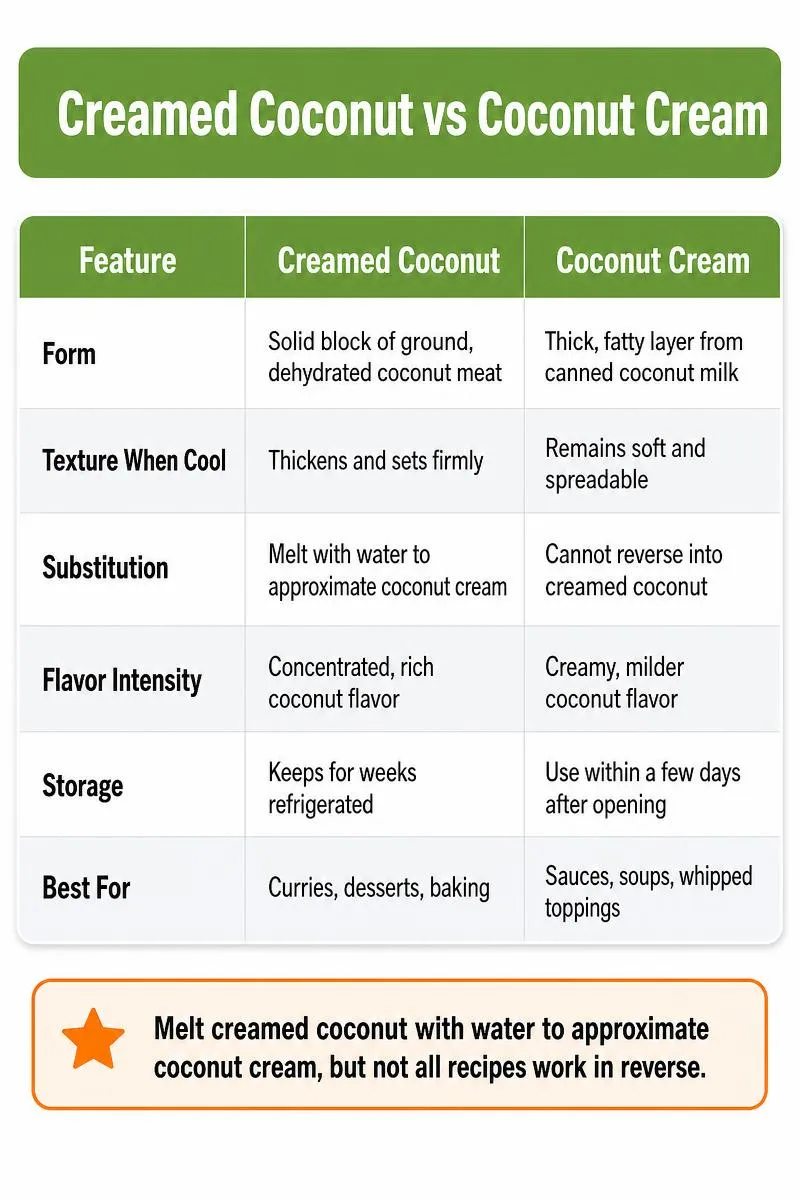
| Feature | Creamed Coconut | Coconut Cream |
|---|---|---|
| Form | Solid block of ground, dehydrated coconut | Thick, fatty layer from canned coconut milk |
| Texture When Cool | Thickens and sets firmly | Remains soft and spreadable |
| Substitution | Melt with water to approximate coconut cream | Cannot be converted back to creamed coconut |
| Flavor Intensity | Concentrated, rich coconut flavor | Creamy, milder coconut flavor |
| Storage | Keeps for weeks refrigerated | Use within a few days after opening |
| Best For | Curries, desserts, baking | Sauces, soups, whipped toppings |
What Is Creamed Coconut?
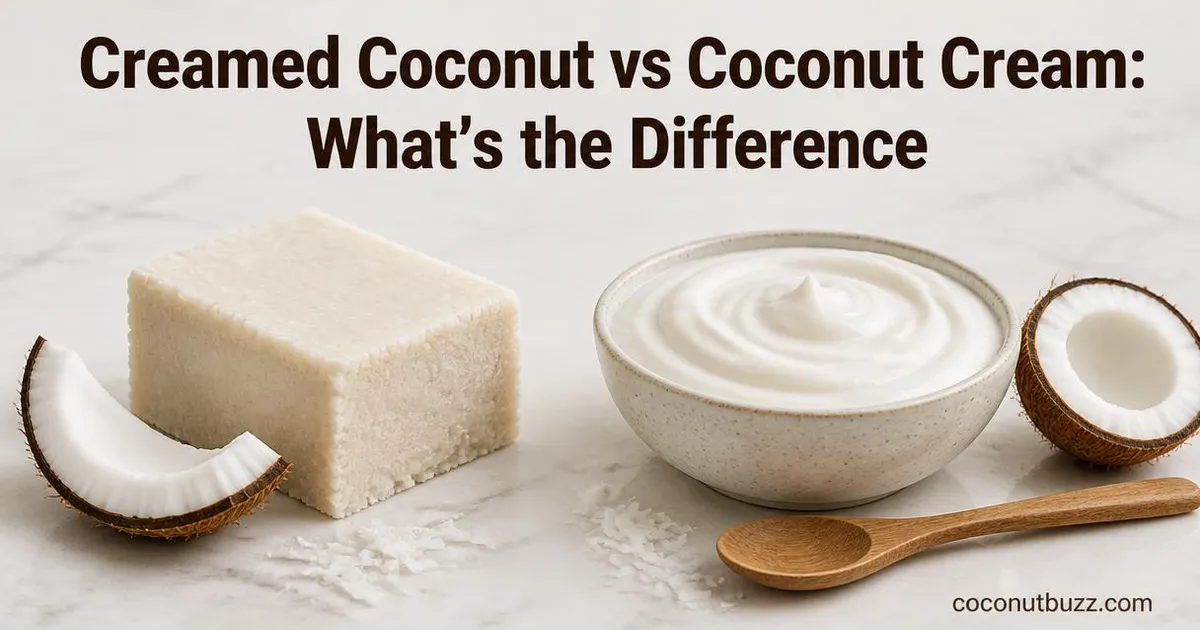
Creamed coconut is a solid block of pure ground, dehydrated coconut meat with no added water. It looks like a dense white bar and feels waxy at room temperature.
The format works best for recipes where you control the liquid content and want concentrated coconut flavor. You can shave off what you need, melt it into a curry, or dissolve it in hot water to create coconut milk at whatever thickness you want.
Strengths include stability at room temperature before opening, high concentration of coconut solids, and flexibility as a base for both coconut milk and cream. Weaknesses show up in prep work – you need to melt or dissolve creamed coconut before most recipes can use it, and rough handling or overheating can turn the texture grainy.
How coconut oil compares to vegetable oil for cooking, heat tolerance, and recipe swaps.
What Is Coconut Cream?
Coconut cream is the thick, scoopable layer that separates to the top of chilled full-fat coconut milk. Brands also sell it canned on its own, with a higher proportion of coconut fat than standard coconut milk.
The consistency works best for finishing sauces, adding richness to drinks, or recipes needing a pourable fatty cream. You open the can, scoop what you need, and stir it in – no melting step required.
Strengths include immediate usability straight from the can and quick integration into hot or cold mixtures. Weaknesses appear in the shorter window of usability after opening and noticeable thickness variation by brand – some cans deliver a thick paste while others pour more like heavy cream.
Creamed Coconut vs Coconut Cream: Cooking Behavior and Texture
Creamed coconut melts into a liquid when warmed and thickens again as it cools, eventually setting firm when chilled. That state change makes it useful for sauces that need to thicken as they sit or desserts that must hold a shape.
Coconut cream stays softer and more scoopable across temperatures, blending smoothly without a full state change. The fat content gives it body, but it won’t solidify the way creamed coconut does.
Winner: creamed coconut for sauces that thicken as they sit or desserts that must hold a shape; coconut cream for instant, smooth richness without structural change.
Creamed Coconut vs Coconut Cream: Substitutions and Conversions
You can melt creamed coconut with warm water to approximate coconut cream. Melt creamed coconut in warm water, starting with a small amount and adding more until you reach the consistency of coconut cream. The result won’t match the exact pourability of canned cream, but it works in most recipes calling for coconut cream as a liquid ingredient.
Direct swaps fail when the recipe relies on creamed coconut’s setting property or coconut cream’s immediate pourability. If a dessert needs to firm up in the refrigerator, coconut cream won’t deliver the same structure. If a sauce needs to stay smooth and pourable after cooling, creamed coconut will thicken too much.
Winner: creamed coconut offers more flexibility because you can dilute it to different consistencies; coconut cream cannot replicate the firm set of chilled creamed coconut.
Worth Reading Next
A breakdown of how cocoa butter and coconut oil differ in texture and melting behavior useful for fat-based recipes.
Creamed Coconut vs Coconut Cream: Flavor Intensity and Recipe Fit
Creamed coconut carries an intense flavor because it contains pure ground meat with all the coconut solids intact. That concentration works when you want coconut to be the main flavor in a dish – think coconut-forward curries, bars, or fudge.
Coconut cream is milder and adds background richness without dominating savory or sweet dishes. The fat smooths out other flavors rather than competing with them.
Winner: creamed coconut when the coconut taste should lead; coconut cream when it should support other flavors without taking over.
Creamed Coconut vs Coconut Cream: Storage and Convenience
Unopened creamed coconut stores in the pantry before opening. Once opened it keeps for weeks wrapped in the refrigerator and can be frozen in portions without separating or losing texture.
Canned coconut cream is convenient out of the can but should be used within a few days after opening. The high fat content makes it prone to absorbing refrigerator odors and developing off flavors faster than creamed coconut.
Winner: creamed coconut for longevity and pantry storage; coconut cream when you need zero prep and immediate use.
Which Should You Choose?
Long-simmered curry that needs to thicken gradually → Creamed Coconut
Chilled dessert or filling that must set firm → Creamed Coconut
Quick sauce, soup, or tropical drink that needs richness now → Coconut Cream
Whipped topping or frosting replacement where pourable fat matters → Coconut Cream
Limited pantry space and you want one product that covers multiple consistencies → Creamed Coconut
Uses, baking tips, and substitution notes for coconut flour that help readers choosing alternative coconut ingredients.
FAQs About Creamed Coconut and Coconut Cream
Is creamed coconut the same as coconut cream?
No. Creamed coconut is a solid block of ground, dehydrated coconut meat. Coconut cream is the thick, fatty layer from canned coconut milk. They have different textures, different water content, and behave differently when heated or chilled.
Can you substitute creamed coconut for coconut cream, and vice versa?
You can substitute creamed coconut melted with water for coconut cream in most recipes, though the texture may be slightly thicker. Substituting coconut cream for creamed coconut fails in recipes that rely on the setting property of chilled creamed coconut – desserts, fudge, or thickened sauces won’t hold their shape.
How do you turn creamed coconut into coconut cream?
Melt creamed coconut in warm water, adjusting the amount of water to reach your desired thickness. Let it cool to thicken. For a thicker result, use less water; for a thinner result closer to coconut milk, use more.
How long does creamed coconut last once opened?
Weeks if wrapped tightly and refrigerated. You can also freeze portions without texture loss. If the surface develops an oily film, that’s normal – the fat naturally separates and can be stirred back in when melted.
Can you freeze creamed coconut?
Yes. Cut the block into portions, wrap each piece in plastic or foil, and freeze. Creamed coconut doesn’t separate or change texture after freezing, so you can thaw only what you need.
Does creamed coconut taste sweet?
No. Creamed coconut contains no added sugar and tastes like concentrated coconut meat – rich and fatty but not sweet. The flavor is more intense than coconut cream but not sweeter.
Can you eat creamed coconut raw?
Yes. You can shave it over desserts, grate it into smoothies, or eat it straight from the block. The texture is dense and waxy at room temperature but melts quickly on your tongue.
Why is my creamed coconut grainy when melted?
Overheating or stirring too vigorously can cause the coconut solids to clump. Melt creamed coconut gently over low heat or with warm – not boiling – water, and stir slowly until smooth.
Why is there oil on top of my creamed coconut?
The fat naturally separates over time, especially in warmer storage conditions. Stir the oil back in when you melt the creamed coconut, or wipe it off if you prefer a drier texture for grating.
Can you make coconut milk from creamed coconut?
Yes. Dissolve creamed coconut in warm water, using more water for a thinner milk and less for a richer one. Stir until smooth and let it cool.
Final Verdict
Neither product is universally better. Your recipe and prep time should decide. Choose creamed coconut for firm set desserts and long-simmered curries where you want the sauce to thicken as it cools. Choose coconut cream for no-prep finishing and applications needing a softer, pourable texture that won’t firm up.
If you only stock one, choose creamed coconut – you can dilute it to approximate both coconut cream and coconut milk, which gives you more flexibility in the kitchen.
External References
- Coconut oil consumption and cardiovascular risk factors in … – NIH
- Coconut Cream vs. Coconut Milk: What’s the Difference? – Thehealthy
- Maximizing Shelf Life: Best Practices for Coconut Cream … – Redvfoods
- The Difference Between Coconut Milk and Coconut Cream – Foodal
- What Is Coconut Cream? Benefits, Uses, Downsides – Healthline