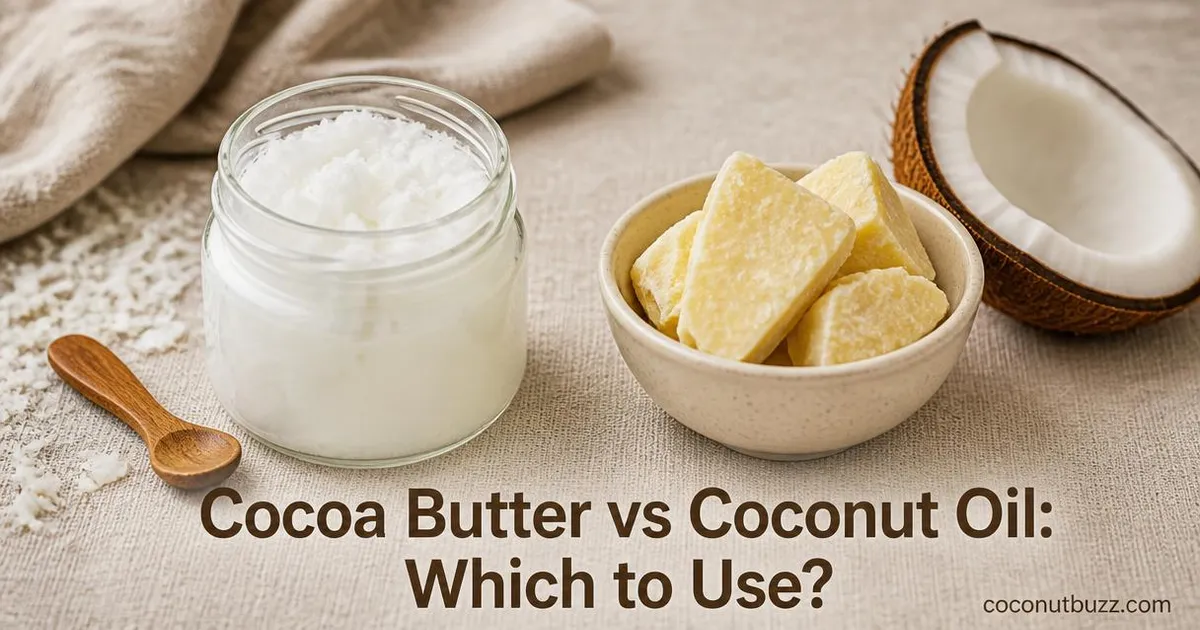
Cocoa Butter vs Coconut Oil: Which to Use?
Most people expect cocoa butter and coconut oil to behave the same way because they’re both “natural” moisturizers. They don’t. One absorbs in seconds and melts on contact; the other sits on your skin for hours, forming a thick protective layer that won’t budge.
The difference comes down to fatty acid structure and melting point, not marketing claims. Coconut oil is dominated by medium-chain fatty acids like lauric acid, which penetrate quickly. Cocoa butter contains mostly stearic and oleic acids – longer chains that create a stable, occlusive barrier instead of sinking in.
Key Takeaways
- Coconut oil absorbs quickly and feels lighter on skin; cocoa butter forms a thicker, more occlusive barrier that holds moisture in longer.
- For hair, coconut oil can penetrate the shaft and work as a pre-wash treatment; cocoa butter coats the surface and adds weight, better for thick or coarse textures.
- Cocoa butter creates a firmer, more stable texture in DIY body butters that won’t melt in your cupboard; coconut oil melts faster and needs whipping or combining with harder butters.
- Neither is universally ideal for facial use: coconut oil may clog pores for acne-prone skin, while cocoa butter is often too heavy for anything but the driest complexions.
- Both are predominantly fat with no significant protein or carbs, but their fatty acid profiles differ – coconut oil is high in lauric acid, cocoa butter in stearic and oleic acids.
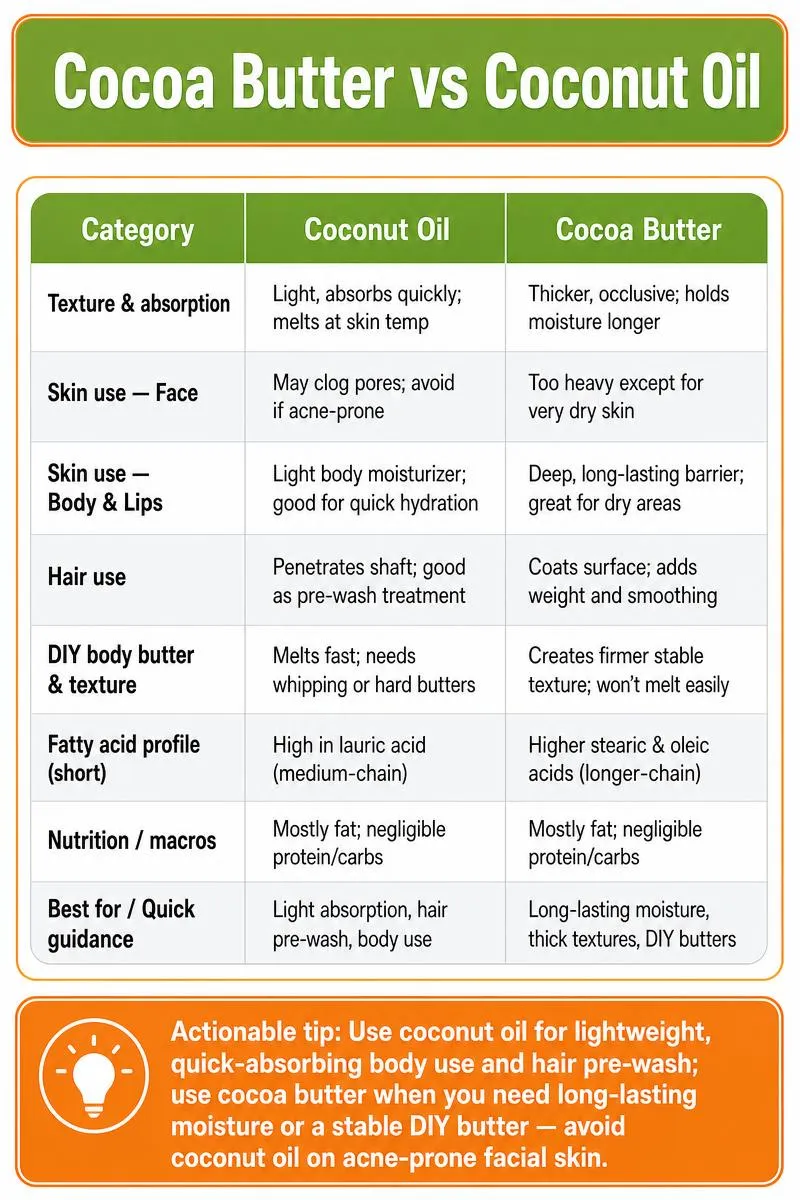
Comparing the Top Cocoa Butter Vs Coconut Oil
| Category | Coconut Oil | Cocoa Butter |
|---|---|---|
| Texture & absorption | Light, absorbs quickly; melts at skin temp | Thicker, occlusive; holds moisture longer |
| Skin use — Face | May clog pores; avoid if acne-prone | Too heavy except for very dry skin |
| Skin use — Body & Lips | Light body moisturizer; good for quick hydration | Deep, long-lasting barrier; great for dry areas |
| Hair use | Penetrates shaft; good as pre-wash treatment | Coats surface; adds weight and smoothing |
| DIY body butter & texture | Melts fast; needs whipping or hard butters | Creates firmer, stable texture; won’t melt easily |
| Fatty acid profile | High in lauric acid (medium-chain) | Higher stearic & oleic acids (longer-chain) |
| Nutrition / macros | Mostly fat; negligible protein/carbs | Mostly fat; negligible protein/carbs |
| Best for / Quick guidance | Light absorption, hair pre-wash, body use | Long-lasting moisture, thick textures, DIY butters |
What Is Cocoa Butter?
Cocoa butter is a solid fat pressed from cacao beans. It’s the same ingredient that gives chocolate its smooth melt and shows up in cosmetics, lotions, and DIY skincare recipes. At room temperature it’s hard and brittle, which makes it useful for formulations that need to hold their shape.
The fat is highly occlusive, meaning it sits on top of skin and prevents water loss rather than sinking in. That makes cocoa butter best for creating protective barriers on very dry or chapped areas – lips, elbows, heels – and adding firmness to homemade balms and body butters.
Strengths
Cocoa butter has a long shelf life, often lasting years without going rancid. It stays solid at room temperature, which keeps formulations stable even in warm climates. The mild chocolate scent is pleasant for most people, and the occlusive nature means you don’t need to reapply as often as lighter oils.
Weaknesses
The thickness that makes cocoa butter protective also makes it slow to absorb. It can feel greasy or heavy, especially on oily skin or fine hair. For anyone who dislikes a coating sensation or needs something that disappears quickly, cocoa butter is usually too much.
You Might Also Like
A practical comparison of babassu and coconut oils for skin-care uses, texture, and melting points.
What Is Coconut Oil?
Coconut oil is extracted from the white meat of mature coconuts. It’s sold as refined or unrefined (virgin), with the unrefined version retaining more of the coconut scent and flavor. The oil is solid or semi-solid at cooler temperatures and melts around body temperature, which is why it liquefies the moment it touches your skin.
Coconut oil is versatile – it’s used for quick-absorbing skin moisture, hair conditioning treatments, and light cooking or baking. Some sources suggest antifungal and antibacterial properties, though these effects are less documented in rigorous clinical settings.
Strengths
The oil melts on contact, so it spreads easily and absorbs faster than most butters. It works for both cosmetic and culinary purposes, and the medium-chain fatty acids give it a different feel and function than long-chain oils like olive or almond.
Weaknesses
Coconut oil is comedogenic for some users, meaning it can clog pores and trigger breakouts, especially on the face. It’s liquid or very soft in warm climates, which makes storage and formulation trickier. The shelf life is shorter than cocoa butter, and it can feel slippery or greasy in balms if not combined with firmer ingredients.
Cocoa Butter vs Coconut Oil: For Skin and Face
Coconut oil is often used for oil cleansing – massaged onto skin to dissolve makeup and sebum, then rinsed off. Cocoa butter doesn’t clean; it seals moisture in and creates a barrier that lasts for hours.
Face Use
Coconut oil is lighter and disappears faster, but it’s pore-clogging for many people with acne-prone or combination skin. Cocoa butter is richer and more occlusive, which makes it too heavy for most faces. If you have very dry skin and no acne history, cocoa butter might work on targeted dry patches, but it’s typically better reserved for the body.
Body and Lip Use
Cocoa butter is superior for very dry or chapped areas – cracked heels, elbows, lips in winter. It locks in moisture and doesn’t need frequent reapplication. Coconut oil works for normal or slightly dry skin, but it absorbs quickly and may need reapplication throughout the day.
Winner: depends on skin type and body area. Cocoa butter for intense barrier protection; coconut oil for lighter, everyday moisture.
Cocoa Butter vs Coconut Oil: For Hair
Coconut oil penetrates the hair shaft more readily than most oils because of its molecular structure. That makes it effective as a pre-wash treatment – applied before shampooing to reduce protein loss during washing. The oil coats the cuticle and works its way inside, which is why it’s so commonly recommended for damaged or chemically treated hair.
Cocoa butter sits on the surface and adds weight and slip. It’s better for thick, coarse, or textured hair that can handle heavier products without looking greasy. For fine or thin hair, cocoa butter is usually too heavy and can weigh strands down or make them look limp.
Winner: coconut oil for fine or normal hair; cocoa butter for thick, dry, or textured hair.
Also Worth Checking Out
Detailed look at how castor and coconut oils perform for hair growth, conditioning, and application tips.
Cocoa Butter vs Coconut Oil: For DIY Body Butter and Texture
Cocoa butter is hard and brittle at room temperature, which gives it structure in DIY recipes. Coconut oil is soft or liquid depending on the season, so it melts easily and needs whipping or combining with harder butters to avoid turning into a puddle.
Body Butter Stability
Cocoa butter creates a firmer balm that holds its shape in a jar and doesn’t liquefy unless exposed to high heat. Coconut oil-based body butters need to be whipped and often require refrigeration or additional stabilizers to maintain texture. If you want a product that stays solid on your bathroom shelf through summer, cocoa butter is the better base.
Winner: cocoa butter for structure and stability; coconut oil for a softer, easier-to-spread finish that melts faster.
Cocoa Butter vs Coconut Oil: Fatty Acid and Nutrition Profile
Coconut oil is high in saturated medium-chain fatty acids, with lauric acid making up the majority. Cocoa butter is also saturated but contains mostly stearic and oleic acids – longer-chain fats that behave differently in the body and on the skin.
Fat Type Comparison
The medium-chain fatty acids in coconut oil, which some sources suggest metabolize differently than long-chain fats. Stearic acid in cocoa butter is considered a neutral saturated fat – it contributes to cocoa butter’s firm texture at room temperature, and oleic acid is a monounsaturated fat found in olive oil.
Macronutrient and Vitamin Content
Both are calorie-dense pure fats with no significant protein or carbohydrates. Cocoa butter contains some vitamin K; coconut oil contains negligible amounts of vitamins. Neither is a meaningful source of micronutrients when used in typical quantities.
Health Context
Neither is clearly healthier overall. The better choice depends on dietary goals and use case – if you’re looking for a cooking fat that behaves differently metabolically, coconut oil’s medium-chain fatty acids are distinct. If you want a stable fat for baking or a butter substitute, cocoa butter’s firmness and neutral flavor profile may be preferable.
Winner: tie; depends on whether you value medium-chain fatty acids or the stability and neutral impact of stearic and oleic acids.
Which Should You Choose?
You have very dry, cracked skin or lips: choose cocoa butter. The occlusive barrier lasts longer and protects better than lighter oils.
You want a light face or body oil that absorbs quickly: choose coconut oil. It melts on contact and disappears faster, though watch for pore-clogging if you’re acne-prone.
You are making a firm DIY body butter or balm: choose cocoa butter. It holds its shape at room temperature and won’t melt in your cabinet.
You have fine hair and want a pre-wash treatment: choose coconut oil. It penetrates the shaft without weighing hair down the way cocoa butter does.
You need a stable ingredient that stays solid at room temperature: choose cocoa butter. Coconut oil liquefies in warm climates and needs extra stabilizers in formulations.
Explore More
Explains differences in fatty-acid profile, metabolic uses, and when to choose MCT versus regular coconut oil.
FAQs About Cocoa Butter and Coconut Oil
Can I replace cocoa butter with coconut oil?
Not in most recipes that require firmness. Coconut oil melts at a lower temperature, so it won’t hold the same structure in balms, body butters, or baked goods that rely on cocoa butter’s hardness. You can substitute in liquid or soft formulations, but expect a different texture.
Does coconut oil repair skin like cocoa butter?
Neither actually repairs skin – they moisturize and protect. Coconut oil absorbs quickly and may have some antibacterial properties; cocoa butter forms a barrier that prevents water loss. Both help skin feel softer and stay hydrated, but they don’t heal damage on a cellular level.
Is cocoa butter healthier than coconut oil?
No clear winner. Cocoa butter contains stearic and oleic acids, which are considered neutral or beneficial fats; coconut oil is high in lauric acid, a medium-chain fatty acid with different metabolic effects. Both are calorie-dense and should be used in moderation. The better choice depends on what you’re making and your dietary goals.
What is the disadvantage of cocoa butter for skin?
Cocoa butter is thick and slow to absorb, so it can feel greasy or heavy. For oily or acne-prone skin, the occlusive layer may trap sebum and lead to breakouts.
Can I use cocoa butter or coconut oil on my face?
Both can work, but with caution. Coconut oil is comedogenic for many people, especially those with acne-prone or combination skin. Cocoa butter is very heavy and usually too much for facial use unless you have extremely dry skin and no breakout concerns. Patch test first.
Which is better for skin, especially dry skin?
Cocoa butter for very dry, cracked areas – it creates a protective barrier that lasts longer. Coconut oil for normal to slightly dry skin that needs lighter, faster-absorbing moisture. If you’re dealing with severe dryness or chapping, cocoa butter wins.
Which is better for hair?
Coconut oil for fine or normal hair – it penetrates the shaft and works well as a pre-wash treatment. Cocoa butter for thick, coarse, or textured hair that can handle the extra weight and benefits from surface coating.
Which is better for body butter?
Cocoa butter for firm, stable body butters that hold their shape at room temperature. Coconut oil for softer, easier-to-spread formulations that melt quickly but may need refrigeration or whipping to maintain texture.
What is the main difference between cocoa butter and coconut oil?
Texture, absorption, and fatty acid profile. Cocoa butter is hard, occlusive, and high in stearic and oleic acids; it sits on skin and protects. Coconut oil is soft or liquid, absorbs quickly, and is high in medium-chain fatty acids like lauric acid; it penetrates rather than forming a barrier.
Final Thoughts
No universal winner exists – the right choice depends on your skin type, hair type, and what you’re making. Cocoa butter is better for protective barriers, firm formulations, and very dry areas. Coconut oil is better for quick absorption, lighter moisture, and penetrating treatments.
Acne-prone skin should avoid coconut oil on the face; fine hair should avoid cocoa butter. If you’re still unsure, try both on a small patch of skin or a section of hair and see how your body responds.
External References