

Coconut Water vs Sports Drinks: Which Is Better?
Coconut water or a sports drink – which bottle belongs in your gym bag?
Both market themselves as hydration upgrades, but they come from opposite worlds. Coconut water is the clear liquid inside young coconuts, poured straight from the fruit. Sports drinks like Gatorade and Powerade are formulated beverages, mixed in a lab to replace what sweat pulls out of your body.
The decision comes down to the same handful of factors either way: electrolytes, sugar, calories, workout type, and recovery context. No single bottle wins across the board. The situation picks the drink.
Key Takeaways
- Neither drink hydrates better across the board – sweat volume decides it, along with session length.
- Sports drinks are engineered around heavy sweating; coconut water brings its electrolytes straight from the nut.
- Coconut water usually wins on calories and added sugar, though flavored brands close the gap quickly.
- For stomach bugs or hangovers, an oral rehydration solution like Pedialyte beats both contenders.
- Daily coconut water carries tradeoffs – mainly sugar – worth knowing before it becomes a habit.
Keep Reading
Coconut water vs coconut juice
Clear breakdown of sugar, electrolyte, and labeling differences between coconut water and coconut juice – ideal for…
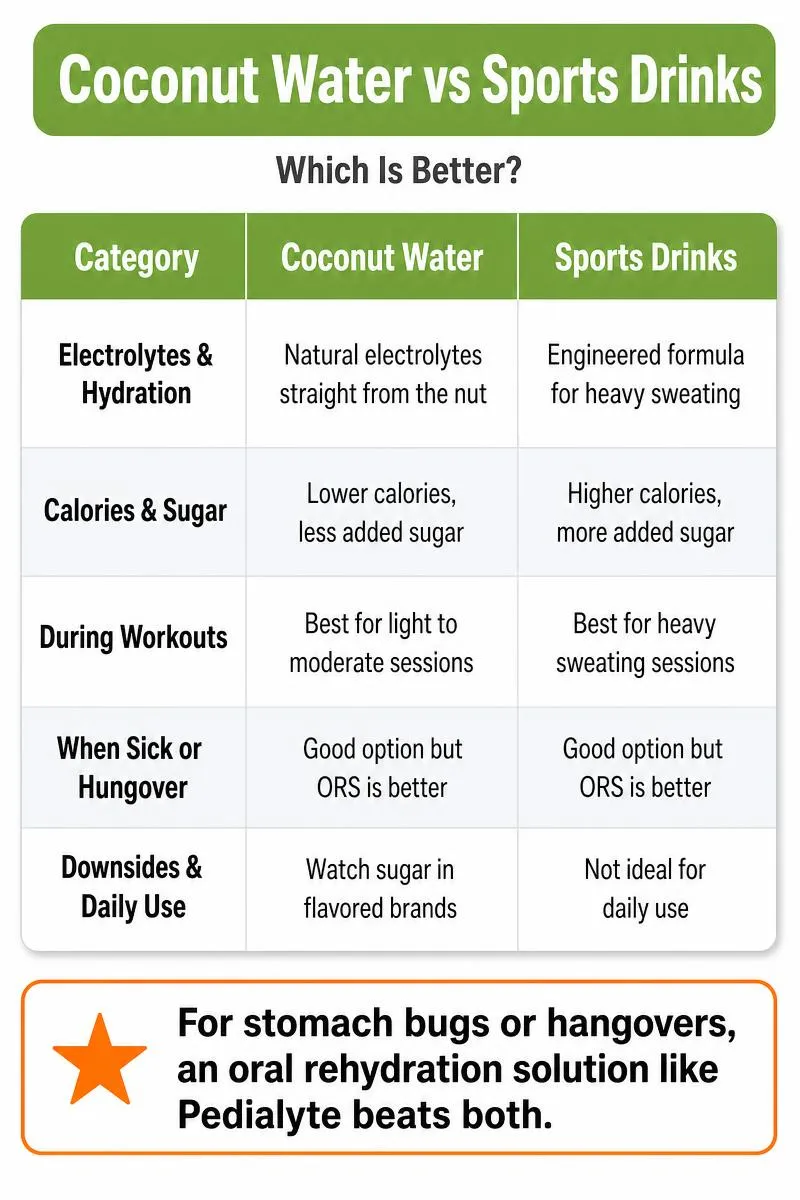
Quick Comparison: Coconut Water Vs Sports Drinks
| Category | Coconut Water | Sports Drinks |
|---|---|---|
| Electrolytes & Hydration | Natural electrolytes from the nut | Engineered for heavy sweating |
| Calories & Sugar | Lower calories, less added sugar | Higher calories, more added sugar |
| During Workouts | Best for light–moderate sessions | Best for heavy-sweat sessions |
| When Sick or Hungover | OK; ORS preferred | OK; ORS preferred |
| Downsides & Daily Use | Watch sugar in flavored brands | Not ideal for daily use |
What Is Coconut Water?
Coconut water is the clear liquid found inside young, green coconuts – not coconut milk, which is pressed from the flesh. You’ll find it sold plain or flavored, in bottles, cartons, and cans.
The strengths are straightforward. Coconut water delivers electrolytes, potassium chief among them, with mild sweetness from its built-in sugars. It also slots in easily as a stand-in for soda or juice.
Weaknesses matter too. The electrolyte balance was never built around sweat loss, and quality varies by brand: plain versions carry far less sugar than flavored ones. Best fit: light activity and everyday hydration.
What Are Sports Drinks?
Sports drinks are formulated beverages – Gatorade and Powerade lead the category – designed to replace fluid and electrolytes during exercise. Recipes target two things plain water doesn’t: sodium levels calibrated to sweat replacement, and sugar that doubles as fuel mid-effort.
Consistency is the selling point. Every bottle delivers the same electrolyte profile, so you know exactly what you’re replacing.
The weaknesses show up outside long sessions. Added sugar and additives serve no purpose when there’s no serious sweat to replace. Best fit: prolonged or high-intensity training, especially in heat.
With both contenders defined, the matchups below show where each drink wins.
1. Coconut Water vs Sports Drinks: Electrolytes and Hydration
Electrolytes are minerals – sodium and potassium among them – that carry electrical charges and run fluid balance, nerve signaling, and muscle contraction. Sweat drains both during exercise, and sodium leaves fastest. Replacing it keeps fluid in your body instead of letting it pass straight through, which is why sodium drives the debate.
Sports drinks handle the problem by formulation: sodium content calibrated to match sweat loss, batch after batch. Coconut water handles it by origin instead: potassium arrives built in, while sodium trails in much smaller amounts.
For light sweating, that potassium-heavy mix is plenty. For a shirt-soaking session, the sodium shortfall starts to show.
Bottom line: sports drinks win for heavy sweat; coconut water covers light to moderate hydration.
2. Coconut Water vs Sports Drinks: Calories and Sugar
Plain coconut water generally carries fewer calories and less sugar than a standard sports drink serving. Flavored coconut waters blur that line – some add enough sweetener to land closer to juice than water. Read the label rather than trusting the category.
Sports drink sugar isn’t pointless, though. During long efforts, your muscles burn through stored carbohydrates (glycogen), and the sugar in the bottle becomes quick fuel that helps hold pace late in a session. Outside long efforts, that same sugar is just sugar.
Bottom line: coconut water wins for calorie-conscious readers; the call flips when a long session turns sugar into fuel.
3. Coconut Water vs Sports Drinks: During Workouts
Most of the research here comes from small endurance cycling trials, and the findings haven’t settled. Evidence for coconut water as a true sports drink substitute stays limited – nobody should treat it as a proven equivalent for hard training.
Sorting sessions helps:
- Intense training in heat: earns a sports drink, because sweat loss and fuel demand climb together.
- Shorter, easier sessions: only call for topping up fluid – a standard gym visit or brisk walk drains water, not reserves, and coconut water covers the refill.
Bottom line: sports drinks suit long, intense work; coconut water suffices for everything shorter and easier.
4. Coconut Water vs Sports Drinks: When Sick or Hungover
Illness changes the math. A stomach bug strips fluid and electrolytes fast – sodium especially – while vomiting makes holding liquids down the real challenge. Alcohol causes its own version: it suppresses vasopressin, the hormone that tells your kidneys to conserve water, which is why a night of drinking leaves you dried out.
Neither contender was designed for this job. Oral rehydration solutions like Pedialyte were – they pair measured sodium with glucose, which the gut absorbs together, pulling water into the body efficiently.
That’s the same principle hospitals rely on for severe dehydration. Coconut water and sports drinks both beat drinking nothing, but neither matches the design.
Bottom line: neither wins – dedicated oral rehydration products handle sickness and hangovers better than both.
5. Coconut Water vs Sports Drinks: Downsides and Daily Use
Daily coconut water has caveats. The sugar counts even unsweetened – a daily bottle adds up like juice.
- Tracking sugar or calories: treat coconut water as a sweetened beverage, not water.
- Kidney conditions: talk to a doctor first, since the potassium load needs managing.
Sports drinks mirror the problem in reverse. Without a workout attached, their added sugar and additives behave like sugary soda – the formulation only makes sense against real sweat loss.
The thirty-day question gets a plain answer: a month of daily coconut water won’t transform your health in either direction. The realistic outcome is better hydration alongside more sugar than you planned, unless you account for it elsewhere in your diet.
Bottom line: neither deserves the default slot; plain water remains the baseline.
Worth Reading Next
Compares hydration profiles and electrolyte content of cactus water and coconut water, offering a useful…
Which Should You Choose?
- Endurance or heat: a sports drink. Its sodium and fuel match what long, sweaty sessions pull out of you.
- Gym visits or errands: coconut water. Fluids plus potassium, without sugar you didn’t earn.
- Stomach bug or hangover: an oral rehydration solution like Pedialyte. Both contenders fall short here.
- Cutting sugar: coconut water, moderated – plain versions, kept to modest servings.
- Desk-day thirst: plain water. Save both drinks for when they earn their sugar.
FAQs About Coconut Water and Sports Drinks
1. Is coconut water healthier than sports drinks like Gatorade or Powerade?
For everyday drinking, usually yes – mostly because plain coconut water typically carries less added sugar than either brand. The word “healthier” flips with the use case: during hard, sweaty training, a sports drink performs a job coconut water wasn’t built for.
2. Is coconut water or a sports drink better for replacing electrolytes?
Depends on the sweat. Heavy sweating favors a sports drink, since its sodium content is calibrated to sweat replacement. Coconut water brings potassium built in but comparatively little sodium, which suits lighter sessions better.
3. Are there downsides to drinking coconut water every day?
The main one is sugar. Even unsweetened, daily servings add calories and sugars that count like juice, and flavored brands push that number higher. People managing blood sugar or kidney conditions should watch portions – and check with a doctor if kidney issues are involved.
4. Is coconut water or a sports drink better when you’re sick?
Neither is ideal. An oral rehydration solution like Pedialyte is purpose-built for the fluid and sodium loss that comes with vomiting or diarrhea. Forced to pick between the two, a sports drink’s sodium gives it a slight edge – but both trail a dedicated rehydration product.
5. Is coconut water good for a hangover?
Partially. Coconut water rehydrates, and dehydration drives several hangover symptoms, so it can ease that portion. What it can’t fix is the poor sleep, inflammation, and irritated stomach behind the rest – for those, only time works.
6. Should you drink coconut water or Pedialyte?
Pedialyte when dehydration is real – sickness, heavy drinking, trouble keeping fluids down. Coconut water when the goal is ordinary hydration with some flavor. Pedialyte’s sodium-and-glucose formula exists specifically to restore fluid quickly; coconut water suits everyday sipping instead.
7. What organ is coconut water good for?
Some sources suggest benefits for the heart, largely credited to potassium’s role in blood pressure regulation – but the evidence is thin. Kidney claims circulate too, with similarly weak support. Treat organ-specific claims as speculation until stronger research arrives.
8. When is the best time to drink coconut water?
Whenever you’d otherwise reach for a sweet drink – it swaps cleanly in place of soda or juice. Shortly after light exercise is another sensible window, when you’re topping up fluid without major sodium losses to replace. Timing matters far less than consistency.
9. How much coconut water per day is reasonable?
A single serving a day is a sensible ceiling for most people, treated like juice rather than water. Days with real sweat loss can justify more; sedentary days argue for less.
Also Worth Checking Out
Breaks down different sugar types and glycemic effects – helpful for readers weighing added sugars in sports drinks…
Final Verdict
Sports drinks for serious sweat; coconut water for lighter sessions and everyday swaps. Illness and hangovers belong to neither – oral rehydration solutions like Pedialyte own that ground.
Before your next workout, flip your usual bottle around and read two lines on the label: sugar and sodium. That information settles the debate for your body better than any category comparison.
External References