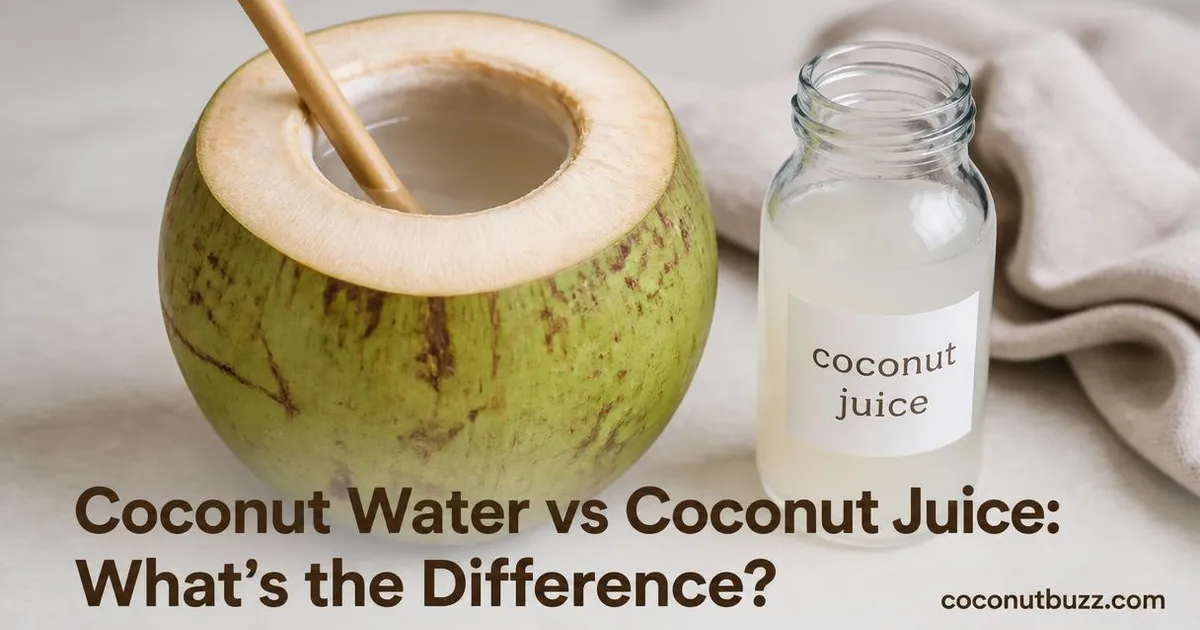
Coconut Water vs Coconut Juice: What’s the Difference?
Walk into any grocery store and you’ll see bottles labeled “coconut water” sitting next to cans labeled “coconut juice.” The labels look different, the packaging varies, and the prices don’t always match. So you’re left wondering if you’re missing something.
In most cases, coconut water and coconut juice are the exact same liquid from young green coconuts. The difference – when there is one – comes down to branding, additives, and marketing choices.
Key Takeaways
- Coconut water and coconut juice usually refer to the same clear liquid from young green coconuts – the terms are often interchangeable
- Some brands use “coconut juice” for products with added sweeteners, fruit blends, or flavoring, so the ingredient list matters more than the front label
- Both can support hydration thanks to naturally occurring electrolytes like potassium, but neither is a cure-all
- Daily consumption is generally safe for most people, though those with kidney disease or on blood pressure medication should check with a doctor
- The best choice depends on ingredient purity – not whether the package says “water” or “juice”
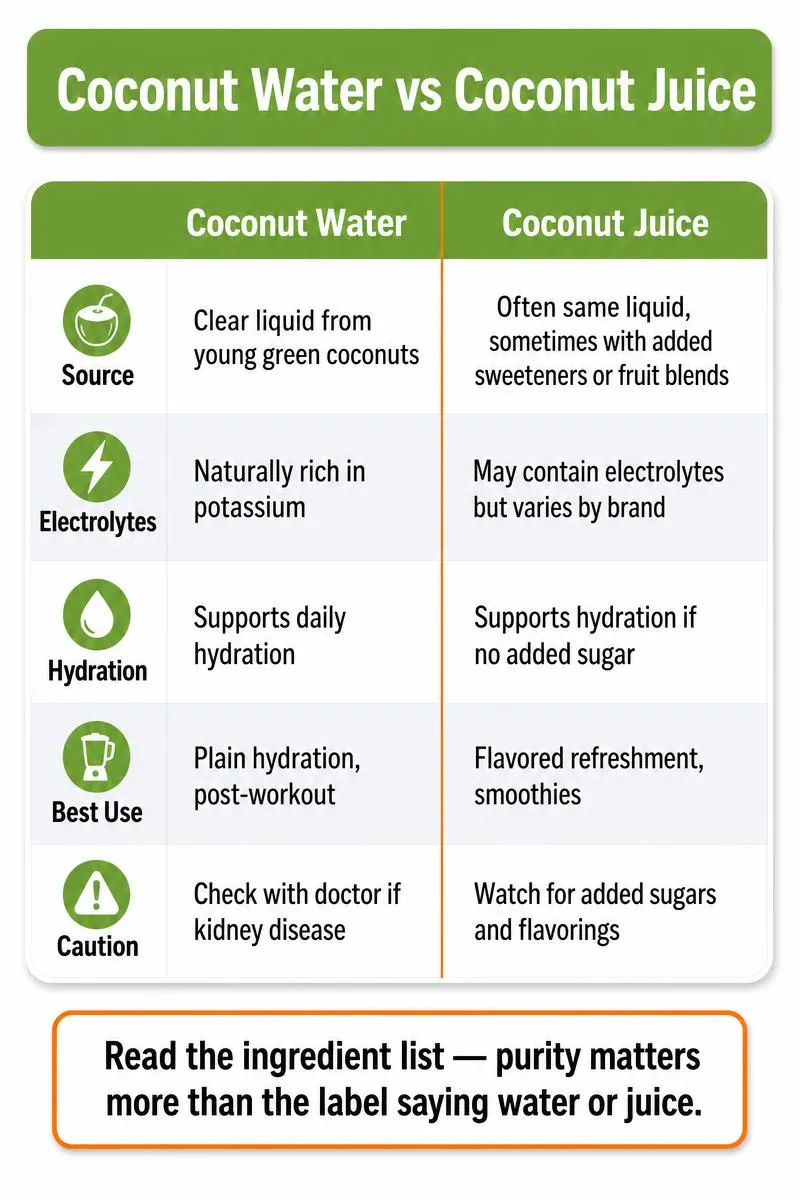
Coconut Water Vs Coconut Juice at a Glance
| Feature | Coconut Water | Coconut Juice |
|---|---|---|
| Source | Clear liquid from young green coconuts | Often same liquid; sometimes sweetened or fruit-blended |
| Electrolytes | Naturally rich in potassium | Varies by brand; may contain electrolytes |
| Hydration | Supports daily hydration | Supports hydration if unsweetened |
| Best Use | Plain hydration, post-workout | Flavored refreshment, smoothies |
| Caution | Check with doctor if kidney disease | Watch for added sugars and flavorings |
What Is Coconut Water?
Coconut water is the clear liquid found inside young green coconuts. It’s mildly sweet with a slightly nutty flavor, and it’s the liquid you’d hear sloshing around if you shook a fresh coconut.
Naturally, coconut water contains electrolytes like potassium, along with smaller amounts of sodium and magnesium. These minerals are why people reach for it after exercise or on hot days.
You’ll find coconut water sold in bottles, cans, cartons, or poured fresh from the shell at markets and juice bars. Pure coconut water goes through minimal processing – typically pasteurization to make it shelf-stable.
Strengths to know: Widely available, and in its pure form it contains no added sugar. The ingredient list reads as a single item.
Weaknesses to watch: Taste varies by brand and sourcing – some batches taste sweet and fresh, others taste flat or slightly sour. Some products labeled “coconut water” still add sugar or flavoring, so you have to check.
You Might Also Like
A focused list of the health and electrolyte benefits of coconut water that readers will want after learning what…
What Is Coconut Juice?
In most cases, coconut juice is the same liquid as coconut water – just sold under a different name. There’s no botanical or processing distinction between the two terms when you’re talking about the liquid inside a young green coconut.
That said, some sources suggest that “coconut juice” on a label may indicate added ingredients or different processing. A product labeled “coconut juice” is more likely to contain added sugar, fruit puree, or flavoring than one labeled “coconut water.” This isn’t a rule – it’s a pattern worth watching for.
Strengths to know: The terminology may appeal to consumers familiar with regional naming conventions, particularly in Asian markets where “coconut juice” is the standard term.
Weaknesses to watch: Inconsistent labeling creates genuine confusion. You might pick up “coconut juice” expecting pure coconut water and end up with a sweetened beverage instead.
Coconut Water vs Coconut Juice: What’s Actually in the Bottle
Both terms usually describe the same clear liquid from young coconuts. If there’s a meaningful difference, it shows up in the ingredient list – not in the name on the front.
Some packaged products labeled “coconut juice” contain added sugar, fruit concentrates, or natural flavoring. These additives change the calorie content and sweetness level. A product labeled “coconut water” is more likely – though not guaranteed – to be pure.
Flipping the package over tells you everything: if the ingredients say “coconut water” and nothing else, you’re getting the straight liquid. If the list includes sugar, fruit puree, or “natural flavors,” you’re getting a blend – regardless of what the front label calls it.
Winner: Neither name wins. The ingredient list matters more than the product name.
Coconut Water vs Coconut Juice: Hydration and Daily Use
Both coconut water and coconut juice are used for hydration. The liquid inside young coconuts contains potassium, sodium, and magnesium – electrolytes your body loses through sweat and urine. That electrolyte profile is why people reach for coconut water after exercise or during illness.
Can you drink it daily? For most people, yes. Pure coconut water works fine as a daily beverage, especially if you’re replacing something sweeter like soda or sports drinks. The main thing to watch is total potassium intake if you’re drinking large amounts regularly.
Morning versus night doesn’t matter much for most people. Some find the mild sweetness of coconut water makes a better morning drink, while others enjoy it as a light evening beverage. Neither timing changes the nutritional content.
Does it replace sports drinks? For light to moderate activity, pure coconut water can work as a hydration drink. For intense or prolonged exercise, commercial sports drinks are formulated with specific sodium-to-potassium ratios that coconut water doesn’t match exactly.
Winner: Tie for pure versions of either. Avoid products with added sugar – they undercut the hydration benefit.
Also Worth Checking Out
Nutritional value of coconut water
Detailed breakdown of macronutrients, electrolytes, and calories to complement the ‘what’s in the bottle’ comparison.
Coconut Water vs Coconut Juice: Side Effects and Cautions
Both coconut water and coconut juice carry the same cautions, since they’re typically the same product.
Frequent urination is one common effect. The potassium in coconut water acts as a mild diuretic, meaning you may pee more after drinking it. This is normal for most people, but it can be inconvenient if you’re drinking it right before bed.
For people experiencing diarrhea, coconut water may help with rehydration due to its electrolyte content. However, it shouldn’t replace oral rehydration solutions designed specifically for dehydration from illness. Coconut water has less sodium than medical rehydration products, so it may not fully replace what severe diarrhea depletes.
The most important caution involves potassium and kidney function. People with kidney disease process potassium differently, and consuming large amounts through coconut water could lead to dangerously high potassium levels. The same concern applies to people taking blood pressure medications – particularly ACE inhibitors and potassium-sparing diuretics – which can increase potassium retention.
Winner: Same cautions apply to both products. If you have a kidney condition or take blood pressure medication, talk to a doctor before making either a daily habit.
Coconut Water vs Coconut Juice: Taste and Best Uses
Pure versions of coconut water and coconut juice taste identical – because they’re the same liquid. Any taste difference comes from additives, processing methods, or the age and variety of coconuts used.
Flavored or sweetened “juice” products taste noticeably different from pure coconut water. Added sugar makes them sweeter, and fruit blends shift the flavor profile entirely. If you’re comparing a pure coconut water to a mango-coconut juice blend, you’re tasting two different beverages.
Best uses: Pure coconut water or juice works well for straight hydration, as a smoothie base, or in light cooking – particularly in Southeast Asian recipes that call for coconut liquid. Sweetened versions work better as mixers or as a standalone treat when you want something flavored.
Winner: Pure forms are interchangeable. Sweetened versions function more like flavored drinks than hydration beverages.
Which Should You Choose?
- You want the purest option: Look for 100% coconut water or juice with no additives. The ingredient list should have one item.
- You need post-workout hydration: Either works if unsweetened. Pure coconut water provides potassium and sodium to replenish what you lose through sweat.
- You have kidney disease or take blood pressure medication: Consult a doctor before drinking either regularly. The potassium content is the concern, not the name on the label.
- You see “coconut juice” on a label: Read the ingredients. Check for added sugar, fruit concentrates, or flavoring before assuming it’s pure.
- You want a bedtime drink: Either is fine in moderation. Some people find the diuretic effect of potassium makes nighttime urination more frequent, so morning may work better if you notice that pattern.
Also Worth Checking Out
An overview of probiotic and nutritional benefits for readers interested in other coconut-based beverages and how they…
FAQs About Coconut Water and Coconut Juice
Is coconut juice the same as coconut water?
In most cases, yes. Both terms refer to the clear liquid inside young green coconuts. The main exception is when a product labeled “coconut juice” contains added sugar or fruit blends – always check the ingredient list.
What is better, coconut water or juice?
Neither is inherently better. The name doesn’t determine quality – the ingredient list does. A pure product under either name is equivalent. A sweetened “juice” product is a different beverage entirely.
What are the downsides of coconut water, and when should you avoid it?
The main downside is potassium content, which matters for people with kidney disease or those taking blood pressure medications that affect potassium retention. Some products also add sugar, which turns a low-calorie hydrating drink into something closer to soda. Avoid it if your doctor has advised limiting potassium intake.
Can I drink coconut water if I have diarrhea?
It may help with mild rehydration because of its electrolyte content, but it shouldn’t replace oral rehydration solutions for moderate to severe diarrhea. Coconut water has less sodium than medical rehydration products, so it may not fully replace what your body is losing.
What happens if I start drinking coconut water every day?
For most people, daily coconut water is fine and may improve hydration habits – especially if it replaces sugary drinks. The main thing to watch is total potassium intake, particularly if you eat a potassium-rich diet or take medications that affect potassium levels.
Should I drink coconut water at night or morning?
Either timing works. Some people notice increased urination at night due to the mild diuretic effect of potassium, so morning may be more practical if that bothers you. The nutritional content doesn’t change based on when you drink it.
Why do I pee a lot after drinking coconut water?
Potassium acts as a mild diuretic, meaning it increases urine production. This is a normal response for most people. If the effect is disruptive, drink smaller amounts or shift your timing earlier in the day.
Is coconut juice hydrating?
Yes, pure coconut juice – same as coconut water – supports hydration because it contains potassium, sodium, and magnesium. Sweetened versions are less ideal for hydration because added sugar changes the fluid balance and calorie content.
What is the difference between coconut juice and coconut milk?
Coconut juice (or water) is the clear liquid inside young green coconuts. Coconut milk is made by grating the white flesh of mature coconuts and pressing it with water to extract a rich, creamy liquid high in fat. They’re completely different products with different nutritional profiles and uses.
Final Verdict
For most buyers, coconut water and coconut juice are the same product with different labels. What separates a good choice from a mediocre one isn’t the name – it’s what’s in the bottle.
The edge case: some products labeled “coconut juice” include added sweeteners, fruit concentrates, or flavoring. That doesn’t make them bad products, but it does make them different from pure coconut water.
Next time you’re in the store, flip the package over and read the ingredients before it goes in your cart. One ingredient means pure coconut water. Anything beyond that means you’re buying a blend – and you should know that before you drink it.
External References
- ACE Inhibitors – StatPearls – NCBI Bookshelf – NIH
- Negative findings for use of coconut water as an oral … – NIH
- Is coconut water ‘healthy’? – Osu
- Potassium – Health Professional Fact Sheet – NIH
- Research Progress in Coconut Water: A Review of Nutritional … – NIH
- ORS vs. Coconut Water vs. Electrolyte Drinks – 1mg