
Coconut Nutrition: 5 Health Benefits Explained
Coconut gets labeled as everything from miracle food to health risk. The truth sits somewhere in between, and it depends on how you eat it.
Whole coconut, meaning the actual flesh, delivers manganese, fiber, and sustained energy from natural fats. Processed coconut oil strips out that fiber and becomes a different product altogether. Which form you choose decides most of what coconut does for you.
Key Takeaways
- Whole coconut retains fiber and minerals that processed coconut oil strips out.
- Its high fiber content slows sugar absorption, which helps keep blood sugar steadier after meals.
- The saturated fat is significant enough to track if you monitor heart health or cholesterol.
- It fits most eating patterns, from paleo to dairy-free, with almost no prep.
- Anyone with a tree nut allergy should test tolerance first with a small amount.
Related Reading
Nutritional value of coconut water
A detailed breakdown of coconut water’s vitamins, minerals, and electrolyte content that complements the broader…
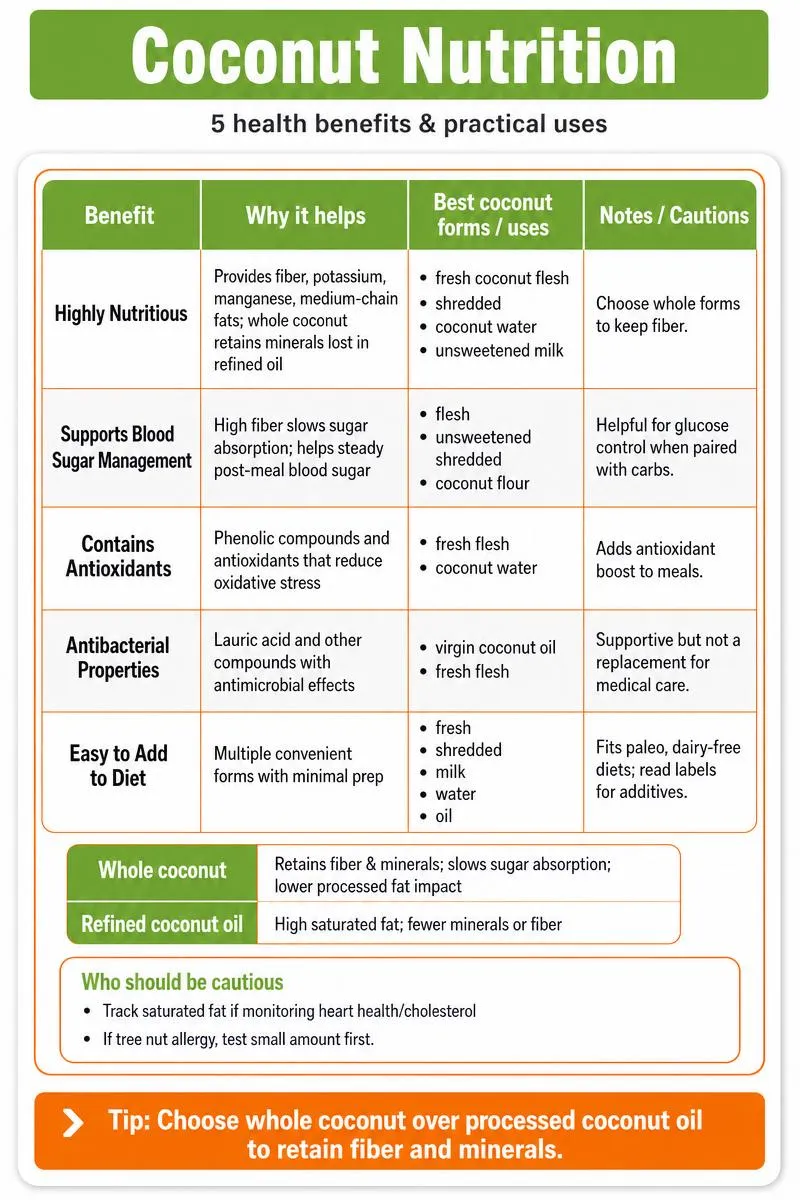
Coconut Nutrition And Benefits Quick Comparison
| Benefit | Why it helps | Best coconut forms / uses | Notes / Cautions |
|---|---|---|---|
| Highly Nutritious | Provides fiber, potassium, manganese, medium‑chain fats | Fresh flesh, shredded, coconut water, unsweetened milk | Choose whole forms to keep fiber |
| Supports Blood Sugar Management | High fiber slows sugar absorption; steadies post‑meal blood sugar | Flesh, unsweetened shredded, coconut flour | Helpful for glucose control when paired with carbs |
| Contains Antioxidants | Phenolic compounds that reduce oxidative stress | Fresh flesh, coconut water | Adds an antioxidant boost |
| Antibacterial Properties | Lauric acid and compounds with antimicrobial effects | Virgin coconut oil, fresh flesh | Supportive; not a replacement for medical care |
| Easy to Add to Diet | Multiple convenient forms with minimal prep | Fresh, shredded, milk, water, oil | Fits paleo & dairy‑free diets; read labels for additives |
What Is Coconut?
Coconut is the fruit of the coconut palm. The entire thing gets used, but not all forms are equal.
- Whole coconut flesh keeps its natural ratio of fiber, water, fat, and minerals.
- Coconut oil isolates only the fat, removing the fiber and most water-soluble nutrients.
- Coconut water retains the electrolytes but loses the fat and fiber.
- Coconut milk thins the nutrient concentration by blending flesh with water, though it keeps some fiber.
Fresh coconut is available whole or pre-cut, and dried coconut comes as flakes, shreds, or chips. Nutrient density varies by form. Packaged versions often hide added sugar, so check the label before buying.
Related Reading
What you can use coconut oil for
Practical applications and uses for coconut oil that help readers understand how to incorporate coconut products into…
5 Health Benefits of Coconut
Each benefit below applies to whole coconut flesh or unsweetened dried coconut. Coconut oil on its own delivers only a fraction of these effects.
1. Highly Nutritious
Coconut delivers manganese for bone health and metabolism, copper for better iron absorption, and iron itself. The natural fat provides steady energy without the crash that follows refined carbohydrates.
The fiber in whole coconut makes the biggest difference nutritionally. A tablespoon of coconut oil gives you none of it. Only the actual flesh or unsweetened dried coconut does.
2. Supports Blood Sugar Management
That fiber steadies blood sugar by slowing how quickly glucose enters your bloodstream. This makes coconut a lower-glycemic choice than refined grains or packaged snacks.
For anyone tracking carbs or managing glucose, that effect matters more than any marketing claim.
3. Contains Antioxidants
Coconut contains phenolic compounds that combat oxidative stress. Fresh, minimally processed coconut holds more of them than heavily processed versions.
Expect modest cellular support, not a dramatic health fix.
4. Antibacterial Properties
Lauric acid, a major fat in coconut, may fight certain bacteria and viruses, according to early research. That potential drives the interest in oil pulling for oral health and topical skin use.
The evidence is still preliminary. Treat it as a possible bonus and keep your prescribed treatments in place.
5. Easy to Add to Your Diet
Coconut works in smoothies, curries, desserts, and straight as a snack. Fresh chunks blend into creamy bases, and dried flakes add texture to oatmeal or yogurt.
It also requires no special prep for paleo, gluten-free, or dairy-free eating.
Related Reading
A comprehensive guide covering the specific health benefits of coconut oil, directly expanding on one of the most…
How to Use Coconut
- Fresh flesh works as chunks for snacking, blended into smoothies, or grated into dishes. Refrigerate any leftovers so they keep longer.
- Dried flakes top breakfast bowls, baked goods, or salads. Choose unsweetened varieties to avoid unnecessary added sugar.
- Coconut milk goes into curries, soups, or coffee as a creamer. Shake the can first so the cream and liquid combine.
Start small and adjust to your digestion and taste as you go.
Related Reading
An exploration of coconut milk’s nutritional profile and health benefits, offering readers another way to incorporate…
Who Should Be Cautious
- People with tree nut allergies should test with a small amount first. Coconut is not a true tree nut, but it still triggers reactions in some.
- Anyone limiting saturated fat for heart health should count coconut toward that daily total, because the saturated fat content is significant.
- Anyone watching calories should be careful with dried flakes. They pack concentrated calories into small volumes, which makes overeating easy.
FAQs
Is it healthy to eat coconut every day?
Yes, for most people, especially in whole form where the fiber stays intact. Just factor the saturated fat into your overall daily intake.
How much coconut should you eat daily?
A small handful of dried flakes or a few fresh chunks fits most diets. There is no magic number, so match portions to your calorie needs and fat goals.
What are the disadvantages of eating coconut?
The high saturated fat is the main concern for heart health, and the calorie density makes overeating easy. Some people also experience digestive discomfort from the fiber.
Is coconut good for your heart?
The saturated fat makes this a fair question, and the research is genuinely mixed. If you already limit saturated fat elsewhere, moderate portions fit most diets. If heart disease runs in your family or you manage high cholesterol, ask your doctor before making it a habit.
What is the best time to eat coconut?
Anytime works. Some people prefer it midday for steady energy, or after a workout for the natural electrolytes. Your overall daily intake matters more than timing.
When should you avoid eating coconut?
Skip it before surgery, since some surgeons advise limiting saturated fat beforehand. Avoid it entirely if you have a known coconut allergy. The same goes if your doctor has you on a strict low-saturated-fat diet for heart reasons.
Final Thoughts
Coconut earns its place when you eat the whole food rather than processed portions of it. The fiber, minerals, and steady energy make it useful. The saturated fat and calorie density mean portion awareness matters.
Pick up unsweetened dried flakes or a fresh coconut on your next grocery run and work it into one meal this week.