
15 Uses for Coconut Oil
You open a jar of coconut oil and wonder how many ways you can actually use it beyond the obvious ones. The answer sits somewhere between “moisture barrier for dry skin” and “wood polish” – more versatile than most single-ingredient products, but not the miracle fix for every surface, every meal, or every skin type.
Some jobs coconut oil handles better than alternatives. Others require caution, especially if you’re acne-prone or watching saturated fat intake.
Key Takeaways
- Coconut oil works across skin care, hair care, cooking, and household tasks, but refined versions suit high-heat cooking while virgin or unrefined versions are preferred for topical use.
- Medium-chain fatty acids may support cholesterol profiles and provide quick energy, though the evidence remains debated among cardiologists.
- Acne-prone or very oily skin should avoid facial application due to its comedogenic rating; coconut oil can also stain fabrics and degrade latex.
- Lauric acid provides antibacterial and antifungal properties with practical applications.
- Start with small amounts for skin and hair to test tolerance, and skip it entirely if you have a coconut allergy or specific dermatological conditions.
Worth Reading Next
A practical comparison of coconut oil and avocado oil for cooking, smoke point, and culinary uses.
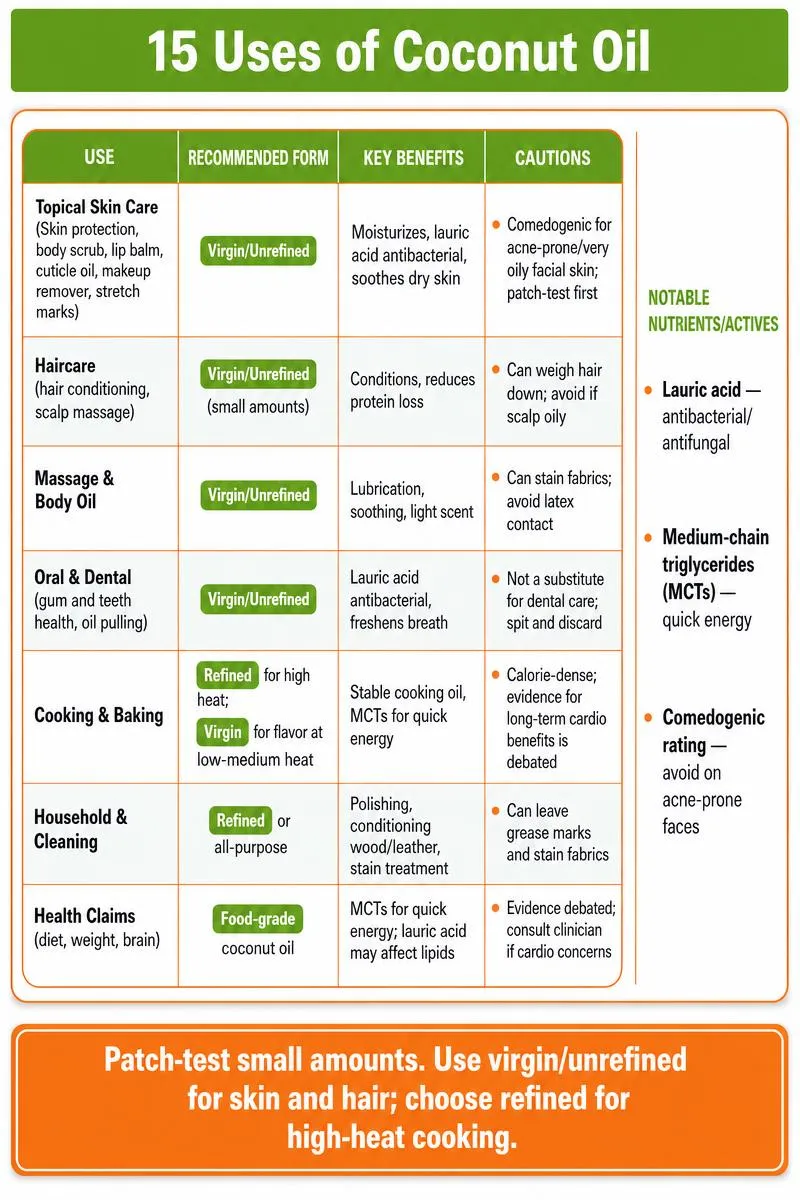
What Can You Use Coconut Oil For Side-by-Side
| Use | Recommended Form | Key Benefits | Cautions |
|---|---|---|---|
| Topical Skin Care (Skin protection, body scrub, lip balm, cuticle oil, makeup remover, stretch marks) | Virgin/Unrefined | Moisturizes, lauric acid antibacterial, soothes dry skin | Comedogenic for acne-prone/very oily facial skin; patch-test first |
| Haircare (hair conditioning, scalp massage) | Virgin/Unrefined (small amounts) | Conditions, reduces protein loss | Can weigh hair down; avoid if scalp oily |
| Massage & Body Oil | Virgin/Unrefined | Lubrication, soothing, light scent | Can stain fabrics; avoid latex contact |
| Oral & Dental (gum and teeth health, oil pulling) | Virgin/Unrefined | Lauric acid antibacterial, freshens breath | Not a substitute for dental care; spit and discard |
| Cooking & Baking | Refined for high heat; Virgin for flavor at low-medium heat | Stable cooking oil, MCTs for quick energy | Calorie-dense; evidence for long-term cardio benefits is debated |
| Household & Cleaning | Refined or all-purpose | Polishing, conditioning wood/leather, stain treatment | Can leave grease marks and stain fabrics |
| Health Claims (diet, weight, brain) | Food-grade coconut oil | MCTs for quick energy; lauric acid may affect lipids | Evidence debated; consult clinician if cardio concerns |
15 Uses for Coconut Oil
Here is where coconut oil genuinely earns its shelf space – and where you should think twice.
1. Skin Protection and Care
Coconut oil forms an occlusive barrier that traps moisture in the skin, making it effective for people with dry or flaky patches. The lauric acid it contains also offers mild antimicrobial effects, which may help with minor irritation.
Virgin or unrefined coconut oil retains more of its natural aroma and nutrient profile, so it’s the better pick for topical use. Refined coconut oil loses some of that but remains stable and odor-neutral if you prefer no scent.
People with normal to dry skin see the most benefit. Those with oily or acne-prone skin should skip facial application – coconut oil can clog pores.
2. Body Scrub and Body Oil
Mix coconut oil with coarse sugar, sea salt, or coffee grounds to create a homemade exfoliant. The oil moisturizes while the granules slough off dead skin, and the whole thing rinses clean in the shower.
Used straight, coconut oil works as a post-shower body oil. Apply it to damp skin so it seals in water, then give it a minute to absorb before dressing to avoid transferring grease to fabric.
3. Massage Oil
Coconut oil melts at body temperature, which gives it a smooth glide for massage. Warm the jar in a bowl of hot water if you want it liquid before application.
Run a patch test on the inner forearm before using it on larger areas. Some people develop contact sensitivity, especially if they have existing skin conditions or allergies.
4. Lip Balm
Coconut oil softens chapped lips by filling in cracks and preventing moisture loss. Dab a small amount on your lips whenever they feel tight or dry.
Reapply frequently in cold or windy weather, since it doesn’t last as long as wax-based balms. Keep a small container in your bag or pocket for easy access.
5. Antibacterial and Antifungal Support
Lauric acid makes up a substantial portion of the fatty acid content in coconut oil, and lab studies indicate it may disrupt the lipid membranes of certain bacteria and fungi. This makes coconut oil a candidate for managing minor skin infections, athlete’s foot, or yeast overgrowth.
Practical applications include applying it to small cuts, rashes, or fungal patches on the skin. The effect is mild compared to prescription antifungals, so persistent or severe infections still need medical treatment.
6. Cuticle Oil
Rub a small amount of coconut oil into the skin around your nails to soften cuticles and prevent hangnails. The oil hydrates the thin skin without leaving a sticky residue.
Use it nightly before bed or after washing dishes. Coconut oil absorbs faster than thicker oils like castor or olive, so it’s a practical choice if you need to type or handle objects shortly after application.
7. Haircare
Coconut oil penetrates the hair shaft better than most oils, thanks to its lauric acid content and fatty acid structure. This makes it effective for deep conditioning masks, frizz control, and scalp hydration.
Hair types that respond well include thick, coarse, or curly textures. Fine or oily hair can end up looking greasy, so limit application to the ends or skip it entirely.
Apply the oil to dry hair, leave it on for a substantial amount of time, then shampoo twice to remove all residue. Leftover oil weighs hair down and attracts dirt.
8. Gum and Teeth Health
Oil pulling involves swishing coconut oil in your mouth for several minutes, then spitting it out. Proponents claim it reduces harmful bacteria, freshens breath, and supports gum health.
Lauric acid does show antimicrobial activity against Streptococcus mutans and other oral bacteria in lab studies. Real-world effects are harder to measure, and oil pulling doesn’t replace brushing or flossing.
Start with a teaspoon and work up to a tablespoon if the texture feels manageable. Spit into the trash, not the sink – solidified oil can clog pipes.
9. Makeup Remover
Coconut oil breaks down long-wear foundation, mascara, and waterproof eyeliner by dissolving the oils and waxes that bind pigments to skin. Massage a small amount onto dry skin, then wipe away with a damp cloth.
Avoid getting it directly in your eyes, since it can blur vision temporarily. Follow up with a gentle cleanser to remove any oily residue, especially if you’re prone to breakouts.
10. Stretch Marks
Coconut oil won’t erase stretch marks, but keeping skin moisturized may reduce their visibility over time. The oil’s occlusive properties help skin stay supple, which some people find useful during pregnancy or weight changes.
Apply it daily to areas like the abdomen, thighs, or hips. Pair it with gentle massage to improve absorption and circulation.
11. Deodorant
Coconut oil serves as the base in many DIY deodorant recipes, combined with baking soda or arrowroot starch to absorb moisture and cornstarch to reduce friction. Its antibacterial properties target odor-causing bacteria.
Skin sensitivity varies widely. Baking soda can irritate some people, so start with a small test batch and watch for redness or itching.
Store homemade deodorant in a cool place to keep it solid. If it melts in warm weather, it still works – just apply with your fingers instead of a stick.
12. Cooking
Refined coconut oil has a high smoke point, making it suitable for sautéing, roasting, and baking. It stays stable at high heat better than many polyunsaturated oils.
Virgin coconut oil has a lower smoke point and a distinct coconut flavor. Use it in dishes where that taste fits – curries, stir-fries, or baked goods with chocolate or tropical fruit.
Both versions contain medium-chain triglycerides, which the liver converts to energy more quickly than long-chain fats. This makes coconut oil popular in ketogenic and low-carb diets, though calorie density remains high.
13. Household Cleaning and Care
Coconut oil conditions wood furniture and cutting boards by filling in micro-cracks and restoring moisture. Rub a thin layer onto the surface, let it sit for a few minutes, then buff with a soft cloth.
It also removes sticky residue from labels, gum, or tape. Apply a small amount, let it sit, then wipe clean. The oil dissolves adhesive without harsh solvents.
Use it sparingly as a light lubricant for squeaky hinges or stuck zippers. Avoid porous fabrics or materials that stain easily, since coconut oil leaves an oily mark.
14. Healthy Dieting and Weight Management
People add coconut oil to coffee, smoothies, or meals as a source of quick energy, relying on the medium-chain triglycerides to fuel workouts or support fat adaptation. Some claim it helps with appetite control, though evidence is mixed.
Calorie density matters. Coconut oil contains substantial calories per serving, so adding large amounts without adjusting the rest of your diet can lead to weight gain.
If you’re experimenting with it for weight management, measure portions and track how you feel. The effect varies widely depending on overall diet composition and activity level.
15. Brain Health
The ketone connection centers on medium-chain triglycerides converting to ketone bodies, which the brain can use as an alternative fuel source to glucose. Some researchers explore this for cognitive decline and neurodegenerative conditions.
Evidence remains early and debated. Some evidence suggests potential benefits, but coconut oil has not been confirmed as a reliable intervention for brain health.
If you’re considering it for cognitive support, discuss it with a healthcare provider first. Don’t use it as a substitute for established treatments.
What Not to Use Coconut Oil For
Coconut oil can clog pores easily. Skip facial application if you have acne-prone or very oily skin – it’s likely to trigger breakouts rather than help.
It degrades latex, so don’t use it with latex condoms or gloves. Choose a water-based or silicone-based lubricant instead if compatibility matters.
High-volume dietary use raises concerns among some cardiologists due to its saturated fat content. Coconut oil is high in saturated fat, including lauric acid, which may raise LDL cholesterol in certain people. Moderation matters, especially if you have existing heart disease or elevated cholesterol.
Coconut oil stains fabrics and doesn’t wash out easily. Avoid applying it right before getting dressed, and keep it away from upholstery or bedding.
Skip it entirely if you have a coconut allergy or specific dermatological conditions where occlusive products are not recommended.
Also Worth Checking Out
A deep dive into using coconut oil versus vaseline for skin care, including when to choose one over the other.
Coconut Oil vs Vaseline for Skin
Both coconut oil and Vaseline function as occlusives, sealing moisture into the skin by forming a barrier on the surface. Vaseline uses petroleum jelly to create an impermeable layer, while coconut oil relies on its fatty acid composition to trap water.
Coconut oil wins when you want natural conditioning, a pleasant scent, and additional fatty acids like lauric acid. It absorbs better than Vaseline and doesn’t leave as heavy a finish.
Vaseline is preferable for non-comedogenic protection, wound care, and severely compromised skin barriers. It is commonly used for eczema, diaper rash, and post-procedure healing because it doesn’t irritate or clog pores the way coconut oil can. It also costs less and lasts longer on the shelf.
FAQs About Coconut Oil
What should you not use coconut oil for?
Avoid using coconut oil on acne-prone or very oily facial skin due to its tendency to clog pores. Don’t use it with latex condoms or gloves, since it degrades the material. Skip high-volume dietary use without considering saturated fat intake if you have heart disease or elevated cholesterol. Keep it away from fabrics and upholstery since it stains easily.
Is eating a spoonful of coconut oil good for you?
A spoonful provides medium-chain triglycerides, which convert to quick energy, but it also adds saturated fat and calories. Some people use it for energy or ketone production, though large amounts may raise LDL cholesterol in certain individuals. Moderation matters, especially if you’re watching heart health.
What does rubbing coconut oil on your body do?
Rubbing coconut oil on your body creates an occlusive barrier that locks in moisture, making skin feel softer and smoother. Lauric acid provides mild antibacterial and antifungal effects. People with dry or normal skin benefit most, while oily or acne-prone skin may experience clogged pores.
Which is better for your skin, coconut oil or Vaseline?
Coconut oil offers natural conditioning, a pleasant scent, and additional fatty acids like lauric acid, but it can clog pores. Vaseline is non-comedogenic, protects wounds better, and works well for severely compromised skin barriers. Choose coconut oil for light hydration and Vaseline for intensive barrier repair.
Why do cardiologists say to avoid coconut oil?
Coconut oil is high in saturated fat, including lauric acid, which may raise LDL cholesterol in some people. Cardiologists worry about increased cardiovascular risk, especially for those with existing heart disease or high cholesterol. Evidence is mixed, and effects vary by individual.
Can coconut oil reduce wrinkles?
Coconut oil moisturizes skin and may temporarily plump fine lines by hydrating the surface, but it doesn’t reverse wrinkles or stimulate collagen production. For anti-aging results, look for retinoids, peptides, or vitamin C serums. Coconut oil serves as a basic moisturizer, not an anti-wrinkle treatment.
Related Reading
A focused comparison for readers interested in hair and skin care alternatives to coconut oil.
Final Thoughts
Coconut oil earns its reputation as a multi-use household item when matched to the right job and the right person. Start with small amounts for skin and hair to test tolerance, choose refined for high-heat cooking, and skip it entirely if you’re prone to breakouts or have specific health concerns. Match it to the right job and it earns its shelf space.
External References
- Ingredient spotlight: Coconut oil for the skin – Curology
- Is Coconut Oil Good for Your Face? Benefits and Risks. – Advanceddermatologypc
- Trimming the Fat on Diet Recommendations for a Healthy Heart – American Heart Association
- Antimicrobial Activity of Coconut Oil and its Derivative … – Semanticscholar
- Antimicrobial Potential of Cocos nucifera (Coconut) Oil on … – NIH
- Medium Chain Triglycerides induce mild ketosis and may … – NIH