
7 Benefits of Coconut Cream for Cooking and Health
Coconut cream is worth keeping in your pantry if you cook dairy-free, want richer textures in soups and curries, or occasionally use it for skin and hair treatments. It is not a health product to consume freely, and it will not transform your diet or skin overnight. Think of it as a tool that does specific jobs well: adding body to sauces, replacing heavy cream in baking, and providing occasional moisturizing benefits.
The confusion around coconut cream usually comes from its name. It is not the liquid inside a coconut (that is coconut water), nor is it the same as coconut milk. It is the thick, fatty layer that rises to the top when coconut milk sits, with a consistency closer to heavy whipping cream. That high fat content is what makes it useful and what also requires moderation.
This article covers seven practical benefits of coconut cream across cooking, nutrition, and personal care. You will learn what it actually does, where the evidence is solid versus speculative, and how to use it without overcomplicating your routine.
Key Takeaways
- Versatile dairy substitute with rich texture for cooking, baking, and coffee
- High saturated fat content means moderation matters for daily consumption
- Skincare applications work because fatty acids create a moisture barrier on the skin surface
- Canned coconut cream has a long shelf life, so it stays pantry-ready for occasional use
- Despite coconut’s popularity in wellness circles, this is not a health food
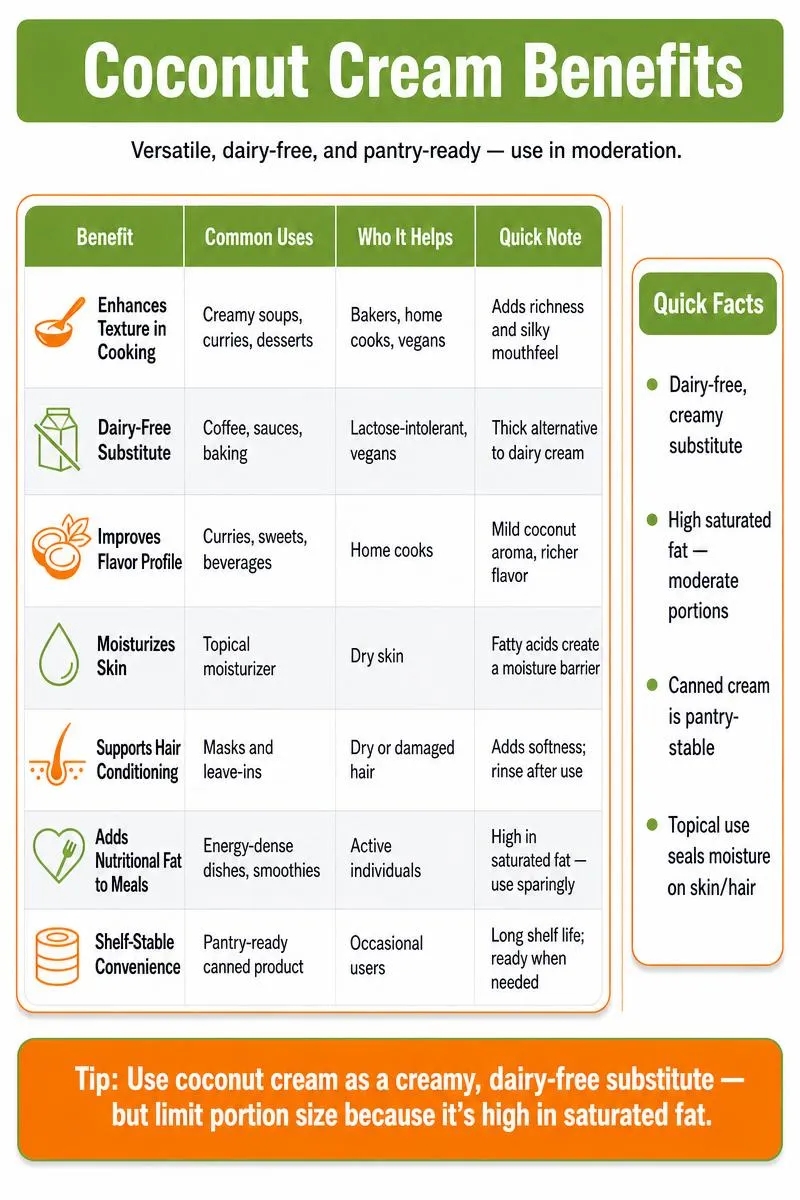
Benefits Of Coconut Cream Quick Comparison
| Benefit | Common Uses | Who It Helps | Quick Note |
|---|---|---|---|
| Enhances Texture in Cooking | Creamy soups, curries, desserts | Bakers, home cooks, vegans | Adds richness and silky mouthfeel |
| Dairy-Free Substitute | Coffee, sauces, baking | Lactose-intolerant, vegans | Thick alternative to dairy cream |
| Improves Flavor Profile | Curries, sweets, beverages | Home cooks | Mild coconut aroma, richer flavor |
| Moisturizes Skin | Topical moisturizer | Dry skin | Fatty acids create a moisture barrier |
| Supports Hair Conditioning | Masks and leave-ins | Dry or damaged hair | Adds softness; rinse after use |
| Adds Nutritional Fat to Meals | Energy-dense dishes, smoothies | Active individuals | High in saturated fat — use sparingly |
| Shelf-Stable Convenience | Pantry-ready canned product | Occasional users | Long shelf life; ready when needed |
What Is Coconut Cream?
Coconut cream is the thick, concentrated product made from simmering coconut flesh in water and straining it. The first pressing yields coconut milk. When that milk sits, the fattier cream rises to the top.
Manufacturers can also make coconut cream directly by using less water in the initial extraction, resulting in a product with higher fat content than standard coconut milk. You will find it canned or in cartons near the coconut milk in most grocery stores. Canned versions tend to be thicker and more stable for cooking.
Some brands contain only coconut and water. Others add stabilizers like guar gum to prevent separation. Check the label if you prefer fewer ingredients.
The consistency varies significantly by brand. Some coconut cream is spoonable and thick, almost like yogurt. Others are pourable but still richer than coconut milk.
For cooking purposes, the thicker versions work better when you need body and richness. The thinner ones work fine for coffee or smoothies.
Related Reading
Where to buy organic coconut milk and options for using coconut milk/cream as a substitute in recipes and sauces.
7 Benefits of Coconut Cream
These seven benefits fall into three categories: cooking applications, dietary uses, and personal care. Some have solid practical backing. Others have limited research but consistent anecdotal use.
1. Enhances Texture in Cooking
Coconut cream adds richness and body to curries, soups, and sauces without dairy. The high fat content helps emulsify ingredients smoothly, creating a mouthfeel similar to heavy cream. It also holds up better than coconut milk under high heat, reducing the chance of separation when simmering for extended periods.
Chefs use it specifically for creamy dishes where dairy is not an option. Thai and Southeast Asian cuisines have used it this way for generations. You can also use it to finish pan sauces, giving them a glossy sheen and velvety consistency.
2. Dairy-Free Substitute
Coconut cream works as a replacement for heavy cream in coffee, baking, and whipped toppings. People following vegan or lactose-intolerant diets use it for frostings, mousses, and creamy pasta sauces. The fat content whips like dairy cream, though the coconut flavor comes through.
Some sources suggest it digests more easily for people with sensitive stomachs, though this varies by individual. If you struggle with both dairy and nut-based alternatives, coconut cream offers another option. It is technically a fruit product rather than a true tree nut.
3. Improves Flavor Profile
Coconut cream adds a subtle tropical aroma and taste to dishes. In savory cooking, this flavor balances spicy and acidic ingredients. The natural fat rounds out sharp edges from chili, lime, or tamarind.
In desserts, the gentle sweetness reduces the need for added sugar. Bakers use it to infuse coconut flavor without the texture of shredded coconut. It also carries other flavors well, making it a good base for infused creams with vanilla, cardamom, or citrus.
4. Moisturizes Skin
The fatty acids in coconut cream may hydrate and soften skin when used in DIY masks and body treatments. The thick consistency creates a protective barrier that locks in moisture. Unlike lighter lotions that absorb quickly, coconut cream sits on the skin surface longer.
People use it on elbows, heels, and hands before bed. Some mix it with essential oils or other ingredients for customized treatments. The research on topical coconut products focuses more on coconut oil, but the same fatty acid profile applies to coconut cream.
5. Supports Hair Conditioning
Some sources suggest coconut cream smooths frizz and adds shine to hair. The fatty acids coat the hair shaft, temporarily sealing the cuticle and reducing flyaways. It works as a pre-wash treatment for dry or damaged hair: apply to lengths and ends before showering, then shampoo as normal.
It rinses cleaner than heavier oils like castor or olive oil, making it easier to wash out without multiple shampoo rounds. People with coarse or curly hair report better results than those with fine hair, who may find it weighs down their strands.
6. Adds Nutritional Fat to Meals
Coconut cream provides calories and fat for energy, which matters if you follow a high-fat diet. It contains lauric acid, a medium-chain fatty acid that some research suggests may have antimicrobial properties. This makes it useful when you want the benefits of coconut fat but do not have fresh coconut available.
Athletes and people on ketogenic diets sometimes use it in smoothies or coffee to increase fat intake. It offers a more neutral flavor than MCT oil and more substance than butter or ghee alone.
7. Shelf-Stable Convenience
Canned coconut cream stores for months unrefrigerated, making it easy to keep on hand for impromptu cooking. Unlike fresh dairy cream, which spoils within days of opening, coconut cream reduces spoilage pressure significantly. This makes it practical for pantry stocking and emergency meal preparation.
You can buy several cans and use them as needed without rushing to finish them before they spoil. Once opened, transfer to an airtight container and refrigerate. The unopened shelf life is what limits waste.
How to Use It
Shake or stir canned coconut cream before opening. The fat separates during storage, leaving a thick layer on top and watery liquid below. Some people refrigerate the can first, then scoop out just the solid cream for whipping.
Start with small amounts. The high fat content means a little goes far in recipes, and you can always add more. Check ingredient labels if you have preferences about additives: the best quality coconut cream contains only coconut and water.
Related Reading
How coconut butter compares as a creamy, high-fat coconut ingredient useful in cooking, baking, and dairy-free recipes.
Who Should Be Cautious
- People monitoring saturated fat for heart health should use coconut cream sparingly, as regular consumption may raise LDL cholesterol in some individuals.
- Those with tree nut allergies should approach coconut products carefully. Coconut is technically a fruit, not a true nut, but cross-reactivity occurs in some people. Consult an allergist if you have severe nut allergies.
- Anyone tracking calories should note that coconut cream is calorie-dense. Measure rather than eyeballing if you are managing weight or macros.
Related Reading
A closer look at coconut yogurt as a dairy-free, probiotic-rich option that pairs well with coconut cream in desserts…
FAQs
Is it okay to eat coconut cream every day?
Moderation matters more than frequency. Daily small amounts are fine for most healthy people. Large daily portions may impact cholesterol and calorie intake, so treat it like any high-fat food: useful in context, problematic in excess.
Is coconut cream healthier than dairy cream?
It depends on your dietary priorities. Coconut cream contains no lactose and no cholesterol, which benefits specific groups. That said, it contains more saturated fat than heavy cream. For heart health, dairy cream has more research supporting moderate use. For dairy-free needs, coconut cream is a practical alternative, not necessarily a superior one.
Which is better: coconut milk or coconut cream?
Use coconut cream when you need richness, thickness, or whipping capability. Use coconut milk when you want coconut flavor without heaviness, such as in lighter soups, smoothies, or as a milk substitute. They are the same product at different concentrations.
Is coconut cream bad for your heart?
It is not inherently bad, but it is not heart-protective either. The saturated fat content means it can raise LDL cholesterol in some people when consumed regularly. If you have heart disease risk factors, limit use and consult your doctor about saturated fat intake.
Can coconut cream help with weight loss?
No direct evidence supports this claim. While some people include it in high-fat diets for weight management, the cream itself does not cause weight loss. Its high calorie density can actually hinder weight loss if portions are not controlled.
How do you store coconut cream after opening?
Transfer to an airtight container and refrigerate. Use within a few days for best quality. You can also freeze in ice cube trays for longer storage, though the texture may change slightly when thawed.
Is organic coconut cream worth buying?
Organic certification ensures the coconuts were grown without synthetic pesticides. The nutritional profile remains similar between organic and conventional versions. Whether the difference matters depends on your priorities and budget.
Final Thoughts
Coconut cream earns its place in a well-stocked pantry because it solves real problems: it adds richness to dairy-free cooking, stabilizes sauces that would otherwise break, and works as an occasional skin and hair treatment. The saturated fat content keeps it in the “use thoughtfully” category rather than the “eat freely” one.
Try swapping it into one recipe where you normally use heavy cream, such as a curry or a soup. The texture will tell you immediately whether it fits your cooking style.
External References