

6 Health Benefits of Coconut Milk, Explained
Coconut milk walks the line between “health food” and “just another dairy alternative.” People want to know if it’s actually doing something for their body or if they’re paying extra for a trend.
The honest answer: coconut milk offers some real benefits that differ from regular milk, but it isn’t a miracle drink. The saturated fat content matters, and how you use it determines what you get out of it.
Here’s what you should understand about coconut milk, based on what the research actually shows.
Key Takeaways
- MCTs digest faster than other fats, potentially providing quicker energy, though evidence for metabolic benefits varies
- Completely lactose-free, making it a genuine option for dairy-free diets
- High in saturated fat, so portion control matters more than with skim cow’s milk
- Lauric acid shows antimicrobial properties in lab studies, but human immune benefits aren’t well-established
- Works for cooking, coffee, and skin care, with different formulations suited to each use
- Not a superfood. Benefits depend on your individual needs and overall diet.
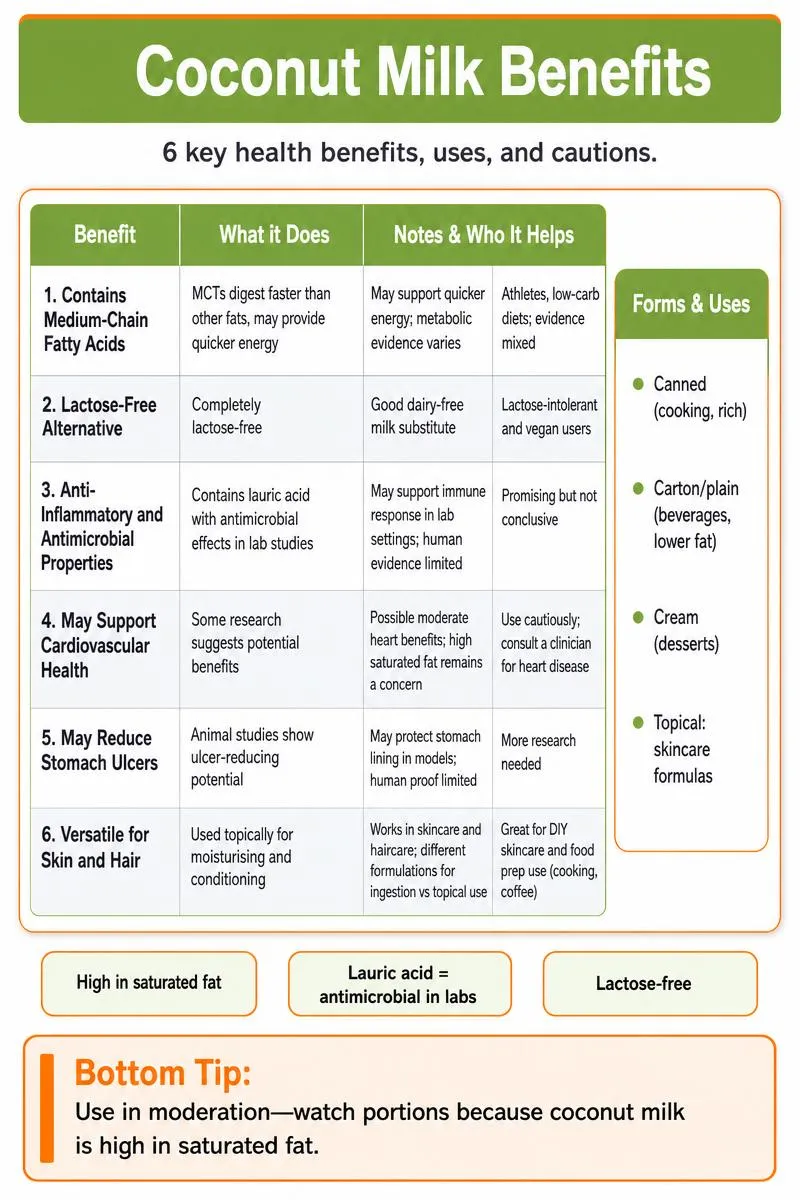
Benefits Of Coconut Milk Quick Comparison
| Benefit | What it Does | Notes & Who It Helps |
|---|---|---|
| MCTs digest faster than other fats, may provide quicker energy | May support quicker energy; metabolic evidence varies | Athletes, low-carb diets; evidence mixed |
| Completely lactose-free | Good dairy-free milk substitute | Lactose-intolerant and vegan users |
| Contains lauric acid with antimicrobial effects in lab studies | May support immune response in lab settings; human evidence limited | Promising but not conclusive |
| Some research suggests potential benefits | Possible moderate heart benefits; high saturated fat remains a concern | Use cautiously; consult a clinician for heart disease |
| Animal studies show ulcer-reducing potential | May protect stomach lining in models; human proof limited | More research needed |
| Used topically for moisturising and conditioning | Works in skincare and haircare; different formulations for ingestion vs topical use | Great for DIY skincare and food prep use (cooking, coffee) |
What Is Coconut Milk?
Coconut milk is blended white coconut flesh strained with water. It is thick, creamy, and white. It is not coconut water (the clear liquid inside fresh coconuts) or cream of coconut (which is heavily sweetened and used for cocktails and desserts).
You will find two main types on shelves:
- Canned coconut milk: Higher fat content, intended for cooking curries, soups, and sauces
- Carton coconut milk: Thinner consistency, often fortified with vitamins, designed for drinking and cereal
The fat content between these varies significantly. Canned versions contain much more actual coconut, while cartons are diluted and may contain additives or sweeteners. Check the ingredient list if you want the real thing.
Keep Reading
Explains how coconut water supports hydration and how it differs from coconut milk.
6 Benefits of Coconut Milk
Some of these benefits are well-supported; others are still early-stage research. Here is what each one actually means for you.
1. Contains Medium-Chain Fatty Acids
Coconut milk is rich in medium-chain triglycerides, or MCTs. These fats absorb directly into your bloodstream through the portal vein, bypassing the slower digestion process that other fats require. Your body can convert them to energy more quickly as a result.
Some research suggests MCTs may slightly increase calorie burning compared to other fats, though the effect is modest and won’t outweigh excess calorie consumption. For people following ketogenic or lower-carb diets, MCTs provide an alternative energy source when glucose is limited.
This matters most if you want quick energy without relying on carbohydrates.
2. Lactose-Free Alternative
Coconut milk contains zero lactose. This makes it a legitimate option for anyone with lactose intolerance, milk protein allergies, or those simply choosing to avoid dairy.
The creamy texture works well in coffee, smoothies, and cooking applications where you would otherwise use cream or whole milk. Unlike some nut milks that separate or taste watery, coconut milk provides genuine richness.
For people who avoid dairy for digestive or ethical reasons, it offers a functional substitute without the lactose-related bloating.
3. Anti-Inflammatory and Antimicrobial Properties
Lauric acid makes up a significant portion of coconut milk’s fat content. Lab studies show lauric acid can kill certain bacteria, viruses, and fungi in test tubes. Your body also converts some lauric acid to monolaurin, a compound with demonstrated antimicrobial effects.
Human studies showing immune benefits from consuming coconut milk are limited. What happens in a laboratory dish does not always translate to effects in the human body. The concentrations used in studies often exceed what you would consume in a normal diet.
Coconut milk provides compounds with theoretical benefits, but don’t rely on it as a defense against illness.
4. May Support Cardiovascular Health
Coconut milk is high in saturated fat, which traditionally raises concerns about heart health. Yet how saturated fat affects your health depends heavily on the overall diet it sits in. Eating coconut milk as part of a diet low in processed foods looks very different from drinking coconut milk lattes while eating pastries.
Some sources suggest the specific fatty acid profile in coconut may affect cholesterol differently than other saturated fats, potentially raising HDL alongside LDL. The evidence here is not settled.
If you monitor heart health with your doctor, coconut milk can fit into your diet, but the saturated fat content means you should not treat it as a free pass to consume unlimited amounts.
5. May Reduce Stomach Ulcers
Animal studies show coconut milk can protect the stomach lining from ulcer formation, potentially by reducing acid secretion and strengthening the mucosal barrier.
Human research confirming this effect does not yet exist. The protective mechanisms observed in animals might apply to humans, but until clinical trials are conducted, this remains speculative.
Coconut milk is unlikely to harm people with digestive sensitivity or a history of ulcers, and might provide some benefit. Don’t use it as a treatment for existing conditions.
6. Versatile for Skin and Hair
Beyond drinking and cooking, coconut milk works externally. The fatty acids create a moisture barrier on dry skin, helping prevent water loss without feeling heavy or greasy. You can use it as a simple hair mask to add shine and reduce frizz, especially on curly or dry hair types.
For skin care, apply coconut milk directly to dry areas or mix it into homemade masks. For hair, massage it into your scalp and lengths, leave it for a short period, then rinse thoroughly. Heavy use can leave residue, so start with small amounts.
For a minimal-ingredient routine, it is a multi-purpose option already sitting in your kitchen.
How to Use It
Canned coconut milk serves cooking best. The high fat content creates creamy curries, thickens soups, and adds richness to rice dishes. Shake the can before opening, or scoop out the solid cream that rises to the top for whipping or adding to coffee.
Carton coconut milk works for drinking, cereal, and smoothies. It pours like regular milk but carries that distinctive coconut flavor. Some brands add calcium and vitamin D to match dairy milk’s nutritional profile.
Start with small amounts. The saturated fat in coconut milk adds up quickly, and portion control matters more than with low-fat alternatives. Look for minimal ingredients: coconut, water, and possibly guar gum as a stabilizer. Avoid products with added sugars or excessive additives unless you specifically want a sweetened beverage.
Explore More
Outlines the nutritional profile and baking uses of coconut flour as an alternative ingredient when cooking with…
Who Should Be Cautious
- People monitoring saturated fat intake: If you have heart disease risk factors or your doctor has recommended limiting saturated fat, coconut milk requires portion awareness. A full can contains significant saturated fat that can exceed daily recommendations in a single serving.
- Those with tree nut allergies: Coconut is technically a fruit, not a tree nut. However, some people with tree nut allergies experience cross-reactivity. If you have severe nut allergies, discuss coconut with your allergist before consuming it regularly.
- People with FODMAP sensitivity: Some carton coconut milks contain added sugars that can trigger digestive issues in sensitive individuals. Plain canned coconut milk in small amounts is usually easier to tolerate than sweetened carton versions.
Worth Reading Next
Reviews how coconut-derived saturated fats affect cholesterol — useful for readers concerned about coconut milk’s fat…
FAQs
Is it okay to drink coconut milk every day?
Yes, for most people in moderate amounts. The saturated fat content means you should watch your portion sizes, but daily consumption is fine if it fits within your overall dietary fat limits. If you have heart disease risk factors, check with your doctor about appropriate amounts.
What are the pros and cons of coconut milk?
Pros: lactose-free, contains MCTs, works in both cooking and beverages, versatile for skin and hair, adds creamy texture without dairy.
Cons: high in saturated fat, higher in calories than skim milk, distinct coconut flavor that doesn’t suit every recipe, some people experience digestive discomfort from the fat content.
Is coconut milk healthier than dairy milk?
It depends on your needs. Coconut milk wins for lactose intolerance and dairy allergies. Dairy milk provides more complete protein and calcium without fortification. Coconut milk contains MCTs that dairy lacks, but canned coconut milk is higher in saturated fat than most dairy milk. Choose based on your specific dietary requirements rather than assuming one is universally better.
Does drinking coconut milk clear skin?
No direct evidence supports this. While lauric acid has antimicrobial properties, drinking coconut milk does not appear to treat acne or improve skin clarity. Some people find the fat content worsens their skin. External application as a moisturizer may help dry skin, but it won’t clear breakouts.
What happens if we drink coconut milk daily?
For most people, nothing dramatic. You might notice more stable energy due to the fat content, or you might gain weight if you consume large portions without adjusting other calorie intake. Some people experience digestive changes from the high fat content.
Is coconut milk good for hair growth?
There is no evidence that coconut milk stimulates hair growth or prevents hair loss. It can condition hair and reduce breakage, which helps maintain the length you already have. For actual growth, factors like genetics, nutrition, and scalp health matter far more than any topical treatment.
When should you avoid coconut milk?
Avoid it if you have a diagnosed coconut allergy, if your doctor has specifically restricted saturated fat intake, or if you notice it triggers digestive symptoms. People with FODMAP sensitivities should check labels for added sugars. If you dislike the taste, obviously skip it. Plenty of alternatives exist.
Can I leave coconut milk on my hair overnight?
You can, but you probably shouldn’t. Coconut milk can be difficult to wash out if left too long, and residue buildup can irritate your scalp. A short treatment provides the conditioning benefits without those risks. Overnight application offers no additional benefit.
Final Thoughts
Coconut milk is a useful ingredient, not a health elixir. The MCTs offer something different from other fats, and the dairy-free nature solves real problems for lactose-intolerant people. The saturated fat content demands respect, not fear, but also not ignorance.
Try it in your next curry or morning coffee. Pay attention to how your body responds. That personal data matters more than any list of benefits.
External References