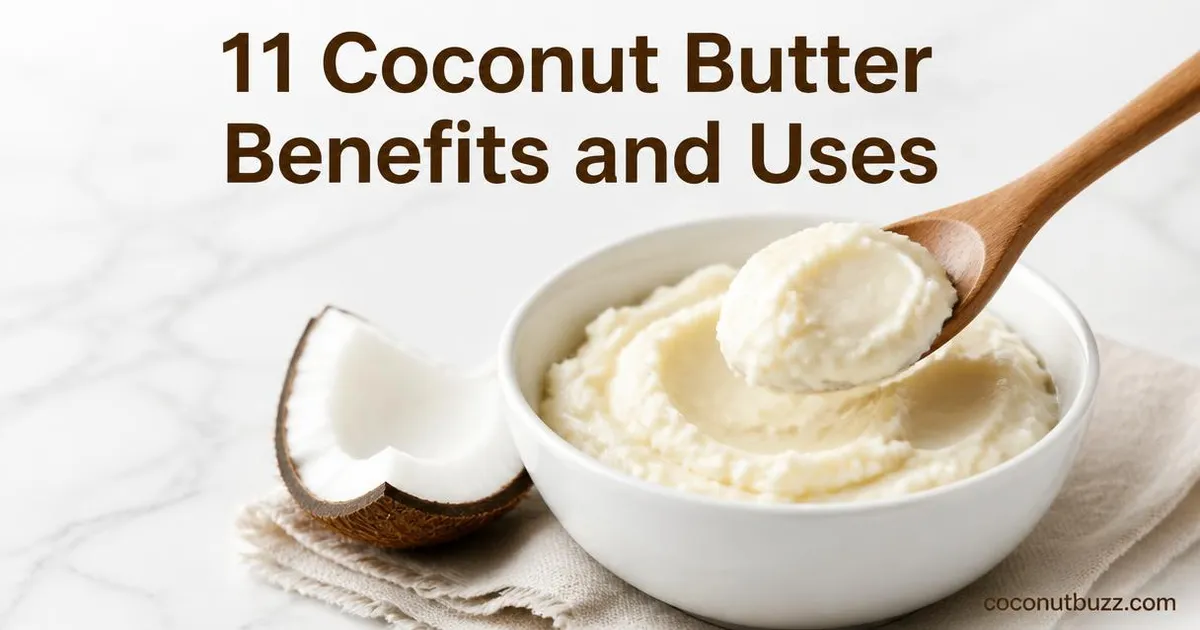
11 Coconut Butter Benefits and Uses
Coconut butter sits in a strange middle ground. It’s not coconut oil, even though the jar looks similar. It’s not nut butter either, despite the name and spreadable texture.
What it actually is: pureed whole coconut meat, fiber and fat together, which means you can eat it and rub it on your skin without anyone questioning your life choices.
Whether it deserves counter space depends on what you need from it. The eleven benefits below cover everything from upgrading your morning coffee to rescuing chapped lips in winter.
Key Takeaways
- Coconut butter is pureed whole coconut meat – it keeps the fiber and protein that coconut oil leaves behind
- It works as both a food ingredient and a topical moisturizer, no separate products needed
- Solid at room temperature, liquid when warmed, which makes it useful for spreads, sauces, and no-bake desserts
- It fits dairy-free, vegan, and paleo diets without substitutions or workarounds
- High calorie density means portions matter if you’re tracking intake
- Most brands stay stable in a cool pantry; refrigeration changes texture but isn’t required
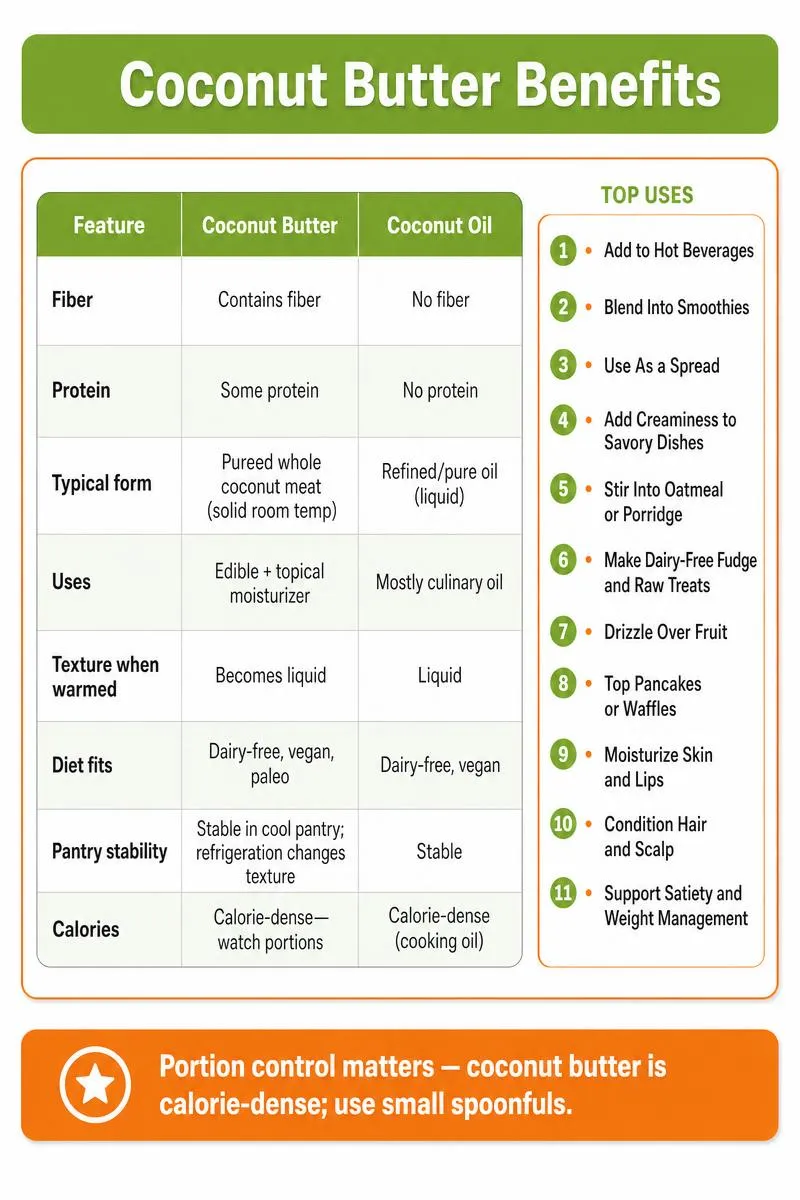
Benefits Of Coconut Butter at a Glance
| Feature | Coconut Butter | Coconut Oil |
|---|---|---|
| Fiber | Contains fiber | No fiber |
| Protein | Some protein | No protein |
| Typical form | Pureed whole coconut meat (solid room temp) | Refined/pure oil (liquid) |
| Uses | Edible + topical moisturizer | Mostly culinary oil |
| Texture when warmed | Becomes liquid | Liquid |
| Diet fits | Dairy-free, vegan, paleo | Dairy-free, vegan |
| Pantry stability | Stable in cool pantry; refrigeration changes texture | Stable |
| Calories | Calorie-dense—watch portions | Calorie-dense (cooking oil) |
What Is Coconut Butter?
Coconut butter is whole coconut meat ground into a thick, creamy paste. The process is simple: dried coconut flesh gets blended until the fat releases and the mixture turns smooth.
Unlike coconut oil, which extracts only the fat, coconut butter includes everything – the fiber, the small amount of protein, and the fat. That’s why it stays opaque and thick instead of turning clear when melted.
Benefits of coconut oil for skin
Practical skin benefits and topical uses of coconut oil — useful if you want to apply coconut butter to skin and…
11 Benefits and Uses of Coconut Butter
Coconut butter shows up in kitchens, bathrooms, and the occasional gym bag.
1. Add to Hot Beverages
Drop a spoonful into hot coffee or tea and it melts into a creamy layer. The fat from the coconut meat emulsifies with the liquid, creating a texture similar to cream without dairy.
This works best in the morning or as an afternoon pick-me-up. If you like bulletproof-style drinks, coconut butter gives you fat plus a small amount of fiber in one ingredient.
2. Blend Into Smoothies
Coconut butter thickens smoothies and adds richness without turning them icy. The fiber from the coconut meat also helps the drink feel more filling.
If you’re on a plant-based or high-fat diet, this is one of the easiest ways to add calories and creaminess without blending in half an avocado every time.
3. Use As a Spread
At room temperature, coconut butter firms up enough to spread on toast, rice cakes, or apple slices. The texture sits somewhere between almond butter and actual butter – thick but pliable.
It replaces butter or cream cheese in situations where you want something neutral or slightly sweet. The coconut flavor is mild, not tropical or overpowering.
4. Add Creaminess to Savory Dishes
Stir a spoonful into curries, soups, or sauces while they’re still hot. Coconut butter melts and blends in, adding body and a subtle coconut note that complements Thai, Indian, or Caribbean flavors.
This is especially useful for dairy-free cooking. Where you’d normally finish a soup with cream or butter, coconut butter does the same job.
5. Stir Into Oatmeal or Porridge
Mix coconut butter into hot oatmeal or any cooked grain. It melts on contact and coats each spoonful with fat and fiber, which slows digestion and keeps you full longer.
If you find plain oatmeal boring or feel hungry an hour after breakfast, this is a simple fix that doesn’t require extra ingredients.
6. Make Dairy-Free Fudge and Raw Treats
Coconut butter hardens when chilled, which makes it the base for no-bake desserts. Mix it with cocoa powder, a sweetener, and maybe some vanilla, then pour into a pan and refrigerate.
You get fudge that sets firm without gelatin, eggs, or dairy. This is why coconut butter shows up constantly in raw and vegan baking – it mimics the binding and setting properties of butter.
7. Drizzle Over Fruit
Warm coconut butter gently until it turns liquid, then pour it over fresh fruit. It cools and firms up slightly on contact, creating a coating similar to a chocolate shell but with coconut instead.
This happens quickly and turns plain strawberries or banana slices into something that feels more intentional.
8. Top Pancakes or Waffles
Use coconut butter instead of syrup if you want a topping that’s less sweet and more filling. It melts into the warm surface and adds richness without the sugar spike.
If you’re cutting back on added sugars but still want your pancakes to taste like something, this works.
9. Moisturize Skin and Lips
Coconut butter doubles as a single-ingredient moisturizer. The lauric acid and other medium-chain fatty acids in coconut meat soften dry skin and create a barrier that holds moisture in.
It works best on very dry patches – elbows, knees, chapped lips. If you have oily or acne-prone skin, test a small area first. The same fat content that makes it good for moisturizing can clog pores on some faces.
10. Condition Hair and Scalp
Massage coconut butter into your scalp or work it through the ends of your hair before washing. The lauric acid and other medium-chain fatty acids may help reduce protein loss in the hair shaft during shampooing.
This helps with dryness and damage, especially if you heat-style regularly or have curly hair that tends to break. Leave it on for a few minutes, then shampoo twice to remove the residue.
11. Support Satiety and Weight Management
Coconut butter contains both fat and fiber, which slow digestion and extend the feeling of fullness after eating. Some sources suggest this combination may help with portion control and weight management, though direct evidence is limited.
A tablespoon adds fat and fiber without much bulk.
Coconut Butter vs Coconut Oil
Coconut butter is the whole coconut meat pureed into a paste. Coconut oil is the extracted fat only, with the solids filtered out.
That difference changes texture and use. Coconut oil turns fully liquid when warm and fully solid when cool, with no in-between. Coconut butter stays thick and spreadable across a wider temperature range because the fiber and solids keep it from separating completely.
Coconut oil works better for high-heat cooking and situations where you want a neutral texture. Coconut butter works better for recipes that need body, or when you want the fiber along with the fat.
A direct, side-by-side comparison of coconut oil and coconut butter covering nutrition, texture, and best uses.
Risks and Side Effects
Coconut butter is calorie-dense. A tablespoon contains roughly the same calories as a tablespoon of any other fat, so portions matter if you’re tracking intake or trying to manage weight.
Avoid it completely if you have a coconut allergy. Despite the name, coconut is technically a drupe, not a tree nut, but cross-reactivity can happen. If you have a tree nut allergy, check with a doctor before trying coconut butter.
FAQs About Coconut Butter
Should you refrigerate coconut butter?
Not required for most brands. A cool pantry keeps it stable for many months. Refrigeration makes it firmer and harder to scoop, but it won’t spoil faster at room temperature as long as the jar stays sealed between uses.
What do people use coconut butter for?
Food and topical use. In food: spreads, smoothies, baking, sauces. On skin: moisturizer for dry patches, lip balm, hair treatment. The same jar works for both.
Is coconut butter healthier than peanut butter?
Depends on what you need. Coconut butter has more saturated fat and less protein than peanut butter. Peanut butter has more protein but less fiber than coconut butter. Neither is universally “healthier” – they do different things.
What is the healthiest butter you can eat?
No single answer. If you want the most omega-3s, choose a nut or seed butter high in those fats. If you want the least processing, choose one with a single ingredient. If you need dairy-free, coconut butter and nut butters both work. “Healthiest” depends on your diet and what you’re trying to accomplish.
Does coconut butter go bad?
Yes, but slowly. Unopened, it lasts a long time in a cool pantry. Once opened, use it within a few months for best flavor. If it smells rancid or tastes off, discard it. Refrigeration extends shelf life but isn’t necessary unless your kitchen runs hot.
What goes well with coconut butter?
Chocolate, berries, oats, coffee, curries, sweet potato, banana. Anything that pairs with coconut or needs creaminess without dairy. It’s mild enough to work in both sweet and savory contexts.
How healthy is coconut butter?
It’s whole coconut meat, so you get the fiber, fat, and small amount of protein that coconut contains. The fat is mostly saturated, specifically lauric acid and other medium-chain fatty acids. Whether that fits your diet depends on your goals – it’s calorie-dense, dairy-free, and minimally processed.
You Might Also Like
Comparison of a common butter alternative for skin and hair — helpful for readers weighing coconut butter against other…
Final Thoughts
Coconut butter is a straightforward ingredient that works in the kitchen and the bathroom without requiring separate products. If you’re curious, start with a small jar and try it in your morning oatmeal or coffee.
The texture takes a minute to get used to, but once it clicks, it replaces multiple products with one jar.
External References