Top 10 Ways to Use Coconut Oil
Coconut oil sits on kitchen shelves and bathroom counters in equal measure, which tells you something about its range. You can fry an egg in it at breakfast and smooth it onto dry elbows before bed. That versatility comes with tradeoffs worth knowing – the same saturated fat content that makes it stable at high heat also makes cardiologists warn against eating it daily, and the moisturizing film that softens skin can turn into a greasy mess if you use too much.
This guide covers ten specific uses, from sautéing vegetables to oil pulling, plus which type of coconut oil to buy for each job. Some applications rely on solid research, others on traditional practice.
Key Takeaways
- Match the job: Refined, virgin, and cold-pressed each behave differently in cooking and on skin.
- Greasy residue: Using too much on skin or hair usually requires extra shampoo or soap to remove.
- Cardiologists caution: Some sources suggest coconut oil offers health benefits when consumed, but cardiologists warn against regular consumption because of its saturated fat content.
- Replace butter 1:1: It works in many cooked and baked recipes, though it will add a mild coconut taste.
- Not interchangeable: The type and amount you use should match the specific goal, whether cooking, skin care, or oral care.
Also Worth Checking Out
Best coconut oil for dogs on amazon
A product-focused roundup showing coconut oil options for dogs plus dosing and topical use guidance readers may try as…
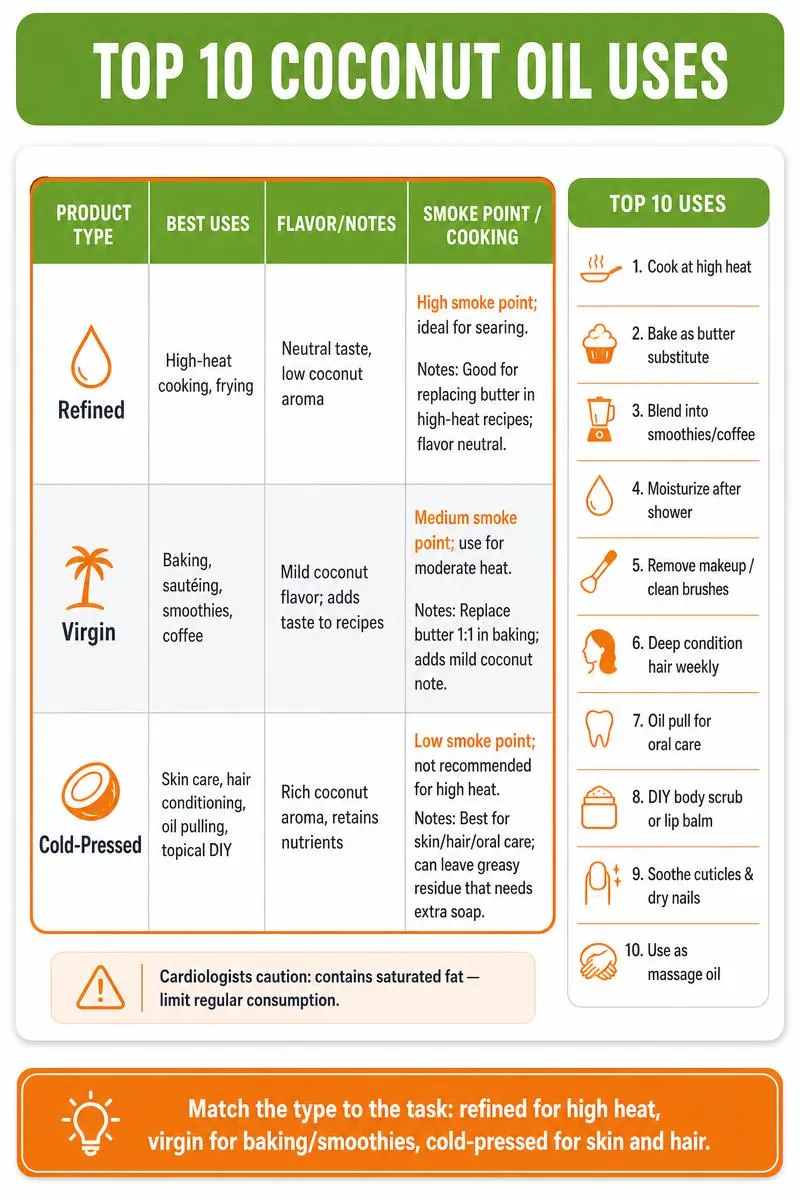
Top Ways To Use Coconut Oil Compared
| Product Type | Best Uses | Flavor/Notes | Smoke Point / Cooking |
|---|---|---|---|
| Refined | High-heat cooking, frying | Neutral taste; low coconut aroma | High smoke point; ideal for searing |
| Virgin | Baking, sautéing, smoothies, coffee | Mild coconut flavor; adds taste | Medium smoke point; use for moderate heat |
| Cold-Pressed | Skin care, hair conditioning, oil pulling | Rich coconut aroma; retains nutrients | Low smoke point; not recommended for high heat |
What to Look for in Coconut Oil
Virgin coconut oil comes from fresh coconut meat pressed without heat or chemicals. It keeps more of the coconut flavor and aroma, which makes it better for recipes where you want that taste or for skin applications where you don’t mind the scent. Refined coconut oil goes through bleaching and deodorizing, which strips most of the coconut smell and taste but keeps the fatty acid profile intact.
Cold-pressed refers to the extraction method – the oil is pressed from the coconut meat without added heat, which preserves more of the lauric acid and medium-chain fatty acids. Cold-pressed oil is usually virgin, but not all virgin oil is cold-pressed. For high-heat cooking like frying or roasting, refined coconut oil works better because it has a higher smoke point and won’t transfer coconut flavor to savory dishes.
For skin care, virgin or cold-pressed oil gives you lauric acid and other medium-chain fatty acids without the chemical processing. If the coconut scent bothers you, refined oil still moisturizes but smells neutral.
The Pros and Cons of Cooking With Coconut Oil
Coconut oil has a lower smoke point for virgin and a higher one for refined, which makes it stable enough for sautéing, roasting, and most baking. That stability comes from its high saturated fat content – lauric acid, myristic acid, and palmitic acid make up most of the fatty acid profile. These medium-chain and long-chain saturated fats don’t oxidize as quickly as polyunsaturated fats when heated.
The downside is that same saturated fat content. Coconut oil is high in saturated fat, which raises LDL cholesterol in many people. Cardiologists note that coconut oil increases LDL more than oils high in unsaturated fats like olive or canola oil.
Virgin coconut oil adds a mild coconut flavor to whatever you cook, which works well in Southeast Asian dishes, smoothies, or baked goods but can taste out of place in a skillet of scrambled eggs. Refined coconut oil solves that problem by removing most of the flavor, so you can use it in neutral-tasting dishes without noticing it.
A closer look at how coconut oil compares to canola for cooking, including smoke point, flavor, and best use cases.
Step-by-Step Guide
Here are ten specific ways to use coconut oil, each with the most common mistake so you can skip the trial and error.
Step 1: Cook with It at High Heat
Refined coconut oil handles high-heat cooking better than virgin because of its higher smoke point. Use it to sauté vegetables, roast chicken, or stir-fry noodles – it won’t break down or smoke as quickly as butter. The flavor stays neutral, so it won’t compete with garlic, ginger, or other seasonings.
The common mistake is using virgin coconut oil in a hot pan. Virgin oil has a lower smoke point and burns more easily, which creates a bitter taste and fills your kitchen with smoke. Save virgin oil for medium-heat cooking or recipes where you want the coconut flavor.
Step 2: Bake with It as a Butter Substitute
Coconut oil replaces butter at a 1:1 ratio in most baked goods – cookies, muffins, quick breads, brownies. Melt it first if the recipe calls for softened butter, or use it solid if the recipe needs cold butter. Coconut oil keeps baked goods moist because the medium-chain fatty acids coat flour particles differently than shortening or vegetable oil.
The mistake is using coconut oil in recipes that rely on cold butter for texture, like pie crust or biscuits. Cold butter creates flaky layers when it melts in the oven; coconut oil doesn’t behave the same way. Stick to recipes where butter is melted or creamed with sugar.
Step 3: Blend It into Smoothies or Coffee
Add a teaspoon of coconut oil to a blender with coffee, milk, or a fruit smoothie for a richer texture. The blending emulsifies the oil into the liquid, so it doesn’t separate as quickly. Some sources suggest that the medium-chain triglycerides in coconut oil provide quick energy, though research on this is mixed.
The mistake is adding too much. More than a teaspoon or two creates an oily film on top of your drink that doesn’t blend in fully. Start small and see how you like the texture before increasing the amount.
Step 4: Moisturize Dry Skin After a Shower
Apply a thin layer of coconut oil to damp skin – arms, legs, elbows, or any dry patches. The oil seals in the water on your skin, which prevents moisture loss better than lotion alone. Lauric acid and capric acid in coconut oil also have antimicrobial properties, though that doesn’t mean it treats skin infections.
The mistake is using too much. Coconut oil absorbs slowly, so a thick layer sits on your skin and transfers to your clothes or sheets. A little goes further than you’d expect – warm a small amount between your palms and spread it thin.
Step 5: Remove Makeup and Clean Brushes
Massage coconut oil onto your face to dissolve makeup, including waterproof mascara and eyeliner. The oil breaks down the oils and waxes in makeup, so it wipes off more easily. You can also use it to clean makeup brushes – swirl the bristles in coconut oil, then rinse with warm water and soap.
The mistake is not rinsing afterward. Coconut oil left on your skin can trap makeup residue, dirt, and dead skin cells, which may lead to clogged pores. Follow up with a gentle cleanser to remove the oil and whatever it dissolved.
Step 6: Deep Condition Hair Once a Week
Coat damp hair from mid-lengths to ends with coconut oil, wait 20-30 minutes, then shampoo twice to remove it. Coconut oil penetrates the hair shaft because of its low molecular weight, which reduces protein loss during washing. This can smooth frizz and make hair feel softer, especially if it’s dry or chemically treated.
The mistake is applying coconut oil to your roots. Oil at the scalp makes hair look greasy and flat, and it’s harder to wash out. Focus on the ends where hair is driest and most damaged.
Step 7: Oil Pull for Oral Care
Swish one tablespoon of coconut oil in your mouth for 10-15 minutes, then spit it into a trash can. Oil pulling is a traditional Ayurvedic practice that some sources suggest may reduce bacteria in the mouth, though research on its effectiveness is limited. The lauric acid in coconut oil does have antimicrobial properties, but it doesn’t replace brushing or flossing.
The mistake is swallowing the oil or spitting it into the sink. Swallowing means you’re ingesting whatever bacteria the oil pulled from your mouth. Spitting into the sink can clog pipes because coconut oil solidifies at room temperature.
Step 8: Make a DIY Body Scrub or Lip Balm
Mix coconut oil with sugar or coarse salt to make a body scrub. The oil moisturizes while the granules exfoliate dead skin. You can also apply a thin layer of coconut oil to dry lips as a simple balm – it seals in moisture and doesn’t taste bad if you lick your lips.
The mistake is using a sugar or salt scrub on your face. The granules are often too harsh for facial skin, which is thinner and more sensitive than the skin on your body. Stick to using scrubs on arms, legs, and feet.
Step 9: Soothe Cuticles and Dry Nails
Rub a small amount of coconut oil onto your nail beds and cuticles to soften dry skin. The oil absorbs slowly, so it keeps the area moisturized longer than hand lotion. This is especially useful in winter when hands crack and cuticles peel.
The mistake is applying coconut oil before painting your nails. The oil creates a barrier that prevents nail polish from adhering, so your manicure chips faster. Use it after your polish is fully dry or on days when you’re not painting your nails.
Step 10: Use It as a Massage Oil
Warm a small amount of coconut oil between your hands, then use it for a body massage. The oil provides lasting glide without absorbing too quickly, which makes it easier to work on tight muscles. It doesn’t evaporate like water-based lotions, so you don’t need to reapply as often.
The mistake is using too much. Excess oil on skin or floors creates a slipping hazard, especially if you’re massaging feet or walking around afterward. Start with a teaspoon and add more only if you need it.
Safety and Side Effects
For skin use, coconut oil can clog pores in some people. It may block pores and cause breakouts, especially on the face. If you have oily or acne-prone skin, test it on a small area first before applying it broadly.
Patch test coconut oil on your inner arm before using it on your face or scalp. Some people develop contact dermatitis or an allergic reaction, though coconut allergies are less common than nut allergies. Check the next day to see if redness, itching, or swelling appears.
Cardiologists note that coconut oil raises LDL cholesterol more than oils high in unsaturated fats, which increases the risk of heart disease over time. If you already have high cholesterol or a family history of heart disease, limit how often you cook with it.
FAQs About Coconut Oil
What are the top ways to use coconut oil in cooking?
Sautéing, roasting, baking, and blending into smoothies or coffee. Refined coconut oil works best for high-heat cooking because it has a higher smoke point and neutral flavor. Virgin coconut oil fits recipes where you want a mild coconut taste.
How can I use coconut oil for my health?
Some sources suggest that the medium-chain triglycerides in coconut oil provide quick energy, but research is mixed. Cardiologists caution against eating it regularly because it raises LDL cholesterol. Oil pulling is a traditional oral care practice, though scientific support for its benefits is limited.
How do I use coconut oil for skin?
Apply a thin layer to damp skin after showering to seal in moisture. You can also use it to remove makeup or soften dry patches on elbows and heels. Avoid using it on your face if you have oily or acne-prone skin, since it can clog pores.
How do I use coconut oil on hair?
Coat damp hair from mid-lengths to ends, wait 20-30 minutes, then shampoo twice. Coconut oil penetrates the hair shaft and reduces protein loss, which smooths frizz and softens dry hair. Don’t apply it to your roots, or your hair will look greasy.
What does rubbing coconut oil on your body do?
Coconut oil moisturizes skin by creating a barrier that slows water loss. The lauric acid and capric acid in it also have antimicrobial properties. Use it on dry areas like arms, legs, and elbows, but start with a thin layer to avoid a greasy residue.
Can coconut oil reduce wrinkles?
No solid research supports coconut oil as a wrinkle treatment. It moisturizes skin, which can temporarily make fine lines less visible, but it doesn’t increase collagen production or reverse aging. For wrinkle reduction, retinoids and sunscreen have stronger evidence.
Why do cardiologists say to avoid coconut oil?
Coconut oil is high in saturated fat, and cardiologists note that it raises LDL cholesterol more than oils high in unsaturated fats. Higher LDL cholesterol increases the risk of heart disease. Cardiologists recommend limiting saturated fat intake, especially if you have cardiovascular risk factors.
Which oil does not clog arteries?
Oils high in unsaturated fats – like olive oil, avocado oil, and canola oil – lower LDL cholesterol and reduce the risk of artery-clogging plaque buildup. These oils contain monounsaturated and polyunsaturated fats, which improve lipid profiles better than saturated fats.
Where not to put coconut oil?
Avoid applying it to your face if you have oily or acne-prone skin, since it can clog pores. Don’t use it on your scalp or hair roots if you want to avoid greasy buildup. Skip using it before nail polish application because it prevents adhesion.
What happens if I eat a spoonful of coconut oil every day?
You’ll consume a significant amount of saturated fat, which can raise your LDL cholesterol over time. Some sources suggest benefits from the medium-chain triglycerides, but the evidence isn’t strong enough to outweigh the cardiovascular concerns. If you already have high cholesterol, daily consumption isn’t recommended.
Related Reading
Practical comparisons for beauty uses—how coconut oil stacks up against argan for hair and skin care routines.
Final Thoughts
Coconut oil works across cooking, skin care, and a handful of other uses, but the type you buy and how much you use determines whether it helps or leaves a mess. Refined oil handles high heat and neutral flavors; virgin oil brings moisture and a coconut scent. Either way, moderation matters – too much on your skin or in your diet creates problems that outweigh the benefits.
Start with one cooking method and one non-food use to see how coconut oil fits your routine. Choose refined or virgin based on your first planned use and test it this week.
External References