Coconut Oil vs Argan Oil: Which Is Better?
Coconut oil sinks deep into the hair shaft and reduces protein loss. Argan oil sits closer to the surface, adding shine and taming frizz without adding weight. These two oils work in fundamentally different ways – and picking the wrong one can leave your hair greasy or your face feeling coated.
The right choice comes down to three things: your hair type, your skin type, and what you’re trying to accomplish in that specific step of your routine.
Key Takeaways
- Coconut oil penetrates the hair shaft and helps reduce protein loss, but it can weigh down fine hair.
- Argan oil adds shine and controls frizz without heaviness, making it easier for daily leave-in use.
- Argan oil is generally preferred for facial skin and oily scalps; coconut oil is commonly used for body skin and deep conditioning.
- Curly or coarse hair often tolerates coconut oil well; fine or straight hair usually responds better to argan oil.
- You can use both oils in the same routine if you separate them by wash step.
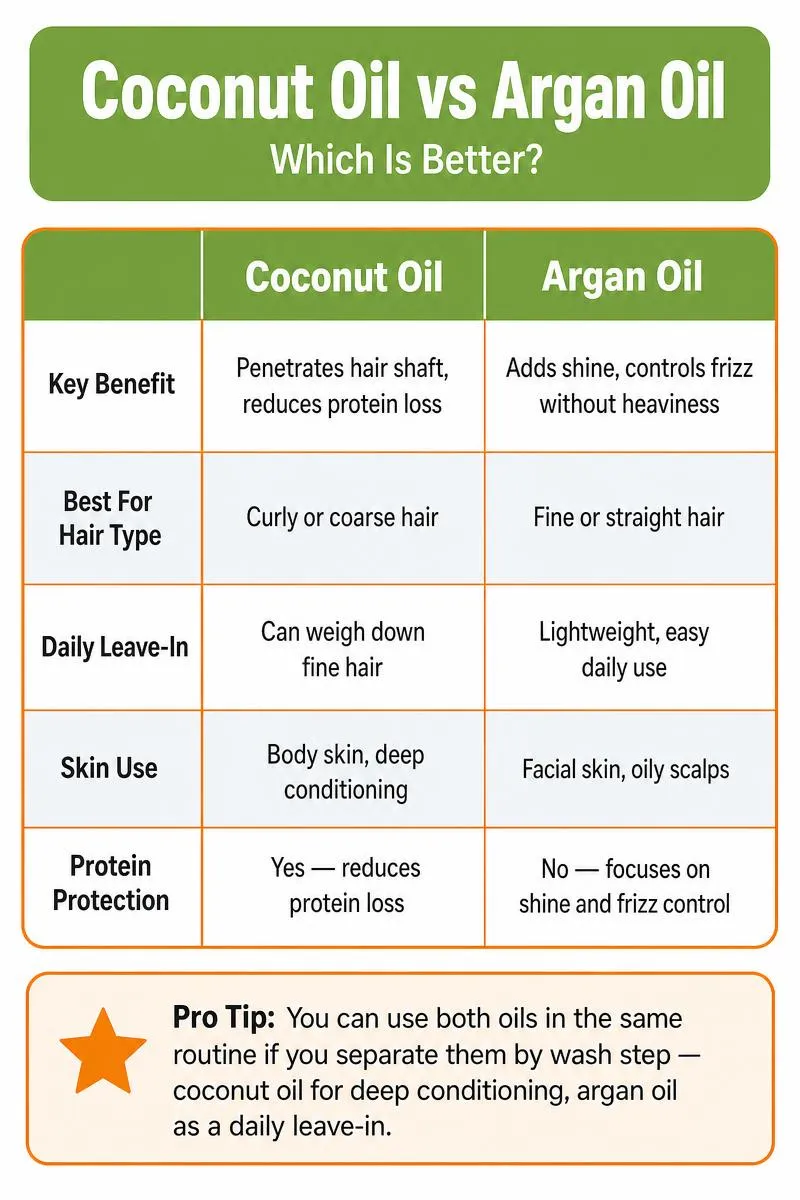
Quick Comparison: Coconut Oil Vs Argan Oil
| Attribute | Coconut Oil | Argan Oil |
|---|---|---|
| Key Benefit | Penetrates hair shaft; reduces protein loss | Adds shine; controls frizz |
| Best for Hair Type | Curly or coarse | Fine or straight |
| Daily Leave-In | Can weigh down fine hair | Lightweight; good for daily use |
| Skin Use | Body skin; deep conditioning | Facial skin; oily scalps |
| Protein Protection | Yes — reduces protein loss | No — focuses on shine and frizz control |
What Is Coconut Oil?
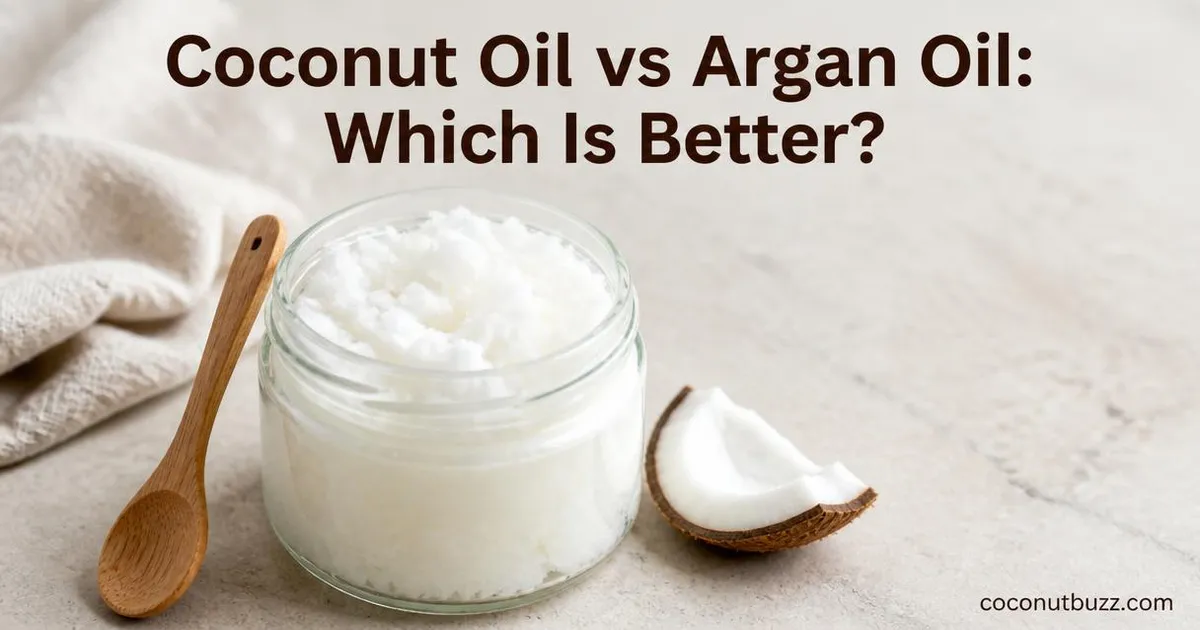
Coconut oil is extracted from the meat and kernel of mature coconuts. It’s high in saturated fats, which gives it a solid texture at room temperature and a relatively heavy feel on skin and hair.
This oil works best as a deep conditioning treatment, a pre-wash mask, or a body moisturizer. The saturated fat structure allows coconut oil to penetrate the hair shaft rather than just coating the surface. That penetration is what helps reduce protein loss from washing, brushing, and heat styling.
Strengths of coconut oil: It’s affordable, widely available, and one of the few oils that actually gets inside the hair strand instead of sitting on top.
Weaknesses of coconut oil: The heavy texture can build up on fine hair, and some sources suggest it may clog follicles on oily scalps. If your hair already struggles with grease, coconut oil can make that worse.
Worth Reading Next
A side-by-side look at jojoba vs coconut oil for hair and skin, ideal for readers comparing oil performance and…
What Is Argan Oil?
Argan oil is pressed from the kernels of the argan tree, which grows primarily in Morocco. It contains a mix of fatty acids and vitamin E, and it has a lightweight texture that absorbs quickly into skin and hair.
This oil is best suited for leave-in conditioning, frizz control, facial serums, and daily hair oiling. Unlike coconut oil, argan oil doesn’t penetrate the hair shaft deeply – it coats the cuticle and seals in moisture from the outside.
Strengths of argan oil: Lightweight, fast-absorbing, and leaves a non-greasy finish. You can apply it to dry hair in the morning without your hair looking weighed down by afternoon.
Weaknesses of argan oil: It costs more than coconut oil, and it doesn’t function as a deep protein treatment. If your hair is severely damaged from chemical processing, argan oil alone won’t rebuild structure the way a penetrating treatment can.
Coconut Oil vs Argan Oil: Hair Care
Both oils improve hair condition, but they do it through different mechanisms and at different points in your routine.
For breakage prevention, coconut oil has the edge. Because it penetrates the shaft, coconut oil protects protein structure during washing and heat styling. Applied as a pre-wash treatment, coconut oil gets inside the strand before shampoo strips it.
For daily styling and moisture retention, argan oil performs better. It smooths the cuticle, controls frizz, and adds shine without the heaviness that coconut oil brings. You can run a few drops through dry hair midday without needing to wash it out.
Neither oil regrows hair from dormant follicles. What both can do is improve the condition of existing hair – coconut oil by protecting protein structure, argan oil by sealing the cuticle and reducing moisture loss.
Coconut Oil vs Argan Oil: Skin Care
Argan oil is usually the better choice for facial skin, including acne-prone types. Its lightweight texture absorbs without leaving a heavy film, and the vitamin E content supports skin barrier function without overwhelming pores the way a thicker oil might.
Coconut oil works well for body skin – arms, legs, hands – where the heavier texture is less of an issue. But on the face, coconut oil may feel too heavy and can be comedogenic for some users, meaning it can clog pores and trigger breakouts.
If you have dry skin on your body, coconut oil’s saturated fats create an effective moisture barrier. If you’re looking for a facial oil, argan oil’s lighter profile makes it the safer starting point.
You Might Also Like
Explains how shea butter and coconut oil differ on skin hydration and barrier repair – useful for readers exploring…
Coconut Oil vs Argan Oil: Hair Type Match
Curly or coarse hair: Coconut oil often wins for sealing in moisture. The heavier texture coats thicker strands effectively, and the penetration helps reduce breakage in hair that’s naturally prone to dryness.
Fine or straight hair: Argan oil wins here. Coconut oil’s weight can leave fine hair limp and greasy, while argan oil adds shine without dragging the hair down.
Oily scalp: Argan oil is generally the safer pick. Coconut oil can add to existing oiliness and may build up on the scalp over time.
Dandruff-prone scalp: Argan oil is usually better tolerated. Coconut oil’s heaviness can trap moisture and irritate an already sensitive scalp.
Chemically treated hair: Use argan oil for daily maintenance – it smooths the cuticle without buildup. Reserve coconut oil for occasional deep conditioning sessions when your hair needs more intensive protein protection.
Coconut Oil vs Argan Oil: Using Them Together
You don’t have to pick one. These oils can work in the same routine if you separate them by wash step.
Use coconut oil as a pre-wash mask – apply it to dry hair, let it sit, then shampoo it out. The oil penetrates the hair shaft during that waiting period, and the wash removes the heavy residue that would otherwise weigh your hair down.
After washing, apply a few drops of argan oil to damp or dry hair as a leave-in serum. Argan oil seals the cuticle, adds shine, and controls frizz without the buildup risk.
This layering approach gives you coconut oil’s deep conditioning benefit without the heaviness, plus argan oil’s daily styling advantage. Neither oil is the winner here – they serve different steps.
Which Should You Choose?
- Thick, curly, or natural hair that needs deep weekly treatments: Coconut oil.
- Daily leave-in shine and frizz control without heaviness: Argan oil.
- Fine, straight hair or an oily scalp: Argan oil.
- Body skin moisturizing or heavy pre-shampoo masks: Coconut oil.
- Both benefits in one routine: Use coconut oil before washing and argan oil after.
Also Worth Checking Out
Compares castor and coconut oil for hair growth and thickness, a natural follow-up for readers deciding which oil suits…
FAQs About Coconut Oil and Argan Oil
Which oil is best for hair growth and overall hair health?
Neither oil regrows hair from dormant follicles. Coconut oil supports existing hair health by reducing protein loss through shaft penetration. Argan oil improves the condition of hair you already have by sealing the cuticle and adding shine. For overall hair condition, coconut oil does more structural work; for daily appearance, argan oil does more.
Is coconut oil better for hair than argan oil?
It depends on your hair type and how you use it. Coconut oil is better for deep conditioning and protein loss prevention, especially as a pre-wash treatment. Argan oil is better for daily leave-in use, frizz control, and fine hair types.
Is argan oil better than coconut oil for frizzy hair?
Yes, for most people. Argan oil smooths the cuticle and controls frizz without the heavy residue that coconut oil leaves behind. If your frizz comes from dryness in coarse hair, coconut oil’s deeper penetration might help more – but for daily frizz management, argan oil is the easier choice.
Who should not use argan oil on hair?
People with an allergy to tree nuts should avoid argan oil, since argan oil is pressed from a tree nut kernel. If you have extremely fine hair and use too much, argan oil can still cause buildup – start with a small amount and adjust.
Why is my hair falling out after using argan oil?
Hair fall after starting any new oil is more likely related to how you’re using it than the oil itself. Applying too much oil to the scalp can clog follicles and irritate the skin, which may contribute to shedding. Reduce the amount, avoid the scalp if it’s oily, and apply argan oil primarily to the lengths and ends.
Can coconut oil clog hair follicles or cause hair fall?
Some sources suggest that coconut oil’s heavy texture can build up on the scalp and potentially clog follicles, especially on oily or fine hair types. If you notice increased shedding, try using coconut oil only on the lengths of your hair – not the scalp – and always wash it out thoroughly.
Can I leave coconut oil in my hair overnight?
Yes, as a pre-wash treatment. Apply coconut oil to dry hair before bed, cover your pillow, and shampoo it out in the morning. Leaving coconut oil in without washing can cause buildup, especially on fine hair – so reserve overnight application for wash days.
Is argan oil good for daily use?
Yes. Argan oil’s lightweight texture makes it suitable for daily application to damp or dry hair. A few drops on the lengths and ends are usually enough – more than that risks buildup even with a light oil.
Which oil is better for low-porosity or fine hair?
Argan oil. Low-porosity hair resists absorbing heavy oils, so coconut oil tends to sit on the surface and cause buildup. Argan oil’s lighter texture coats the cuticle without trying to penetrate, which works better for hair that doesn’t absorb products easily.
Can I use argan oil and coconut oil together?
Yes. The most effective approach is using coconut oil as a pre-wash mask and argan oil as a post-wash leave-in serum. This way you get the deep conditioning from coconut oil without the heaviness, plus the shine and frizz control from argan oil.
Final Verdict
No single oil wins across the board. Coconut oil handles deep conditioning and coarse hair better. Argan oil handles daily facial and hair use, fine hair, and oily scalps better. Severely damaged hair may benefit from both in a layered routine.
Patch test one oil on your wrist and scalp before building it into your routine – both oils can cause reactions in sensitive individuals, and a small test saves you from a full-face or full-scalp surprise.
External References