
4 Benefits of Coconut Oil for Weight Loss
Most of what you’ve heard about coconut oil and weight loss actually comes from studies on MCT oil – a concentrated extract, not the stuff in your kitchen cabinet. Coconut oil contains medium-chain fatty acids like lauric acid, but in smaller proportions than pure MCT oil. So the metabolic effects get diluted in the real-world version of the product.
That doesn’t mean coconut oil is useless for weight management. The question is whether swapping it in for other fats might give you a slight edge in satiety, metabolism, or cooking quality.
Key Takeaways
- Most weight-loss claims tied to coconut oil come from MCT oil studies, not coconut oil itself. Coconut oil contains a mix of fatty acids, and only a portion are the medium-chain type that research has focused on.
- Coconut oil may increase feelings of fullness compared to some other fats, which could help with portion control – but the effect is modest.
- Coconut oil is calorie-dense. Adding it without cutting calories elsewhere can work against weight-loss goals.
- Replacing processed seed oils with coconut oil in cooking is a more practical approach than eating spoonfuls straight.
- If you take coconut oil in morning coffee or on an empty stomach, count it toward your daily fat intake rather than treating it as extra.
Also Worth Checking Out
Top coconut protein powder picks
Recipes and supplement tips for adding coconut-based protein shakes to support weight-loss meal plans.
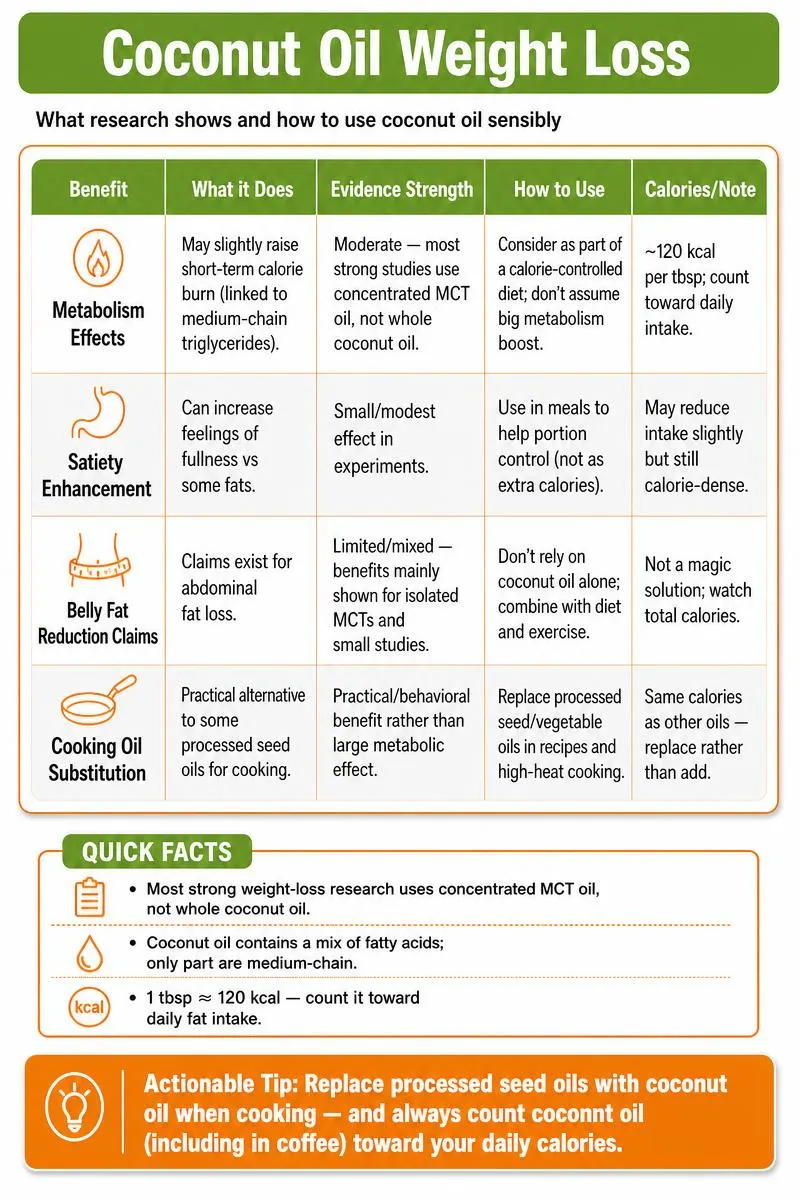
Quick Comparison: Benefits Of Coconut Oil For Weight Loss
| Benefit | What it Does | Evidence Strength | How to Use | Calories/Note |
|---|---|---|---|---|
| Metabolism Effects | May slightly raise short-term calorie burn (linked to medium-chain triglycerides). | Moderate — most strong studies use concentrated MCT oil, not whole coconut oil. | Consider as part of a calorie-controlled diet; don’t assume big metabolism boost. | ~120 kcal per tbsp; count toward daily intake. |
| Satiety Enhancement | Can increase feelings of fullness vs some fats. | Small/modest effect in experiments. | Use in meals to help portion control (not as extra calories). | May reduce intake slightly but still calorie-dense. |
| Belly Fat Reduction Claims | Claims exist for abdominal fat loss. | Limited/mixed — benefits mainly shown for isolated MCTs and small studies. | Don’t rely on coconut oil alone; combine with diet and exercise. | Not a magic solution; watch total calories. |
| Cooking Oil Substitution | Practical alternative to some processed seed oils for cooking. | Practical/behavioral benefit rather than large metabolic effect. | Replace processed seed/vegetable oils in recipes and high-heat cooking. | Same calories as other oils — replace rather than add. |
4 Benefits of Coconut Oil for Weight Loss
Here are four ways coconut oil may factor into weight management.
1. Metabolism Effects
Coconut oil contains medium-chain fatty acids – specifically lauric acid, caprylic acid, and capric acid – that the body processes differently than the long-chain fatty acids found in most dietary fats. Medium-chain fatty acids travel directly to the liver, where they’re more likely to be used for energy rather than stored as fat. Long-chain fatty acids take a slower route through the lymphatic system before reaching the liver.
The catch: coconut oil contains a significant proportion of lauric acid, and lauric acid behaves somewhere between a true medium-chain and a long-chain fatty acid. Pure MCT oil skips this ambiguity because it’s concentrated. So while coconut oil does contain the compounds linked to increased energy expenditure in MCT studies, the dose you get from a tablespoon is lower than what researchers typically use.
If you’re comparing fat sources, coconut oil offers a different metabolic pathway than olive oil or butter. Whether that difference translates to meaningful weight loss from coconut oil alone is still an open question.
2. Satiety Enhancement
Some studies suggest that medium-chain fatty acids may increase feelings of fullness compared to long-chain fats. The proposed mechanism involves ketone production – when the liver metabolizes medium-chain fatty acids rapidly, it produces ketones, which may signal satiety to the brain.
For people who snack between meals or struggle with portion control, this could matter. Feeling full an hour longer after breakfast might mean skipping a mid-morning trip to the pantry. But the satiety effect of coconut oil specifically (versus pure MCT oil) hasn’t been studied as thoroughly, so treat this as a plausible but unconfirmed benefit.
If you already cook with fats, switching to coconut oil won’t add calories but might change how satisfied you feel after eating. That’s a reasonable thing to test on yourself over a couple of weeks.
3. Belly Fat Reduction Claims
Some sources suggest that medium-chain fatty acids may preferentially reduce abdominal fat. The idea comes from a small number of studies on MCT oil where participants lost slightly more waist circumference than those consuming long-chain fats.
Direct evidence for coconut oil producing the same effect is thin. The studies that exist are small, short in duration, and often use MCT oil rather than coconut oil. Abdominal fat also responds strongly to overall calorie balance, sleep, and activity – factors that dwarf any single ingredient’s contribution.
If you’re specifically asking whether coconut oil targets belly fat, the honest answer is that the research doesn’t support a strong direct link. General fat loss from a calorie deficit will reduce abdominal fat over time, and coconut oil’s role in that process is minor at best.
4. Cooking Oil Substitution
The most practical argument for coconut oil in a weight-loss context isn’t about metabolism – it’s about kitchen swaps. Coconut oil is stable at high temperatures because its fatty acids are mostly saturated, which means coconut oil resists oxidation when heated. Seed oils like soybean or canola oil have higher proportions of polyunsaturated fatty acids that can break down under heat.
Replacing a less stable cooking fat with coconut oil means using a fat that resists oxidation, which means fewer degraded compounds in your food. That’s a food-quality decision more than a weight-loss decision, but the two tend to overlap in practical eating patterns.
Coconut oil also has a distinct flavor that works well in certain dishes – curries, baked goods, eggs – and less well in others. If the flavor keeps you cooking at home instead of ordering takeout, that’s a win for calorie control.
How to Use Coconut Oil for Weight Loss
Two practical approaches and one common mistake to avoid.
Morning Coffee and Empty-Stomach Use
Some people add coconut oil to morning coffee, often blended into what’s popularly called bulletproof coffee. The idea is that medium-chain fatty acids on an empty stomach convert quickly to ketones, providing energy without a blood sugar spike. The practical effect: you feel full and skip breakfast.
Timing matters less than total intake. If you add coconut oil to your coffee but also eat your usual breakfast, you’ve added calories rather than shifted them. Count the coconut oil toward your daily fat intake. A tablespoon of coconut oil contains the same calories as a tablespoon of olive oil or butter – roughly the same as any pure fat source.
Cooking Applications and Fat-Replacement Strategy
The cleanest way to use coconut oil for weight loss is as a one-to-one replacement for whatever cooking oil you currently use. Same amount of fat, different fatty acid profile. No net calorie change.
Use coconut oil where its flavor fits: sautéing vegetables for a stir-fry, roasting sweet potatoes, baking muffins. Use a different oil where coconut flavor would clash – like a vinaigrette or a delicate fish preparation.
Caution Around Straight Spoonfuls
Taking coconut oil by the spoonful is a trend that circles around online, and it’s the approach most likely to backfire. The appeal is simple: if medium-chain fatty acids boost metabolism, why not take them straight? But a tablespoon of coconut oil is a tablespoon of pure fat.
Eating coconut oil on top of your regular meals adds roughly the same calories as adding a tablespoon of butter to your daily intake, and a daily tablespoon is a consistent calorie increase that can erase a modest deficit. If you want to try coconut oil straight, replace another fat with it rather than adding it. Swap the butter on your toast for coconut oil. Use coconut oil instead of olive oil when sautéing. The swap is where any potential benefit lives.
Worth Reading Next
Detailed nutrition and satiety benefits of coconut milk that complement oil-based weight-loss strategies.
Risks and Considerations
Coconut oil is calorie-dense – every tablespoon is pure fat, and the calories add up the same way they do with any oil. If you’re tracking intake, adding coconut oil without removing something else will push your daily total up. For weight loss, that math works against you. The practical approach: swap, don’t add.
Coconut oil is also high in saturated fat. While the saturated fatty acids in coconut oil (primarily lauric acid) behave differently than stearic acid and palmitic acid in red meat, some clinicians still recommend keeping saturated fat intake moderate. If you have a history of elevated cholesterol or cardiovascular issues, talk to your doctor before making coconut oil a daily staple.
One thing coconut oil absolutely does not do: burn fat when applied to skin. Topical coconut oil can moisturize and may support skin barrier function thanks to its lauric acid content. But rubbing coconut oil on your belly does not cause fat loss beneath the skin. Fat loss happens through metabolic processes, not through surface contact.
FAQs About Coconut Oil for Weight Loss
Is coconut oil good for losing belly fat?
Direct evidence is thin. The studies suggesting abdominal fat reduction used MCT oil, not coconut oil, and were small. Overall calorie balance drives belly fat loss far more than any single food. Coconut oil may support that process if used as a fat replacement, but coconut oil alone won’t target your midsection.
Will eating a spoonful of coconut oil help me lose weight?
Not by itself. A spoonful of coconut oil is pure fat with the same calorie density as any other oil. If you add coconut oil to your current intake, you’re increasing calories. If you swap coconut oil for another fat you’d normally eat, you might notice slightly different satiety – but a standalone spoonful is not a weight-loss strategy.
Can I rub coconut oil on my belly to burn fat?
No. Topical application of coconut oil does not cause fat loss. Coconut oil can moisturize skin, but fat loss requires a calorie deficit. No oil or cream applied to the surface of your skin changes the fat stored beneath it.
What is the best time to take coconut oil for weight loss?
There’s no evidence that timing coconut oil meaningfully changes its effect. Morning coffee is popular for the steady energy without a blood sugar spike, but total daily intake matters more than timing. Pick a time that fits your routine.
What is the best coconut oil for weight loss?
Unrefined (virgin) coconut oil retains more natural polyphenols and has a stronger coconut flavor. Refined coconut oil is neutral in taste and still contains the same fatty acid profile. Both work for cooking. If you’re using coconut oil primarily for high-heat cooking where you don’t want coconut flavor, refined coconut oil is the practical choice. If you want the full flavor and minimal processing, go with virgin coconut oil.
What kind of results can I expect from coconut oil for weight loss?
Modest, if any. Coconut oil is not a stimulant or metabolism booster like caffeine. The most realistic scenario is that swapping coconut oil in for less stable cooking fats supports an overall eating pattern that leads to gradual weight loss. Don’t expect visible changes from coconut oil alone – expect coconut oil to be one factor among many in your overall eating pattern.
Keep Reading
Low-calorie hydration and electrolyte guidance to help manage appetite and support workouts during weight loss.
Final Thoughts
Coconut oil is not a weight-loss shortcut. The research behind the most compelling claims comes from MCT oil, not the jar sitting in your pantry. But coconut oil can fit into a sensible eating plan if you use it as a replacement for other fats rather than an addition to them.
Try swapping your usual cooking oil for coconut oil for two weeks. Track how full you feel after meals and whether your energy stays steady through the morning. If coconut oil helps you eat less or cook at home more often, that’s where the real benefit shows up – not in any magical fat-burning property, but in practical habits that stick.
External References
- Dietary medium-chain triacylglycerols in metabolic regulation – ScienceDirect
- Long-Chain vs. Medium- and Short-Chain Fatty Acids – Creative-proteomics
- Effects of medium-chain triglycerides on weight loss and … – NIH
- Ask the doctor: Coconut oil and health – Harvard Health
- Coconut Oil vs Olive Oil vs Canola Oil? The Latest Evidence – Dietvsdisease
- Weight-loss diet that includes consumption of medium-chain … – NIH