

8 Benefits of Coconut Oil in Coffee
Coconut oil in coffee adds saturated fat and calories to your morning cup. But the specific fats in coconut oil – medium-chain fatty acids like lauric acid – behave differently in the body than the long-chain fatty acids in most foods.
The practice caught on with keto dieters and intermittent fasters who use fat to extend energy and blunt hunger between meals. Whether the benefits of coconut oil in coffee actually extend beyond those groups depends on your goals, your digestion, and how much you’re adding.
Key Takeaways
- Coconut oil in coffee may create steadier energy than black coffee alone, but the added saturated fat and calories aren’t free.
- The practice is most useful for people following keto or intermittent fasting protocols; for others, the extra calories may work against weight goals.
- Some sources suggest benefits for digestion, satiety, and mental alertness, though evidence is mixed and individual responses vary.
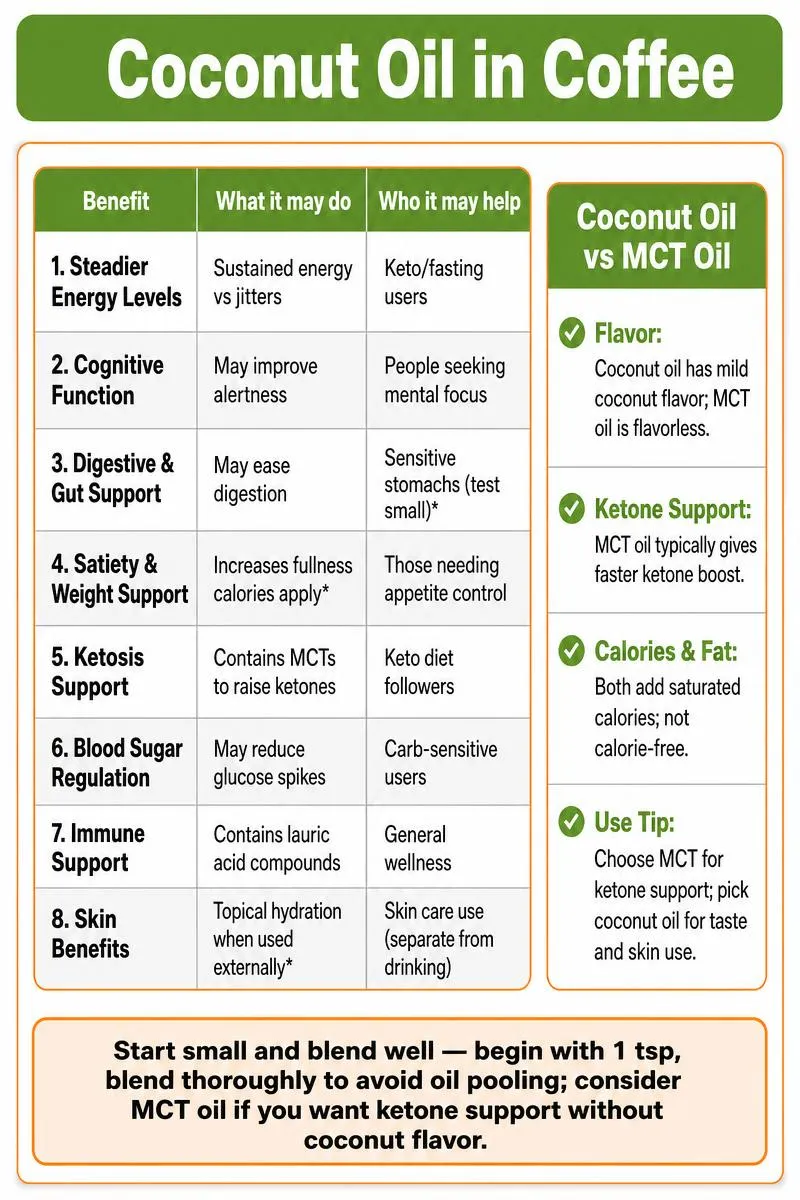
- Start with a small amount and blend well to avoid oil pooling on the surface; consider MCT oil if you want ketone support without coconut flavor.
- People watching saturated fat intake or with sensitive stomachs should approach coconut oil in coffee with caution.
Benefits Of Coconut Oil In Coffee at a Glance
| Benefit | What it may do | Who it may help |
|---|---|---|
| Steadier Energy Levels | Sustained energy vs jitters | Keto/fasting users |
| Cognitive Function | May improve alertness | People seeking mental focus |
| Digestive & Gut Support | May ease digestion | Sensitive stomachs (test small) |
| Satiety & Weight Support | Increases fullness; calories apply* | Those needing appetite control |
| Ketosis Support | Contains MCTs to raise ketones | Keto diet followers |
| Blood Sugar Regulation | May reduce glucose spikes | Carb-sensitive users |
| Immune Support | Contains lauric acid compounds | General wellness |
| Skin Benefits | Topical hydration when used externally | Skin care use (separate from drinking) |
How to Add Coconut Oil to Your Coffee
Coconut oil doesn’t dissolve in coffee the way cream does. Without emulsification, the oil floats on top and can feel greasy going down.
Use a blender or milk frother to emulsify the oil into the coffee. Blending forces the oil and liquid together, creating a creamy texture that stays mixed long enough to drink.
Start with a small amount and adjust based on how your stomach handles it and whether you can taste the coconut. Some people love the flavor; others find it overpowering.
Whether coconut oil in coffee breaks a fast depends on your specific fasting goals. If your fast is about calorie restriction, any coconut oil adds calories. If your fast is about insulin response, the medium-chain fatty acids in coconut oil may have less impact than carbohydrates – but they’re not zero.
Practical ideas for using coconut oil beyond coffee, with recipes and household uses readers can try next.
8 Benefits of Coconut Oil in Coffee
The eight benefits below come from a mix of research on medium-chain fatty acids, anecdotal reports from keto and fasting communities, and search interest around specific claims.
1. Steadier Energy Levels
Caffeine hits fast and fades within hours. Adding fat to coffee may slow that process down.
Medium-chain fatty acids in coconut oil may slow the absorption of caffeine, stretching out the stimulant effect over a longer period. Instead of a spike and crash, some drinkers report a gentler curve – alertness without the jitters or the afternoon dip.
This caffeine-slowing effect isn’t well-studied in controlled trials, so individual responses vary. But the logic – fat slowing gastric emptying, which delays caffeine reaching the bloodstream – has a reasonable physiological basis.
2. Cognitive Function and Mental Alertness
The mental clarity claims around coconut oil in coffee come from how the body processes medium-chain fatty acids.
Caprylic acid and capric acid – two medium-chain fatty acids present in coconut oil – travel to the liver where they’re converted into ketone bodies. Ketones can cross the blood-brain barrier and serve as an alternative fuel source for the brain, separate from glucose.
This is the same mechanism that drives interest in MCT oil for cognitive support. Coconut oil contains these same fatty acids, just at lower concentrations than a refined MCT product.
Some people report sharper focus and clearer thinking after drinking coconut oil coffee. Whether that’s the ketones, the caffeine, or the placebo of a richer morning drink is hard to separate.
3. Digestive and Gut Health Support
Some coconut oil coffee drinkers report improved digestion and less bloating. The mechanism here differs from the energy or cognitive claims.
Lauric acid, the most abundant fatty acid in coconut oil, has demonstrated antimicrobial activity in lab studies. Some sources suggest this antimicrobial property may help balance gut bacteria, though human clinical evidence is limited.
For some people, adding fat to coffee on an empty stomach stimulates bowel movements – similar to how cream or butter does. Others experience the opposite: cramping or loose stools, especially at higher amounts.
4. Satiety and Weight Loss Support
Because fat slows gastric emptying (as noted with caffeine absorption), coffee with coconut oil stays in the stomach longer than black coffee. That delayed emptying may reduce hunger signals and help you feel full between meals.
For intermittent fasters, this is one of the main draws – the oil helps extend a morning fast without eating a full breakfast. Whether this actually supports weight loss depends on total daily calorie intake.
Coconut oil is calorie-dense. If adding oil to your morning coffee doesn’t reduce what you eat later in the day, the extra calories can add up quickly and work against weight loss goals.
5. Ketosis Support
Ketosis is a metabolic state where the body burns ketone bodies instead of glucose for fuel. Getting into ketosis requires keeping carbohydrate intake very low and increasing fat intake.
Coconut oil is primarily fat, with almost no carbohydrates. Adding it to coffee increases fat intake without adding carbs, which aligns with keto macronutrient goals.
The medium-chain fatty acids in coconut oil convert to ketones more readily than long-chain fatty acids. While not as concentrated as MCT oil, coconut oil can contribute to ketone production and help keto dieters maintain ketosis.
6. Blood Sugar Regulation
Adding fat to a beverage may moderate the glucose response to anything consumed alongside it. Fat slows digestion, which can flatten the spike in blood sugar that follows carbohydrate intake.
For someone drinking black coffee, there’s no carbohydrate to spike – so blood sugar regulation is less relevant. The potential benefit shows up when coconut oil coffee replaces a sugary breakfast or helps you avoid snacking on carbs mid-morning.
Evidence specifically on coconut oil and blood sugar is limited. The mechanism is plausible, but the oil alone doesn’t stabilize glucose without dietary context.
7. Immune Support
In the body, lauric acid converts to monolaurin, a compound that has demonstrated antimicrobial and antiviral properties in laboratory settings.
Some sources suggest this antimicrobial activity may support immune function, though most evidence comes from in vitro studies rather than human trials. Drinking lauric acid in coffee doesn’t guarantee the same effects seen in lab conditions.
8. Skin Benefits
Search interest in coconut oil in coffee for skin suggests people are curious about whether drinking this combination improves skin appearance.
Coconut oil contains fatty acids that play roles in skin barrier function and moisture retention. The medium-chain fatty acids in coconut oil may contribute to skin health when consumed, though direct evidence linking coconut oil coffee to improved skin is thin.
Hydration, overall diet quality, and sleep likely matter more for skin than any single ingredient in your coffee. But if the fat in coconut oil helps you avoid a sugary breakfast that triggers inflammation, the indirect benefit to skin could be real.
Coconut Oil in Coffee vs MCT Oil
MCT oil is a concentrated extract of the medium-chain fatty acids found in coconut oil – primarily caprylic acid and capric acid. Coconut oil contains these same fatty acids along with lauric acid, which behaves differently.
MCT oil produces ketones more efficiently because it’s refined to the specific fatty acids the liver converts fastest. If ketone production is your goal – for cognitive support, keto adaptation, or athletic performance – MCT oil does that job better.
Coconut oil costs less and adds a distinct flavor that some people enjoy. Coconut oil also contains lauric acid, which MCT oil typically removes during refining.
Choose MCT oil if ketone production is the priority and you don’t mind a neutral taste. Choose coconut oil if you prefer the flavor, want to spend less, or want the broader fatty acid profile including lauric acid.
Worth Reading Next
A focused rundown of possible risks, symptoms, and safety tips for people concerned about coconut oil side effects.
Side Effects and Safety Notes
The most common side effect of coconut oil in coffee is digestive upset. Drinking fat on an empty stomach can trigger cramping, loose stools, or nausea – especially if you start with too much.
Saturated fat content is the other concern. Coconut oil is heavily saturated fat, and many cardiologists advise limiting saturated fat intake to protect cardiovascular health. The American Heart Association has consistently recommended reducing saturated fat, and coconut oil is no exception despite its popularity in wellness circles.
The calorie density of coconut oil also deserves attention. Oil is the most calorie-dense macronutrient, and portions can creep up over time. What starts as a small amount can grow without noticing, and the extra calories can quietly negate any weight loss benefits.
FAQs About Coconut Oil in Coffee
Is coconut oil in coffee actually good for you?
That depends on your diet and goals. For keto dieters and intermittent fasters, coconut oil in coffee can support ketosis and extend fasting periods. For someone eating a standard diet, the added saturated fat and calories may not offer enough benefit to justify the trade-offs.
How much coconut oil should I put in my coffee?
Start with a small amount and see how your stomach responds. If you tolerate it well, you can increase from there. Blending is essential – stirring with a spoon leaves the oil floating on top.
What are the side effects of coconut oil in coffee?
Digestive upset is the most common – cramping, loose stools, or nausea, especially on an empty stomach. The saturated fat content is also a concern for people monitoring cardiovascular health.
Is coconut oil or MCT oil better in coffee?
MCT oil produces ketones more efficiently and has no flavor. Coconut oil costs less, adds coconut flavor, and contains lauric acid along with medium-chain fatty acids. Choose based on whether ketone production or cost and flavor matters more to you.
Can I drink coconut oil coffee while intermittent fasting?
Technically, any calories break a fast. But if your fasting goal is reducing insulin spikes rather than zero calorie intake, the medium-chain fatty acids in coconut oil may have less impact than carbohydrates. The answer depends on what you’re trying to achieve with the fast.
Can I drink coconut oil coffee on the keto diet?
Yes. Coconut oil adds fat with almost no carbohydrates, which fits keto macronutrient targets. The medium-chain fatty acids may also support ketone production, helping you maintain ketosis.
Does coconut oil in coffee make you poop?
For some people, yes. Fat stimulates the release of bile and can speed up digestion, especially on an empty stomach. This effect is similar to what happens with butter or heavy cream in coffee.
Why do cardiologists say to avoid coconut oil?
Coconut oil is high in saturated fat, which can raise LDL cholesterol. The American Heart Association and many cardiologists recommend limiting saturated fat to protect cardiovascular health. Despite its popularity, coconut oil hasn’t been exempted from this guidance.
What is the healthiest oil to add to coffee?
There’s no single healthiest option – it depends on your goals. MCT oil offers the most efficient ketone production, coconut oil adds flavor and lauric acid, and butter provides fat-soluble vitamins with a creamy texture. Each has trade-offs.
What burns fat when added to coffee?
No single ingredient in coffee burns fat. Caffeine can modestly increase metabolic rate, and medium-chain fatty acids are metabolized differently than other fats – but fat loss depends on overall calorie balance, not a specific oil added to your cup.
Keep Reading
A comparison of coconut milk and regular milk to help readers choose a creamer alternative for their coffee.
Final Thoughts
If you follow a high-fat diet or want to experiment with your morning energy, coconut oil in coffee offers a straightforward way to add medium-chain fatty acids to your routine. Start with a small amount, blend it well, and pay attention to how your stomach and energy respond over the first few days.
If you notice digestive discomfort or you’re watching saturated fat intake, coconut oil in coffee probably isn’t the right addition for you. MCT oil may be a better fit if ketone production is your main goal – just expect to pay more for the refinement.
External References