

Coconut Milk vs Regular Milk: Which Is Better?
Coconut milk and regular milk come from completely different sources – one from pressed coconut flesh, the other from cows – yet they compete for the same spot in your coffee, cereal, and recipes. The choice between them comes down to three things: what your body tolerates, what you’re cooking, and what nutrients you’re trying to get (or avoid).
Regular milk delivers significantly more protein and naturally occurring calcium. Coconut milk skips the lactose and dairy proteins entirely but brings more saturated fat and a distinct tropical flavor. Neither one is universally better – the right pick shifts depending on your dietary priorities.
Key Takeaways
- Coconut milk is entirely dairy-free; regular milk contains lactose and dairy proteins like casein and whey.
- Regular milk delivers far more complete protein per serving than coconut milk.
- Coconut milk contains more saturated fat than regular milk, mostly from lauric acid.
- They behave differently in cooking – coconut milk adds flavor and richness, regular milk stays neutral.
- The right choice hinges on your dietary priorities.
Coconut Milk Vs Regular Milk Quick Comparison
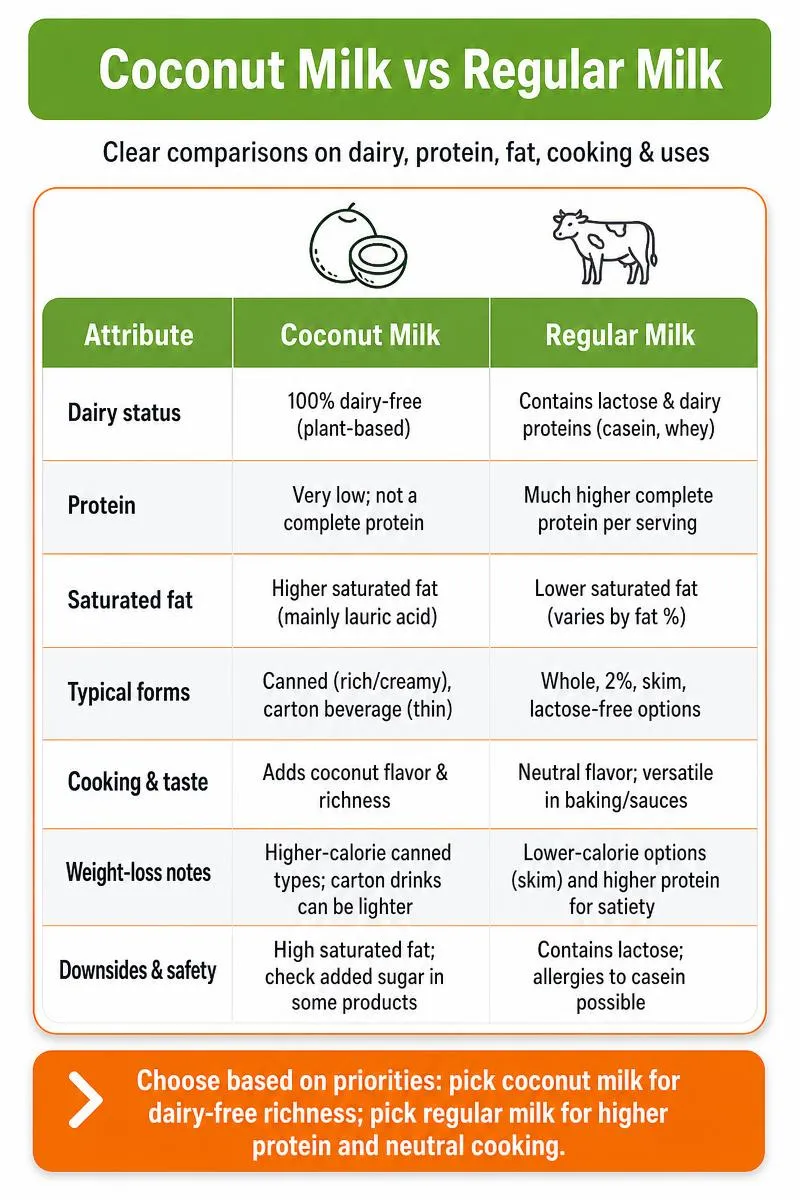
| Attribute | Coconut Milk | Regular Milk |
|---|---|---|
| Dairy status | 100% dairy-free (plant-based) | Contains lactose & dairy proteins (casein, whey) |
| Protein | Very low — not a complete protein | Higher; complete protein per serving |
| Saturated fat | Higher saturated fat (mainly lauric acid) | Lower saturated fat (varies by fat %) |
| Typical forms | Canned (rich), carton beverage (thin) | Whole, 2%, skim, lactose-free options |
| Cooking & taste | Adds coconut flavor and richness | Neutral flavor; versatile in baking and sauces |
| Weight-loss notes | Canned types higher-calorie; carton drinks lighter | Lower-calorie options (skim); higher satiety |
| Downsides & safety | High saturated fat; check added sugar | Contains lactose; casein allergy possible |
What Is Coconut Milk?
Coconut milk is the liquid pressed from grated mature coconut flesh. You’ll find coconut milk sold two ways: canned (thicker, higher fat, better for cooking) and in cartons (thinner, often fortified, better for drinking and cereal).
Canned coconut milk works best in curries, soups, smoothies, and dairy-free baking where you want creaminess and a coconut flavor. Carton coconut milk is better suited for coffee, cereal, and drinking straight.
Strengths of coconut milk: coconut milk is completely dairy-free, has a rich and creamy texture, and works well in both savory and sweet dishes. Weaknesses of coconut milk: coconut milk is low in protein, high in saturated fat, and can separate or curdle when exposed to high heat or acidic ingredients.
Explore More
Nutritional value of coconut water
A clear breakdown of coconut-based beverage nutrition to compare coconut milk with other coconut drinks and understand…
What Is Regular Milk?
Regular milk is pasteurized cow’s milk, sold in three common fat levels: whole, reduced-fat, and skim. The pasteurization process heats the milk to kill harmful bacteria while retaining most of the naturally occurring nutrients.
Regular milk works best for drinking, cereal, neutral baking (where you don’t want added flavor), and protein shakes. Strengths of regular milk: regular milk provides complete protein – meaning it contains all nine essential amino acids – along with naturally occurring calcium and vitamin B12. Weaknesses of regular milk: regular milk contains lactose, which many people can’t digest, and regular milk is unsuitable for anyone with a dairy allergy.
Coconut Milk vs Regular Milk: Nutrition
Protein and calcium: Regular milk wins decisively on both. A single serving of regular milk delivers a meaningful amount of complete protein containing all nine essential amino acids, plus naturally occurring calcium. Coconut milk contains only trace amounts of protein and, unless fortified, very little calcium.
Carbohydrates and sugars: Unsweetened coconut milk contains fewer carbohydrates than regular milk. Regular milk naturally contains lactose, a milk sugar that adds to the carbohydrate content. Unsweetened coconut milk contains little to no sugar – though sweetened or flavored versions add sugar back in.
Fat and saturated fat: Coconut milk contains more total fat than regular milk, and most of that fat is saturated – primarily lauric acid, a medium-chain fatty acid. Regular milk contains less total fat, with a smaller proportion coming from saturated fat.
Cholesterol and fiber: Coconut milk is naturally cholesterol-free since coconut milk comes from a plant source, and coconut milk contains small amounts of dietary fiber from coconut flesh. Regular milk contains dietary cholesterol because regular milk comes from an animal, and regular milk contains no fiber.
Iron and potassium: Coconut milk contains more iron than regular milk. Both milks provide potassium, with coconut milk generally offering more per serving.
Coconut Milk vs Regular Milk: Taste and Cooking
Flavor is where these two milks diverge most noticeably. Regular milk has a neutral, slightly sweet taste that blends into almost any recipe without announcing itself. Coconut milk carries a distinct coconut flavor that works in some dishes and clashes in others.
In baking, regular milk is the safer choice when you want other flavors to lead. Coconut milk works well in recipes where the tropical note complements the dish – think coconut cake, tropical smoothies, or dairy-free macaroons.
In sauces and curries, coconut milk shines. The medium-chain fatty acids give coconut milk a creamy richness that holds up well in savory dishes like Thai curry or coconut soup. Regular milk can work in sauces too, but regular milk is more prone to curdling under high heat or acidity and won’t deliver the same velvety texture.
In coffee, both milks work, but coconut milk and regular milk perform differently. Regular milk steams and froths well for lattes and cappuccinos. Coconut milk adds a subtle sweetness and coconut note, and some brands of coconut milk separate when poured into hot coffee.
For cereal, regular milk is the familiar choice. Coconut milk (carton version) works fine but changes the flavor profile of your breakfast.
Regular milk wins for neutral recipes where you don’t want added flavor. Coconut milk wins for creamy, flavored dishes where richness and a coconut note enhance the result.
Also Worth Checking Out
Practical cooking and substitution guidance for coconut fats that readers can apply when using coconut milk in recipes.
Coconut Milk vs Regular Milk: Weight Loss
Unsweetened coconut milk is often lower in carbohydrates than regular milk. If you’re following a low-carb approach, coconut milk may fit better into your daily carbohydrate allowance. That said, coconut milk’s higher fat content means coconut milk can be more calorie-dense depending on the variety – canned coconut milk is particularly rich.
Reduced-fat regular milk is lower in both saturated fat and total calories than coconut milk. If your weight-loss approach focuses on reducing fat intake and calorie density, reduced-fat regular milk may be the better fit.
Protein plays a role in satiety – the feeling of fullness that helps you eat less overall. Regular milk’s higher protein content may help you feel fuller for longer compared to coconut milk, which contains very little protein.
Coconut Milk vs Regular Milk: Downsides and Safety
Both milks have legitimate downsides worth knowing before you commit to either one.
Coconut milk concerns: The high saturated fat content – mostly lauric acid – is the primary concern with coconut milk. Some dietary guidelines recommend limiting saturated fat intake for cardiovascular health, so if you’re monitoring saturated fat due to a heart condition or cholesterol concern, coconut milk’s fat content is worth paying attention to. Some sources also suggest individual reactions to coconut milk vary – some people report digestive discomfort after consuming coconut milk.
Regular milk concerns: Lactose intolerance is the most common issue with regular milk. People who lack sufficient lactase – the enzyme needed to break down lactose – may experience bloating, gas, or diarrhea after drinking regular milk. Dairy allergies, which involve an immune response to milk proteins like casein and whey, are a separate and more serious concern.
Who should avoid coconut milk: anyone with a coconut allergy, those following a saturated-fat-restricted diet, and people who experience digestive discomfort after consuming coconut milk. Coconut is technically a fruit, not a tree nut, but some people with tree-nut sensitivities also react to coconut – check with your doctor if you’re unsure.
Who should avoid regular milk: anyone with a diagnosed dairy allergy, people with lactose intolerance, and those following a vegan or dairy-free diet.
Which Should You Choose?
If you have a dairy allergy or lactose intolerance, coconut milk is the clear choice. Coconut milk contains no lactose, no casein, and no whey.
If your primary protein source matters – you’re an athlete, recovering from injury, or trying to increase protein intake – regular milk delivers far more complete protein per serving.
If you want creamy cooking with rich flavor, coconut milk brings a texture and taste that regular milk can’t replicate. Curries, soups, and tropical-flavored desserts benefit from coconut milk specifically.
If you’re monitoring saturated fat, reduced-fat regular milk contains less saturated fat than coconut milk. The lauric acid in coconut milk, while a medium-chain fatty acid, still counts toward your saturated fat intake.
If you’re limiting carbohydrates, unsweetened coconut milk contains fewer carbs than regular milk. The lactose in regular milk adds carbohydrates that unsweetened coconut milk simply doesn’t have.
Worth Reading Next
Is coconut oil good for cholesterol
A focused look at saturated fat and cholesterol effects that helps readers weigh health trade-offs when choosing…
FAQs About Coconut Milk and Regular Milk
Is coconut milk better for you than regular milk?
Neither is universally better. Regular milk provides more complete protein and naturally occurring calcium. Coconut milk is dairy-free, lower in carbohydrates, and naturally cholesterol-free. Your dietary needs determine which milk is better for you.
Which has more calories, coconut milk or regular milk?
Canned coconut milk is generally more calorie-dense than regular milk due to the higher fat content. Carton coconut milk (the thinner, drinking kind) is often comparable to or lower in calories than whole milk. Check labels, since calorie content varies widely by brand and fat level.
Is coconut milk better than regular milk for weight loss?
It depends on your approach. If you’re limiting carbohydrates, unsweetened coconut milk fits better. If you’re reducing calories and prioritizing protein for satiety, reduced-fat regular milk may serve you better.
Does coconut milk taste like regular milk?
No. Coconut milk has a distinct coconut flavor that regular milk doesn’t have. Regular milk tastes neutral and slightly sweet. If a recipe needs neutrality, regular milk works; if the dish benefits from a coconut note, coconut milk enhances the flavor.
Can I substitute coconut milk for regular milk in a recipe?
Yes, but expect a flavor change. Coconut milk adds a coconut taste that regular milk doesn’t, so coconut milk works best in recipes where that flavor complements the dish. In baking, you may also need to account for differences in fat content and liquid density.
Is there a downside to drinking coconut milk?
The main downsides are low protein content and high saturated fat. Coconut milk also contains very little calcium unless fortified. If you rely on milk as a protein or calcium source, coconut milk won’t deliver what regular milk does.
Why do I feel weird after drinking coconut milk?
Some people report digestive discomfort after consuming coconut milk. The fat content can be heavier than what your digestive system is used to, and individual reactions to coconut products vary. If discomfort persists, talk to your doctor.
Can coconut milk affect your liver?
There’s no strong evidence that moderate coconut milk consumption harms the liver. The medium-chain fatty acids in coconut milk are metabolized differently than long-chain fats, but research on long-term effects remains limited. If you have a liver condition, consult your doctor before making significant dietary changes.
Is coconut milk an appropriate choice for children?
Coconut milk lacks the complete nutrition – particularly protein and calcium – that growing children need. If you’re considering coconut milk for a child, especially a young one, talk to a pediatrician about how to ensure adequate protein, calcium, and vitamin D from other sources.
What is the healthiest milk to drink?
There’s no single healthiest milk. The healthiest choice depends on your nutritional needs, dietary restrictions, and health goals. Regular milk is strongest for protein and calcium. Coconut milk is best for dairy-free, low-carb diets. Read labels and choose the option that fills your specific nutritional gaps.
Final Verdict
No universal winner exists between coconut milk and regular milk. Regular milk suits people who need complete protein, natural calcium, and a neutral flavor. Coconut milk suits people who need a dairy-free option, want fewer carbohydrates, or are cooking dishes where a coconut flavor enhances the result.
Edge cases worth noting: young children who need complete nutrition for growth benefit from regular milk’s protein and calcium profile. Athletes needing recovery protein after exercise also get more from regular milk than coconut milk.
Here’s a practical next step: buy a small container of each and test both in your usual recipes for one week. You’ll learn quickly which one tastes right, digests well, and fits your routine better than any article can tell you.
External References