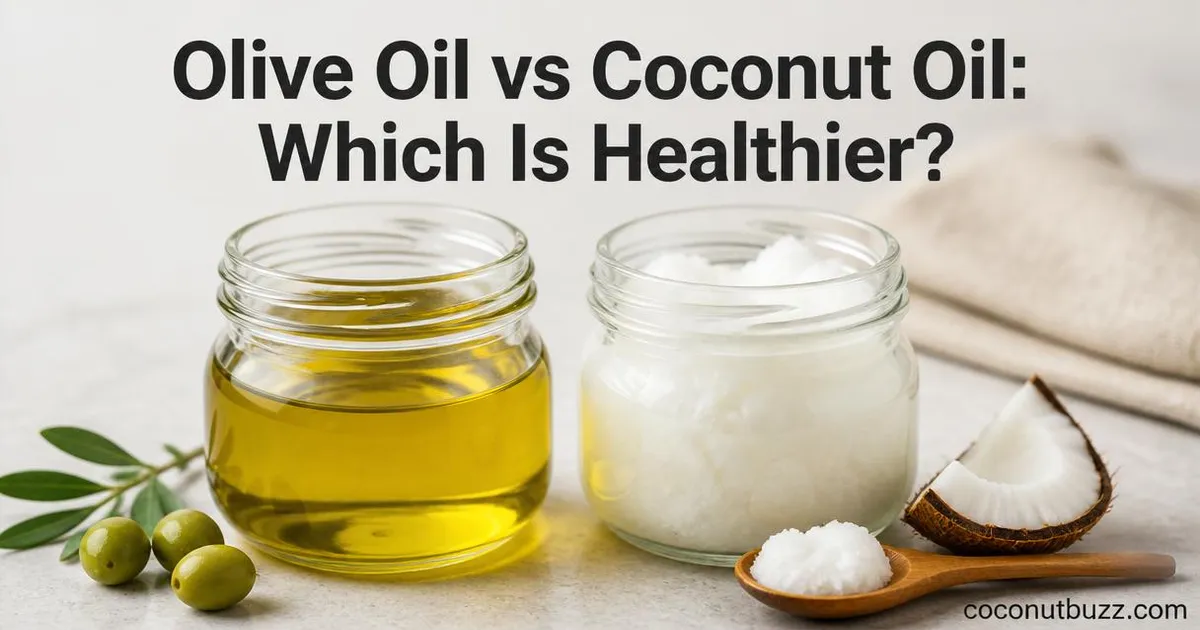
Olive Oil vs Coconut Oil: Which Is Healthier?
Most cooking advice treats olive oil and coconut oil as if one is clearly superior. The reality is messier: olive oil has decades of cardiovascular research behind it, while coconut oil handles high heat without breaking down. The choice between them depends on what you’re cooking, what health outcomes matter most to you, and whether you trust newer studies challenging the saturated-fat consensus.
Key Takeaways
- Olive oil has stronger clinical evidence for heart health benefits.
- Some sources suggest cardiologists advise limiting coconut oil because of its high saturated fat content.
- Coconut oil withstands high heat; olive oil excels at low to medium heat and raw applications.
- Extra virgin olive oil offers more complex flavor for finishing dishes.
- Coconut oil solidifies at room temperature, making it useful in baking and some skincare routines.
- Most kitchens benefit from keeping both oils for different tasks.
Comparing the Top Olive Oil Vs Coconut Oil
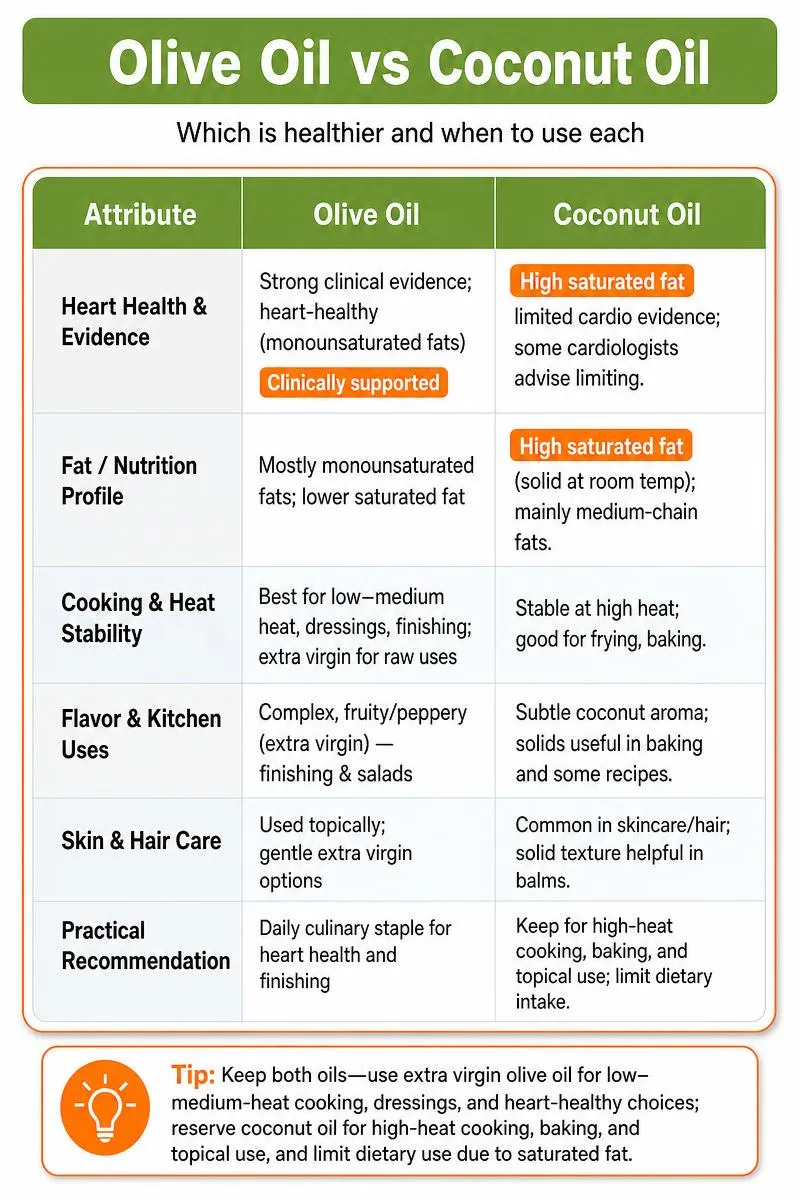
| Attribute | Olive Oil | Coconut Oil |
|---|---|---|
| Heart Health & Evidence | Strong clinical evidence; heart‑healthy (monounsaturated) | High in saturated fat; limited cardio evidence; many advise limiting |
| Fat / Nutrition Profile | Mostly monounsaturated; lower saturated fat | High saturated fat; mainly medium‑chain fats; solid at room temp |
| Cooking & Heat Stability | Best for low–medium heat, dressings, finishing (extra virgin raw) | Stable at high heat; good for frying and baking |
| Flavor & Kitchen Uses | Complex, fruity/peppery (extra virgin); finishing & salads | Subtle coconut aroma; solids useful in baking |
| Skin & Hair Care | Used topically; gentle extra virgin options | Common in skincare and hair; solid texture good for balms |
| Practical Recommendation | Daily culinary staple for heart health and finishing | Keep for high‑heat cooking, baking, and topical use; limit dietary intake |
What Is Olive Oil?
Olive oil comes from pressing whole olives. Extra virgin means the oil was cold-pressed without heat or chemicals, keeping more polyphenols and flavor compounds intact. Virgin olive oil follows the same process but with slightly lower flavor standards. Refined olive oil gets chemically processed to remove defects, which also strips out most of the aroma and protective compounds.
You’ll get the most out of olive oil in salad dressings, drizzled over finished dishes, or used for low-to-medium heat sautéing. The fruity, peppery, or grassy notes in good extra virgin oil add complexity that heat would destroy anyway.
Olive oil’s main strength is the volume of clinical research linking it to better cardiovascular outcomes, plus a flavor range that spans delicate to intensely pungent. The downsides: smoke point varies widely by grade, and high-quality extra virgin olive oil is notably more expensive than refined grades.
Related Reading
A detailed comparison of avocado oil and coconut oil for cooking, smoke point, and heart-healthy fat profiles.
What Is Coconut Oil?
Coconut oil is extracted from the white meat inside mature coconuts. Virgin coconut oil comes from fresh coconut meat, usually cold-pressed or fermented, and keeps a mild coconut aroma. Refined coconut oil starts with dried coconut meat (called copra), then gets bleached and deodorized to remove the coconut smell and extend shelf life.
It works best for high-heat cooking, baking recipes that call for solid fat, and topical applications like hair masks or body moisturizer. Coconut oil solidifies at room temperature, making it behave more like butter than liquid oil in recipes.
Coconut oil’s strengths include stability at high temperatures, a firm texture that replaces butter or shortening in vegan baking, and a mild sweetness that complements tropical or Asian dishes. The main weaknesses: it’s predominantly saturated fat, and the flavor – even in refined versions – can clash with Mediterranean or French cooking.
Olive Oil vs Coconut Oil: Nutrition and Heart Health
Olive oil contains mostly monounsaturated fatty acids, particularly oleic acid, which multiple long-term studies associate with lower LDL cholesterol and reduced cardiovascular disease risk. It also delivers polyphenols like hydroxytyrosol and oleuropein, which appear to reduce inflammation and oxidative stress in arterial walls.
Coconut oil is predominantly saturated fat, primarily lauric acid, myristic acid, and palmitic acid. Saturated fats tend to raise both LDL (low-density lipoprotein) and HDL (high-density lipoprotein) cholesterol. Some smaller studies suggest lauric acid raises HDL more than other saturated fats, but the LDL increase remains a concern for most cardiologists.
Most major health organizations – including the American Heart Association – recommend limiting saturated fat intake and replacing it with unsaturated fats. That guidance is based on decades of epidemiological data linking high saturated fat intake to increased heart disease risk. Some newer research questions whether all saturated fats behave identically, but the consensus still leans heavily toward olive oil for regular use.
Winner: olive oil for regular consumption, especially if you’re managing cholesterol or following established heart-health guidelines.
Olive Oil vs Coconut Oil: Cooking and Heat Stability
Smoke point tells you when an oil starts to break down and produce off-flavors and potentially harmful compounds. Extra virgin olive oil typically has a lower smoke point, depending on polyphenol content and processing. Refined olive oil can reach significantly higher temperatures. Light olive oil (highly refined) handles the highest heat among olive oil grades.
Coconut oil – both virgin and refined – offers moderate to high smoke points, with refined versions handling more heat than virgin. The high percentage of saturated fat makes coconut oil chemically stable under heat, meaning it resists oxidation better than polyunsaturated oils like canola or sunflower.
For deep frying, stir-frying, or roasting at high heat, refined coconut oil or light olive oil both work. For gentler sautéing, pan-roasting, or medium-heat cooking, extra virgin olive oil adds flavor without risk. For raw applications – dressings, dips, finishing drizzles – extra virgin olive oil delivers aroma and polyphenols that heat would destroy.
Winner: coconut oil for high heat; olive oil for low heat and finishing.
Explore More
Benefits of coconut oil in coffee
How coconut oil performs when added to coffee, including potential metabolic effects and culinary considerations.
Olive Oil vs Coconut Oil: Flavor and Kitchen Versatility
Extra virgin olive oil ranges from buttery and mild to intensely fruity, grassy, or peppery, depending on the olive variety and harvest timing. That complexity works in Mediterranean dishes, vinaigrettes, pasta, roasted vegetables, and anywhere you want the oil to contribute its own character. Refined olive oil tastes neutral, making it a blank canvas for other flavors.
Coconut oil – even refined – carries a faint sweetness and, in virgin form, a noticeable coconut aroma. That flavor pairs naturally with Thai curries, tropical desserts, smoothies, and baked goods where a hint of coconut enhances the dish. In Italian, French, or Middle Eastern cooking, that same sweetness can feel out of place.
Olive oil stays liquid at room temperature, so it blends easily into dressings and marinades. Coconut oil solidifies when cool, which makes it useful in pie crusts, vegan butter substitutes, and no-bake treats that need to firm up in the fridge.
Winner: olive oil for savory versatility; coconut oil for sweet and tropical dishes.
Olive Oil vs Coconut Oil: Skin and Hair Care
Both oils show up in DIY beauty routines, but they behave differently on skin and hair. Coconut oil contains lauric acid, which has antimicrobial properties and may help reduce certain skin bacteria. It sits on the skin’s surface longer, forming an occlusive barrier that locks in moisture. That barrier works well for very dry skin or as an overnight hair mask, but it can clog pores on acne-prone or oily skin.
Olive oil delivers squalene and vitamin E, both of which may support skin repair and hydration. It absorbs more readily than coconut oil, leaving less residue. People with sensitive or combination skin often find olive oil less likely to trigger breakouts, though individual reactions vary widely.
For hair, coconut oil’s small molecular structure allows it to penetrate the hair shaft, reducing protein loss during washing. Olive oil coats the hair and smooths the cuticle but doesn’t penetrate as deeply. If your hair is coarse, dry, or damaged, coconut oil may offer more conditioning. If your hair is fine or gets greasy easily, olive oil or a lighter oil might feel less heavy.
Winner: depends on skin type and desired finish. Coconut oil for occlusive moisture and deep hair conditioning; olive oil for lighter hydration and sensitive skin.
Which Should You Choose?
Prioritize heart health: choose olive oil. The clinical evidence for cardiovascular benefits is stronger and more consistent.
Sear, fry, or roast above medium-high heat: choose coconut oil. Its saturated fat structure resists oxidation at higher temperatures.
Make salad dressings, dips, or finishing oils: choose olive oil. The polyphenols and flavor complexity add more than just fat.
Bake goods requiring solid fat: choose coconut oil. It mimics butter’s texture in vegan recipes and pie crusts.
Want a subtle sweetness in curries or smoothies: choose coconut oil. The flavor complements tropical and Southeast Asian dishes without overpowering them.
Worth Reading Next
A side-by-side look at coconut oil and jojoba oil for skin and hair uses, absorption, and cosmetic benefits.
FAQs About Olive Oil and Coconut Oil
Why do cardiologists say to avoid coconut oil?
Most cardiologists follow American Heart Association guidelines, which recommend limiting saturated fat to reduce LDL cholesterol and cardiovascular disease risk. Coconut oil is predominantly saturated fat, much higher than butter or lard. Some newer studies suggest lauric acid may behave differently than other saturated fats, but the consensus among cardiologists remains cautious until more long-term data emerges.
Which is better for your brain, olive oil or coconut oil?
Olive oil has more research linking it to cognitive health, particularly in Mediterranean diet studies that associate regular olive oil consumption with lower rates of cognitive decline. Some sources suggest medium-chain triglycerides in coconut oil may provide an alternative energy source for brain cells in conditions like Alzheimer’s, but clinical evidence remains limited. For general brain health, olive oil has the stronger track record.
Which is better for wrinkles, olive oil or coconut oil?
Olive oil contains squalene and polyphenols, both of which may support skin repair and protect against oxidative damage that contributes to aging. Coconut oil forms an occlusive barrier that locks in moisture but doesn’t deliver the same antioxidant profile. For anti-aging skincare, olive oil has more compounds associated with reducing oxidative stress, though neither oil replaces sunscreen or proven retinoids.
What’s the healthiest oil to cook with?
No single oil is healthiest for every situation. Extra virgin olive oil has the most clinical support for heart health when used at low to medium heat or raw. Avocado oil offers a high smoke point and similar monounsaturated fat content for high-heat cooking. Coconut oil works for high heat but delivers mostly saturated fat. Match the oil to the cooking method and your health priorities.
What is the healthiest oil for the heart?
Extra virgin olive oil has decades of research linking it to improved cholesterol ratios, reduced inflammation, and lower cardiovascular disease risk. The polyphenols in high-quality extra virgin oil appear to protect LDL cholesterol from oxidation, a key step in artery damage. If you’re managing heart health, olive oil is the most evidence-backed choice.
Is eating a spoonful of coconut oil every day good for you?
It depends on the rest of your diet and your cholesterol levels. A tablespoon of coconut oil adds a substantial amount of saturated fat, which could approach or exceed daily limits recommended by the American Heart Association. If you’re already eating meat, cheese, or other saturated fat sources, adding coconut oil could push you over. If you have normal cholesterol and use it in place of butter, the risk is lower – but olive oil would still offer more cardiovascular benefits.
What is the number one food for memory?
No single food dominates memory research, but fatty fish high in omega-3s – particularly DHA – consistently show up in studies linking diet to cognitive function. Salmon, sardines, and mackerel deliver more DHA than any plant-based oil. Among oils, extra virgin olive oil has the most evidence for supporting brain health, largely through its role in Mediterranean diet studies.
Which is better for weight loss, olive oil or coconut oil?
Neither oil directly causes weight loss – both deliver roughly the same calories per tablespoon. Some small studies suggest medium-chain triglycerides in coconut oil may slightly increase energy expenditure or reduce appetite, but the effect is modest and inconsistent. For weight management, total calorie intake matters more than oil type. Olive oil’s heart-health benefits make it a better long-term choice for most people.
Which is better for hair, olive oil or coconut oil?
Coconut oil penetrates the hair shaft due to its small molecular structure, reducing protein loss during washing and improving moisture retention. Olive oil coats the hair and smooths the cuticle but doesn’t absorb as deeply. If your hair is thick, dry, or chemically treated, coconut oil typically offers more repair. If your hair is fine or prone to greasiness, olive oil provides shine without weighing it down.
Final Thoughts
Olive oil is the safer default for daily cooking and general health. The cardiovascular evidence is strong, the flavor works across more cuisines, and it doesn’t come with the saturated-fat concerns that make coconut oil controversial.
Coconut oil still earns a spot for high-heat tasks, vegan baking, and dishes where its mild sweetness fits. If you monitor cholesterol or follow heart-health guidance from a cardiologist, favor olive oil for most uses.
Stock one quality extra virgin olive oil for raw and low-heat cooking, and one refined coconut oil for frying or baking, and match the oil to the dish.
External References