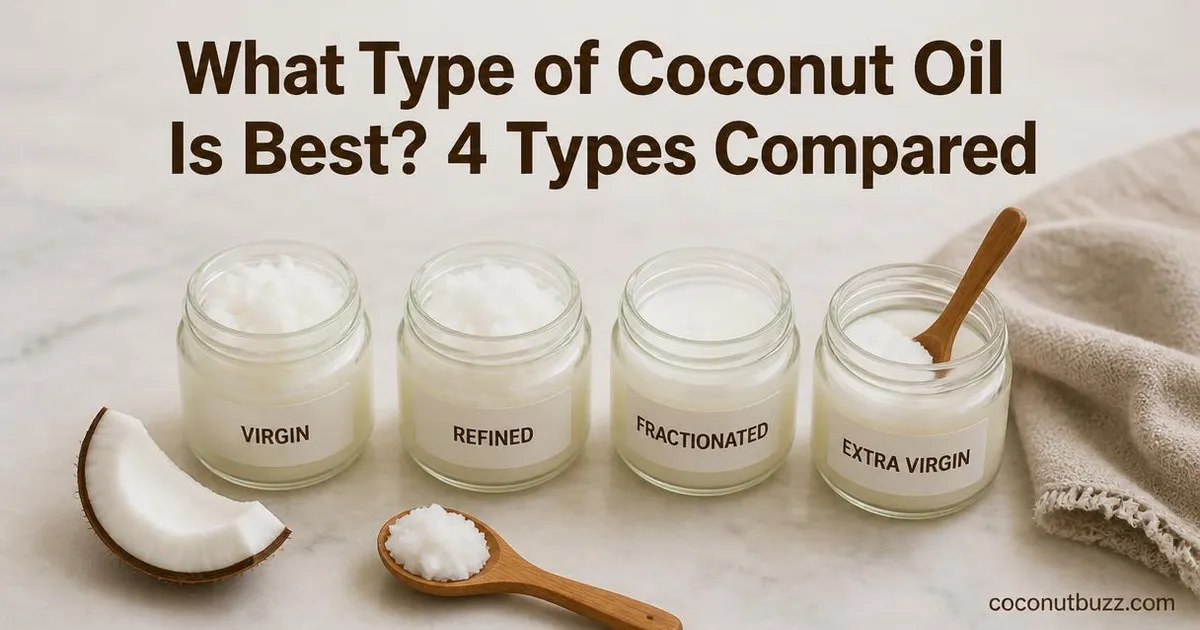
What Type of Coconut Oil Is Best? 4 Types Compared
You stand in the oil aisle and see four jars: virgin, refined, organic, and MCT. They all say “coconut oil” on the label, but they are not the same product. The question is not which one is objectively best – it is which one fits what you actually plan to do with it.
Here is the short version: there are four main types of coconut oil, and each one serves a different purpose. Some belong in the kitchen, some belong on your skin, and one jar can cover both if you do not mind a coconut scent. Your flavor preference and your intended use pick the winner, not a label.
Key Takeaways
- The core decision is refined versus unrefined: refining strips coconut flavor and scent, while virgin keeps both.
- “Virgin” and “extra-virgin” labels mean the same thing – both refer to unrefined oil.
- Choose refined for neutral cooking, and choose virgin when coconut flavor is welcome.
- Organic is a farming label, not a processing method. Organic oils come in both refined and virgin forms.
- Fractionated (MCT) oil stays liquid at room temperature, so beauty products favor it over solid jars.
- If you want one jar for everything, virgin covers cooking, skin, and hair.
Related Reading
A direct comparison of baby oil and coconut oil that helps readers choose the safest coconut oil type for infant and…
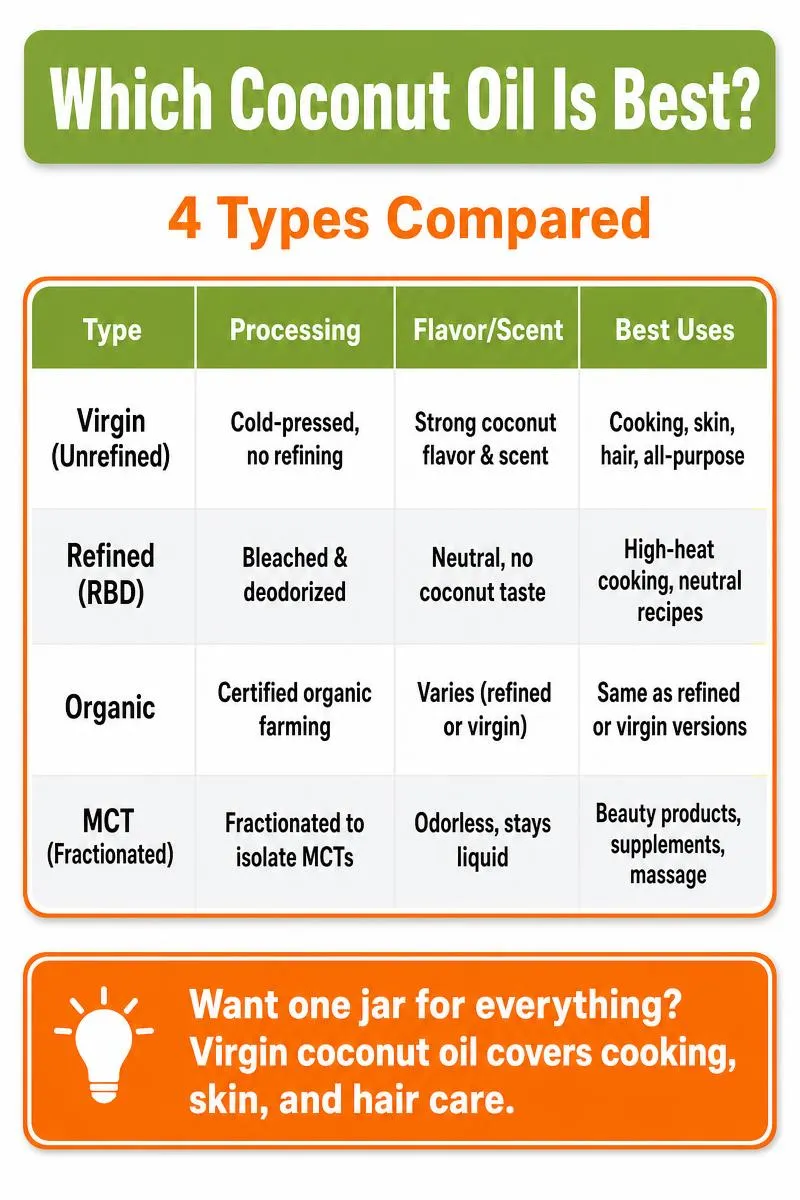
Quick Comparison: What Type Of Coconut Oil Is Best
| Type | Processing | Flavor / Scent | Best Uses |
|---|---|---|---|
| Virgin (Unrefined) | Cold-pressed, unrefined | Strong coconut flavor & scent | Cooking, skin, hair, all-purpose |
| Refined (RBD) | Bleached & deodorized | Neutral — no coconut taste | High-heat cooking, neutral recipes |
| Organic | Certified organic farming | Varies (refined or virgin) | Same as refined or virgin versions |
| MCT (Fractionated) | Fractionated to isolate MCTs | Odorless, stays liquid | Beauty products, supplements, massage |
4 Types of Coconut Oil and Who Each Is Best For
Every jar of coconut oil on a store shelf falls into one of four categories. The differences come down to how the oil is processed, whether the coconuts were certified organic, and whether the oil has been fractionated to stay liquid.
1. Virgin Coconut Oil (Unrefined)
Virgin coconut oil is pressed from fresh coconut meat with minimal processing, which preserves natural coconut flavor and scent. The labels “virgin,” “extra-virgin,” and “unrefined” all point to the same product. There is no industry distinction between virgin and extra-virgin the way there is with olive oil.
This type is best for cooks who want coconut flavor in their food and for anyone who wants a single jar that works for both kitchen and body care. The retained lauric acid – a medium-chain fatty acid found in coconut oil – carries through to the finished product along with the taste and smell.
2. Refined Coconut Oil (RBD)
RBD stands for refined, bleached, and deodorized. RBD processing removes coconut taste and smell, producing a neutral oil that behaves like coconut oil in cooking but does not taste like coconut. The refining process uses steam and filtering, and the “bleached” step refers to filtering through clay, not chemical bleaching.
Refined coconut oil is best for everyday cooking and baking where coconut flavor would clash. If you are frying eggs, making popcorn, or baking a cake that should not taste tropical, reach for RBD.
3. Organic Coconut Oil
Organic is a certification layered over the processing method, not a processing method itself. You can buy organic refined (RBD) coconut oil and organic virgin coconut oil. The organic seal covers farming standards, not how the oil was extracted or whether it retains coconut flavor.
Organic coconut oil is best for buyers who prioritize sourcing and farming standards. Underneath the organic label, you still need to choose refined or virgin based on how you plan to use the oil.
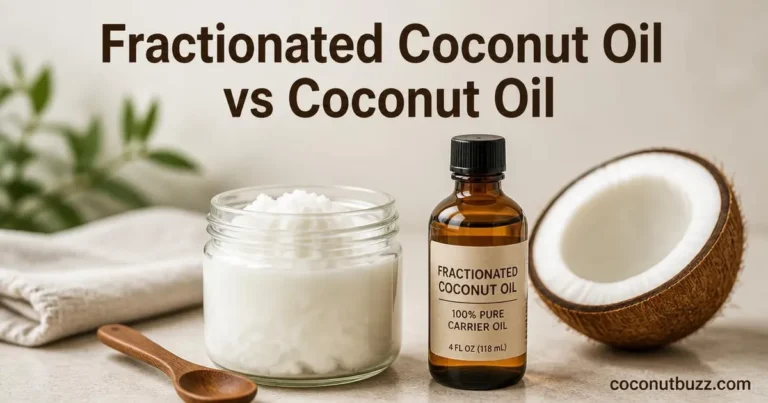
4. MCT (Fractionated) Coconut Oil
Fractionated coconut oil has been processed to remove the long-chain fatty acids, leaving primarily capric and caprylic acid. These medium-chain triglycerides keep the oil liquid at room temperature. You can pour it straight from a bottle instead of scooping from a jar.
MCT oil is common in beauty products and rare in kitchens. It is best for hair and skin, where a pourable liquid beats a solid jar that needs warming in your hands.
How to Choose Coconut Oil
Comparing a virgin oil from one brand against a refined oil from another tells you nothing useful. The first move is to decide which type you want, then compare brands within that type. A virgin oil from Brand A should be judged against a virgin oil from Brand B, not against Brand B’s refined product.
Check the ingredient list for purity. The label should name coconut oil only, with no added oils or preservatives. A “100% virgin” or “100% pure” claim on the front should match a single-ingredient list on the back.
Certifications matter depending on your definition of “best.” Organic certification tells you about farming standards. Fair trade certification tells you about sourcing practices. Neither one tells you whether the oil is refined or virgin, so check both the certification and the processing type before buying.
Match the form to your use. Solid jars work for cooking, where you scoop what you need. Liquid formats, like fractionated oil in a pump bottle, work better for body care, where pouring is easier than scraping.
Explore More
Benefits of coconut oil for hair
A practical guide to using coconut oil on hair, including benefits, application tips, and which oil types work best for…
FAQs About Coconut Oil
What is coconut oil?
Oil pressed from coconut meat, used for both cooking and body care. The pressing method and any post-extraction processing determine the type.
Which type of coconut oil is healthiest?
Some sources suggest virgin coconut oil, since it is the least processed form and retains the most compounds naturally present in coconut, including lauric acid.
Is refined coconut oil okay to eat?
Yes. Refining changes the flavor and scent, not the edibility. RBD coconut oil is a standard ingredient in packaged foods and commercial frying.
Which coconut oil is best for cooking?
No special “cooking grade” exists. Pick refined for neutral flavor or virgin for coconut flavor, depending on the dish. Neither type requires special handling.
Which coconut oil is best for hair and skin?
Virgin works as a multi-use jar if you do not mind the coconut scent. Fractionated (MCT) oil is the better choice if you want a pourable liquid with no aroma.
How can you tell if coconut oil is pure?
Look for a one-ingredient label and a “100% virgin” or “100% pure” claim. Any added oils or preservatives mean the product is a blend.
Which brand of coconut oil is best?
Organic standouts include Nutiva, Dr. Bronner’s, and Thrive Market. All three offer virgin and refined options.
Where can you buy 100% virgin coconut oil?
Grocery stores stock it in the baking or natural foods aisle. You can also buy directly from brand websites and online retailers.
Worth Reading Next
Benefits of coconut oil for skin
A detailed skin-use guide covering benefits and application advice that helps readers decide which coconut oil type…
Final Thoughts
There is no wrong type of coconut oil, only a mismatched one. Each of the four serves a different kitchen or routine, and the best choice depends on whether you are cooking, moisturizing, or both. Before buying another jar, check the label on the one you already own – the processing type and ingredient list will tell you whether it matches how you are actually using it.
External References
- Palm-Free Fractionated Coconut Oil (FCO) and Caprylic … – Gcimagazine
- Unlocking the Power of Lauric Acid: Properties, Benefits … – Oliviaoleo
- Coconut Oil: Chemical Structure Insights | PDF – Scribd
- Coconut oil, is it good or bad? – Myhealthmeter
- Applications of Medium-Chain Triglycerides in Foods – PMC – NIH