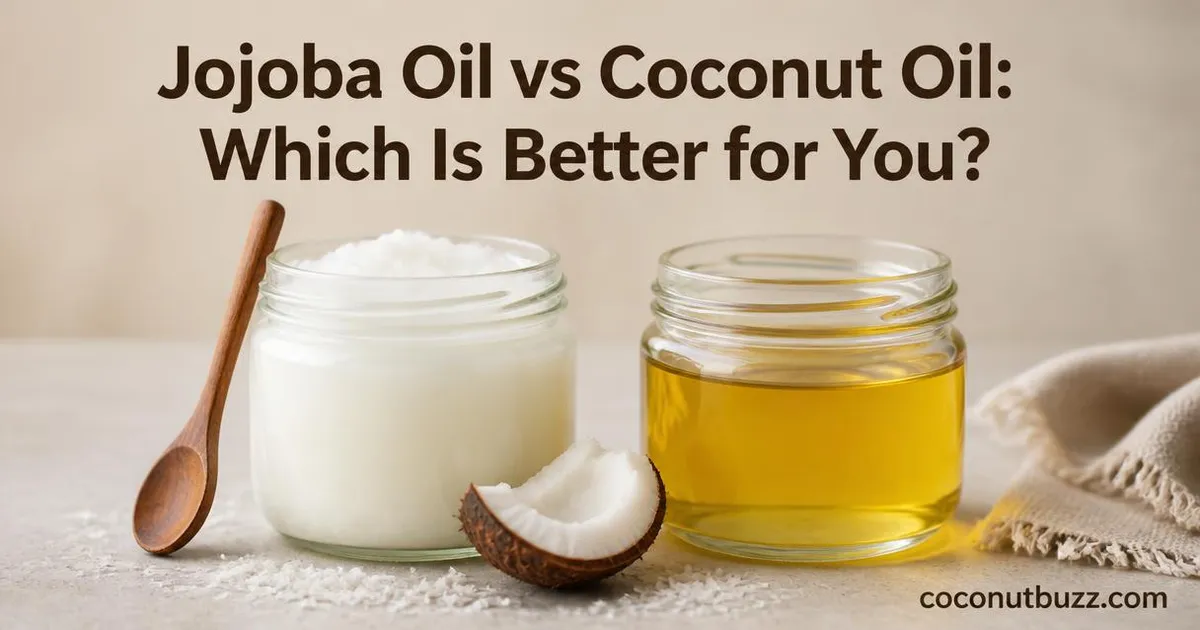
Jojoba Oil vs Coconut Oil: Which Is Better for You?
Jojoba oil isn’t an oil. Chemically, it’s a wax ester that mimics human sebum, which means it behaves completely differently on your skin and hair than coconut oil does.
That structural difference explains why one sits lightly on the surface while the other sinks in deep, and why your face might love one but break out from the other. Coconut oil penetrates the hair shaft and reduces protein loss, making it useful for damaged or coarse hair.
Jojoba oil coats lightly without clogging pores, which is why it is often recommended for acne-prone skin. Picking the wrong one means you may not see the results you want.
Key Takeaways
- Jojoba oil is a liquid wax ester, not a true oil, so it mimics sebum and behaves differently on skin than coconut oil
- Coconut oil penetrates the hair shaft and reduces protein loss; jojoba oil sits on the surface and works better for scalp balance
- Jojoba oil has a lower comedogenic rating, making it safer for acne-prone or oily skin
- Coconut oil offers deeper conditioning for dry or coarse hair but can feel heavy on fine hair or oily scalps
- Jojoba oil resists rancidity longer due to its wax ester structure, while coconut oil oxidizes faster once opened
- Neither oil is universally better – the right choice depends on whether you’re treating hair shaft damage or surface-level skin needs
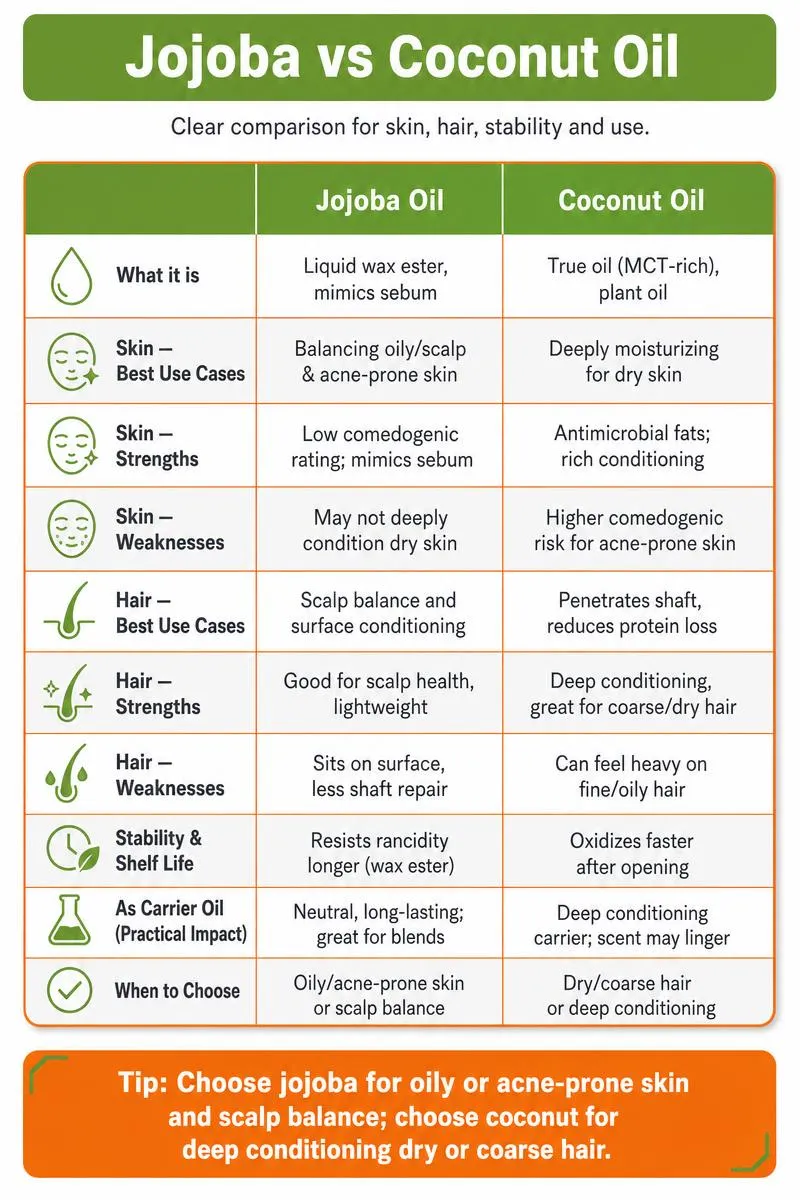
Jojoba Oil Vs Coconut Oil Quick Comparison
| Category | Jojoba Oil | Coconut Oil |
|---|---|---|
| What it is | Liquid wax ester, mimics sebum | True oil (MCT-rich), plant oil |
| Skin — Best Use Cases | Balancing oily/scalp & acne-prone skin | Deeply moisturizing for dry skin |
| Skin — Strengths | Low comedogenic rating; mimics sebum | Antimicrobial fats; rich conditioning |
| Skin — Weaknesses | May not deeply condition very dry skin | Higher comedogenic risk for acne-prone skin |
| Hair — Best Use Cases | Scalp balance and surface conditioning | Penetrates shaft; reduces protein loss |
| Hair — Strengths | Good for scalp health; lightweight | Deep conditioning; great for coarse/dry hair |
| Hair — Weaknesses | Sits on surface; less shaft repair | Can feel heavy on fine or oily hair |
| Stability & Shelf Life | Resists rancidity longer (wax ester) | Oxidizes faster after opening |
| As Carrier Oil (Practical Impact) | Neutral, long-lasting; great for blends | Deep-conditioning carrier; scent may linger |
| When to Choose | Oily/acne-prone skin or scalp balance | Dry/coarse hair or deep conditioning |
What Is Jojoba Oil?
Jojoba oil comes from the seeds of the jojoba plant, but it’s technically a liquid wax. Its molecular structure closely resembles human sebum, which is why skin recognizes it and rarely rejects it.
The plant grows in desert climates, and producers cold-press the seeds to extract the liquid. That wax structure gives jojoba oil a long shelf life and makes it stable at room temperature.
1. Best Use Cases
Jojoba oil works well for facial moisturization because it doesn’t clog pores the way heavier oils do. It’s also a reliable carrier oil for essential oils, blending cleanly without overpowering scents.
Scalp treatments benefit from jojoba oil because it dissolves buildup without stripping natural oils. It also absorbs slowly, which makes it useful for overnight treatments or leave-in applications.
2. Strengths
The lightweight feel makes jojoba oil comfortable for daily use, even on oily or combination skin. It has a low comedogenic rating, which means it rarely triggers breakouts.
Jojoba oil resists oxidation better than most plant oils because its wax ester bonds are more stable. That means it stays fresh longer, even if you don’t use it every day.
Some sources suggest jojoba oil has documented anti-inflammatory properties that support skin-barrier health, though results vary by individual.
3. Weaknesses
Jojoba oil doesn’t penetrate the hair shaft deeply, so it won’t repair internal damage or prevent protein loss. It coats the surface, which helps with shine but not strength.
It also costs more per ounce than coconut oil, partly because jojoba plants grow in limited regions and yield less oil per harvest.
Also Worth Checking Out
A detailed comparison of fractionated and regular coconut oil, including differences in texture, stability, and best…
What Is Coconut Oil?
Coconut oil is a saturated fat extracted from the meat of mature coconuts. It’s solid at room temperature and melts around body temperature, which is why it feels different on skin than liquid oils do.
The oil is rich in lauric acid, a medium-chain fatty acid that gives coconut oil its penetrating ability. That structure allows it to slip between the proteins in hair and skin cells, delivering moisture deeper than surface-coating oils can reach.
1. Best Use Cases
Coconut oil excels at deep hair conditioning, especially for dry, damaged, or coarse hair. It reduces protein loss during washing, which helps hair retain strength over time.
For body moisturizing, coconut oil works as an occlusive sealant, trapping water in the skin. It’s particularly useful on very dry areas like elbows, knees, and heels.
2. Strengths
Coconut oil penetrates the hair shaft better than most plant oils, which makes it effective for pre-wash treatments. Some studies suggest it reduces protein loss by forming a barrier inside the hair cuticle.
It’s widely available and costs less per ounce than jojoba oil, making it practical for full-body use or frequent applications. The melting point also makes it easy to apply – it liquefies in your hands.
3. Weaknesses
Coconut oil has a high comedogenic rating, meaning it clogs pores for many people. If you’re acne-prone or have oily skin, it’s not a safe choice for facial use.
It can also feel heavy or greasy on fine hair, especially if you use too much or don’t rinse thoroughly. Some people find it builds up on their scalp over time, requiring clarifying shampoos to remove.
Jojoba Oil vs Coconut Oil: For Skin
Comedogenic ratings measure how likely an oil is to clog pores on a scale of zero to five. Jojoba oil rates low, while coconut oil rates high.
That difference matters if you’re acne-prone – coconut oil is significantly more likely to trigger breakouts. Jojoba oil behaves like sebum, so your skin treats it as familiar.
It balances oil production rather than adding more weight. Coconut oil acts as an occlusive sealant, sitting on top of the skin and locking moisture in. That’s useful for very dry skin but problematic for oily or combination types.
Skin Type Recommendations
- For oily or acne-prone skin, jojoba oil is the safer choice. Its low comedogenic rating and sebum-mimicking structure mean it’s less likely to clog pores or worsen breakouts.
- For dry skin, both oils work well, but coconut oil provides a heavier seal that’s useful in cold weather or after water exposure. Jojoba oil works better if you want moisture without the greasy feel.
- For sensitive skin, jojoba oil often responds better because it’s less reactive and closer to what your skin already produces. Coconut oil can irritate some people, especially if they have a mild coconut sensitivity they haven’t identified.
- For eczema-prone skin, the answer depends on the flare. Coconut oil’s occlusive properties help during dry, cracked phases by sealing in moisture. Jojoba oil may support skin-barrier repair between flares, though individual reactions vary.
Daily Facial Use
Jojoba oil can be used on the face every day without issues for most people. Its lightweight texture and low comedogenic rating make it suitable for morning and evening routines.
Coconut oil is riskier for daily facial use. If you have dry skin and know you don’t react to it, you can use it as a night treatment. For everyone else, skip it on the face and save it for body or hair.
Jojoba Oil vs Coconut Oil: For Hair
Coconut oil penetrates the hair shaft because its small molecular size and affinity for keratin allow it to slip between cuticle layers. Some studies suggest it significantly reduces protein loss during washing, which helps hair retain strength and elasticity.
Jojoba oil doesn’t penetrate the same way. It coats the hair shaft and scalp, providing surface-level moisture and dissolving buildup. That makes it useful for scalp balance and lightweight shine, but it won’t repair internal damage.
Hair Type and Texture
- For dry, damaged, or coarse hair, coconut oil offers more noticeable conditioning. It reaches the cortex, where structural damage happens, and helps prevent further protein loss.
- For fine hair or oily scalps, jojoba oil responds better. Coconut oil’s penetrating ability becomes a liability on fine hair – it weighs strands down and makes them look greasy. Jojoba oil adds shine without the heaviness.
- For thick hair that feels dry at the ends but oily at the roots, use coconut oil on the lengths and jojoba oil on the scalp. The two oils solve different problems and don’t conflict when applied to separate areas.
Avoiding the Greasy Look
Coconut oil makes hair feel greasy when you use too much or don’t rinse thoroughly. Start with a small amount for shoulder-length hair and apply it only to the mid-lengths and ends, not the scalp.
Leave it on for about 20 minutes before washing, and shampoo twice if needed. The oil melts at body temperature, so if your hair still feels slick after one wash, a second round usually clears it.
Explore More
Refined vs unrefined coconut oil
Explains how processing affects coconut oil’s scent, shelf life, and suitability for skin and hair care.
Jojoba Oil vs Coconut Oil: Stability and Shelf Life
Jojoba oil’s wax ester structure resists oxidation better than coconut oil’s triglyceride structure. Wax esters have stronger bonds that break down more slowly when exposed to air, light, and heat.
Coconut oil oxidizes faster once opened, especially if stored in warm or bright conditions. Rancid coconut oil smells sour or musty, and using it on skin or hair can cause irritation.
Storage Conditions
Jojoba oil tolerates room temperature and indirect light without degrading quickly. It can last a year or more if kept in a closed container away from direct sunlight.
Coconut oil stays stable longer when stored in a cool, dark place. Heat accelerates oxidation, so avoid leaving it near stoves, windowsills, or bathrooms with poor ventilation.
Practical Impact
If you buy oils in bulk or use them infrequently, jojoba oil is the better investment. It won’t go rancid before you finish the bottle.
Coconut oil works fine if you use it regularly and store it properly. Just check the smell before each use – if it’s off, toss it.
Jojoba Oil vs Coconut Oil: As a Carrier Oil
Jojoba oil blends more cleanly with essential oils and perfumes because it’s nearly odorless and doesn’t solidify at room temperature. Coconut oil has a distinct scent that can compete with or mask other fragrances, and it hardens in cooler environments, which makes blending inconsistent.
Jojoba oil absorbs slowly, which gives essential oils more time to penetrate without evaporating. Coconut oil absorbs faster but can feel heavy if you’re using it in a massage blend or body oil.
Scent Neutrality
Jojoba oil won’t interfere with the scent profile of your blend. If you’re making a custom perfume oil or a specific aromatherapy blend, jojoba oil lets the other ingredients come through.
Coconut oil adds a coconut scent that some people love and others find distracting. If you’re fine with that base note, it works. If you want control over the final scent, jojoba oil is the cleaner choice.
When to Choose One Over the Other
For DIY facial serums or blends meant for oily skin, use jojoba oil. Its low comedogenic rating and lightweight feel make it safer for facial application.
For body massage oils or blends meant for very dry skin, coconut oil’s occlusive properties and lower cost make it practical. Just warm the container first if the oil has solidified.
Which Should You Choose?
- If you have acne-prone or oily skin, choose jojoba oil. Its low comedogenic rating and sebum-mimicking structure make it safer for facial use without clogging pores.
- For dry, damaged, or coarse hair, coconut oil delivers deeper conditioning and reduces protein loss. It penetrates the hair shaft in ways jojoba oil can’t.
- For fine hair or oily scalps, jojoba oil benefits you more. Coconut oil will weigh hair down and make it look greasy, while jojoba oil adds shine without the heaviness.
- If you need a long-lasting carrier oil for essential oils or perfume, jojoba oil resists rancidity better and blends more cleanly. Coconut oil’s scent and solidification make it less reliable for blending.
You Might Also Like
A practical comparison of coconut oil and coconut butter for topical uses and when one might be preferred over the…
FAQs About Jojoba Oil and Coconut Oil
Can you mix jojoba and coconut oil?
Yes. Mixing them gives you jojoba oil’s lightweight feel and coconut oil’s penetrating ability in one blend. Start with equal parts and adjust based on whether you want more surface coating or deeper conditioning.
Can I use jojoba oil on my face every day?
Yes, for most people. Jojoba oil has a low comedogenic rating and mimics sebum, so it’s safe for daily use on the face. Main exception: if you have a jojoba allergy or extremely sensitive skin, patch test first.
Do dermatologists recommend jojoba oil?
Some do, especially for acne-prone or sensitive skin. Its low comedogenic rating and anti-inflammatory properties make it a common suggestion for patients who can’t tolerate heavier oils or synthetic moisturizers.
What is the difference between jojoba oil and coconut oil for hair?
Coconut oil penetrates the hair shaft and reduces protein loss, making it better for damaged or coarse hair. Jojoba oil coats the surface and balances the scalp, making it better for fine hair or oily scalps.
Will coconut oil make my hair feel greasy?
It can, especially if you use too much or have fine hair. Apply a small amount only to the mid-lengths and ends, leave it on for about 20 minutes, and shampoo twice if needed.
Is jojoba oil better for your scalp than your hair?
Yes. Jojoba oil dissolves scalp buildup and balances oil production, but it doesn’t penetrate the hair shaft deeply enough to repair internal damage. Use it for scalp health, not for conditioning the lengths.
Which is better for eczema, jojoba oil or coconut oil?
It depends on the phase. Coconut oil’s occlusive properties help during dry, cracked flares by sealing in moisture. Jojoba oil may support barrier repair between flares, but individual reactions vary. Patch test both.
What is the disadvantage of jojoba oil?
It doesn’t penetrate hair deeply, so it won’t repair protein damage or strengthen hair from the inside. It also costs more per ounce than coconut oil, which makes it less practical for full-body or frequent use.
Why does shelf stability matter for natural oils?
Rancid oils can irritate skin and scalp, smell unpleasant, and lose their beneficial properties. If you buy in bulk or use oils infrequently, choosing a stable oil like jojoba saves money and avoids skin reactions.
What oil is best for aging skin?
Jojoba oil is a safer starting point for facial use because of its low comedogenic rating and anti-inflammatory properties. Coconut oil can work on the body but risks clogging pores on the face. For aging skin, prioritize oils that support barrier health without triggering breakouts.
Final Thoughts
Neither oil is universally better. Jojoba oil’s wax ester structure makes it safer for facial skin and oily scalps, while coconut oil’s penetrating ability makes it more effective for deep hair conditioning and very dry body skin.
Jojoba oil is the safer starting point for facial use because of its low comedogenic rating. Coconut oil works well for hair if you have coarse or damaged strands, but skip it on fine hair or acne-prone skin.
Patch test your chosen oil on a small area of skin or a single hair section before regular use. That tells you how your skin or scalp reacts without committing to a full application.
External References