Green Coconut vs Brown Coconut: Which to Buy
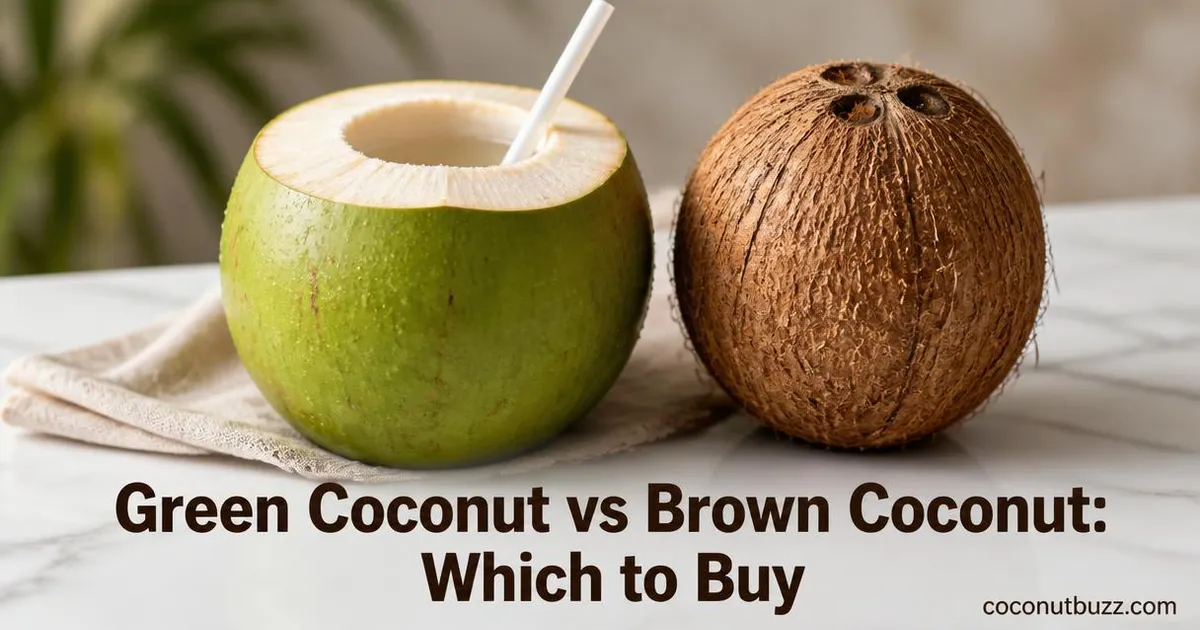
Green and brown coconuts aren’t different varieties – they’re the same fruit at different stages of ripeness. A green coconut is young, full of water, and lined with soft jelly-like meat. A brown coconut is the same fruit months later, with most of that water replaced by thick, firm flesh.
So the real question isn’t which one is “better.” It’s what you plan to do with it. Drinking and snacking lean green. Cooking, milking, and baking lean brown.
Key Takeaways
- Green and brown coconuts are the same fruit at different ages – not separate species or types.
- Green coconuts hold more water and have soft, spoonable meat that’s easy to eat fresh.
- Brown coconuts develop thick, firm flesh that’s best for making coconut milk, cream, and grated toppings.
- Green coconut meat tastes mild and sweet; brown coconut meat tastes richer and more intensely nutty.
- Choose green when you want hydration and a light snack. Choose brown when you need meat for recipes.
Also Worth Checking Out
A practical comparison of coconut water’s hydration benefits versus Pedialyte for when you care about electrolytes and…
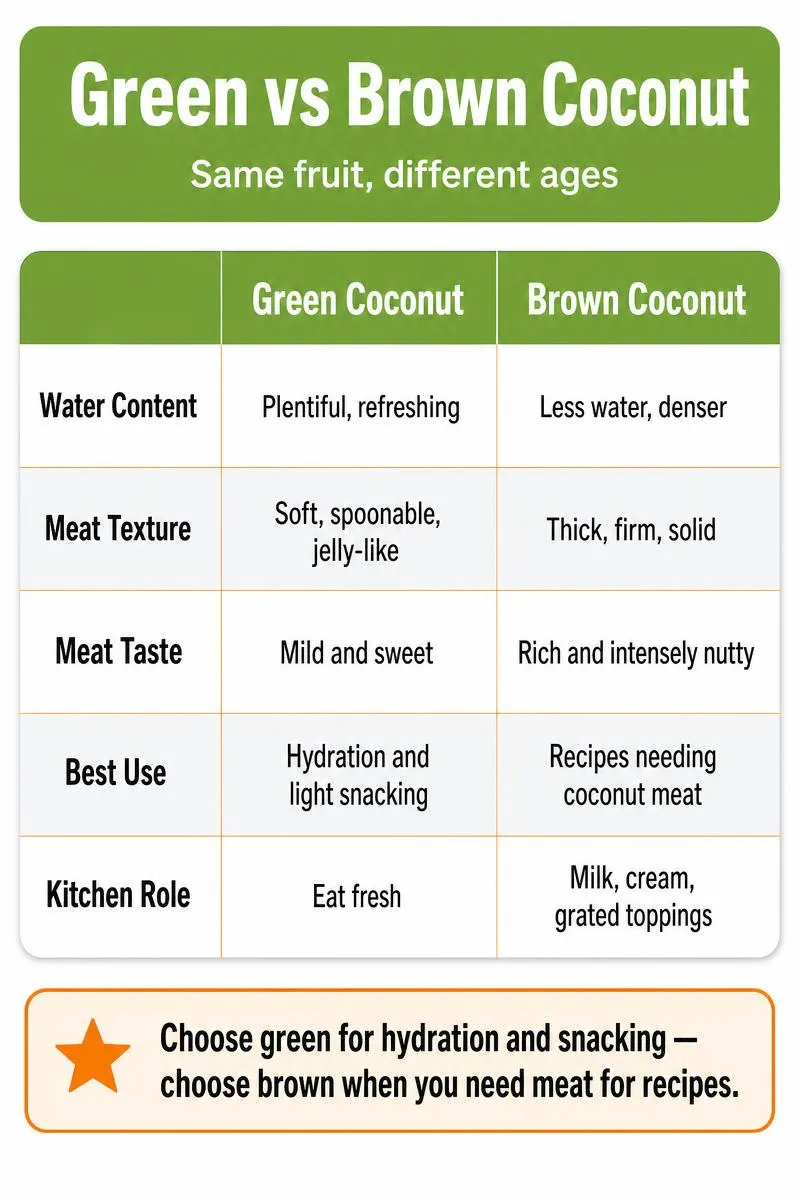
Green Coconut Vs Brown Coconut Quick Comparison
| Feature | Green Coconut | Brown Coconut |
|---|---|---|
| Water Content | Plentiful, refreshing | Less water, denser |
| Meat Texture | Soft, spoonable, jelly-like | Thick, firm, solid |
| Meat Taste | Mild and sweet | Rich and intensely nutty |
| Best Use | Hydration and light snacking | Recipes needing coconut meat |
| Kitchen Role | Eat fresh | Milk, cream, grated toppings |
What Is Green Coconut?
A green coconut is the younger stage of the fruit, harvested young, several months after the palm flowers. The outer husk stays smooth and green, and the shell inside is still relatively soft compared to a mature coconut.
Green coconuts are valued for the large amount of coconut water they hold. That water is naturally sterile inside the shell and contains electrolytes like potassium, sodium, and magnesium – the minerals you lose through sweat. The meat lining the shell is thin, gelatinous, and soft enough to scoop out with a spoon.
Key strengths: More water than a mature coconut, easier to crack open, and refreshing on its own. The soft meat requires no tools to eat.
Key weaknesses: Very little flesh compared to a brown coconut. The meat is too soft to grate, press for milk, or use in most cooked dishes.
What Is Brown Coconut?
A brown coconut is the mature stage of the same fruit. Over 11 to 12 months on the palm, the green husk dries out and turns fibrous brown. Inside, most of the water has been absorbed and converted into solid endosperm – the thick, white flesh you associate with shredded coconut and coconut milk.
Brown coconuts are the go-to for anything that requires coconut as an ingredient. The firm flesh can be grated, blended with water and strained to make coconut milk, or pressed further to make coconut cream. The flavor is deeper and more concentrated than what you’d get from a green coconut.
Key strengths: Abundant firm meat, developed coconut flavor, and versatility across cooking, baking, and milk extraction.
Key weaknesses: The shell is significantly harder to crack – you’ll need a cleaver or a heavy knife and some confidence. There’s less water inside, and getting the meat out requires scraping or prying it from the shell.
Green Coconut vs Brown Coconut: Taste and Texture
Green coconut meat is mildly sweet, almost translucent, and gelatinous – somewhere between jelly and custard. You can scoop it straight from the shell with a spoon, and it practically melts in your mouth. The flavor is delicate, more about freshness than intensity.
Brown coconut meat is firm, dense, and white. It has a pronounced nutty flavor and a satisfying chew. The higher fat content in mature flesh gives brown coconut a richness that green coconut can’t match. Grated brown coconut holds its shape in curries and baked goods, while green meat would dissolve into nothing.
Winner: Green coconut for delicate texture. Brown coconut for bold, full coconut flavor.
Explore More
Breaks down flavor, electrolyte content, and drinking uses to help readers decide which natural ‘water’ suits their…
Green Coconut vs Brown Coconut: Coconut Water
Green coconuts contain significantly more water than brown coconuts. That liquid is clearest and most refreshing when the coconut is young, with a light sweetness that comes from natural sugars in the endosperm.
As the coconut matures, water volume drops and the remaining liquid becomes slightly thicker and less sweet. Some people actually prefer the taste of water from a mature coconut for its fuller, more coconut-forward flavor. But if you’re drinking coconut water for refreshment and electrolyte replenishment, green is the clear choice.
Winner: Green coconut, by a wide margin, for drinking.
Green Coconut vs Brown Coconut: Cooking and Kitchen Use
Green coconut works best in fresh, no-cook contexts. The soft meat works well blended into smoothies, scooped over fruit, or folded into light desserts where you want texture without heaviness. The water can be drunk straight or used as a base for refreshing drinks.
Brown coconut is essential for almost any cooked coconut dish. You need the firm flesh to make coconut milk and coconut cream – the foundations of curries, soups, and many Southeast Asian and Caribbean recipes. Grated mature coconut goes into baking, macaroons, toppings, and coatings. You can toast it, grind it into flour, or press it for oil. Green coconut simply can’t do any of this.
Winner: Brown coconut, for cooking versatility.
Which Should You Choose?
- You want fresh coconut water: Choose green. More liquid, lighter taste, easier to drink straight from the shell.
- You need coconut milk, cream, or grated meat: Choose brown. The thick flesh is what makes milk and cream possible.
- You want a light, soft snack: Choose green. The jelly-like meat is spoonable and refreshing.
- You’re baking or cooking rich coconut dishes: Choose brown. Firm flesh holds up under heat and delivers concentrated flavor.
- You want the most usable meat per coconut: Choose brown. A mature coconut gives you far more flesh to work with than a young one.
You Might Also Like
Coconut flour vs all-purpose flour
Explains how coconut flour behaves in recipes compared with all-purpose flour – useful if you plan to cook with mature…
FAQs About Green and Brown Coconuts
Do green coconuts turn brown, and why are there two types?
Yes – that’s exactly what happens. A green coconut left on the palm eventually dries out, the husk turns brown, and the water inside converts into thick flesh. The two types you see in stores are just the same fruit harvested at different points along that timeline.
Are green coconuts healthy, and which type is healthiest?
Both offer different benefits. Green coconut water provides electrolytes like potassium and magnesium, making it useful for hydration. Brown coconut meat is higher in medium-chain fatty acids, particularly lauric acid, which the body processes differently from most dietary fats. Neither is “healthier” overall – they serve different purposes.
Which coconut water is best – green or brown?
Green coconut water. It’s more abundant, sweeter, and lighter. Brown coconuts still contain some water, but less of it, and the flavor is more subdued.
What are the downsides of eating coconut, and when should you avoid it?
Coconut is high in saturated fat, mostly from lauric acid, so anyone monitoring saturated fat intake should be mindful of portion sizes. Coconut allergy is rare but serious – avoid all coconut products if you have one. Anyone with a kidney condition should also check with a doctor before drinking large amounts of coconut water, since the potassium content can be significant.
How often should you eat coconut?
There’s no official guideline. Most people can enjoy coconut meat or water several times a week without issue. If you’re watching saturated fat or calorie intake, keep portions reasonable and factor coconut into your daily totals.
What does coconut do for women?
Coconut provides the same nutrients regardless of sex – electrolytes from the water and medium-chain fatty acids from the meat. Some sources suggest lauric acid may have antimicrobial properties, but evidence is still emerging. There’s nothing in coconut specifically tailored to women’s health that differs from its general nutritional profile.
Final Verdict
Neither coconut is objectively better than the other. Green wins if you want hydration and a fresh, light snack. Brown wins if you’re cooking, making milk, or need substantial coconut flesh for a recipe.
One edge case: if you want both water and meat from the same coconut, go green – but expect the flesh to be thin and soft. You won’t get enough to grate or press.
If you’ve never tasted them side by side, buy one of each. Crack them open on the same afternoon and you’ll understand the difference immediately.
External References