

Coconut Water vs Pedialyte: Which Hydrates Better?
Coconut water and Pedialyte both get sold as hydration fixes, which convinces a lot of shoppers they’re interchangeable. They’re not. One is the juice of young green coconuts; the other is an oral rehydration solution engineered to pull fluid back into a depleted body. Sodium separates them, and sodium decides who each drink actually helps.
After a hot afternoon or a moderate workout, either choice works fine. A child with a stomach bug is a different story – reaching for coconut water instead of Pedialyte there is the mistake that gives this comparison its stakes. The right pick depends on how much you lost and which minerals went with it. Who’s drinking matters too, along with whether you need a sick-day tool or an everyday beverage.
Key Takeaways
- Different tools, different jobs. Pedialyte targets real fluid loss from vomiting, diarrhea, or heavy sweating; coconut water handles mild, everyday dehydration.
- Sodium is the divider. Pedialyte pairs sodium with glucose to speed absorption; coconut water leans on potassium and carries very little sodium.
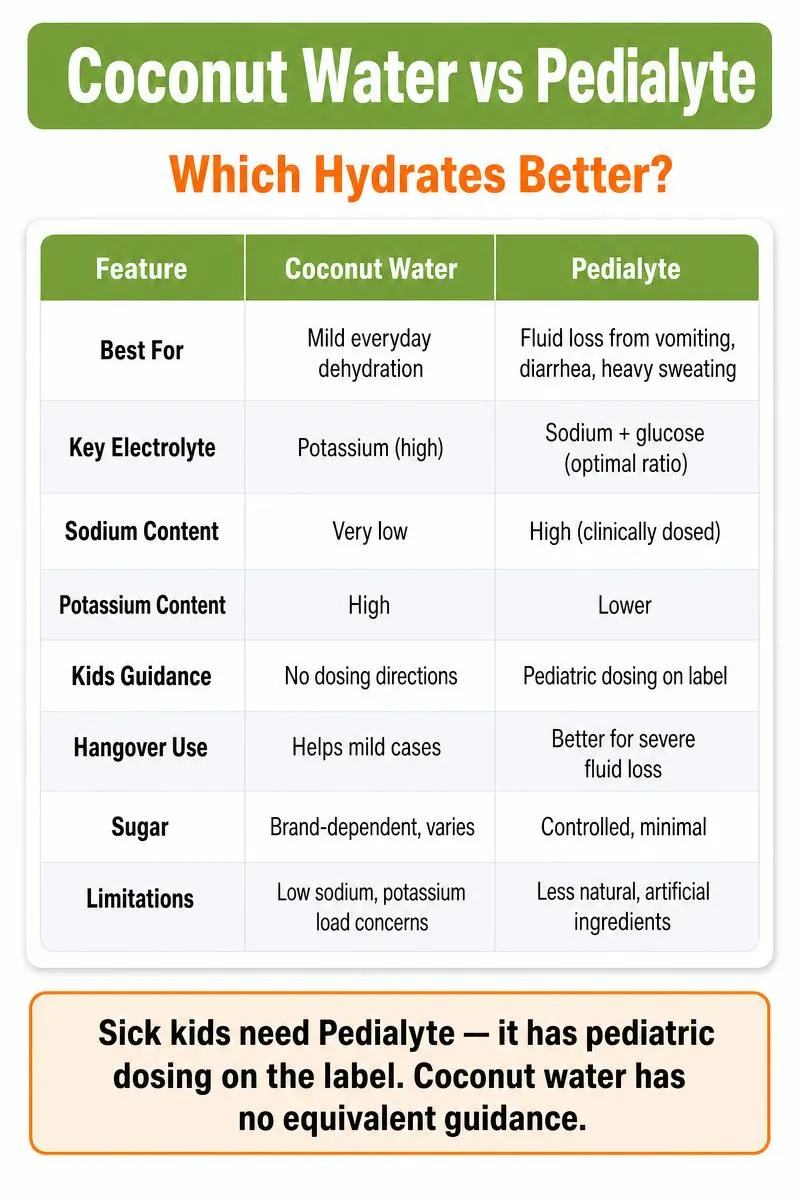
- Sick kids need Pedialyte. It comes with pediatric dosing directions on the label; coconut water has no equivalent guidance.
- Hangovers go either way. Both can help – the size of the fluid loss and how nauseous you feel pick the winner.
- Coconut water has limits. Minimal sodium, brand-dependent sugar, and a potassium load some drinkers need to restrict.
Comparing the Top Coconut Water Vs Pedialyte
| Feature | Coconut Water | Pedialyte |
|---|---|---|
| Best For | Mild everyday dehydration | Vomiting, diarrhea, heavy sweating |
| Key Electrolyte | Potassium (high) | Sodium + glucose (optimal ratio) |
| Sodium Content | Very low | High (clinically dosed) |
| Potassium Content | High | Lower |
| Kids Guidance | No dosing directions | Pediatric dosing on label |
| Hangover Use | Helps mild cases | Better for severe fluid loss |
| Sugar | Brand-dependent | Controlled, minimal |
| Limitations | Low sodium; potassium load concerns | Less natural; may include artificial ingredients |
What Is Coconut Water?
Coconut water is the clear liquid found inside young green coconuts. It isn’t coconut milk – milk gets pressed from the flesh of mature coconuts, while the water occurs naturally inside the nut itself.
Coconut water works best for casual daily hydration and post-workout refreshment, and many athletes treat it as a lighter alternative to sports drinks. Potassium is the headline nutrient. Plain and flavored bottles fill the shelves, and plain versions skip added sweeteners altogether.
The trade-offs show up under stress. Sodium barely registers in coconut water, yet sodium is the mineral your body loses fastest through sweat and stomach illness.
Sugar varies sharply between brands – plain bottles stay modest, flavored ones can creep toward soft-drink territory. The potassium load that serves everyday sippers is also the reason people with kidney disease or potassium restrictions need to count it.
Explore More
Coconut water vs coconut juice
Explains the differences between coconut water and coconut juice so readers understand what coconut water actually is…
What Is Pedialyte?
Pedialyte is an oral rehydration solution originally formulated for children, now marketed heavily to adults. The category was designed for a narrow job: restoring fluid and electrolytes during vomiting, diarrhea, fever, and travel-related dehydration.
Pedialyte’s formula pairs sodium with glucose, and that combination is the whole trick. Glucose helps your gut absorb sodium, and water follows the sodium back into your bloodstream. The label also carries pediatric dosing directions, so parents know how much to offer a sick child and how often.
Pedialyte is a processed product with artificial flavors, and the taste charms nobody. It’s formulated and priced for sick days, not daily sipping.
Coconut Water vs Pedialyte: Rehydration Effectiveness
Mild thirst and genuine fluid loss are different problems. Light dehydration from a warm day or a workout responds to nearly any palatable fluid, coconut water included.
Depletion from extended vomiting or diarrhea drains water and sodium together. Replacing only the water leaves the imbalance half-fixed.
The published evidence on coconut water is thin but interesting. One trial pitted it against a carbohydrate-electrolyte beverage in dehydrated exercisers, and some sources suggest it rehydrated them comparably. Still, exercisers are a friendlier test case than a stomach flu, where sodium demands run far higher.
Verdict: Pedialyte for meaningful dehydration, coconut water for mild, everyday cases.
Coconut Water vs Pedialyte: Electrolyte Profile
Read the labels and the split becomes obvious: coconut water is potassium-dominant, Pedialyte is sodium-forward. Both minerals matter for hydration, but they replace very different losses.
Sodium is what your body dumps hardest during vomiting, diarrhea, and heavy sweating, and your blood relies on sodium to hold onto water. Large volumes of low-sodium fluid can move through a depleted body without correcting much. Pedialyte’s sodium-plus-glucose design exists to break that cycle.
Sugar is the tiebreaker for daily drinkers. Plain coconut water stays reasonably light; flavored versions swing enough between brands that two bottles on the same shelf can land far apart. Pedialyte’s formulation stays consistent, but consistency matters less when the product was never intended for everyday use anyway.
Verdict: Pedialyte for replacing real losses, coconut water for routine top-ups.
Worth Reading Next
Coconut water vs sports drinks
Compares coconut water to commercial sports drinks on hydration and electrolyte content to assess rehydration…
Coconut Water vs Pedialyte: Toddlers and Sick Kids
The direct answer: coconut water cannot stand in for Pedialyte during childhood illness. Vomiting and diarrhea drain sodium quickly. A low-sodium drink tops a depleted child up with water while skipping the mineral that keeps water in circulation.
Pedialyte also gives parents something coconut water never will: pediatric dosing directions printed on the label. A sick toddler needs measured amounts at set intervals. Coconut water offers no equivalent guidance because it wasn’t formulated for illness in the first place.
Some warning signs require a doctor regardless of which drink is in the cup:
- Little to no urination suggests fluids aren’t keeping pace with the losses.
- Unusual drowsiness in a sick child warrants a call to your pediatrician.
- No tears when crying can signal significant fluid depletion.
- Repeated vomiting that defeats every small sip means the illness needs medical attention.
Verdict: Pedialyte whenever a child is actively losing fluids.
Coconut Water vs Pedialyte: Hangovers and Adult Sickness
Alcohol strips away fluid and electrolytes at once. Its diuretic effect sends you to the bathroom more often, and sodium and potassium leave with the extra urine.
Coconut water restocks the fluid and potassium comfortably but brings little sodium to a loss that included plenty of it. Pedialyte replaces both halves of the deficit, which is exactly why its hangover marketing took off. Gatorade sits between them as the third sick-day standby – a sports drink carrying generally more sugar and less sodium than Pedialyte, built for athletic losses rather than queasy mornings.
Split decision: Pedialyte when nausea limits what stays down, because small volumes deliver more of what your body needs per swallow. Coconut water earns its spot once your stomach tolerates larger drinks and you’d rather rehydrate on something that tastes good.
Which Should You Choose?
- Mild dehydration after a workout or hot day calls for coconut water, which handles it pleasantly.
- A vomiting child needs Pedialyte, offered according to the label’s dosing directions.
- For a heavy hangover, pick Pedialyte if your stomach allows it and coconut water otherwise.
- An everyday sipping habit suits coconut water – plain versions, with an eye on flavored-bottle sugar.
- Visible dehydration signs or ongoing vomiting mean neither drink will fix it. Contact a doctor.
Explores alternative natural hydration options and how coconut water stacks up against cactus water for everyday…
FAQs About Coconut Water and Pedialyte
Quick answers first – the exceptions matter more than the rules.
1. Is coconut water a good replacement for Pedialyte?
Yes for mild, everyday dehydration. No for vomiting, diarrhea, or a sick child – coconut water’s sodium content runs too low to replace what those conditions drain, and Pedialyte was engineered for exactly that gap.
2. Which hydrates faster when you are already dehydrated?
Pedialyte, when the dehydration is real rather than casual thirst. Its sodium-and-glucose formula moves water back into your system more efficiently than low-sodium fluids, which is why oral rehydration solutions serve as the medical standard for significant fluid loss.
3. Is coconut water better than other electrolyte drinks?
Against sports drinks, coconut water usually trades sodium for less sugar and more potassium. That’s a good deal for light workouts and a bad one for heavy sweating or illness, when sodium losses dominate.
4. Can I give my toddler coconut water instead of Pedialyte?
Not during illness. Pedialyte carries pediatric dosing directions and a sodium level matched to fluid losses; coconut water has neither. Offer Pedialyte and call the doctor if symptoms don’t improve.
5. Which is better for a hangover?
Pedialyte for rough mornings, coconut water for mild ones. Heavy drinking drains sodium along with fluid, and queasiness shrinks how much you can keep down – Pedialyte delivers more of what’s missing in fewer sips.
6. How does coconut water compare to Gatorade when you are sick?
Both are second-tier choices for real sickness. Coconut water brings potassium but almost no sodium; Gatorade brings some sodium but plenty of sugar. Pedialyte beats both because it was formulated for the losses illness causes.
7. What are the downsides of drinking coconut water?
The sodium runs too low for serious rehydration. Sugar varies widely by brand, especially among flavored bottles. And people with kidney disease need to count the potassium toward their daily limit.
8. Who should avoid coconut water?
Anyone with kidney disease or a prescribed potassium restriction should ask a doctor before making it a habit. People managing their sugar intake should reach for plain bottles over flavored ones. Most everyone else can drink it freely.
9. What happens if you drink coconut water every day?
For most healthy people, nothing dramatic – steady hydration and a consistent potassium source. Two habits worth keeping: favor plain over sweetened, and loop in your doctor first if kidney issues are part of your picture.
Final Thoughts
Pedialyte owns sick days and true fluid loss. Coconut water owns daily hydration. The jobs barely overlap, which is why the versus framing misleads – plenty of households sensibly keep both on hand.
Routine Pedialyte sipping by healthy adults is rarely necessary. Without meaningful fluid loss, you’re taking in sodium your body hasn’t earned and paying sick-day money for an ordinary drink.
Before stocking either one, compare the labels on the exact brands you’d actually buy. Formulations differ more than shoppers expect, particularly the sugar hiding in flavored coconut waters.
External References