
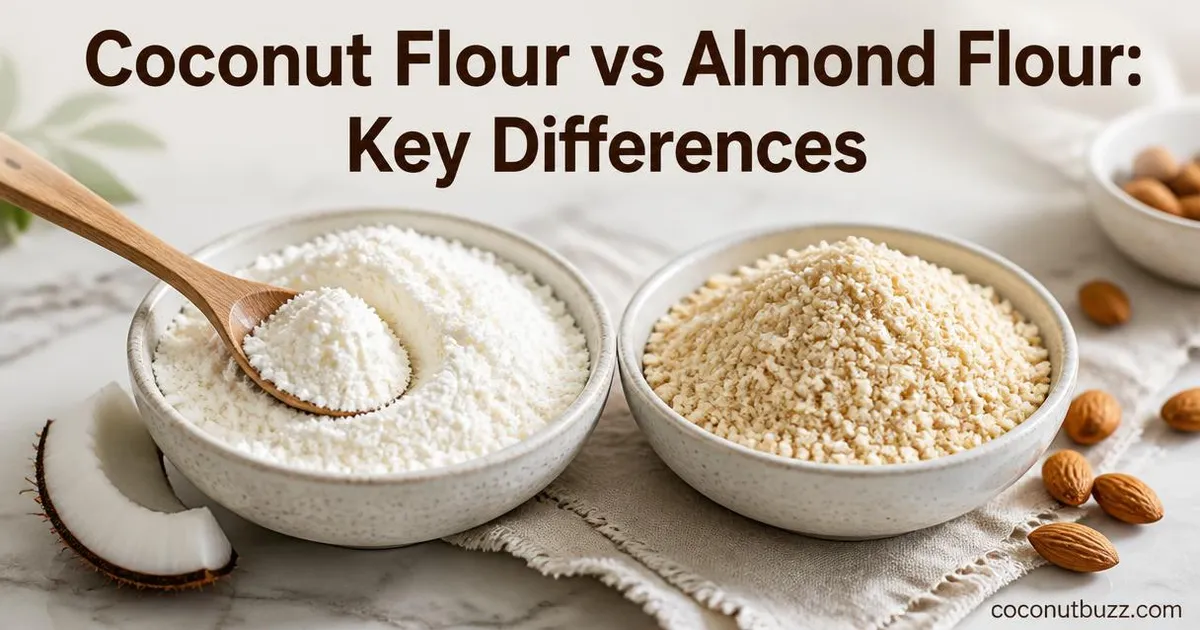
Coconut Flour vs Almond Flour: Key Differences
Most people assume gluten-free flours swap in and out like different brands of sugar. They don’t. Coconut and almond flour both work for low-carb and gluten-free baking, but they behave so differently in recipes that choosing one over the other isn’t about quality – it’s about what you’re actually making.
Almond flour acts predictably, absorbs liquid like most grain-based flours, and produces light, tender baked goods. Coconut flour soaks up liquid like a sponge, needs far more eggs to bind, and creates dense results.
Key Takeaways
- Coconut flour absorbs far more liquid than almond flour and cannot be substituted 1:1 without reformulating the entire recipe
- Almond flour produces lighter, moister baked goods; coconut flour yields denser, more compact results
- Both are naturally gluten-free, but coconut flour is higher in fiber while almond flour contains more fat and protein
- Which flour works better depends on the recipe type and dietary goal – neither is universally superior
- Some sources suggest coconut flour may support certain digestion-related goals, though individual response varies
Coconut Vs Almond Flour Side-by-Side
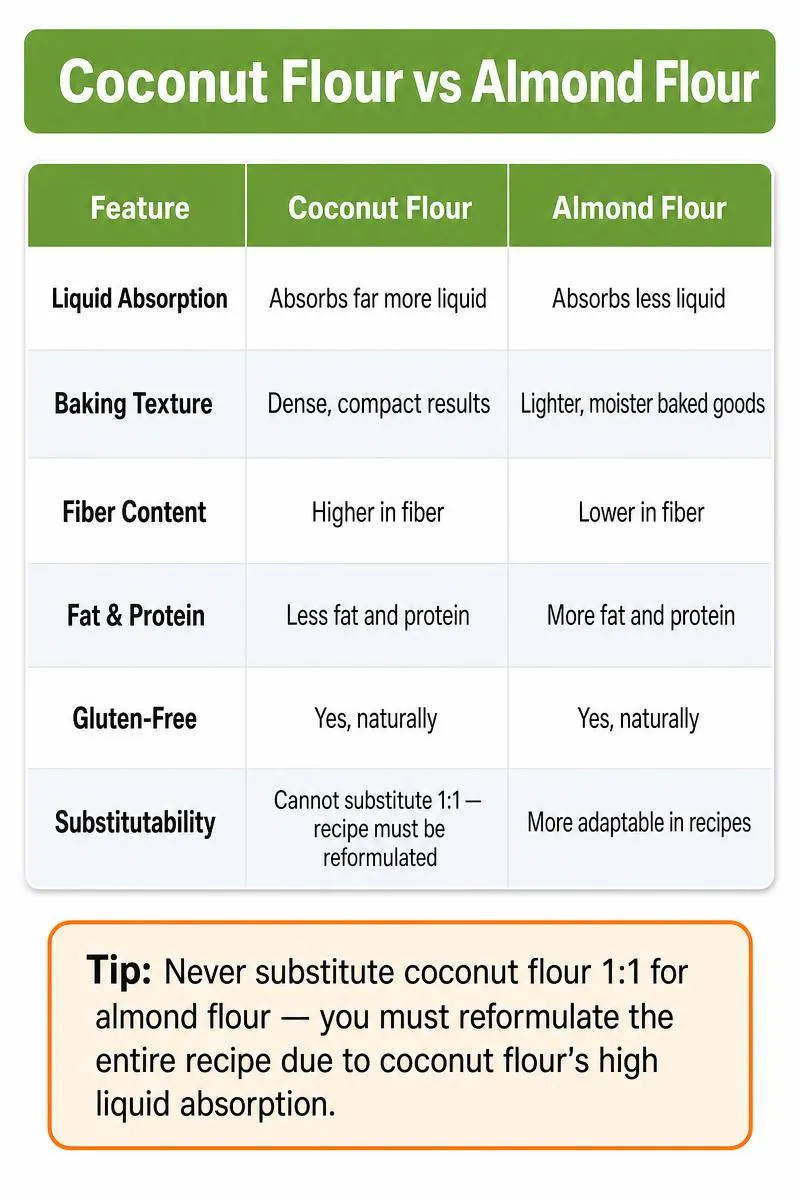
| Feature | Coconut Flour | Almond Flour |
|---|---|---|
| Liquid Absorption | Absorbs far more liquid | Absorbs less liquid |
| Baking Texture | Dense, compact results | Lighter, moister baked goods |
| Fiber Content | Higher in fiber | Lower in fiber |
| Fat & Protein | Less fat and protein | More fat and protein |
| Gluten-Free | Yes, naturally | Yes, naturally |
| Substitutability | Cannot substitute 1:1 — reformulate recipe | More adaptable in recipes |
What Is Coconut Flour?
Coconut flour comes from dried coconut meat ground into a fine powder. The result is a high-fiber, low-carb flour that works in paleo and gluten-free recipes.
Coconut flour excels in recipes specifically designed for dense baked goods like thick pancakes, heavy muffins, or compact breads. The fiber content creates structure without gluten, but that same fiber makes the flour incredibly thirsty for liquid.
The main weakness shows up when you treat coconut flour like wheat flour or try swapping it into recipes without adjusting ratios. It needs significantly more liquid and eggs than most flours, and skipping those adjustments produces dry, crumbly disasters.
Worth Reading Next
A practical comparison of coconut flour and all-purpose flour with baking ratios and recipe tips readers can apply when…
What Is Almond Flour?
Almond flour is made from blanched almonds – almonds with skins removed – ground into a fine meal. The fat and protein content sits closer to grain-based alternatives than coconut flour does, which makes it behave more predictably in recipes.
Almond flour works best for cakes, cookies, pastries, and pie crusts that need a light crumb and tender texture. The monounsaturated fats from the ground almonds keep baked goods moist without added fat, and the mild nutty flavor stays neutral in most desserts.
The main drawbacks are cost and allergen concerns. Almond flour typically costs more than coconut flour, and it’s completely off-limits for anyone with tree nut allergies.
Coconut Flour vs Almond Flour: Baking Performance
Coconut flour absorbs liquid at a rate that surprises most first-time users. A recipe calling for coconut flour needs significantly more eggs and liquid than the same recipe would need with almond flour, and the final texture leans dense and compact.
Almond flour behaves more like traditional flour in terms of liquid absorption and binding. Recipes using almond flour follow more intuitive ratios, produce predictable results, and forgive small measurement errors better than coconut flour does.
Winner: almond flour for ease and consistency in most baking situations; coconut flour for specific dense textures where its unique properties work as a feature rather than a bug.
Coconut Flour vs Almond Flour: Nutrition
Coconut flour contains more fiber per serving than almond flour. That fiber content means fewer net carbs and slower digestion, which some sources suggest may support certain digestion-related goals, though individual response varies.
Almond flour delivers more fat and protein per serving, with fewer carbs than coconut flour when measured by volume. The monounsaturated fats in almond flour come from the ground almonds themselves, not added ingredients.
Caloric density differs based on how much flour a recipe actually uses. Coconut flour recipes typically call for much smaller amounts due to the absorbency factor, which can reduce total calories even though coconut flour and almond flour have similar caloric density by weight.
Winner: depends entirely on whether you prioritize fiber intake or fat and protein macros for your specific dietary approach.
Related Reading
A breakdown of how these sweeteners differ in flavor, moisture impact, and nutrition-helpful for adjusting recipes that…
Coconut Flour vs Almond Flour: Taste and Texture
Coconut flour can impart a mild coconut flavor in baked goods, though the intensity varies by recipe and how much flour you use. Overbaking coconut flour creates a gritty texture that doesn’t improve with time or storage.
Almond flour has a neutral, slightly nutty flavor that fades into the background in most desserts. The texture it produces mimics traditional cake crumb better than coconut flour does – soft, moist, and tender rather than dense.
Winner: almond flour for neutral taste and tender texture in most desserts, especially when you don’t want the end result to taste like coconut.
Coconut Flour vs Almond Flour: Substitutability
No direct 1:1 substitution exists between coconut and almond flour. The difference in liquid absorption alone makes simple swaps impossible without completely changing the recipe’s liquid and egg ratios.
A rough guideline suggests replacing one cup of almond flour with one-quarter cup of coconut flour, but that swap also requires adding more eggs and liquid to compensate. The exact amounts depend on the recipe, and even experienced bakers often need to experiment.
Winner: neither flour wins on substitutability – successful swaps require recipe reformulation rather than simple measurement changes.
Related Reading
Explains how coconut butter behaves as a fat and binder in recipes, useful when adapting recipes between coconut and…
Which Should You Choose?
Choose almond flour when you’re baking light cakes, cookies, or pastries where texture and tenderness matter. Almond flour also works better for beginners learning gluten-free baking since it behaves more predictably than coconut flour.
Choose coconut flour when you want dense pancakes, muffins, or breads with high fiber content. Coconut flour is also the only option for nut-free households or anyone managing tree nut allergies.
If your macros prioritize higher fat and protein intake, almond flour delivers more of both per typical serving. If you need more fiber or want to minimize net carbs, coconut flour offers better numbers in that direction.
FAQs About Coconut Flour and Almond Flour
Can I substitute coconut flour for almond flour?
Not in a 1:1 ratio. Coconut flour absorbs far more liquid than almond flour, so swapping them requires reducing the coconut flour amount to roughly one-quarter of the almond flour called for and adding extra eggs and liquid. Even with those adjustments, the texture will change significantly.
What are common mistakes when baking with coconut flour?
Using too much coconut flour is the biggest mistake – it creates dry, crumbly results that don’t bind. Not adding enough eggs is the second most common error, since coconut flour needs eggs for structure that gluten would normally provide.
Is it better to bake cookies with almond flour or coconut flour?
Almond flour works better for most cookie recipes because it produces a tender, chewy texture similar to traditional cookies. Coconut flour cookies turn out denser and cake-like, which works for specific recipes designed around that texture but disappoints if you want a classic cookie.
Which one is healthier, coconut flour or almond flour?
Neither flour is universally healthier – the answer depends on your dietary priorities. Coconut flour contains more fiber and fewer net carbs, while almond flour delivers more protein and monounsaturated fats. Both are gluten-free and lower in carbs than wheat flour.
What is the healthiest flour for baking?
No single flour qualifies as healthiest for everyone. Coconut flour works well for high-fiber, low-carb approaches. Almond flour fits higher-fat, moderate-protein plans. The healthiest flour for you matches your specific dietary needs and the type of food you’re making.
Is coconut flour gluten-free?
Yes. Coconut flour is naturally gluten-free since it’s made entirely from dried coconut meat. Cross-contamination can occur during processing if the facility also handles wheat, so check labels if you have celiac disease or severe gluten sensitivity.
Is almond flour gluten-free?
Yes. Almond flour is naturally gluten-free because it’s made from ground almonds with no wheat or grain ingredients. Like coconut flour, check for potential cross-contamination warnings if you need to avoid gluten completely.
Is coconut flour keto?
Yes, coconut flour works for keto diets. The high fiber content means low net carbs per serving, and recipes using coconut flour typically call for small amounts due to its absorbency. The exact fit depends on your daily carb limit and how much coconut flour a specific recipe uses.
Is almond flour keto?
Yes, almond flour fits most keto diet plans. Almond flour contains fewer carbs than wheat flour and provides fat and protein that align with keto macros. The net carb count stays low enough for most people following ketogenic approaches.
Is almond meal the same as almond flour?
No. Almond meal is made from whole almonds with skins still on, creating a coarser texture and darker color. Almond flour uses blanched almonds with skins removed, producing a finer, lighter result. Almond meal works in some recipes but changes the texture and appearance compared to almond flour.
Final Thoughts
Neither flour wins across the board. Almond flour takes the lead for ease of use, predictable texture, and light baked goods. Coconut flour wins for fiber content, lower net carbs, and nut-free requirements.
Nut allergies rule out almond flour entirely, which makes coconut flour the clear choice in those situations. Beyond that, match the flour to the recipe type rather than declaring one superior.
Start with a recipe specifically designed for whichever flour you choose rather than trying to convert recipes written for the other. The structural differences are too significant for casual swaps, and following flour-specific recipes saves ingredients, time, and frustration.
External References
- The Truth About Nut Allergies – Medicalert
- The Effects of Almond Consumption on Cardiovascular Health … – NIH
- Coconut Flour vs. Almond Flour – Nutrition Comparison – Thrivemarket
- Coconut Flour vs Almond Flour-Health Benefits for Keto Diet – Drberg
- How to Calculate Net Carbs – Healthline
- Carbohydrates: How carbs fit into a healthy diet – Mayo Clinic