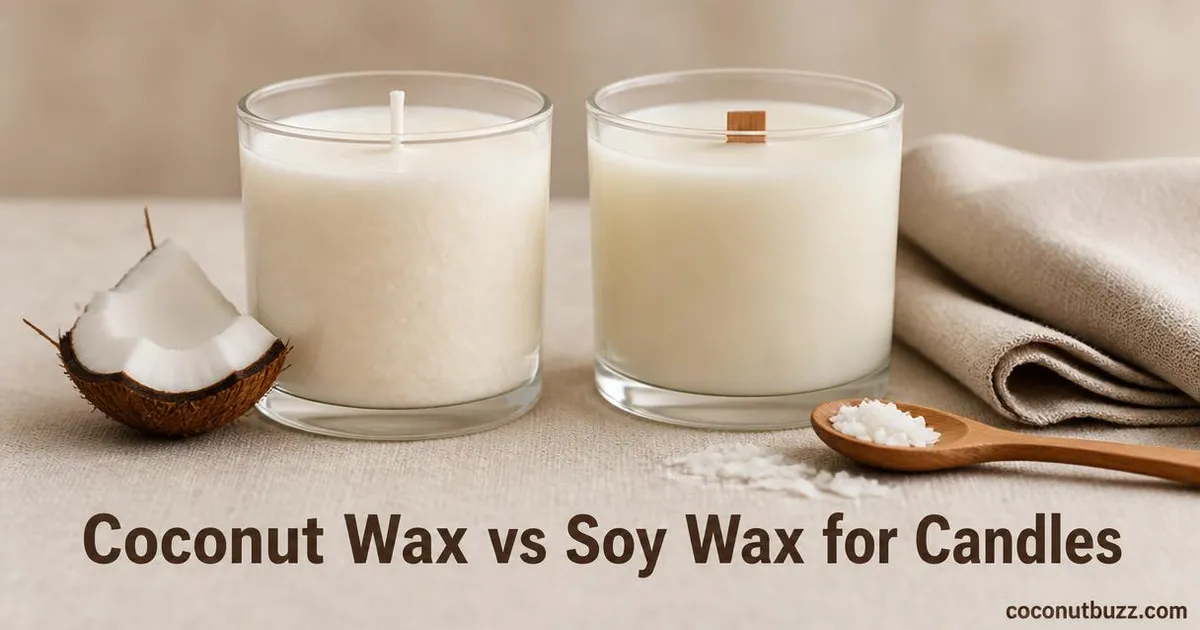
Coconut Wax vs Soy Wax for Candles
Most candle makers searching coconut wax vs soy wax want one thing: a clear way to decide which wax fits their candles without wasting money on bulk orders that don’t perform. The comparison comes down to burn quality, scent throw, source, cost, and whether a blend might give you the best of both.
The way to figure this out is straightforward: run small batches with identical containers, wicks, and fragrance loads. Same conditions, different wax. Whatever differences you see come from the wax, not your setup.
Key Takeaways
- Coconut wax usually costs more upfront but often delivers stronger scent throw and cleaner melt pools than pure soy.
- Soy wax is widely available and budget-friendly, though it can frost or struggle with hot throw in larger spaces.
- Coconut-soy blends are popular because blends combine soy’s stability with coconut’s fragrance retention and even burn.
- Your best choice depends on whether you prioritize scent strength, burn time, budget, or sourcing practices.
- Cost per candle often favors soy, though coconut wax’s longer burn time and stronger scent throw can offset the higher price for some sellers.
Comparing the Top Coconut Wax Vs Soy Wax
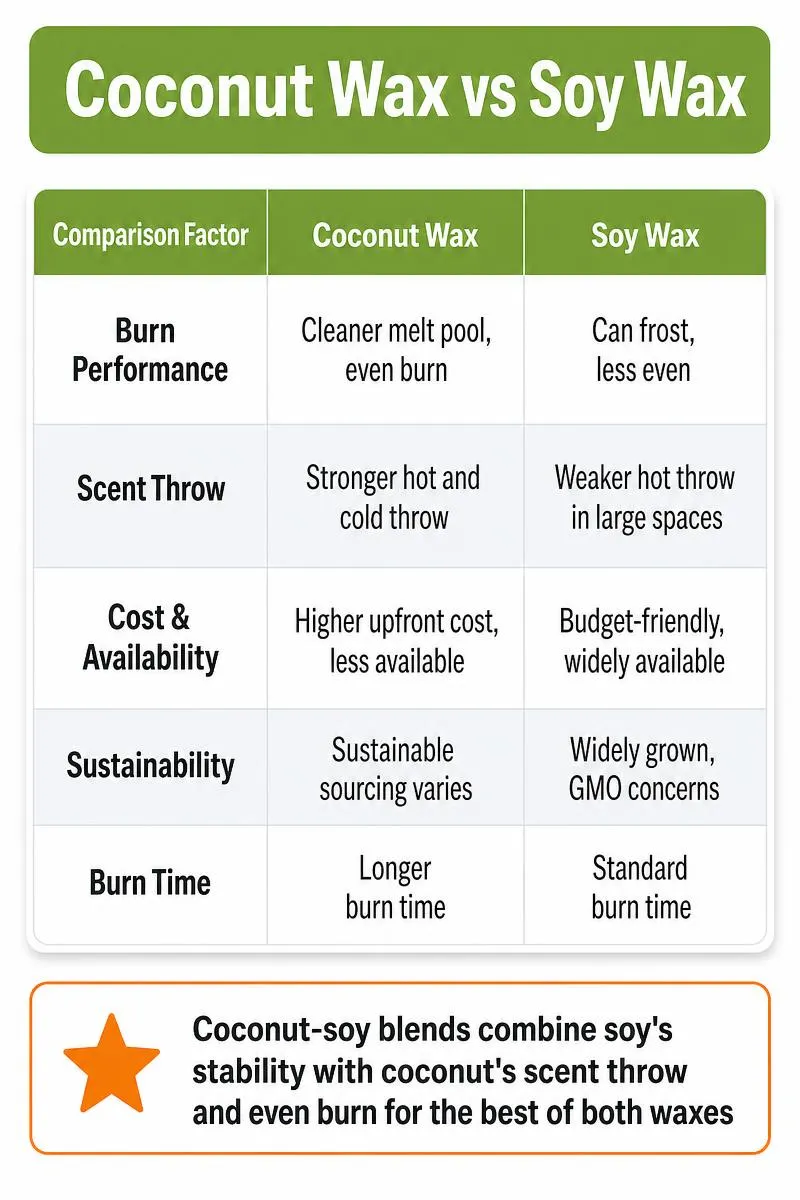
| Comparison Factor | Coconut Wax | Soy Wax |
|---|---|---|
| Burn Performance | Cleaner melt pool, even burn | Can frost; less even |
| Scent Throw | Stronger hot and cold throw | Weaker hot throw in large spaces |
| Cost & Availability | Higher upfront cost; less available | Budget-friendly; widely available |
| Sustainability | Sustainable sourcing varies | Widely grown; GMO concerns |
| Burn Time | Longer burn time | Standard burn time |
What You’ll Need to Compare Coconut and Soy Wax
To run a fair side-by-side test, you need small sample batches of coconut wax and soy wax. Buy one-pound bags rather than bulk so you can test without committing.
Use identical containers, wicks, and fragrance oils for every test candle. If the jar, wick size, or fragrance load varies between candles, you won’t know whether the wax or the setup caused the difference.
Keep a thermometer, scale, and timer handy. The thermometer tracks pour temperature and melt pool temperature. The scale ensures identical fragrance loads. The timer records how long each candle burns evenly before tunneling or drowning the wick.
Explore More
Product listings for coconut room sprays and fragrance options to pair with candles and test scent throw.
Step-by-Step Guide
Each step below isolates one variable so you can compare coconut wax and soy wax without guessing. Work through all five before making a bulk purchase.
Step 1: Compare Burn Performance and Melt Quality
Check for even melt pools, tunneling, burn time, and flame control. Light each test candle at the same time and let both burn for the same duration. Measure how far the melt pool reaches the container wall and whether either candle tunnels or leaves wax on the sides.
Coconut wax has a lower melting point than soy wax, which supports slower, steadier burning. The lower melt point means coconut wax reaches a full melt pool faster and burns more evenly across the surface. Soy wax can tunnel if the wick is too small for the container diameter, leaving unburned wax around the edges.
A common mistake is judging appearance instead of timing how long each candle burns evenly. A candle that looks good early on might tunnel later. Record burn time to the point where the melt pool stops reaching the container walls.
Step 2: Test Scent Throw Cold and Hot
Check fragrance strength before lighting and while burning in the same size room. For cold throw, sniff each candle the day after pouring and again after one week. For hot throw, light each candle in a room of identical size and walk to different distances to gauge how far the scent carries.
Coconut wax often has better fragrance retention than soy wax. Coconut wax holds fragrance oils more tightly during cooling, which means less oil evaporates during the cure period. Soy wax may need a higher fragrance oil load to achieve the same throw, which can increase cost and risk sweating.
A common mistake is relying only on cold throw from the top of the candle. Cold throw tells you whether the fragrance survived the pour, but hot throw tells you whether the scent fills a room when the candle is actually burning.
Step 3: Check Source and Sustainability
Look into farming practices, region of origin, and whether the supplier discusses harvest methods. Coconut wax comes from the meat of coconuts harvested primarily in tropical regions across Southeast Asia. Soy wax comes from soybeans grown largely in the United States, Brazil, and Argentina.
Both coconut wax and soy wax are plant-based, but coconut farming and soy farming carry different regional and environmental tradeoffs. Coconut trees are perennial and grow in mixed agroforestry systems in some regions, which can support biodiversity. Soy farming in some areas has driven deforestation, though suppliers certified through organizations like the Round Table on Responsible Soy Association address this concern.
A common mistake is treating “natural” as a guarantee of sustainable or ethical sourcing. Ask suppliers about their sourcing chain, certifications, and whether they know which farms or cooperatives produced the raw material. If the supplier cannot answer basic questions about origin, that gap in information is itself a red flag.
Step 4: Calculate Cost and Availability
Check price per pound, shipping fees, and whether the wax is stocked locally or requires special ordering. Soy wax is produced at large scale in the United States and widely available from candle supply retailers. Coconut wax is produced at smaller scale and often shipped from fewer suppliers, which can mean higher shipping costs or longer lead times.
Coconut wax is typically pricier per pound than soy wax and harder to find in some regions. If you live far from a coconut wax distributor, shipping fees can push the effective cost significantly above the listed price per pound. This affects batch pricing and your margin per candle.
A common mistake is comparing wax price per pound without factoring in shipping, regional availability, or the extra fragrance oil some waxes need for strong throw. If soy wax requires a higher fragrance load to match coconut wax’s scent throw, the fragrance oil cost can narrow the gap between the two waxes more than you’d expect from the wax price alone.
Step 5: Try a Coconut-Soy Blend
Test how a pre-made or custom blend performs on burn, scent, and appearance. Pre-made coconut-soy blends are available from many candle supply retailers and come with recommended pour temperatures, fragrance loads, and wick sizes. If you want to create your own blend, start with a higher proportion of soy wax and adjust from there.
Blends use soy wax for structure and stability while leveraging coconut wax’s scent retention and even melt pool. Soy wax gives the blend a firmer texture that resists melting in warm shipping or storage conditions. Coconut wax contributes the lower melt point and fragrance retention that pure soy sometimes lacks.
A common mistake is assuming you must commit to a single wax type instead of experimenting with ratios. A blend might solve frosting issues from pure soy and reduce the cost of pure coconut wax at the same time. Test several blend ratios before settling on one.
When to Choose a Coconut-Soy Blend Over Pure Wax
A blended wax solves problems that pure soy and pure coconut each create on their own. Pure soy wax can frost, develop a rough surface after pouring, or struggle to throw scent in larger rooms. Pure coconut wax costs more and can be too soft for pillar candles or warm-weather shipping.
Coconut-soy blends address frosting and scent issues without the full cost of pure coconut wax. The soy component hardens the blend enough to resist melting during transport, while the coconut component improves fragrance retention and melt pool evenness. Many small candle businesses use blends as their default base for these reasons.
Blends affect wick sizing and fragrance load compared to pure waxes. A blend’s melt point falls between soy and coconut, so you may need a different wick size than either pure wax requires. Fragrance load also shifts: blends often accept a slightly lower fragrance percentage than pure coconut wax but a higher percentage than pure soy wax. Test wick sizes and fragrance loads specifically for your blend ratio rather than borrowing settings from pure wax recipes.
Related Reading
A detailed comparison of coconut oil and argan oil properties, uses, and stability.
Common Mistakes to Avoid With Coconut and Soy Wax
Buying bulk wax before running small test batches. One-pound sample bags cost more per ounce than bulk, but bulk wax that tunnels or sweats fragrance oil costs more overall. Test first, then buy in volume.
Using the same wick size for both waxes. Coconut wax and soy wax have different melt points and densities. A wick that works in soy wax may drown in coconut wax’s softer, faster-melting pool. Test each wax with multiple wick sizes.
Ignoring cure time and assuming scent throw on day one matches week two. Soy wax typically needs several days of curing before the fragrance binds fully with the wax. Coconut wax may reach peak throw sooner, but both waxes change during the first week. Test cold throw and hot throw at day one, mid-week, and after a full week to track how the scent develops.
FAQs About Coconut Wax vs Soy Wax
What is the healthiest wax to use for candles?
Coconut wax, soy wax, and beeswax are all plant-based or naturally derived waxes that burn cleaner than paraffin, which is petroleum-based. Among these, beeswax produces the least soot, while coconut wax and soy wax both burn with minimal soot when wicked correctly. If avoiding synthetic additives matters to you, check whether your wax supplier uses no additional stabilizers or preservatives.
Can I mix coconut wax and soy wax?
Yes, coconut wax and soy wax blend well. Start with a higher proportion of soy wax, pour at the temperature recommended for soy wax, and test the blend’s melt pool and scent throw before scaling up. Pre-made coconut-soy blends are also available if you prefer not to mix your own.
What is better, soy wax or coconut wax?
Neither is universally better. Coconut wax generally delivers stronger scent throw, slower burn time, and more even melt pools. Soy wax costs less, is easier to find, and produces firm candles that resist melting in warm conditions. Your priorities determine which wax is better for your specific candles.
What wax should you avoid in candles?
Paraffin wax, derived from petroleum, produces more soot than plant-based waxes and releases volatile organic compounds when burned. Gel wax, which is a mineral oil polymer, also burns less cleanly than coconut or soy wax. If clean burning matters to you, stick with coconut, soy, or beeswax.
How do you make candles smell stronger?
Increase fragrance oil load within the wax’s maximum recommendation, ensure adequate cure time before burning, and choose a wax with good fragrance retention like coconut wax or a coconut-soy blend. Wick size also affects hot throw: a wick that’s too small won’t create enough heat to release fragrance, while a wick that’s too large burns off the scent before it reaches the room.
What is the strongest fragrance oil for candles?
No single fragrance oil outperforms all others – strength depends on concentration and wax binding. Oils with high concentrations of base notes like vanilla, sandalwood, and patchouli tend to persist longer, while citrus top notes fade faster. Test each fragrance at the same load in the same wax to compare strength fairly.
What oils should you not use in candles?
Avoid essential oils with low flash points, which can ignite or evaporate before the wax pool releases them. Also avoid fragrance oils formulated for soap or skin, which may contain carriers that don’t bind with wax and can cause sweating or separation. Use fragrance oils specifically formulated for candle making.
How does coconut wax compare to beeswax?
Beeswax burns longer and produces less soot than coconut wax, but beeswax has a natural honey scent that can compete with added fragrances. Coconut wax accepts added fragrance more neutrally and has a lower melt point that creates a wider melt pool. Beeswax costs more than both coconut wax and soy wax and is an animal product, which matters if you want a vegan candle.
Explains differences in texture, melting behavior, and common household uses between coconut oil and vaseline.
Final Thoughts
If you are unsure which wax fits your project, run a side-by-side burn test with identical conditions before buying in bulk. Start with a coconut-soy blend if you want balanced performance without the premium price of pure coconut wax. Order sample bags of each wax and a coconut-soy blend, then test all three with your chosen fragrance and wick to see which one earns your bulk order.
External References
- The unknown risks of scented candles! what science has to say – NIH
- Indoor Air Quality Implications of Soy Wax versus Paraffin … – Researchgate
- Essential Oils: More Harmful Than Helpful? – Lung
- Are Soy Artisanal Candles Better Than Beeswax for Indoor … – Bohemefragrances
- Are scented candles bad for you? What the science says – Cnn
- The dangers of fragrances to those of us with breathing … – Mayo Clinic