

Coconut Yogurt vs Greek Yogurt: Which Is Healthier?
Most people assume yogurt is yogurt – pick whichever tastes better. But coconut yogurt and Greek yogurt come from entirely different sources, and that changes everything from protein content to who can actually eat them.
Greek yogurt delivers more protein per serving than most plant-based options. Coconut yogurt skips dairy entirely, which makes it the only option for vegans and anyone with lactose intolerance. If you’re choosing based on macros alone, Greek yogurt wins. If you can’t digest dairy, the comparison ends before it starts.
Key Takeaways
- Greek yogurt contains far more protein than coconut yogurt, making it better for satiety and muscle recovery.
- Coconut yogurt works for dairy-free, vegan, and lactose-intolerant diets, while Greek yogurt does not.
- Many coconut yogurt brands add sugar to improve flavor, which can raise the carbohydrate content above plain Greek yogurt.
- Both contain live probiotic cultures, though the specific strains and colony counts vary by brand.
- Greek yogurt’s thick, tangy texture suits savory dishes and high-protein dips; coconut yogurt’s lighter sweetness works better in smoothies and desserts.
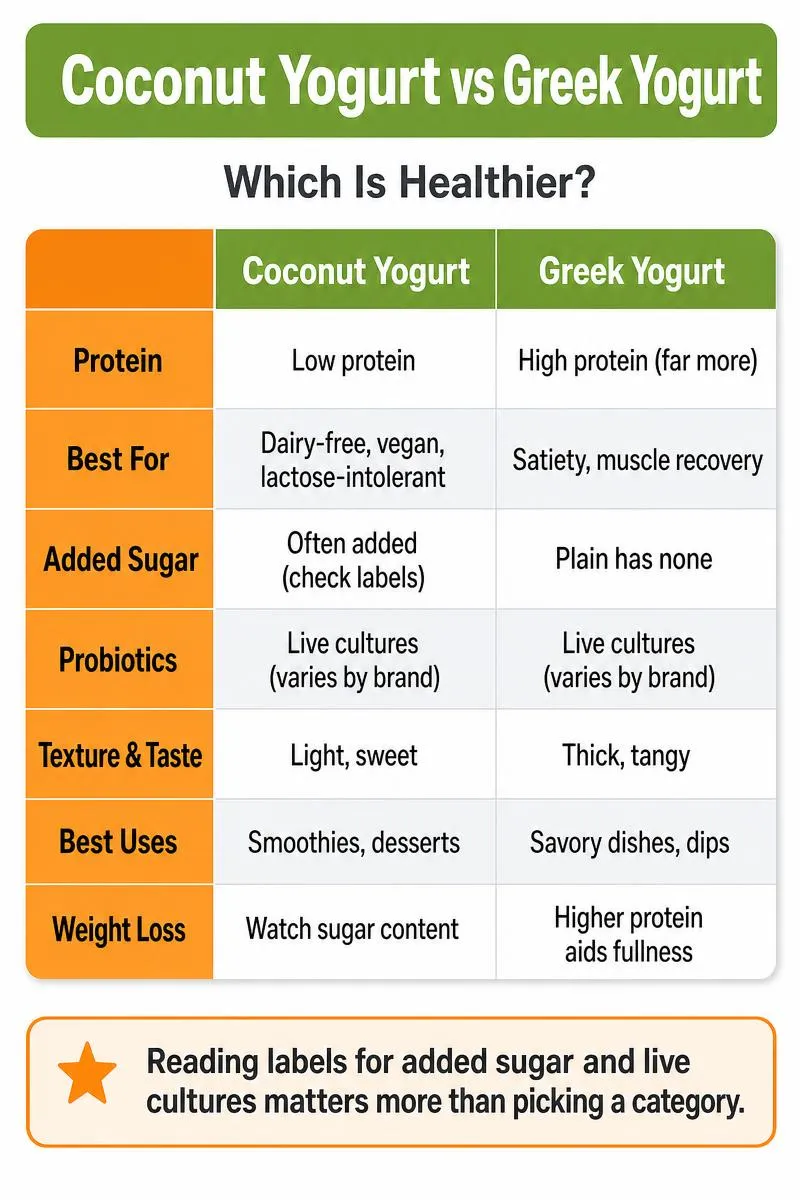
- Reading labels for added sugar and live cultures matters more than picking a category.
Comparing the Top Coconut Yogurt Vs Greek Yogurt
| Feature | Coconut Yogurt | Greek Yogurt |
|---|---|---|
| Protein | Low protein | High protein (far more) |
| Best For | Dairy-free, vegan, lactose‑intolerant | Satiety, muscle recovery |
| Added Sugar | Often added (check labels) | Plain has none |
| Probiotics | Live cultures (varies by brand) | Live cultures (varies by brand) |
| Texture & Taste | Light, sweet | Thick, tangy |
| Best Uses | Smoothies, desserts | Savory dishes, dips |
| Weight Loss | Watch sugar content | Higher protein aids fullness |
What Is Coconut Yogurt?
Coconut yogurt starts with coconut milk – the canned, full-fat kind – and bacterial cultures that ferment the natural sugars. The cultures thicken the milk and develop a mild tang, though coconut yogurt stays sweeter and less acidic than dairy-based versions.
It fits dairy-free, vegan, and paleo diets without modification. People with lactose intolerance can eat it without digestive distress. The flavor stays mild enough to work in both sweet bowls with fruit and savory applications like curry or dressings.
Protein content sits low compared to Greek yogurt, usually a few grams per serving. Many brands add tapioca starch or guar gum for thickness and cane sugar or fruit puree for sweetness. Texture varies widely – some brands feel creamy and dense, others thin and watery.
You Might Also Like
A breakdown of coconut sugar’s nutrition and uses as a yogurt sweetener.
What Is Greek Yogurt?
Greek yogurt starts as regular cow’s milk yogurt, then gets strained to remove whey. Straining concentrates the protein and fat while reducing the lactose and liquid whey. The result is a thick, tangy product with more protein per serving than unstrained yogurt.
The high protein content makes Greek yogurt popular for post-workout snacks, high-satiety breakfasts, and meal plans focused on muscle maintenance. Full-fat versions contain more calories but also more fat-soluble vitamins. Non-fat versions cut calories but can taste more sour.
Greek yogurt’s tangy flavor and thick texture work well in savory cooking – marinades for chicken, bases for dips, substitutes for sour cream. The acidity can curdle in some hot dishes unless you temper it first. Anyone with a dairy allergy or following a vegan diet cannot eat Greek yogurt.
Coconut Yogurt vs Greek Yogurt: Nutrition
Greek yogurt delivers far more protein than coconut yogurt. Plain, unsweetened versions contain significantly higher protein levels. That protein comes from casein and whey, both complete proteins with all essential amino acids.
Coconut yogurt contains mostly fat from medium-chain triglycerides, the same fatty acids found in coconut oil. Carbohydrate content varies widely depending on added sugars. Plain coconut yogurt has fewer carbs than sweetened versions, but still more than plain Greek yogurt in most cases.
Calorie density depends on fat content. Full-fat coconut yogurt and full-fat Greek yogurt land in a similar range. Non-fat Greek yogurt drops the calorie count significantly, while coconut yogurt rarely comes in a truly low-fat version because coconut milk itself is high in fat.
Winner: Greek yogurt for protein; coconut yogurt for anyone avoiding dairy.
Also Worth Checking Out
A comparison of coconut sugar and maple syrup’s sweetness, calories, and glycemic impact.
Coconut Yogurt vs Greek Yogurt: Gut Health
Both products rely on live bacterial cultures to ferment and thicken. Common strains include Lactobacillus bulgaricus, Streptococcus thermophilus, and Bifidobacterium. These probiotics can support digestive health and immune function when consumed regularly.
Some coconut yogurt formulations may include inulin or other fibers from added ingredients, which can act as prebiotics – food for the beneficial bacteria already in your gut. Greek yogurt typically contains less fiber unless the brand adds it separately.
Probiotic diversity and colony-forming units vary by brand and production method. Some brands add extra strains after fermentation. Others rely only on the starter cultures. Checking the label for “live and active cultures” becomes essential.
Winner: Depends on the specific strains and added prebiotic fibers in each brand.
Coconut Yogurt vs Greek Yogurt: Weight Loss
Greek yogurt’s high protein content increases satiety – the feeling of fullness after eating. Protein also requires more energy to digest than fat or carbohydrates, which slightly increases calorie expenditure. If you struggle with hunger between meals, Greek yogurt can help you stay satisfied longer.
Coconut yogurt contains less protein but can still fit into a calorie-controlled diet. The medium-chain triglycerides may metabolize differently than long-chain fats, though research on whether this affects weight loss remains mixed. If coconut yogurt helps you stick to a plant-based eating plan you can sustain, it supports weight loss indirectly.
Added sugars in either product increase calorie content without adding satiety. Plain versions of both yogurts keep calorie counts lower and give you control over sweetness. Portion size matters as much as the type of yogurt.
Winner: Greek yogurt if protein-driven satiety keeps you from overeating; coconut yogurt works if it supports a sustainable plant-based approach.
Coconut Yogurt vs Greek Yogurt: Substitutions in Cooking
Greek yogurt’s thickness and tang make it ideal for savory applications. It holds up in dips like tzatziki, thickens salad dressings without thinning them, and tenderizes meat in marinades thanks to lactic acid. In baking, Greek yogurt adds moisture and a slight tang to muffins, cakes, and quick breads.
Coconut yogurt works better in recipes where dairy flavor would clash or where you want a subtle sweetness. Smoothies, chia puddings, and fruit bowls benefit from coconut yogurt’s lighter texture and mild flavor. In baking, coconut yogurt adds moisture but less protein, which can change the structure of the final product.
Swapping one for the other usually works in cold applications like smoothies or parfaits. In cooked dishes, expect differences in tang, thickness, and moisture content. Greek yogurt may curdle under high heat unless stabilized with starch or tempered slowly. Coconut yogurt separates less but doesn’t provide the same creamy thickness.
Winner: Greek yogurt for thick, savory dishes; coconut yogurt for lighter, sweeter recipes.
Keep Reading
Uses and baking tips for coconut flour, handy when substituting dairy-based yogurt in recipes.
Which Should You Choose?
For a high-protein breakfast or post-workout snack: Greek yogurt delivers significantly more protein, which supports muscle recovery and keeps hunger at bay longer.
For dairy allergies, lactose intolerance, or vegan diets: Coconut yogurt is the only option that fits these restrictions without modification.
For thick dips, dressings, or savory sauces: Greek yogurt’s tangy flavor and dense texture make it the better base for tzatziki, ranch, or marinades.
For mild, slightly sweet smoothies or desserts: Coconut yogurt blends into fruit-based recipes without adding dairy tang or overpowering other flavors.
For managing added sugar intake: Plain Greek yogurt is easier to find in low-sugar or no-sugar versions across most grocery stores. Coconut yogurt often contains added sugars to balance the mild flavor, so reading labels becomes essential.
FAQs About Coconut Yogurt and Greek Yogurt
Is coconut yogurt actually healthy?
Yes, if you choose unsweetened versions with live cultures. Coconut yogurt provides medium-chain triglycerides and probiotics, but many brands add significant sugar to improve flavor. Check the ingredient list – plain coconut milk and live cultures should be the main components.
Is coconut yogurt better for your gut than Greek yogurt?
Not necessarily. Both contain live probiotic cultures, and gut health depends more on the specific strains and colony counts than the base ingredient. Some coconut yogurts include prebiotic fibers, which can support existing gut bacteria, but Greek yogurt with added fiber can offer similar benefits.
Can you replace Greek yogurt with coconut yogurt in recipes?
Yes in smoothies, parfaits, and cold dishes. In cooked applications, expect changes in thickness, tang, and behavior under heat. Greek yogurt may curdle in hot dishes; coconut yogurt stays more stable but won’t thicken sauces as much. Baking with coconut yogurt reduces protein content and can change the texture of the final product.
Does coconut yogurt spike blood sugar?
Plain coconut yogurt has a lower impact on blood sugar than sweetened versions. Brands that add cane sugar, agave, or fruit puree increase the carbohydrate content significantly. Medium-chain triglycerides and any added inulin may slow sugar absorption slightly, but added sugars still raise blood glucose.
Is it okay to eat coconut yogurt every day?
Yes for most people, as long as you watch portion sizes and choose low-sugar options. Coconut yogurt is high in saturated fat from medium-chain triglycerides, which affects people differently depending on overall diet and health status. If you have a coconut allergy or need to limit saturated fat, daily consumption may not suit you.
Which is healthier, coconut yogurt or Greek yogurt?
Greek yogurt offers more protein and usually less added sugar in plain versions. Coconut yogurt fits dairy-free and vegan diets and provides medium-chain triglycerides. “Healthier” depends on your dietary needs – Greek yogurt supports muscle maintenance and satiety, while coconut yogurt works for lactose intolerance and plant-based eating.
What is the healthiest yogurt you can eat?
Plain, unsweetened yogurt with live cultures – whether dairy-based or coconut-based. The healthiest option depends on your protein needs, dietary restrictions, and tolerance for dairy. Greek yogurt maximizes protein; coconut yogurt eliminates dairy. Skyr, Icelandic yogurt, and other strained dairy options offer similar benefits to Greek yogurt with slight texture differences.
Final Verdict
Greek yogurt wins for protein content and satiety. Coconut yogurt wins for dairy-free eating and anyone who can’t digest lactose.
If you have a strict dairy allergy or follow a vegan lifestyle, Greek yogurt isn’t an option. If you’re a high-performance athlete or focused on muscle recovery, coconut yogurt’s low protein content may leave you short. For everyone else, the decision comes down to flavor preference and how much added sugar you’re willing to tolerate.
Look for live and active cultures, check the sugar content, and compare protein per serving. Those three factors determine which one works for you.
External References