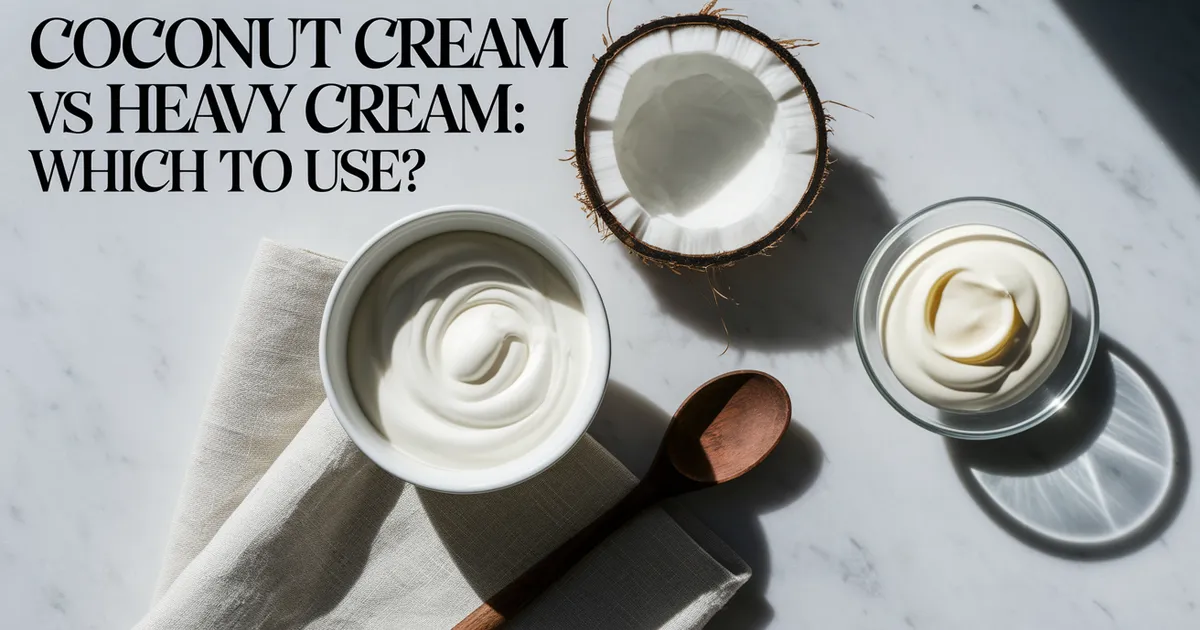
Coconut Cream vs Heavy Cream: Which to Use?
Can you swap coconut cream for heavy cream? Yes, but the swap changes more than the ingredient label. Coconut cream brings a distinct tropical flavor and a completely different fat profile, while heavy cream whips, reduces, and behaves in ways coconut cream simply can’t match. The right pick depends on whether you need structure from dairy cream or plant-based richness from coconut.
Key Takeaways
- Heavy cream whips to stiff, stable peaks; coconut cream rarely holds structure no matter how long you beat it.
- Coconut cream is cholesterol-free, but both are high in saturated fat from different sources.
- Heavy cream fits stricter low-carb diets with fewer carbs; coconut cream is the go-to for vegan or dairy-free cooking.
- Canned coconut cream works best in cooked sauces and soups, though coconut cream adds noticeable coconut flavor to whatever you make.
- Substituting one for the other changes texture and taste, so the recipe matters more than any general rule.
Comparing the Top Coconut Cream Vs Heavy Cream
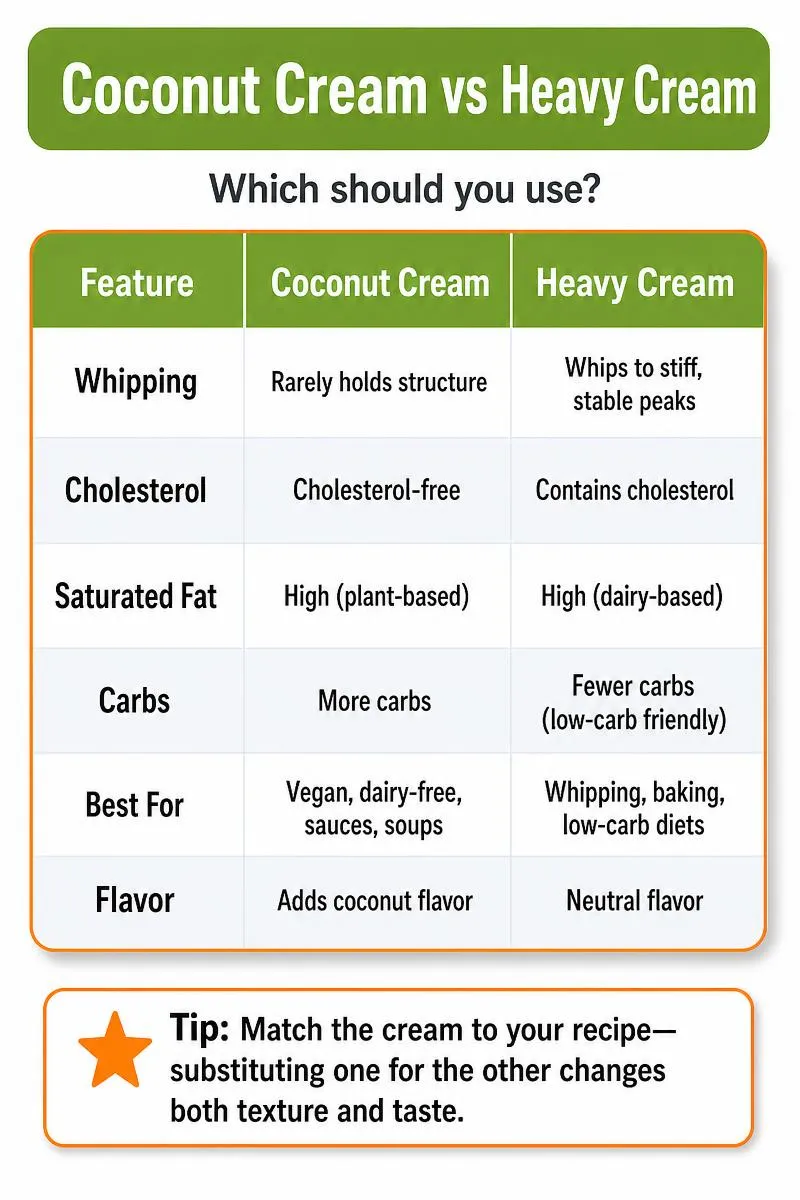
| Feature | Coconut Cream | Heavy Cream |
|---|---|---|
| Whipping | Rarely holds structure | Whips to stiff, stable peaks |
| Cholesterol | Cholesterol-free | Contains cholesterol |
| Saturated Fat | High (plant-based) | High (dairy-based) |
| Carbs | More carbs | Fewer carbs (low-carb friendly) |
| Best For | Vegan, dairy-free, sauces, soups | Whipping, baking, low-carb diets |
| Flavor | Adds coconut flavor | Neutral flavor |
What Is Coconut Cream?
Coconut cream is the thick, rich layer skimmed from the top of chilled coconut milk. When you refrigerate a can of full-fat coconut milk, the solids separate from the water and rise. That solid layer is coconut cream. It’s distinct from cream of coconut, which is sweetened and processed for cocktails and desserts.
Best use cases: Coconut cream shines in curries, soups, dairy-free desserts, and as a coffee creamer. The fat content gives body and richness without any dairy.
Key strengths: Coconut cream is vegan, dairy-free, and cholesterol-free. Some sources suggest that the medium-chain fatty acids in coconut fat may have anti-inflammatory properties, though research is still early.
Main weaknesses: Coconut cream is high in saturated fat. The fat can separate when heated too quickly, and despite efforts to whip it, coconut cream does not hold stiff peaks the way dairy cream does.
Keep Reading
How coconut milk compares to oat milk for thickness, flavor, and cooking substitutions.
What Is Heavy Cream?
Heavy cream is the high-fat layer skimmed from cow’s milk, often labeled heavy whipping cream. By definition, heavy cream contains a fat content high enough to whip into stable peaks.
Best use cases: Whipping, pastry work, rich pan sauces, and ice cream bases. Heavy cream is the backbone of classic dessert toppings and emulsified sauces.
Key strengths: Heavy cream whips to stiff peaks and holds structure for extended periods. The flavor is neutral, so heavy cream blends into savory or sweet dishes without competing. Heavy cream also stays stable when reduced over heat.
Main weaknesses: Heavy cream contains lactose and dietary cholesterol, and is unsuitable for anyone following a vegan diet.
Coconut Cream vs Heavy Cream: Nutrition and Macros
Calories and fat: Both are calorie-dense due to high fat content. Heavy cream and coconut cream are both rich in saturated fat, though the sources differ – heavy cream’s saturated fat comes from animal-based fats, while coconut cream’s comes from plant-based fats including lauric acid.
Carb content: Heavy cream is lower in carbohydrates, making it a tighter fit for strict low-carb diets. Coconut cream contains slightly more carbs, though the amount is still modest.
Protein content: Heavy cream provides a small amount of dairy protein. Coconut cream contains almost no protein.
Fiber content: Coconut cream provides trace amounts of fiber, likely from residual coconut solids. Heavy cream contains no fiber.
Section winner: Heavy cream is lower in carbs, while coconut cream provides trace fiber that heavy cream lacks.
Coconut Cream vs Heavy Cream: Cooking and Baking
Whipping behavior: Heavy cream whips to firm, stable peaks that hold their shape for hours. Coconut cream usually stays loose and soft, even after chilling and beating. Some bakers manage to get coconut cream to hold briefly, but the result is inconsistent and rarely matches the structure of whipped heavy cream.
Soups and sauces: Both work in soups and sauces, but behave differently. Heavy cream blends smoothly into hot liquids and reduces into silky pan sauces. Coconut cream adds body and richness, but the fat can separate if the liquid gets too hot or boils. Stirring gently and keeping the temperature moderate helps coconut cream stay emulsified.
Baked goods: Heavy cream adds fat and moisture to baked goods without altering flavor. Coconut cream does the same but introduces coconut flavor, which works in tropical desserts and some quick breads but clashes with more neutral recipes.
Substitution ratios: For most recipes, you can substitute coconut cream for heavy cream at a one-to-one ratio by volume. The texture will be slightly different – coconut cream tends to be thicker when cold and looser when warm.
Section winner: Heavy cream for whipping and structural roles; coconut cream for dairy-free cooking where coconut flavor fits.
Worth Reading Next
Which is better for high-heat cooking and how flavor and smoke point differ – useful when choosing fats for recipes…
Coconut Cream vs Heavy Cream: Dietary Fit
Vegan and dairy-free: Coconut cream is fully plant-based and works for vegan and dairy-free diets. Heavy cream is an animal product and contains lactose, so it’s off the table for anyone avoiding dairy.
Paleo compatibility: Both coconut cream and heavy cream can fit a paleo approach, since paleo allows some dairy depending on the version you follow. Strict paleo eaters who avoid dairy would choose coconut cream.
Keto and low-carb: Heavy cream has fewer carbohydrates, making it a better macro fit for strict keto. Coconut cream still works for keto, but the slightly higher carb count means you need to watch portion sizes more closely.
Section winner: Coconut cream for plant-based and dairy-free diets; heavy cream for stricter keto macros.
Coconut Cream vs Heavy Cream: Cholesterol and Saturated Fat
Cholesterol content: Heavy cream contains dietary cholesterol because it comes from an animal source. Coconut cream contains zero dietary cholesterol because it’s plant-based. If you’re specifically avoiding dietary cholesterol, coconut cream is the clear choice.
Saturated fat: Both are high in saturated fat. Heavy cream’s saturated fat is primarily from palmitic and stearic acids found in dairy. Coconut cream’s saturated fat is mostly lauric acid, a medium-chain fatty acid that the body metabolizes somewhat differently than long-chain fats. Some sources suggest lauric acid may have mild anti-inflammatory effects, though the evidence is early and mixed.
Section winner: Coconut cream if you’re avoiding dietary cholesterol. Otherwise, both require moderation given the saturated fat content in each.
Which Should You Choose?
- You need whipped toppings or stable peaks: Heavy cream is the only reliable option here. Coconut cream won’t hold the structure you need.
- You are vegan, lactose intolerant, or avoiding dairy: Coconut cream gives you richness and body without any dairy.
- You are following strict low-carb macros: Heavy cream has fewer carbs and fits tighter into keto tracking.
- You want cholesterol-free cream for cooking: Coconut cream contains no dietary cholesterol, while heavy cream does.
- You are making Asian curries or tropical desserts: Coconut cream is the traditional ingredient, and the flavor belongs in those dishes.
Keep Reading
A side-by-side look at almond and coconut milks to help decide dairy-free cream substitutes and recipe swaps.
FAQs About Coconut Cream and Heavy Cream
Can you use coconut cream instead of heavy cream?
Yes, in most cooked dishes you can substitute coconut cream for heavy cream at a one-to-one ratio. The texture will differ slightly and coconut cream adds coconut flavor, so it works best in recipes where that flavor is welcome.
What is the best substitute for heavy cream?
For dairy-free cooking, coconut cream is one of the closest substitutes in terms of richness and fat content. For whipping, though, no plant-based cream matches heavy cream’s ability to hold stiff peaks.
What’s the best substitute for coconut cream?
Heavy cream works if you don’t need a dairy-free option. For a plant-based substitute, full-fat coconut milk reduced slightly on the stove can approximate the thickness of coconut cream.
What’s healthier, coconut cream or heavy cream?
Neither is clearly healthier. Coconut cream is cholesterol-free and contains medium-chain fatty acids, but it’s still high in saturated fat. Heavy cream contains cholesterol and lactose but has fewer carbs. The healthier choice depends on what you’re optimizing for.
Which has more calories and fat?
Both are high in calories and fat, and the amounts are close enough that portion size matters more than which cream you pick. Coconut cream tends to be slightly more calorie-dense per serving because of its higher fat concentration when scooped from the can.
Why does coconut cream not whip?
Coconut fat has a different molecular structure than dairy fat. Dairy fat traps air bubbles when beaten, creating a stable foam. Coconut fat melts at a lower temperature and doesn’t hold those air bubbles the same way, so beating coconut cream produces a soft, loose texture rather than stiff peaks.
Is coconut cream anti-inflammatory?
Some sources suggest that lauric acid, the dominant fatty acid in coconut cream, may have anti-inflammatory properties. The research is early and mixed, so it’s accurate to say coconut cream may help with inflammation but shouldn’t be relied on as an anti-inflammatory intervention.
Final Verdict
Neither cream is universally better – the right pick depends on what you’re cooking and what dietary lines you’re holding. If you need whipped peaks or a neutral-flavored reduction, heavy cream does the job coconut cream can’t. If you’re cooking dairy-free or making a curry, coconut cream delivers richness and body without the lactose or cholesterol.
Try both in your favorite sauce or soup recipe and compare the texture and flavor side by side. That’s the fastest way to learn which one your kitchen actually needs.
External References
- Full-fat dairy foods and cardiovascular disease: Is there a … – Mayo Clinic
- a comparative study with lauric acid – NIH
- Anti-inflammatory activity of lauric acid, thiocolchicoside and … – NIH
- Lactose intolerance – Symptoms & causes – Mayo Clinic
- Lactose Intolerance: Symptoms, Causes, Tests, and More – Healthline