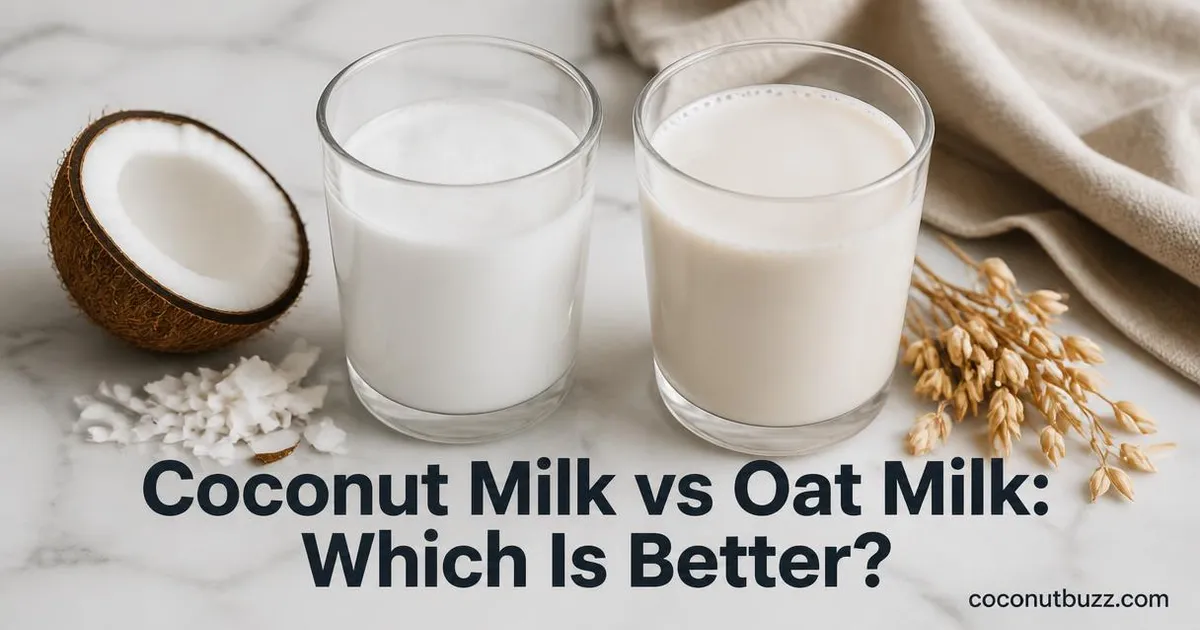
Coconut Milk vs Oat Milk: Which Is Better?
Coconut milk and oat milk both sit in the dairy-free aisle, but they’re built from completely different starting materials – one comes from the flesh of a tropical fruit, the other from soaked and blended grain.
Most people end up using both, but for very different things. Oat milk tends to win in coffee mugs. Coconut milk tends to win in cooking pots.
Key Takeaways
- Oat milk leans higher in carbohydrates, while coconut milk contains more saturated fat – so the better fit depends on your dietary goals.
- Most people prefer oat milk for coffee and coconut milk for creamy cooking, because the taste and texture differ enough to matter in each setting.
- Oat milk generally uses less water to produce, while coconut milk raises tropical-farming and shipping sustainability questions.
- Both work for lactose-intolerant drinkers, but allergen profiles differ – people with specific food sensitivities should check labels carefully.
- For frothing and latte art, oat milk performs better; coconut milk works best in soups, curries, and smoothies.
Quick Comparison: Coconut Milk Vs Oat Milk
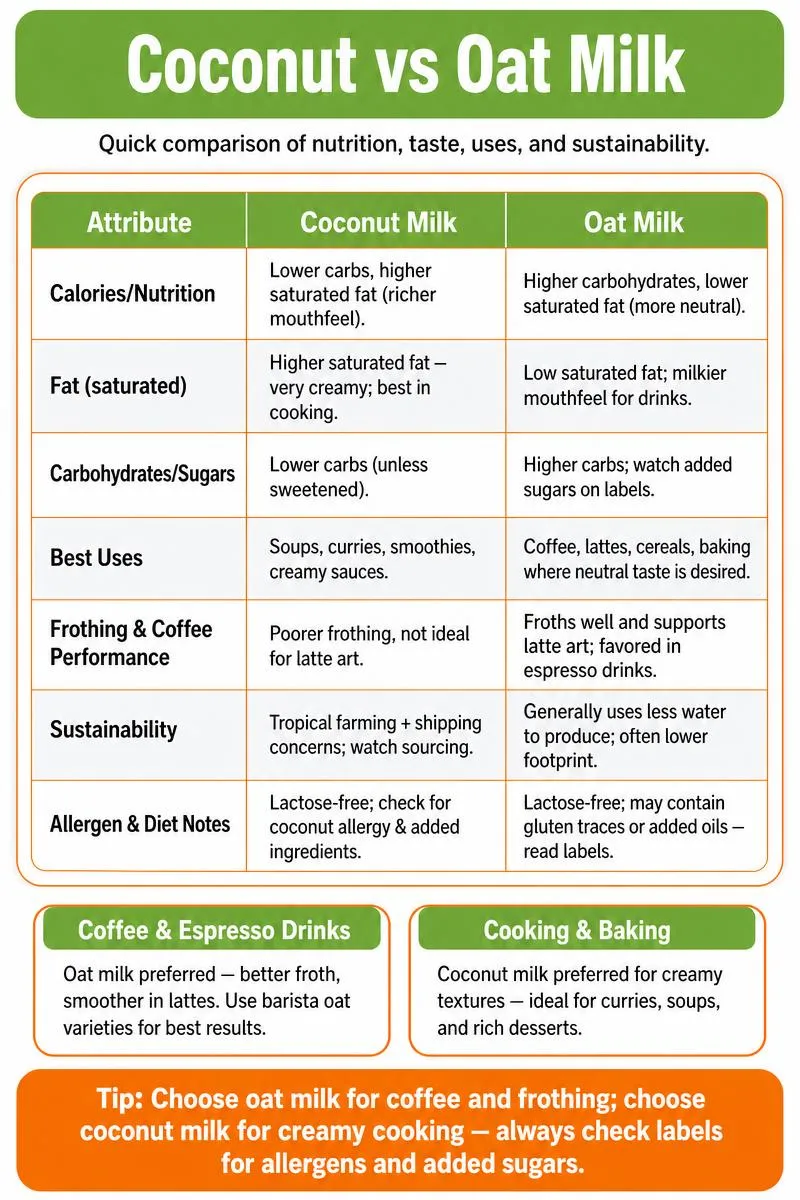
| Attribute | Coconut Milk | Oat Milk |
|---|---|---|
| Calories/Nutrition | Lower carbs, higher saturated fat (richer mouthfeel). | Higher carbohydrates, lower saturated fat (more neutral). |
| Fat (saturated) | Higher saturated fat — very creamy; best in cooking. | Low saturated fat; milkier mouthfeel for drinks. |
| Carbohydrates/Sugars | Lower carbs (unless sweetened). | Higher carbs; watch added sugars on labels. |
| Best Uses | Soups, curries, smoothies, creamy sauces. | Coffee, lattes, cereals, baking where neutral taste is desired. |
| Frothing & Coffee Performance | Poorer frothing, not ideal for latte art. | Froths well and supports latte art; favored in espresso drinks. |
| Sustainability | Tropical farming + shipping concerns; watch sourcing. | Generally uses less water to produce; often lower footprint. |
| Allergen & Diet Notes | Lactose-free; check for coconut allergy & added ingredients. | Lactose-free; may contain gluten traces or added oils — read labels. |
What Is Coconut Milk?
Coconut milk is made by blending coconut flesh with water and then straining out the solids. You’ll find it in two main forms: canned and refrigerated cartons. Canned coconut milk is thicker and higher in fat because it uses a higher ratio of coconut flesh. Refrigerated carton versions are thinner and diluted for drinking, often with added water and stabilizers.
Best use cases: Coconut milk shines in curries, soups, tropical smoothies, and desserts. The high fat content gives dishes a creamy body that dairy milk would normally provide. Thai green curry, coconut rice pudding, and piña colada-style smoothies all lean on that richness.
Key strengths: Coconut milk delivers a rich, tropical flavor and a creamy texture thanks to its fat content. Coconut fat includes lauric acid, a medium-chain fatty acid that the body metabolizes differently than longer-chain fats. Coconut milk is naturally dairy-free, making it useful for anyone avoiding lactose.
Main weaknesses: Coconut flavor doesn’t stay quiet. In a delicate soup or a mild latte, coconut milk can dominate the taste profile rather than blend in. Coconut milk also tends to separate in hot drinks, forming oily patches on the surface – which is why baristas rarely reach for it.
Keep Reading
A side-by-side comparison of almond milk and coconut milk covering nutrition, taste, and common uses.
What Is Oat Milk?
Oat milk is made by blending oats with water and straining out the remaining oat solids. Most commercial oat milks are fortified with vitamins and minerals like calcium, vitamin D, and vitamin B12 to approximate what dairy milk provides. Some brands also add oils or stabilizers to improve texture.
Best use cases: Oat milk works well in coffee, cereal, and as a straight-pour drinking milk. Barista blends are formulated specifically to handle steam wand pressure and hold foam structure in espresso drinks.
Key strengths: Oat milk has a mild, slightly sweet, neutral flavor that doesn’t compete with coffee or other ingredients. Oat milk froths better than most plant milks because the starches and added proteins help stabilize foam. Barista-grade oat milks are widely available and designed to produce microfoam for latte art.
Main weaknesses: Oat milk is thinner than dairy cream, so drinks can feel less substantial if you’re used to whole milk. Lower-quality oat milks can taste grainy or chalky, especially when heated.
Coconut Milk vs Oat Milk: Nutrition and Calories
Both milks replace dairy, but their macronutrient patterns look very different because their base ingredients are fundamentally different. Oat milk, being grain-based, leans higher in carbohydrates – the starches in oats convert into sugars during processing. Coconut milk, being fat-based, leans higher in saturated fat, particularly lauric acid. Coconut milk generally contains less carbohydrate and protein than oat milk.
Most commercial oat milks are fortified with calcium, vitamin D, and vitamin B12. Coconut milk in carton form is also sometimes fortified, but canned coconut milk typically is not – it’s closer to its natural nutrient profile. Reading labels matters here, because fortification varies widely by brand and format.
The heart health conversation matters for both but points in different directions. Coconut milk’s saturated fat content – primarily lauric acid – raises LDL cholesterol in some people, though lauric acid may also raise HDL. Oat milk contains beta-glucan, a soluble fiber linked to modest cholesterol reduction. If heart health is a priority, oat milk’s beta-glucan content gives it an edge, while coconut milk’s saturated fat warrants moderation for anyone monitoring lipid levels.
Neither milk is universally “more nutritious” – the better choice depends on what you’re trying to get more of or avoid. Oat milk suits people wanting fiber and a carbohydrate-friendly option. Coconut milk suits people wanting fat and a lower-carb profile.
Explore More
A nutrition-focused comparison highlighting protein, calories, and suitability for different diets.
Coconut Milk vs Oat Milk: Taste and Texture
Coconut milk tastes tropical, rich, and distinctly coconutty. The fat content creates a creamy mouthfeel that coats the palate. That richness is a strength in coconut-forward dishes but a liability when you want a neutral background.
Oat milk tastes mild, slightly sweet, and cereal-like without a strong identity of its own. Oat milk is thinner than coconut milk and closer to the consistency of skim or low-fat dairy milk. That neutrality is exactly why oat milk disappears into coffee so easily.
The winner here depends on what you’re drinking or eating. Coconut milk wins when you want bold flavor – a coconut-lime smoothie, a Thai curry, a coconut cream pie. Oat milk wins for everyday drinking where you don’t want the milk announcing itself.
Coconut Milk vs Oat Milk: Best Uses for Coffee and Cooking
Where each milk shines depends on whether you’re pouring or cooking – the two tasks demand very different things from a dairy substitute.
1. Coffee and Espresso Drinks
Oat milk froths better than coconut milk. The starches and proteins in oat milk help create stable microfoam, which is why barista blends exist. Lattes, cappuccinos, and matcha lattes all work well with oat milk because the flavor stays neutral and the foam holds its shape.
Coconut milk struggles in coffee. The fat tends to separate when hit with hot espresso, leaving an oily film on top. The coconut flavor also competes with the coffee rather than complementing it. Some people enjoy the combination in iced drinks, but for hot espresso work, oat milk is the clear winner.
2. Cooking and Baking
Coconut milk excels in creamy soups, curries, and desserts where its fat content and flavor are assets. Thai curries, coconut soup, rice pudding, and dairy-free ice cream all benefit from the richness that coconut milk provides. The lauric acid in coconut fat stays solid at cooler temperatures, which helps set desserts.
Oat milk works in baking too, but its lower fat content means recipes may need adjustments – you might need added oil or butter to compensate. Oat milk’s slight sweetness can be a plus in baked goods like muffins and pancakes.
Bottom line: Oat milk for coffee drinks, coconut milk for cooking and flavor-forward recipes.
Related Reading
Benefits of coconut oil in coffee
Practical tips on using coconut oil in coffee and how it alters flavor and texture.
Coconut Milk vs Oat Milk: Sustainability
Oat milk generally uses less water per liter produced than coconut milk. Oats grow in temperate climates, often closer to the populations consuming oat milk, which can shorten the supply chain. Many oat milk brands source oats regionally.
Coconut milk raises different sustainability questions. Coconuts grow in tropical regions, often far from where coconut milk is consumed, so shipping distance adds to the carbon footprint. Coconut farming also involves questions about monoculture practices and fair labor in tropical agriculture – issues that don’t apply to oat farming in the same way.
Both plant milks generally beat dairy milk on environmental impact across water use, land use, and greenhouse gas emissions. Between the two, oat milk typically has the lighter footprint. But neither is perfect, and sourcing transparency varies by brand.
Which Should You Choose?
- For daily coffee and lattes: Oat milk. It froths well, tastes neutral, and barista blends are easy to find.
- For curries, soups, and tropical dishes: Coconut milk. The fat content and flavor are what these recipes need.
- For cereals and smoothies where you want a neutral base: Oat milk. Coconut milk’s flavor would compete with cereal.
- For the richest, creamiest texture possible: Coconut milk. Its fat content delivers a body that oat milk can’t match.
- For lower water use and local sourcing potential: Oat milk. Oats grow in temperate climates closer to most consumers.
FAQs About Coconut Milk and Oat Milk
What are the downsides of drinking oat milk?
Oat milk is higher in carbohydrates than some other plant milks, which matters for people managing carb intake. Some brands add oils, sugars, or gums that you may not want. Low-quality oat milk can taste grainy. If you have celiac disease or gluten sensitivity, check for certified gluten-free labels – oats are often cross-contaminated with wheat during processing.
What does coconut milk do to your gut?
Coconut milk contains lauric acid, which has some antimicrobial properties in lab studies, but there’s no strong evidence that drinking coconut milk meaningfully changes gut bacteria in humans. Coconut milk is naturally dairy-free and lactose-free, so it won’t trigger lactose-related digestive issues. Canned coconut milk is high in fat, which can slow digestion – something to note if you have a sensitive stomach.
Is coconut milk or oat milk better for weight loss?
Neither milk is inherently better for weight loss. Oat milk tends to be lower in calories per serving but higher in carbohydrates. Coconut milk is higher in calories and fat but lower in carbs. For someone managing calorie intake, lighter oat milk may be easier to fit into a daily plan. For someone on a low-carb or ketogenic approach, coconut milk’s lower carbohydrate content fits better. Total diet matters more than which milk you pour.
Which is more nutritious, coconut milk or oat milk?
Neither is clearly more nutritious – they offer different nutrient profiles. Oat milk provides more carbohydrates and, in many commercial brands, beta-glucan fiber linked to cholesterol reduction. Coconut milk provides more fat, including lauric acid. Both are commonly fortified with calcium, vitamin D, and vitamin B12, but fortification varies by brand. Check labels for the specifics that matter to you.
How do coconut milk and oat milk taste different?
Coconut milk tastes tropical, rich, and distinctly like coconut. Oat milk tastes mild, slightly sweet, and cereal-like with a neutral finish. Coconut milk coats the palate with its fat content; oat milk drinks thinner and closer to the feel of low-fat dairy milk.
Which works better in coffee and baking?
Oat milk works better in coffee – it froths well, stays stable in hot drinks, and doesn’t compete with coffee flavor. Coconut milk works better in baking where you want richness, such as coconut cakes or custards. For general baking like muffins and quick breads, either can work, though oat milk’s lower fat content may require added oil in some recipes.
Can people with allergies safely drink coconut milk and oat milk?
Coconut is classified as a fruit by the FDA, not a tree nut, so most people with tree nut allergies can tolerate coconut – but coconut allergy does exist and can be serious. Oat milk is generally safe for people with nut allergies, but those with celiac disease or gluten sensitivity need certified gluten-free oat milk due to cross-contamination risk. Anyone with a known food allergy should check labels and consult an allergist.
Can you make coconut milk and oat milk at home?
Yes, both are straightforward to make. Coconut milk requires blending shredded coconut with hot water and straining through a nut milk bag or cheesecloth. Oat milk requires blending rolled oats with water and straining – though home-made oat milk can be slimy if over-blended. Home-made versions won’t be fortified with calcium, vitamin D, or vitamin B12 unless you add supplements.
Which is better for the environment?
Oat milk generally has a lighter environmental footprint. Oats grow in temperate climates closer to consumers, use less water, and don’t require tropical shipping. Coconut milk involves long-distance shipping from tropical regions and raises questions about farming practices. Carton coconut milk often contains imported ingredients beyond just the coconut, including stabilizers and emulsifiers. Both plant milks typically beat dairy milk on environmental impact.
Which is better for heart health?
Oat milk has the edge for heart health. Oat milk contains beta-glucan, a soluble fiber linked to modest reductions in LDL cholesterol. Coconut milk’s saturated fat content – primarily lauric acid – can raise LDL cholesterol, though lauric acid may also raise HDL. Canned coconut milk has higher saturated fat concentration than carton coconut milk, so the format you buy matters. If cardiovascular health is a priority, oat milk’s fiber profile and lower saturated fat content make it the better choice. Anyone with existing heart conditions should discuss dietary fat intake with their doctor.
Final Verdict
Neither milk is universally superior – the right choice depends on what you’re making and what your nutrition goals are. Oat milk suits daily coffee routines, cereal, and anything where you want a neutral, froth-friendly base. Coconut milk suits cooking, curries, and recipes where rich flavor and creamy fat content matter.
If you’re monitoring saturated fat, dealing with specific food sensitivities, or managing carbohydrate intake, read the labels on both before committing.
Try oat milk in your usual morning coffee and coconut milk in a go-to curry recipe. You’ll know within one cup and one bowl which one earns a permanent spot in your kitchen.
External References