
Almond vs Coconut Milk: Which Wins for You
If you pour almond milk into a Thai curry, the result will be thin and flavorless. If you pour canned coconut milk into your morning coffee, you’ll taste coconut all day. These two plant milks look similar on a shelf, but they behave nothing alike once you open the carton.
Almond milk dominates the dairy-free aisle in most grocery stores – it’s the default people grab for cereal and smoothies. Coconut milk sits nearby but serves a completely different purpose: it adds richness and tropical flavor to cooking, not just a pourable liquid for your glass.
The almond vs coconut milk question isn’t really about which one is better. It’s about which one does the job you need it to do.
Key Takeaways
- Higher fat and calories – coconut milk changes how each fits into different diets and recipes.
- Neutral taste – almond milk works in everyday drinks, while coconut milk adds a distinct tropical flavor to curries and desserts.
- Inflammation effects – some sources suggest the two milks may affect inflammation differently, but individual responses vary.
- Neither universally better – the right choice depends on whether you prioritize low calories, cooking performance, or environmental impact.
- Not always interchangeable – almond milk and coconut milk differ in fat content and flavor, which changes how they perform in recipes.
- Both dairy-free – but coconut is a fruit, not a tree nut, a distinction that matters for people with specific allergies.
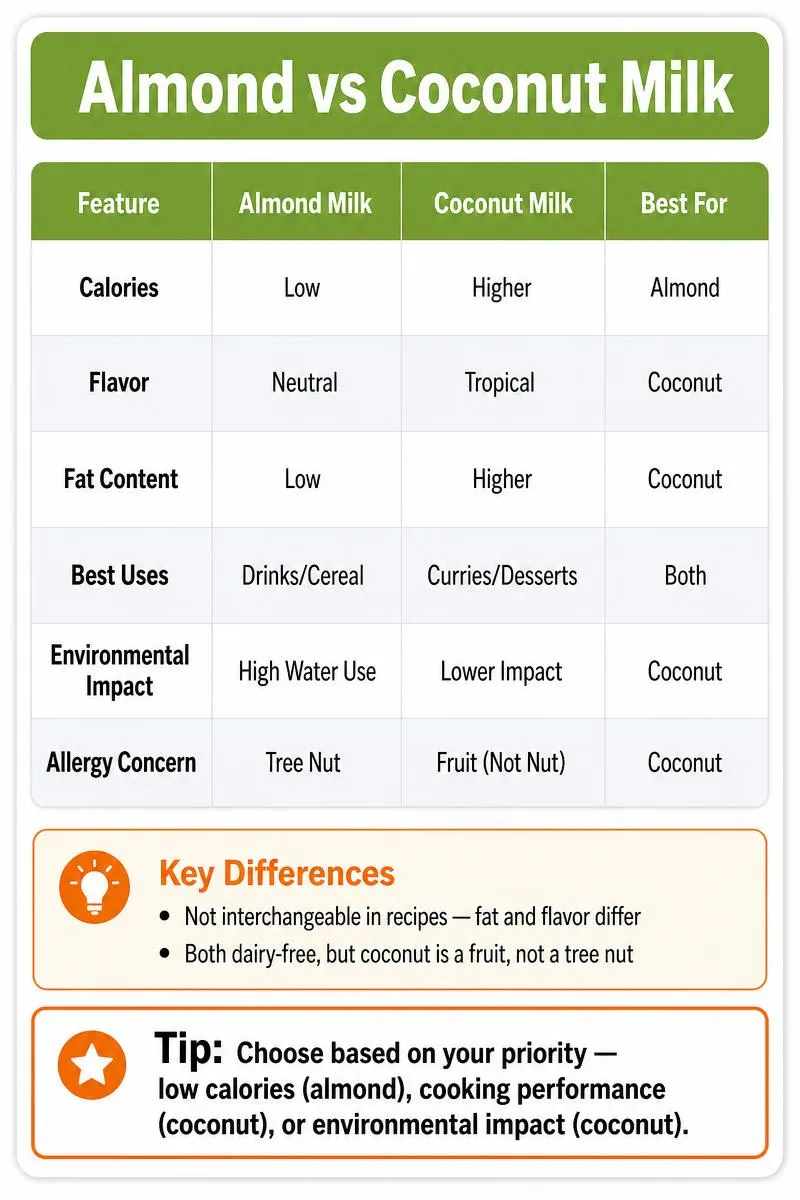
Almond Vs Coconut Milk at a Glance
| Feature | Almond Milk | Coconut Milk | Best For |
|---|---|---|---|
| Calories | Low | Higher | Almond |
| Flavor | Neutral | Tropical | Coconut |
| Fat content | Low | Higher | Coconut |
| Best uses | Drinks/Cereal | Curries/Desserts | Both |
| Environmental impact | High water use | Lower impact | Coconut |
| Allergy concern | Tree nut | Fruit (not nut) | Coconut |
What Is Almond Milk?
Manufacturers make almond milk by grinding almonds with water, then straining out the solids. The resulting liquid is thin and milky, with most of the fiber and protein from the whole nuts left behind. Store-bought versions often add calcium, vitamin D, and sometimes vitamin E to bring the nutrient profile closer to dairy milk.
Almond milk works best in cereals, smoothies, and everyday drinking. The thin consistency and neutral flavor make almond milk easy to pour over granola or blend into a fruit smoothie without competing with other ingredients.
Strengths: low calorie count, wide availability, and versatility. Almond milk sits in virtually every grocery store, mixes well into coffee, and substitutes for dairy milk in most baking recipes without altering the flavor.
Weaknesses: low protein, separation in hot drinks, and high water demand. Almond milk contains very little protein unless the manufacturer fortifies it. Almond milk can curdle or separate when poured into hot coffee. Almond farming also requires significant irrigation, particularly in California where most U.S. almonds grow.
Keep Reading
A direct comparison of soy milk and coconut milk covering nutrition, taste, and best uses.
What Is Coconut Milk?
Coconut milk comes from grated coconut flesh pressed with water. The pressing extracts the fat and flavor from the coconut meat, producing a rich, creamy liquid. Coconut milk is available in two main forms: thick canned milk used for cooking, and thinner carton milk sold as a beverage.
Canned coconut milk works best in curries, soups, tropical smoothies, and dairy-free desserts that need richness. The fat content gives dishes a silky texture that thin almond milk can’t replicate.
Strengths: high fat content, cooking stability, and natural lactose-free status. Coconut milk stays smooth under heat, making it reliable in simmered dishes. The medium-chain triglycerides in coconut fat add body to sauces and desserts without dairy.
Weaknesses: higher calories, strong coconut flavor, and cold-temperature solidification. Coconut milk carries more calories than almond milk per serving, and the coconut taste can clash with savory or delicate dishes. Refrigerated coconut milk also tends to solidify or separate when cold, which means you may need to warm or stir it before use.
Almond Milk vs Coconut Milk: Nutrition
The nutritional gap between almond milk and coconut milk comes down to fat and calorie density. Most commercial almond milks are low-calorie because they’re mostly water with a small amount of ground almonds. Coconut milk, especially the canned variety, contains a much higher concentration of fat from the coconut meat.
Almond milk typically contains fortified calcium and vitamin D, which manufacturers add to match what dairy milk provides. Coconut milk naturally contains small amounts of iron and magnesium, though carton versions may also be fortified with calcium and vitamins.
If you’re following a low-calorie eating plan, almond milk fits more easily into daily use. If you need more dietary fat – for a keto approach, for energy density, or for cooking performance – coconut milk delivers that.
Almond Milk vs Coconut Milk: Taste and Culinary Uses
Almond milk tastes mildly sweet and almost neutral. That neutrality makes almond milk the go-to for coffee, cereal, and baked goods where you don’t want a competing flavor. Coconut milk tastes rich, sweet, and distinctly tropical – the flavor is unmistakable and doesn’t fade when you dilute it.
For baking, almond milk substitutes for dairy milk with minimal flavor disruption. Cakes, muffins, and pancakes come out tasting like themselves. Coconut milk in baking works better in recipes that lean into the coconut flavor – think coconut macaroons, tropical quick breads, or dairy-free ice cream.
For savory cooking, the split is clear. Almond milk works for light sauces and soups where you want creaminess without strong flavor. Coconut milk is the standard for Thai curries, coconut-based soups, and dishes that benefit from the fat and tropical taste.
For coffee, almond milk pours and steams reasonably well, though it can separate in hot espresso. Coconut milk in coffee adds sweetness and body, but the coconut flavor dominates – some people love it, others find it overpowering.
Everyday drinking: almond milk. Creamy cooking: coconut milk.
Worth Reading Next
Coconut yogurt vs greek yogurt
A side-by-side look at coconut yogurt and Greek yogurt for flavor, texture, and culinary swaps.
Almond Milk vs Coconut Milk: Health Benefits and Inflammation
The fat difference between these two milks changes how they affect energy and fullness. Coconut milk’s medium-chain triglycerides are metabolized differently than the fats in most other foods – the liver processes MCTs more quickly, which some sources suggest may support energy levels. Almond milk’s low calorie and low fat content means it won’t contribute much to satiety on its own, but it also won’t add significant calories to a meal.
The inflammation question comes up often with both milks. Some sources suggest that coconut milk, with its saturated fat content from lauric acid, may affect inflammatory markers differently than almond milk, which contains polyunsaturated fats from the small amount of almond oil that passes through. Individual responses appear to vary – there’s no clear consensus that one is more or less inflammatory across the board.
Winner depends on your goals – and any allergy considerations. If you’re watching calories, almond milk is the lighter option. If you’re incorporating more fat into your meals, coconut milk fits that approach.
Almond Milk vs Coconut Milk: Environmental Impact
Almond orchards require substantial irrigation, especially in California’s dry climate, where most of the world’s almonds grow. Almond farming draws heavily on groundwater resources, and that water intensity is one of the most common criticisms of almond milk.
Coconut palms grow in tropical climates where rainfall provides much of the water the trees need. Coconut milk generally carries a lighter water footprint than almond milk for that reason. Coconut production does raise other concerns – land use in tropical regions and the broader ecosystem impacts of coconut plantation farming.
Both almond milk and coconut milk outperform dairy milk in terms of water use and greenhouse gas emissions. Between the two, coconut milk typically wins on water efficiency, though the full environmental picture depends on where and how the crops are grown.
Which Should You Choose?
For everyday drinking and low-calorie smoothies, choose almond milk. The neutral flavor and thin consistency blend into anything without adding calories or competing tastes.
For creamy curries, soups, and tropical desserts, choose coconut milk. The fat content and richness give dishes a texture that almond milk can’t match.
If you have a tree nut allergy, choose coconut milk. Coconuts are classified as fruits, not tree nuts, so coconut milk works for most people who can’t tolerate almonds.
If you want the option with lower water use, choose coconut milk. Coconut palms rely primarily on rainfall rather than irrigation.
If you need a neutral base for coffee or baked goods, choose almond milk. Coconut milk’s flavor will assert itself in anything you make.
Keep Reading
A concise rundown of coconut yogurt’s nutritional benefits and probiotic considerations.
FAQs About Almond Milk and Coconut Milk
What is healthier, coconut milk or almond milk?
Neither is objectively healthier. Almond milk is lower in calories and fat; coconut milk provides more dietary fat and calories. Your health goals determine which one fits better – low-calorie diets favor almond milk, while higher-fat approaches favor coconut milk.
What is the difference between coconut milk and almond milk?
Almond milk is made from ground almonds and water, producing a thin, neutral liquid. Coconut milk is made from pressed coconut flesh and water, producing a thicker, richer liquid with a distinct coconut flavor. The fat content, taste, and culinary uses differ significantly.
Is coconut milk or almond milk less inflammatory?
Some sources suggest individual responses vary. Coconut milk contains lauric acid, a saturated fat that may affect inflammatory markers differently than the polyunsaturated fats in almond milk. There’s no clear consensus that one is universally less inflammatory.
Which is better for cooking and baking, coconut milk or almond milk?
Coconut milk is better for curries, soups, and rich desserts where fat and coconut flavor are assets. Almond milk is better for baking, coffee, and light sauces where a neutral taste matters. The two are not always interchangeable because the fat content gap changes texture.
Which is more environmentally sustainable?
Coconut milk generally has a lighter water footprint because coconut palms rely on rainfall, not irrigation. Almond farming in California requires significant water.
Are there any downsides to drinking coconut milk?
Coconut milk is higher in calories and saturated fat than most plant milks. The coconut flavor can clash with certain dishes, and refrigerated coconut milk tends to solidify when cold. If you’re watching calorie intake, the fat content adds up quickly.
Why are people ditching almond milk?
Concerns about water use in almond farming are the most common reason. Some people also find that almond milk’s low protein content and tendency to separate in hot drinks make it less satisfying. Environmental awareness has pushed some consumers toward lower-water alternatives like oat milk or coconut milk.
What is the healthiest alternative milk?
There’s no single healthiest option – it depends on what you need. Almond milk is lowest in calories, soy milk is highest in protein, and coconut milk provides the most dietary fat. Check the ingredient list for added sugars and fillers, since those vary widely between brands.
Can I substitute almond milk for coconut milk, or the reverse?
You can in some recipes, but the results will differ. Swapping almond milk for canned coconut milk in a curry produces a thinner, less flavorful dish. Swapping coconut milk for almond milk in coffee adds coconut taste you may not want. The fat content gap makes them poor substitutes in recipes where texture matters.
Is coconut milk dairy-free, and is it a nut?
Yes, coconut milk is dairy-free. Coconuts are classified as fruits, not tree nuts, so coconut milk is generally safe for people with tree nut allergies. The FDA classifies coconut as a tree nut for labeling purposes, but most people with tree nut allergies can consume coconut without issue – check with an allergist if you’re unsure.
Final Verdict
Almond milk fits daily drinking and calorie-conscious routines. Coconut milk excels in cooking, richer recipes, and anything that benefits from fat and tropical flavor.
One thing to keep in mind when shopping: carton coconut milk beverages are thinner and lower in fat than canned coconut milk, which is designed for cooking. If you buy coconut milk for a curry, grab the can – the carton version won’t give you the creaminess the recipe needs.
Try both in whatever you drink or cook most often, and the right choice will be obvious after one round.
External References