10 Benefits of Coconut Oil for Hair
People search for coconut oil hair benefits because they want to know if it actually works and how to use it without ending up with greasy, heavy strands. The answer depends on your hair type, how you apply it, and whether you’re willing to experiment with timing and amount.
This article covers 10 benefits, application methods that work for different routines, and the side effects that show up when coconut oil doesn’t agree with your hair. Results vary – what transforms one person’s dry curls might weigh down someone else’s fine hair.
Key Takeaways
- Coconut oil reduces protein loss from hair shafts, making it especially useful for protecting against damage from washing, heat styling, and chemical treatments.
- The oil adapts to different hair routines without requiring a complete overhaul – use it as a pre-wash treatment, deep conditioning mask, scalp treatment, or light leave-in sealant.
- Buildup and greasiness are real risks for fine or naturally oily hair – if strands feel stiff, coated, or look flat after use, scale back the amount or frequency.
- Virgin and refined versions offer different experiences: virgin coconut oil retains lauric acid and a coconut scent, while refined oil feels lighter and smells neutral.
Compare coconut oil to castor oil for hair growth and thickness-what to use for stronger, longer hair.
10 Benefits of Coconut Oil for Hair
Here’s what coconut oil actually does for your hair, broken down by mechanism.
1. Locks in Deep Moisture
Coconut oil’s molecular structure allows it to penetrate the hair shaft rather than just coating the surface. Once inside, the oil fills gaps in damaged cuticles and slows water evaporation from the cortex.
This works best on dry or porous hair that loses moisture quickly. If your hair feels brittle or frizzes easily in dry air, coconut oil can help strands hold onto hydration longer than water-based conditioners alone.
2. Reduces Protein Loss
Lauric acid, a medium-chain fatty acid that makes up most of coconut oil’s composition, bonds to hair proteins and prevents them from washing out during shampooing. Coconut oil has been shown to reduce protein loss more effectively than some other common oils.
Less protein loss means the hair shaft stays structurally intact. Over weeks and months, this translates to strands that snap less easily and hold their shape better under tension.
3. Strengthens and Protects the Hair Shaft
The protein-preserving effect extends beyond washing. Heat styling, chemical treatments, and even vigorous towel-drying pull protein from hair fibers, weakening the internal structure.
Coconut oil applied before these activities creates a barrier that keeps more protein in place. Hair that’s been bleached, permed, or straightened benefits most because the cuticle damage is already severe and protein loss accelerates quickly without protection.
4. Helps Prevent Damage From Washing and Styling
Water causes hair shafts to swell, lifting cuticle scales and making strands vulnerable to friction damage during washing. Coconut oil applied before shampooing – called a pre-poo treatment – limits how much water penetrates the cortex, so cuticles don’t lift as aggressively.
This reduces the friction-based damage that happens when wet hair rubs against itself during scrubbing and rinsing. Daily washers and people with long hair see the most benefit because cumulative grooming damage adds up quickly.
5. Supports Hair Growth
Some sources suggest coconut oil supports hair growth, but the mechanism isn’t follicle stimulation. Coconut oil doesn’t increase the rate at which hair grows from the scalp – that’s determined by genetics and overall health.
What it does is reduce breakage at the ends, which lets you retain more length over time. If breakage has been limiting how long your hair gets, coconut oil can help you keep growth that would otherwise snap off.
6. Helps Reduce Hair Loss From Breakage
Breakage happens when the hair shaft weakens at a specific point – usually from repeated stress, heat damage, or chemical processing. The strand snaps before it reaches the end of its natural growth cycle.
Coconut oil strengthens the shaft by preserving structural proteins and filling microcracks in the cuticle. Stronger strands bend instead of breaking under tension from brushing, styling, and environmental stress, which means you lose less hair in your brush and see fewer short broken pieces mixed with full-length shedding.
7. Improves Scalp Health and Manages Dandruff
Coconut oil’s emollient properties soften dry, flaky scalp skin and reduce the tight, itchy feeling that comes with dehydration. Massaging it into the scalp increases blood flow temporarily and helps loosen dead skin cells before shampooing.
Some people report fewer dandruff flakes after regular scalp treatments, though results vary. Coconut oil won’t address fungal dandruff caused by Malassezia yeast as effectively as medicated shampoos, but it can manage dryness-related flaking.
8. Boosts Natural Shine
Shine happens when light reflects evenly off smooth hair cuticles. Coconut oil smooths lifted cuticle scales by filling gaps and creating a more uniform surface.
The effect is most visible on damaged or porous hair, where cuticles naturally sit further from the shaft. A small amount applied to damp hair and distributed through the mid-lengths and ends catches light better than untreated strands.
9. Softens and Detangles Hair
Coconut oil reduces friction between individual strands, which makes detangling easier and less damaging. Coarse, curly, or textured hair tangles more readily because of its structure – strands naturally wrap around each other.
Applying coconut oil before combing allows teeth to glide through knots with less pulling. You lose fewer strands during detangling and spend less time working through problem areas.
10. Works in Multiple Application Styles
Coconut oil adapts to different hair routines without requiring a complete overhaul. You can use it as a pre-shampoo treatment for protein protection, a deep conditioning mask for moisture, a scalp treatment for dryness, or a light leave-in sealant on damp ends.
It also mixes well with other ingredients: honey for extra humectant properties, essential oils for scent, or other carrier oils like argan or jojoba to adjust thickness and absorption speed.
How to Use Coconut Oil for Hair
Pre-poo treatment works best for protein protection. Apply coconut oil to dry hair before shampooing, focusing on lengths and ends. The oil penetrates the shaft and limits water absorption during washing, reducing swelling and friction damage.
Scalp massage helps with dryness and flaking. Warm a small amount of coconut oil between your palms and massage into the scalp using circular motions. This loosens dead skin and softens dry patches.
Deep conditioning mask delivers moisture to very dry or damaged hair. Apply coconut oil generously from mid-lengths to ends on damp or dry hair, cover with a shower cap, and leave it on. Some people leave it overnight, though this increases the risk of buildup.
Leave-in sealant works for damp hair after washing. Use a pea-sized amount, warm it in your palms until liquid, and smooth over the bottom half of your hair. This seals in moisture from your conditioner and adds shine without the protein-preserving effect of pre-wash use.
DIY blends let you customize texture and benefits. Mix coconut oil with lighter oils like grapeseed or sweet almond if it feels too heavy on its own. Add a few drops of rosemary or peppermint essential oil if you want a scalp-stimulating effect.
Wet vs. dry application changes how coconut oil behaves. Applying to dry hair before washing maximizes protein protection and limits water penetration. Applying to damp hair after washing focuses on sealing moisture and smoothing cuticles. Neither method is better – they serve different purposes.
Worth Reading Next
A look at babassu vs coconut oil for moisturizing and managing frizz in hair types prone to dryness.
Side Effects of Coconut Oil for Hair
Buildup problems happen when coconut oil accumulates on the hair shaft faster than shampooing removes it. Strands feel stiff, look dull, and may appear greasy even right after washing. Fine or low-porosity hair is most vulnerable because the oil sits on the surface rather than absorbing.
If you notice buildup, use a clarifying shampoo to strip the excess, then reduce how much coconut oil you apply or how often you use it. Start with a dime-sized amount and increase only if your hair absorbs it completely.
Greasiness issues show up when you use too much or apply it too close to the roots. Coconut oil is heavy compared to lighter oils like argan or jojoba, and a little goes further than you’d expect.
Keep application focused on mid-lengths and ends unless you’re treating a dry scalp. If your scalp produces oil naturally, adding coconut oil near the roots will make hair look flat and unwashed.
Overnight use increases the chance of both buildup and scalp irritation. Leaving coconut oil on for eight hours gives it plenty of time to penetrate, but it also gives it time to migrate onto pillowcases, clog pores along the hairline, and coat strands so thoroughly that one shampoo session won’t remove it all.
Overnight treatments work for some people, especially those with very dry or coarse hair. If you try it and wake up with greasy, stiff hair or scalp breakouts, stick to shorter treatment windows.
Who should be cautious: people with naturally oily scalps, fine hair, or low-porosity hair that doesn’t absorb products easily. If your hair feels coated, heavy, or stiff after using coconut oil once, it’s not a good match for your routine.
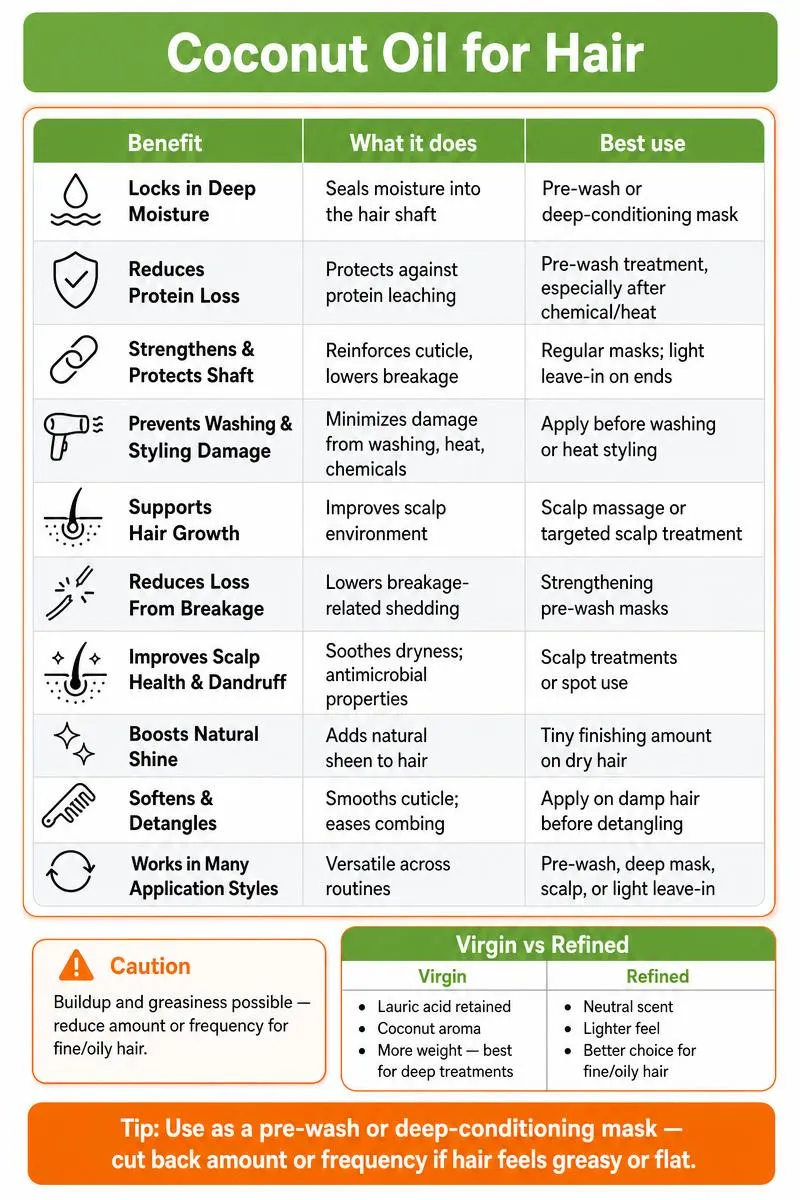
Benefits Of Coconut Oil For Hair Side-by-Side
| Benefit | What it does | Best use |
|---|---|---|
| Locks in Deep Moisture | Seals moisture into the hair shaft | Pre-wash or deep-conditioning mask |
| Reduces Protein Loss | Protects against protein leaching | Pre-wash treatment, especially after chemical/heat |
| Strengthens & Protects Shaft | Reinforces cuticle, lowers breakage | Regular masks; light leave-in on ends |
| Prevents Washing & Styling Damage | Minimizes damage from washing, heat, chemicals | Apply before washing or heat styling |
| Supports Hair Growth | Improves scalp environment | Scalp massage or targeted scalp treatment |
| Reduces Loss From Breakage | Lowers breakage-related shedding | Strengthening pre-wash masks |
| Improves Scalp Health & Dandruff | Soothes dryness; antimicrobial properties | Scalp treatments or spot use |
| Boosts Natural Shine | Adds natural sheen to hair | Tiny finishing amount on dry hair |
| Softens & Detangles | Smooths cuticle; eases combing | Apply on damp hair before detangling |
| Works in Many Application Styles | Versatile across routines | Pre-wash, deep mask, scalp, or light leave-in |
FAQs About Coconut Oil for Hair
Does coconut oil actually help hair growth?
Not directly. Coconut oil doesn’t stimulate follicles or speed up the rate hair grows from your scalp. What it does is reduce breakage by strengthening the hair shaft, which lets you retain more length over time.
How long should you leave coconut oil in your hair, and is overnight use safe?
A short pre-wash treatment protects against protein loss without much buildup risk. Longer treatments work for deep conditioning. Overnight use is safe for most people but increases the chance of greasy buildup and scalp clogging – try shorter durations first.
What are the side effects of coconut oil on hair?
Buildup, greasiness, and stiff or coated strands are the most common issues. Fine or low-porosity hair is more prone to these problems. Scalp breakouts can happen if you apply too much near the roots or leave it on overnight.
What happens if I put coconut oil in my hair every day?
Daily use increases buildup risk significantly, especially if you’re not clarifying regularly. Most hair types do better with less frequent application. If your hair absorbs it completely and doesn’t feel heavy, daily use on ends only might work.
What oil is best for hair growth?
No oil directly stimulates growth, but oils that reduce breakage and strengthen strands help you keep length. Coconut oil, argan oil, and castor oil all reduce damage in different ways. Coconut oil penetrates the shaft; argan oil smooths cuticles; castor oil coats and protects.
Why do hairdressers hate coconut oil?
Some hairdressers see buildup problems in clients who overuse coconut oil or don’t clarify properly. Buildup interferes with chemical treatments like color and perms because it blocks product penetration.
Is it better to put coconut oil in wet or dry hair?
Dry hair before shampooing gives you protein protection and limits water-related swelling. Damp hair after washing seals in moisture and adds shine. Choose based on whether you want damage prevention or conditioning.
What can I mix with coconut oil for hair growth?
Coconut oil doesn’t stimulate growth, so mixing it with other ingredients won’t change that. For breakage reduction, try mixing with argan oil for extra cuticle smoothing or castor oil for thicker protective coating. Rosemary or peppermint essential oil may improve scalp circulation, though evidence for growth stimulation is limited.
Also Worth Checking Out
Details on when to choose coconut oil over mineral-oil-based baby oil for gentle scalp and hair care.
Final Thoughts
Coconut oil works well for many hair types, especially when you’re trying to protect against washing damage or reduce breakage from styling. Start with a small test section to see how your hair responds before applying it all over.
Pay attention to whether your hair feels softer and stronger or stiff and coated after use. Adjust the amount, timing, or frequency based on what you notice, and clarify regularly if you use it often.
External References