Castor Oil vs Coconut Oil: Which One for Hair and Skin?
Most people reach for coconut oil because it’s easy to use and absorbs fast. Castor oil sits in the back of the cabinet, too thick and sticky to bother with. But castor oil does something coconut oil can’t – it works directly on the scalp to support hair thickness at the roots, while coconut oil protects the hair shaft itself from protein loss.
Neither oil is universally better. Castor oil is better for scalp treatment but requires mixing with lighter oils to stay manageable. Coconut oil handles general moisturizing and strand protection without the mess. The right choice depends on whether you need targeted scalp nourishment or easier application for hair length and skin.
Key Takeaways
- Castor oil works on the scalp and roots to support hair thickness, while coconut oil penetrates the hair shaft to prevent protein loss
- Coconut oil absorbs faster and works well for general moisturizing, while castor oil stays on the surface longer and may help with acne treatment
- Castor oil has a heavy, sticky texture that requires mixing with lighter oils for most uses
- You can mix both oils together for hair treatments that combine scalp nourishment with strand protection
- Application method matters – castor oil works best on the scalp and roots, coconut oil on hair length and ends
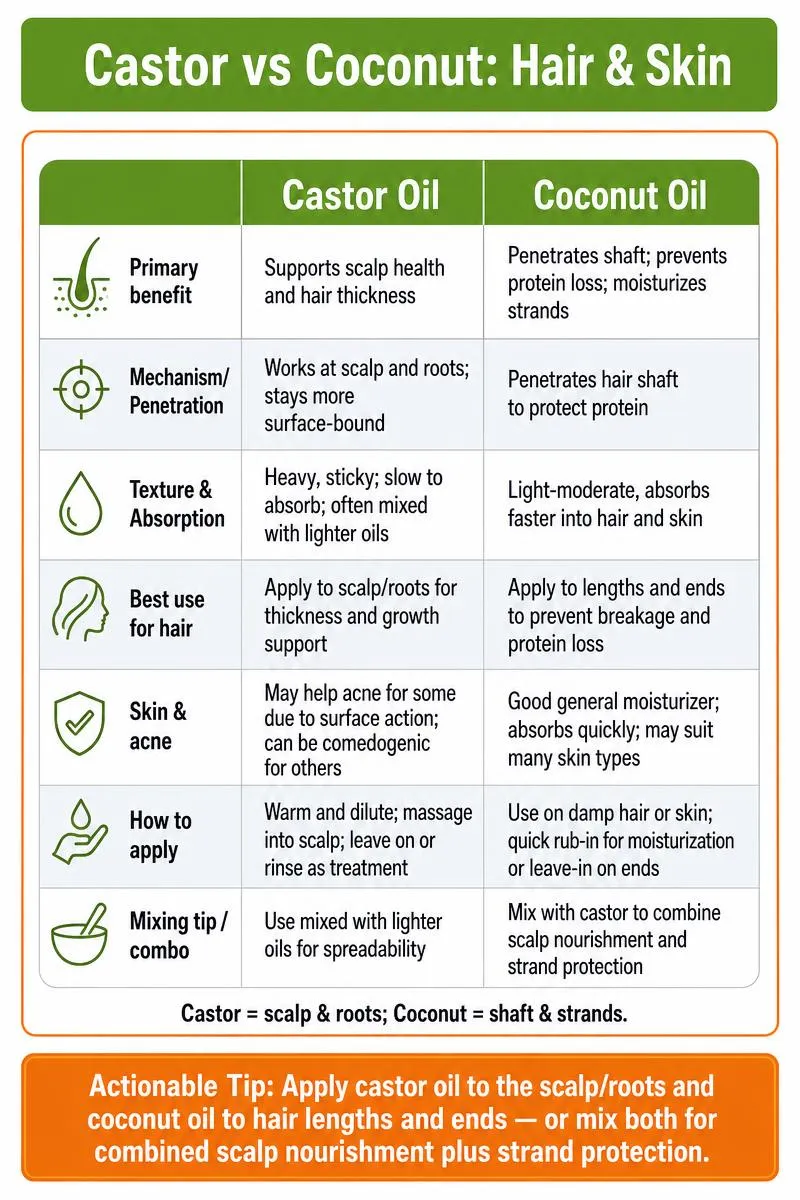
Castor Oil Vs Coconut Oil Compared
| Castor Oil | Coconut Oil |
|---|---|
| Supports scalp health and hair thickness | Penetrates shaft; prevents protein loss; moisturizes strands |
| Works at scalp and roots; stays more surface-bound | Penetrates hair shaft to protect protein |
| Heavy, sticky; slow to absorb; often mixed with lighter oils | Light–moderate; absorbs faster into hair and skin |
| Apply to scalp/roots for thickness and growth support | Apply to lengths and ends to prevent breakage |
| May help acne for some; can be comedogenic for others | Good general moisturizer; absorbs quickly; suits many skin types |
| Warm and dilute; massage into scalp; leave on or rinse | Use on damp hair or skin; quick rub-in or leave on ends |
| Mix with lighter oils for spreadability | Mix with castor for combined scalp nourishment and strand protection |
What Is Castor Oil?
Castor oil is a thick, viscous oil pressed from castor beans. The sticky consistency prevents quick absorption into skin or hair, which means the oil stays where you apply it longer than most other oils.
Castor oil is known for scalp nourishment and promoting hair thickness at the roots. On skin, the oil forms a protective barrier and some sources suggest it may help with acne treatment due to its high ricinoleic acid content. The main drawback is the heavy texture, which makes castor oil difficult to apply alone and harder to wash out.
Most people mix castor oil with lighter oils or apply it in small amounts directly to the scalp.
Keep Reading
Practical comparison of shea butter and coconut oil for skin and hair care, including moisturizing benefits and typical…
What Is Coconut Oil?
Coconut oil is extracted from coconut meat and solidifies at room temperature but melts easily on contact with skin. The light texture compared to castor oil means faster absorption and less residue.
Coconut oil penetrates inside the hair shaft to prevent protein loss and protect hair from damage. For skin, the oil provides moisture and creates a smooth feel without the heavy coating that castor oil leaves behind. You can use coconut oil alone without dilution for most applications.
Potential downsides include clogging pores for some people and providing less targeted scalp benefits than castor oil. Coconut oil works better as an all-purpose moisturizer than a treatment for specific scalp concerns.
Castor Oil vs Coconut Oil: Hair Growth and Thickness
Castor oil is better for scalp treatment and supporting hair thickness at the roots. The oil works on the scalp itself rather than the hair strands, so the oil reaches the scalp where roots are.
Coconut oil does not have the same scalp-focused benefits but protects the hair shaft from protein loss, which helps prevent breakage. The oil penetrates the strand to strengthen hair from the inside rather than coating it from the outside.
If your goal is thicker hair or scalp health, castor oil is the better choice. For protecting existing hair from damage and keeping strands strong, coconut oil wins.
Castor Oil vs Coconut Oil: Texture and Absorption
Coconut oil has a much lighter texture and absorbs faster, making it easier to apply and wash out. You can smooth it through hair or onto skin without the dragging sensation that castor oil creates.
Castor oil is thick and sticky, which makes it challenging to spread evenly or remove from hair. Most people mix castor oil with a lighter oil like coconut oil to make it manageable. The heavy consistency does have one advantage – castor oil stays in place longer on the scalp, giving it more contact time for treatment.
If ease of use matters to you, coconut oil is simpler. Castor oil requires more effort but stays where you put it for longer contact time.
You Might Also Like
Explores texture, absorption, and hair/skin benefits of olive oil versus coconut oil – useful when weighing application…
Castor Oil vs Coconut Oil: Skin Moisturizing and Acne
Coconut oil absorbs into skin more readily and works well for general moisturizing and creating a smooth surface. The oil melts on contact and spreads easily across large areas without feeling greasy for long.
Castor oil sits on the skin longer and forms a thicker barrier. For acne treatment, castor oil may be more effective due to its high ricinoleic acid content, though it can feel heavy. Coconut oil may clog pores for some people, especially those with oily or acne-prone skin.
If you want light, fast-absorbing moisture, choose coconut oil. For targeted treatment or a protective barrier, castor oil is better despite the heavier texture.
Castor Oil vs Coconut Oil: How to Apply Each Oil
Castor oil should be applied directly to the scalp and roots, massaged in, and left for at least 30 minutes or overnight. The oil is difficult to wash out, so mix it with coconut oil or another light oil in a 1:1 or 1:2 ratio before applying.
Coconut oil can be applied alone to hair length and ends, or to skin as needed. For hair masks combining both oils, apply the mixture to the scalp, work through the length, and shampoo thoroughly after.
On the face, use castor oil sparingly and consider applying it only at night. The heavy texture can stain pillowcases and may feel uncomfortable during the day.
Which Should You Choose?
If your main concern is scalp health or hair thickness at the roots, choose castor oil or a castor-coconut mix applied to the scalp.
If you want to protect hair strands from damage and breakage, coconut oil works better on the hair length.
For easy, lightweight skin moisturizing, coconut oil is simpler and absorbs faster. You can apply it without mixing or worrying about residue.
If you need targeted treatment for acne or a thicker skin barrier, castor oil may be more effective but requires tolerance for its heavy texture.
If you want both scalp nourishment and hair strand protection, mix castor oil and coconut oil together for hair masks.
Worth Reading Next
Breaks down how cocoa butter and coconut oil differ for skin hydration and barrier repair, helping choose the best…
FAQs About Castor Oil and Coconut Oil
Which is better for skin, castor oil or coconut oil?
Coconut oil is better for general moisturizing because it absorbs faster and feels lighter. Castor oil works better for targeted treatment like acne or creating a protective barrier, but its heavy texture is not ideal for everyday use.
Which oil is better for hair growth?
Castor oil is better for scalp health and supporting hair thickness at the roots. Coconut oil does not have the same scalp benefits but prevents breakage by protecting the hair shaft from protein loss.
What are the disadvantages of castor oil?
Castor oil has a thick, sticky texture that is hard to apply alone and difficult to wash out. The oil can feel heavy on skin and may stain fabrics. Castor oil works best when diluted with a lighter oil like coconut oil.
Can I mix castor oil and coconut oil together?
Yes. Mixing them combines the scalp benefits of castor oil with the lighter texture and hair strand protection of coconut oil. A common ratio is one part castor oil to one or two parts coconut oil.
How often should I apply these oils to my hair?
Once or twice a week is typical for oil treatments. More frequent use can lead to buildup or greasy hair. Adjust based on how your hair and scalp respond.
Can I apply castor oil on my face every night?
You can, but the heavy texture may be uncomfortable and could stain pillowcases. Start with a small amount a few times a week and see how your skin reacts before using it nightly.
Is coconut oil or castor oil better for aging skin?
Neither oil has strong evidence for reversing aging. Coconut oil provides moisture and a smooth feel. Castor oil forms a thicker barrier. Choose based on texture preference rather than anti-aging claims.
Final Verdict
Castor oil and coconut oil serve different purposes. Castor oil is the better choice for scalp treatment and hair thickness, while coconut oil is easier to use and better for protecting hair strands and moisturizing skin.
Most people benefit from using both – castor oil on the scalp and roots, coconut oil on hair length and ends, or a mix of the two for a balanced hair mask. If you are new to hair oils, start with coconut oil alone for simplicity, then add castor oil to your scalp routine if you want more targeted nourishment. Try each oil separately first to see how your skin and hair respond before mixing them.
External References