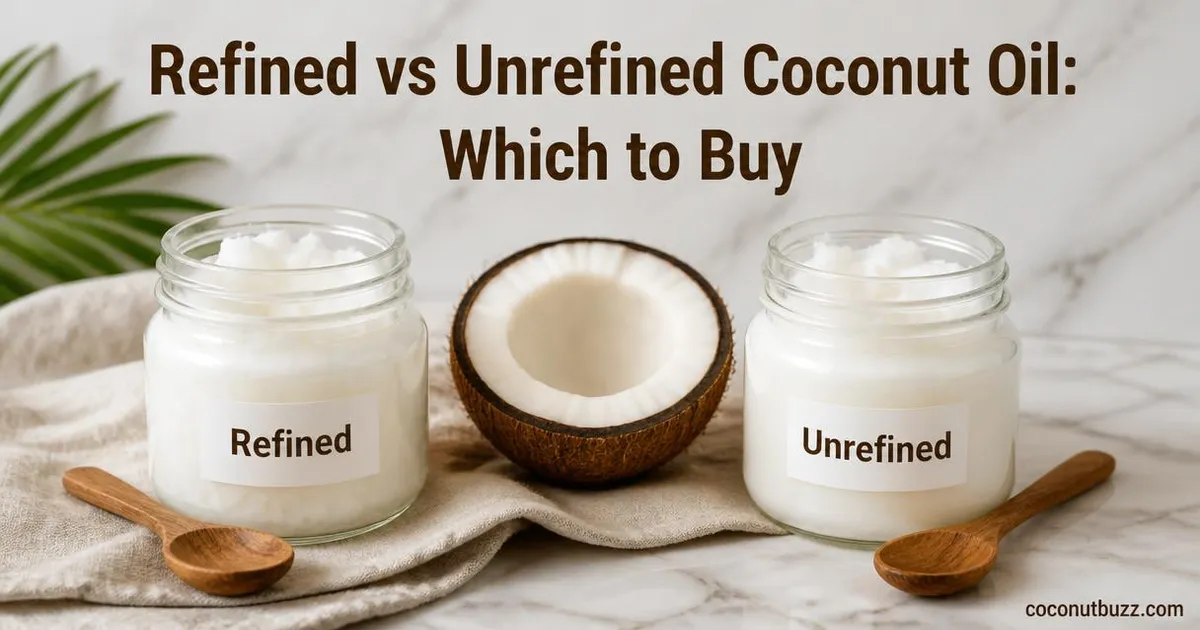
Refined vs Unrefined Coconut Oil: Which to Buy
The two jars look almost identical on the shelf, but one smells like a beach vacation and the other barely smells at all. Refined and unrefined coconut oil come from the same fruit, yet they behave completely differently in a skillet, on your skin, and in your pantry.
Refined coconut oil goes through bleaching and deodorizing to strip away flavor and aroma. Unrefined coconut oil – also called virgin – skips those steps and keeps the natural coconut scent and taste intact. The choice between them isn’t about quality; it’s about matching the oil to what you’re actually making or applying.
Key Takeaways
- Refined coconut oil is deodorized and neutral in flavor, which makes it a practical choice for everyday savory cooking
- Unrefined coconut oil keeps its natural coconut scent and taste, suiting recipes where that flavor is welcome
- For skin and hair, refined works without adding scent, while unrefined delivers a stronger coconut aroma along with moisture
- Some sources suggest unrefined oil retains more beneficial plant compounds because it undergoes less processing
- Neither type is universally better; the right pick depends on whether you need neutral flavor, high heat tolerance, or minimal processing
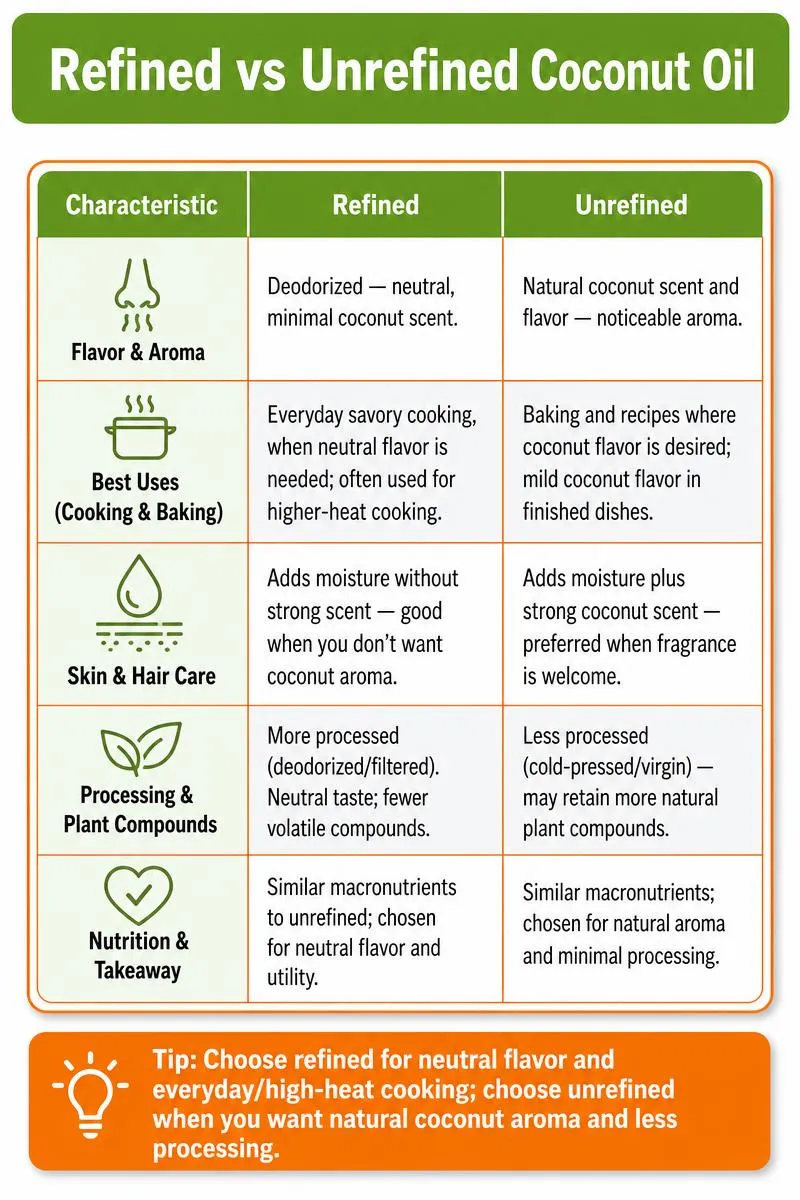
Refined Vs Unrefined Coconut Oil Compared
| Characteristic | Refined | Unrefined |
|---|---|---|
| Flavor & Aroma | Deodorized — neutral, minimal coconut scent. | Natural coconut scent and flavor — noticeable aroma. |
| Best Uses (Cooking & Baking) | Everyday savory cooking, when neutral flavor is needed; often used for higher-heat cooking. | Baking and recipes where coconut flavor is desired; mild coconut flavor in finished dishes. |
| Skin & Hair Care | Adds moisture without strong scent — good when you don’t want coconut aroma. | Adds moisture plus strong coconut scent — preferred when fragrance is welcome. |
| Processing & Plant Compounds | More processed (deodorized/filtered). Neutral taste; fewer volatile compounds. | Less processed (cold-pressed/virgin) — may retain more natural plant compounds. |
| Nutrition & Takeaway | Similar macronutrients to unrefined; chosen for neutral flavor and utility. | Similar macronutrients; chosen for natural aroma and minimal processing. |
What Is Refined Coconut Oil?
Refined coconut oil starts as dried coconut meat – called copra – that gets bleached and deodorized to remove flavor and aroma. The process creates a nearly flavorless fat with a pale color that blends into recipes without announcing itself.
The main strength is neutrality. Refined coconut oil won’t add coconut flavor to a stir-fry or clash with garlic and onions. It’s widely available, usually costs less than unrefined versions, and works in recipes where you want the texture of coconut oil but none of the taste.
The tradeoff is processing. Bleaching and deodorizing remove not just flavor but also some of the original plant compounds found in fresh coconut meat. If minimal processing matters to you, refined coconut oil sits further from the source.
Also Worth Checking Out
Practical ideas for cooking and household uses that help readers apply the differences between refined and unrefined…
What Is Unrefined Coconut Oil?
Unrefined coconut oil – often labeled virgin or extra-virgin – comes from fresh coconut meat pressed using cold or expeller methods. No bleaching, no deodorizing. The result is an oil that smells and tastes distinctly like coconut.
The minimal processing keeps original compounds intact. Unrefined coconut oil retains polyphenols, tocopherols, and other plant substances that get stripped away during refining. The natural coconut aroma is strong, which works well in smoothies, raw desserts, or tropical-flavored baked goods.
The downside is that same pronounced flavor. Unrefined coconut oil can overpower delicate ingredients or clash with savory dishes. It also typically costs more than refined versions, reflecting the gentler processing and fresher starting material.
Refined Coconut Oil vs Unrefined Coconut Oil: Cooking and Baking
Both oils handle heat well, but refined coconut oil tolerates higher temperatures without breaking down. That makes it better for frying, sautéing, and roasting where you need sustained high heat and don’t want coconut flavor competing with other ingredients.
Unrefined coconut oil works in cooking too, but the coconut taste limits where it fits. Low-heat baking, no-bake desserts, and tropical-flavored recipes all benefit from that natural aroma. Use it in granola, energy balls, or Thai curries where coconut flavor belongs.
Winner: Refined for neutral, high-heat cooking. Unrefined for coconut-flavored or low-heat baking.
Refined Coconut Oil vs Unrefined Coconut Oil: Skin and Hair Care
Both types moisturize skin and hair because they share the same basic fat structure – primarily lauric acid and other medium-chain fatty acids. The difference is scent and what remains after processing.
Unrefined coconut oil brings deep moisture along with a strong coconut aroma that lingers on skin and hair. Some sources suggest the retained plant compounds may offer additional benefits beyond simple moisturizing, though basic hydration comes from the fatty acids present in both types.
Refined coconut oil delivers the same moisture without the scent. If you layer fragranced products, work in a scent-sensitive environment, or simply prefer no coconut smell, refined oil disappears into your routine.
Winner: Unrefined for deep moisture with coconut scent. Refined for scent-free moisturizing.
Benefits of coconut oil for hair
Targeted guidance on hair uses and benefits that complements the skin and hair care comparison in this article.
Refined Coconut Oil vs Unrefined Coconut Oil: Taste and Aroma
Unrefined coconut oil tastes and smells exactly like coconut – tropical, sweet, and immediately recognizable. That intensity makes it ideal for smoothies, coffee, raw treats, and any recipe where coconut flavor enhances the dish.
Refined coconut oil has almost no taste or smell. The deodorizing process removes the volatile compounds responsible for coconut aroma, leaving behind a neutral fat that won’t flavor whatever you’re cooking or baking.
Winner: Unrefined for pronounced coconut character. Refined when neutrality is needed.
Refined Coconut Oil vs Unrefined Coconut Oil: Nutrition
Both oils share the same basic fat composition – primarily saturated fat – mostly lauric acid and other medium-chain fatty acids. Calorie for calorie, the core nutritional profile is nearly identical.
The difference lies in what survives processing. Unrefined coconut oil retains polyphenols, tocopherols, and other plant compounds found in fresh coconut meat. Refined coconut oil loses most of these during bleaching and deodorizing. Some sources suggest these retained compounds may offer benefits beyond basic nutrition, though research is still developing.
Winner: Unrefined if you prioritize minimal processing and retained plant compounds. Otherwise comparable in basic fat profile.
Which Should You Choose?
You cook mostly savory dishes at higher heats or want a neutral oil → Refined coconut oil won’t compete with garlic, ginger, or spices, and it handles sustained high temperatures without issue.
You want noticeable coconut flavor in raw or low-heat recipes → Unrefined coconut oil brings the tropical aroma and taste that makes smoothies, energy balls, and no-bake desserts work.
You need a moisturizer or hair oil without a strong scent → Refined coconut oil hydrates without leaving a coconut trail on your skin or pillow.
You want the least processed option for eating straight or adding to drinks → Unrefined coconut oil skips the bleaching and deodorizing steps and keeps the original plant compounds intact.
You need one all-purpose jar for multiple household uses → Refined coconut oil covers more ground – it works in both sweet and savory recipes, moisturizes without adding scent, and costs less per jar.
Explore More
Benefits of coconut oil for skin
A deeper look at topical benefits and application tips that readers will find useful after weighing skin-care…
FAQs About Refined and Unrefined Coconut Oil
Which type of coconut oil is the healthiest?
Unrefined coconut oil undergoes less processing and retains more plant compounds like polyphenols, which some sources suggest may offer benefits beyond basic nutrition. Both types share the same core fat profile – primarily lauric acid and other medium-chain fatty acids – so the difference comes down to those retained compounds and how much processing matters to you.
What type of coconut oil is best for skin?
Unrefined coconut oil works best if you want maximum moisture with a natural coconut scent and the plant compounds that survive minimal processing. Refined coconut oil is better if you need hydration without fragrance or if you layer other scented products. Both moisturize effectively because they share the same fatty acid structure.
Is refined or unrefined coconut oil better for dogs?
Unrefined coconut oil is typically preferred for dogs because it contains polyphenols and tocopherols and has no additional processing steps. Most dogs tolerate the coconut flavor well. Start with small amounts and watch for digestive upset, which can happen with either type if you introduce too much fat too quickly.
Why do cardiologists recommend avoiding coconut oil?
Coconut oil is high in saturated fat, and some cardiologists caution against high saturated fat intake because it can raise LDL cholesterol in certain people. The medium-chain fatty acids in coconut oil behave differently than long-chain saturated fats, but research is mixed on whether that difference translates to meaningful heart health benefits. If you have cardiovascular concerns, discuss coconut oil use with your doctor.
What is the healthiest oil for heart health?
Olive oil – particularly extra-virgin – consistently shows the strongest evidence for heart health benefits. It contains monounsaturated fats and polyphenols associated with lower cardiovascular risk. Avocado oil and oils high in omega-3 fatty acids like flaxseed oil also rank well, though each serves different culinary purposes.
What happens if you put coconut oil on your skin every day?
Coconut oil moisturizes by forming a barrier that reduces water loss from the skin surface. Daily use can keep dry skin hydrated, but it may clog pores on acne-prone or oily skin types because it’s comedogenic. If you have sensitive or breakout-prone skin, test a small area first before applying it daily to your face.
Which coconut oil is best for face wrinkles?
Unrefined coconut oil retains more plant compounds that some sources suggest may support skin health, but coconut oil doesn’t reduce existing wrinkles. It moisturizes and plumps skin temporarily, which can make fine lines less visible while it’s on. For actual wrinkle reduction, ingredients like retinoids and peptides show stronger research support than any coconut oil type.
Does unrefined coconut oil taste different from refined coconut oil?
Yes. Unrefined coconut oil tastes and smells distinctly like coconut – sweet, tropical, and strong. Refined coconut oil is nearly flavorless and odorless because deodorizing removes the volatile compounds responsible for coconut aroma. The difference is immediate and obvious when you open each jar.
What should I look for when buying coconut oil?
Decide first whether you need coconut flavor or neutrality. Look for “virgin” or “unrefined” labels if you want minimal processing and coconut taste. Choose “refined” if you need a neutral oil for savory cooking. Check the ingredient list – it should say only coconut oil, with no added oils or fillers.
How do you use refined coconut oil?
Use refined coconut oil anywhere you’d use butter or another neutral cooking fat. It works in stir-fries, roasted vegetables, baked goods, and pan-frying without adding coconut flavor. You can also apply it to skin and hair as a scent-free moisturizer. It melts at around room temperature, so scoop it solid or pour it liquid depending on your kitchen’s warmth.
Final Thoughts
Neither refined nor unrefined coconut oil wins outright. The better option is the one that matches what you’re making or applying. Unrefined coconut oil suits recipes and routines where coconut flavor and minimal processing matter. Refined coconut oil handles high-heat cooking and scent-free body care without announcing itself.
If you must buy just one jar, refined coconut oil covers more cooking and body care scenarios because it doesn’t impose flavor restrictions. But the real answer is simpler: buy a jar of each and test them for a week in your own recipes and skin routine. You’ll know which one belongs in your regular rotation.
External References