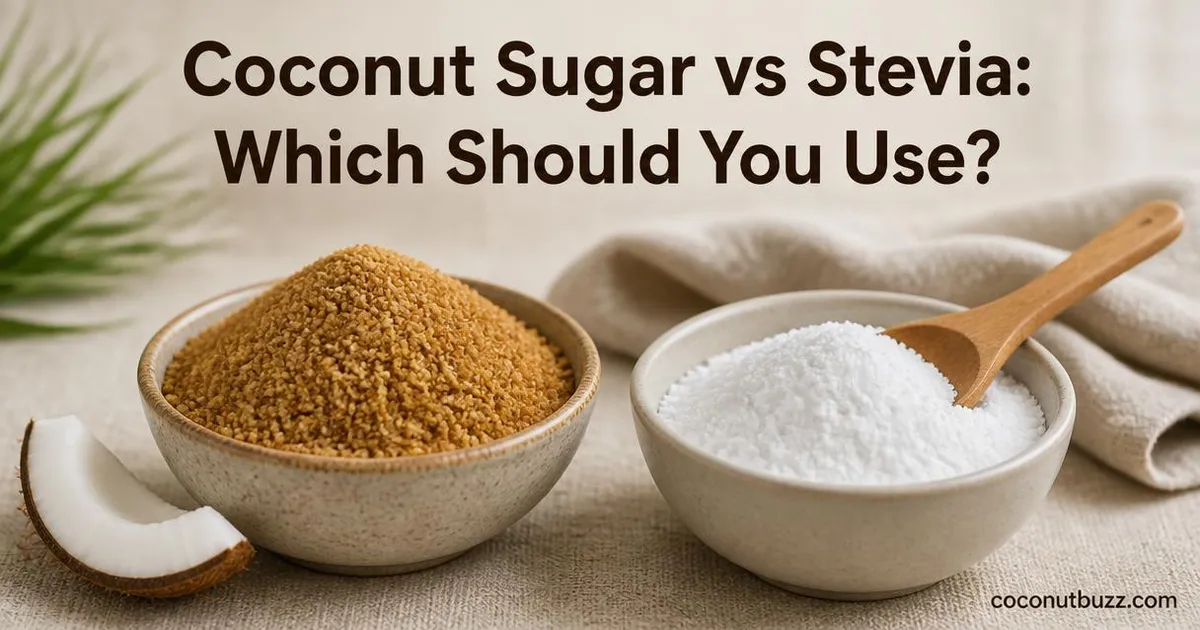
Coconut Sugar vs Stevia: Which Should You Use?
The difference comes down to: do you need a sweetener that acts like sugar in recipes, or one that adds sweetness without carbs?
Key Takeaways
- Stevia works for low-carb and low-calorie goals; coconut sugar works when you need a granulated sweetener that behaves like regular sugar in baking
- Coconut sugar raises blood glucose the same way table sugar does; stevia has minimal to no glycemic impact
- Coconut sugar tastes like brown sugar with caramel notes; stevia can leave a bitter aftertaste depending on the brand and your taste buds
- Coconut sugar substitutes one-to-one for regular sugar in most recipes; stevia’s intensity usually requires cutting other liquids or adding bulk ingredients
- Coconut sugar contains trace minerals from coconut palm sap, though not enough to replace actual food sources
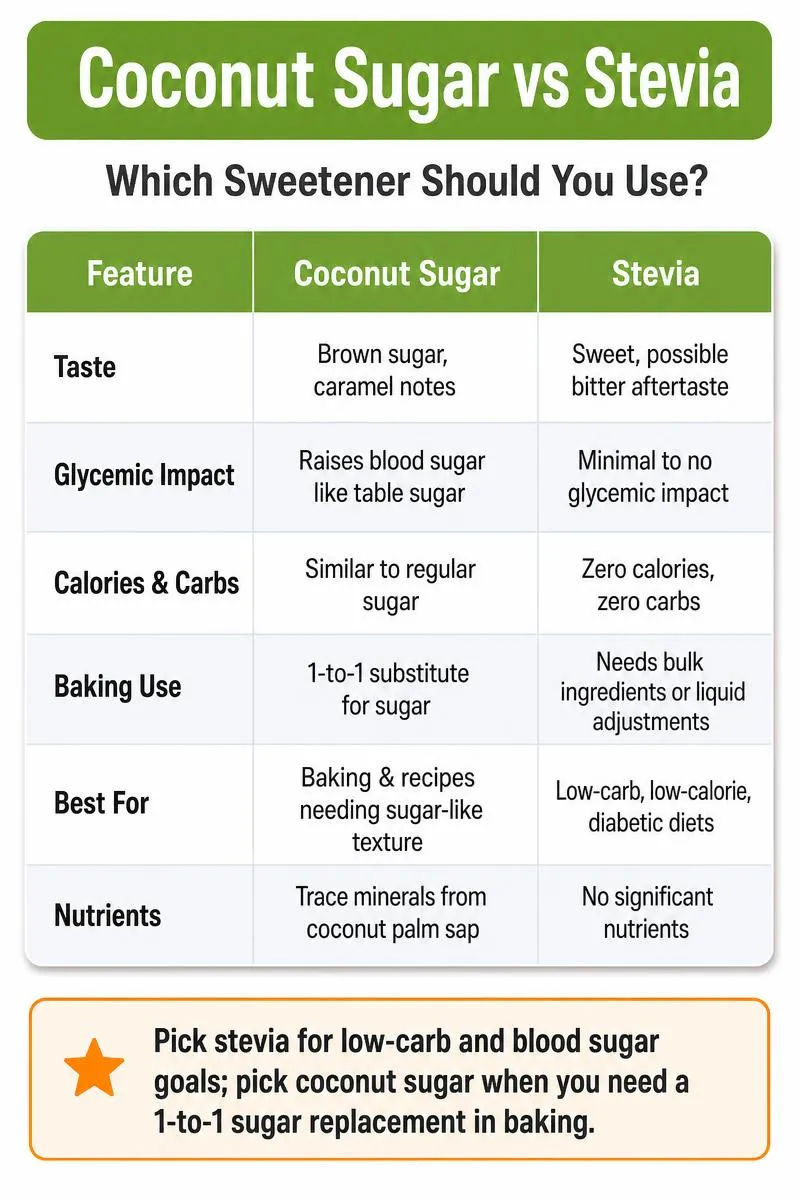
Coconut Sugar Vs Stevia Side-by-Side
| Feature | Coconut Sugar | Stevia |
|---|---|---|
| Taste | Brown sugar, caramel notes | Sweet; possible bitter aftertaste |
| Glycemic impact | Raises blood sugar like table sugar | Minimal to no glycemic impact |
| Calories & carbs | Similar to regular sugar | Zero calories, zero carbs |
| Baking use | 1-to-1 substitute for sugar | Needs bulk or liquid adjustments |
| Best for | Baking & sugar-like texture | Low-carb, low-calorie, diabetic diets |
| Nutrients | Trace minerals from palm sap | No significant nutrients |
What Is Coconut Sugar?
Coconut sugar comes from the sap of coconut palm flower buds. Farmers tap the buds, collect the liquid, then heat it until the water evaporates and crystals form. The granules look and pour like brown sugar because the sap is simply evaporated rather than refined and bleached.
It works best in baking, coffee, oatmeal, and sauces where you need something granulated that dissolves and caramelizes like regular sugar. Coconut sugar substitutes one-to-one for white or brown sugar in most recipes without changing texture or rise.
The main strength is culinary – it behaves like the sugar you’re replacing, so you don’t need to rework a recipe’s ratios. The main weakness is metabolic – coconut sugar delivers the same calories and carbohydrates as any other sugar.
Explore More
Explains differences in sweetness, texture, and baking behavior between date sugar and coconut sugar.
What Is Stevia?
Stevia comes from the leaves of Stevia rebaudiana, a plant native to South America. Manufacturers extract steviol glycosides – the sweet-tasting compounds – and sell them as liquid drops, powder, or granulated blends mixed with erythritol or maltodextrin to add bulk.
Stevia works best in beverages, smoothies, and recipes where you only need sweetness, not sugar’s structure or volume. It’s far sweeter than sugar, so you need much less per serving.
The main strength is metabolic – stevia adds sweetness without calories, carbohydrates, or blood sugar impact. The main weakness is culinary – stevia doesn’t provide the bulk, moisture, or caramelization that sugar does, so swapping it into a cake recipe usually means adjusting flour, fat, or liquid ratios to compensate.
Coconut Sugar vs Stevia: Taste and Flavor
Coconut sugar tastes like brown sugar with mild caramel and toffee notes. The flavor comes from trace minerals and compounds left behind when the sap evaporates. Most people find it indistinguishable from cane sugar in baked goods.
Stevia tastes intensely sweet upfront, but many people detect a bitter or licorice-like aftertaste, especially with certain brands or extract methods. Some newer stevia blends mask the bitterness better by using specific steviol glycosides like Reb M instead of older extracts.
Neither sweetener wins universally – coconut sugar works when you want a sugar-like flavor, and stevia works when you prioritize zero calories over taste. Stevia blends using Reb M glycosides tend to reduce the aftertaste compared to older extracts.
Coconut Sugar vs Stevia: Glycemic Impact and Diabetes Suitability
Coconut sugar raises blood glucose because it’s mostly sucrose – the same molecule that makes up table sugar. Some sources suggest coconut sugar contains small amounts of inulin, a fiber that may slow sugar absorption slightly, but its glycemic impact is similar enough to table sugar that the practical difference is negligible.
Stevia doesn’t raise blood glucose because steviol glycosides aren’t absorbed as sugar. Your body metabolizes them differently, so they pass through without triggering an insulin response.
For blood sugar control, stevia wins. If you’re managing diabetes or prediabetes, coconut sugar still counts as sugar and needs to fit within your carbohydrate budget the same way any other sweetener would.
Breaks down flavor, color, and glycemic differences between brown sugar and coconut sugar.
Coconut Sugar vs Stevia: Nutrition, Carbs, and Weight Loss
Coconut sugar contains the same caloric and carbohydrate load per teaspoon as white or brown sugar, which means it affects weight loss the same way any caloric sweetener does – by adding to your total daily intake.
Coconut sugar does contain trace amounts of potassium, iron, zinc, and B vitamins from the palm sap. The concentrations are low enough that you’d need to eat unrealistic amounts to meet daily nutrient needs, but if you’re already using sugar, these trace minerals are a small bonus.
Stevia contributes negligible calories per serving because you use so little of it.
For weight loss or strict carbohydrate restriction, stevia wins. Coconut sugar offers no advantage over table sugar when calories or carbs are the priority.
Coconut Sugar vs Stevia: Side Effects and Safety
Coconut sugar carries the same risks as any other sugar – excess intake contributes to dental cavities, weight gain, and insulin resistance and elevated triglycerides over time. The trace minerals don’t offset those risks if you’re eating large amounts.
Stevia may cause digestive upset in some people, especially when consumed in large quantities or in blends that include sugar alcohols like erythritol. Some individuals report headaches or allergic reactions, though these responses are uncommon. The bitter aftertaste bothers more people than any physical side effect.
Neither sweetener is clearly safer overall. Coconut sugar’s risks come from overconsumption, and stevia’s risks come from individual sensitivity. Your tolerance decides which one works better for you.
Which Should You Choose?
Managing blood sugar or reducing glucose spikes: stevia keeps blood glucose stable without requiring insulin.
For one-to-one baking and texture: coconut sugar swaps directly into recipes without changing ratios or requiring new techniques.
Counting calories or following a strict low-carb plan: stevia lets you add sweetness without adding to your daily totals.
For less-processed granules with a caramel flavor: coconut sugar skips the refining steps that strip cane sugar of its original compounds.
Sweetening drinks and cannot tolerate any aftertaste: try both and decide based on your own taste buds, because aftertaste sensitivity varies widely.
You Might Also Like
Coconut nutrition and benefits
Summarizes coconut’s nutrition profile and health benefits relevant to sugar and sweetener choices.
FAQs About Coconut Sugar and Stevia
What are the downsides of coconut sugar?
Coconut sugar delivers the same calories, carbohydrates, and blood sugar impact as table sugar. The trace minerals it contains don’t change how your body processes the sucrose.
What is the healthiest sugar substitute?
No single substitute wins for everyone. Stevia works if you need zero calories and no glycemic impact. Coconut sugar works if you need something that bakes like regular sugar. Monk fruit, erythritol, and allulose each have their own tradeoffs depending on what you’re making and what you’re avoiding.
Can diabetics eat coconut sugar?
Yes, but coconut sugar still raises blood glucose and counts as a carbohydrate. Diabetics need to account for it the same way they would table sugar, honey, or maple syrup.
Is stevia bad for you?
No, for most people. Regulatory agencies including the FDA have deemed high-purity steviol glycosides safe. Some people experience digestive discomfort or dislike the aftertaste, but those are tolerance issues, not safety concerns.
What is the unhealthiest sugar substitute?
Highly refined artificial sweeteners and sugar alcohols with laxative effects in large amounts can cause the most issues. Most concerns around sweeteners come from consuming excessive amounts of any added sugar or from individual sensitivities to specific extracts.
Is coconut sugar good for you?
Coconut sugar isn’t “good for you” in the sense that it provides health benefits. It’s a less-refined sugar that contains trace minerals, but your body processes it the same way it processes table sugar. If you’re choosing between refined cane sugar and coconut sugar for the same recipe, coconut sugar is a cleaner swap, not a nutritional upgrade.
Which is better for diabetics, coconut sugar or stevia?
Stevia is better for diabetics because it doesn’t raise blood glucose. Coconut sugar impacts blood sugar the same way regular sugar does.
How do coconut sugar and stevia compare to monk fruit?
Monk fruit extract works similarly to stevia – it’s intensely sweet, calorie-free, and doesn’t raise blood sugar. Some people find monk fruit’s aftertaste less bitter than stevia’s. Coconut sugar still behaves like sugar in recipes, while monk fruit requires the same recipe adjustments that stevia does.
Final Verdict
Stevia wins if you’re managing blood sugar, cutting calories, or following a low-carb plan. Coconut sugar wins if you’re baking something that needs sugar’s texture, moisture, and caramelization.
Test both in your most common recipe or beverage and pick based on how they taste and perform in the context you actually use them.
External References