Coconut Butter vs Almond Butter: Which Should You Choose?
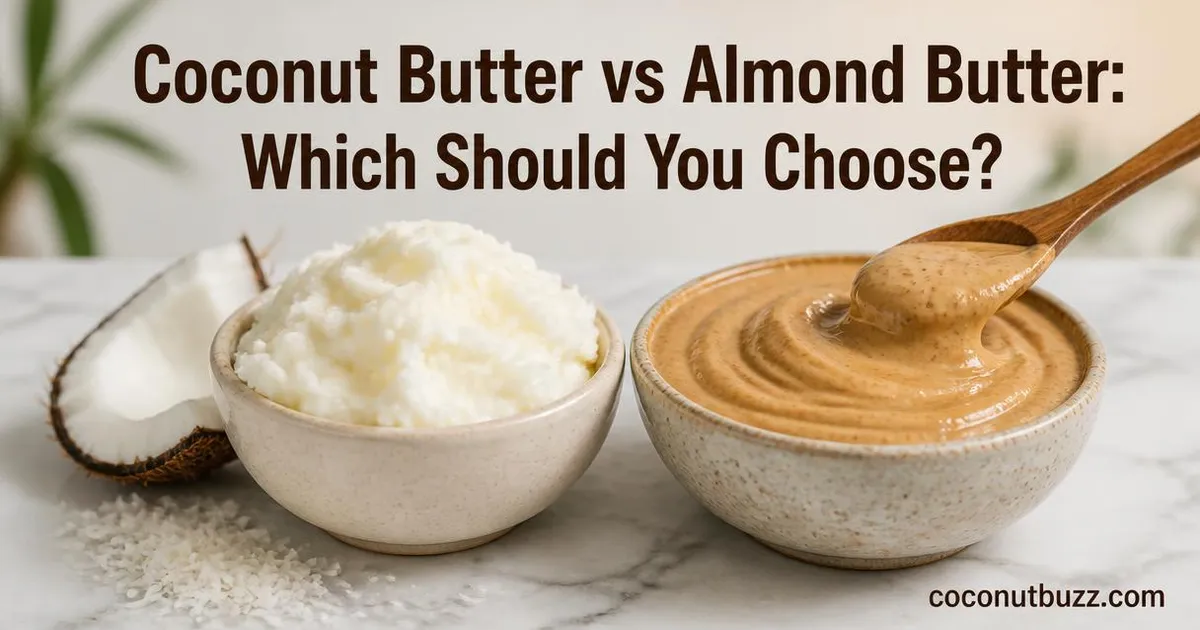
Two jars sit on the shelf. One is coconut butter, the other almond butter. They look similar enough that you might grab either one, but they behave nothing alike once you open the lid.
Coconut butter is firm, sweet, and melts when warm. Almond butter is creamy, nutty, and built for spreading. The comparison comes down to nutrition, calories, cholesterol concerns, taste, and how you actually plan to use the jar.
By the end of this, you’ll know which one belongs in your kitchen and why.
Key Takeaways
- Your cholesterol situation shapes this comparison more than taste does
- Almond butter is the everyday spread; coconut butter acts more like a baking ingredient
- Neither wins for weight loss by default; calories and portions decide
- Coconut almond butter blends exist if you can’t choose one
- Storage differs, so check refrigeration needs before buying
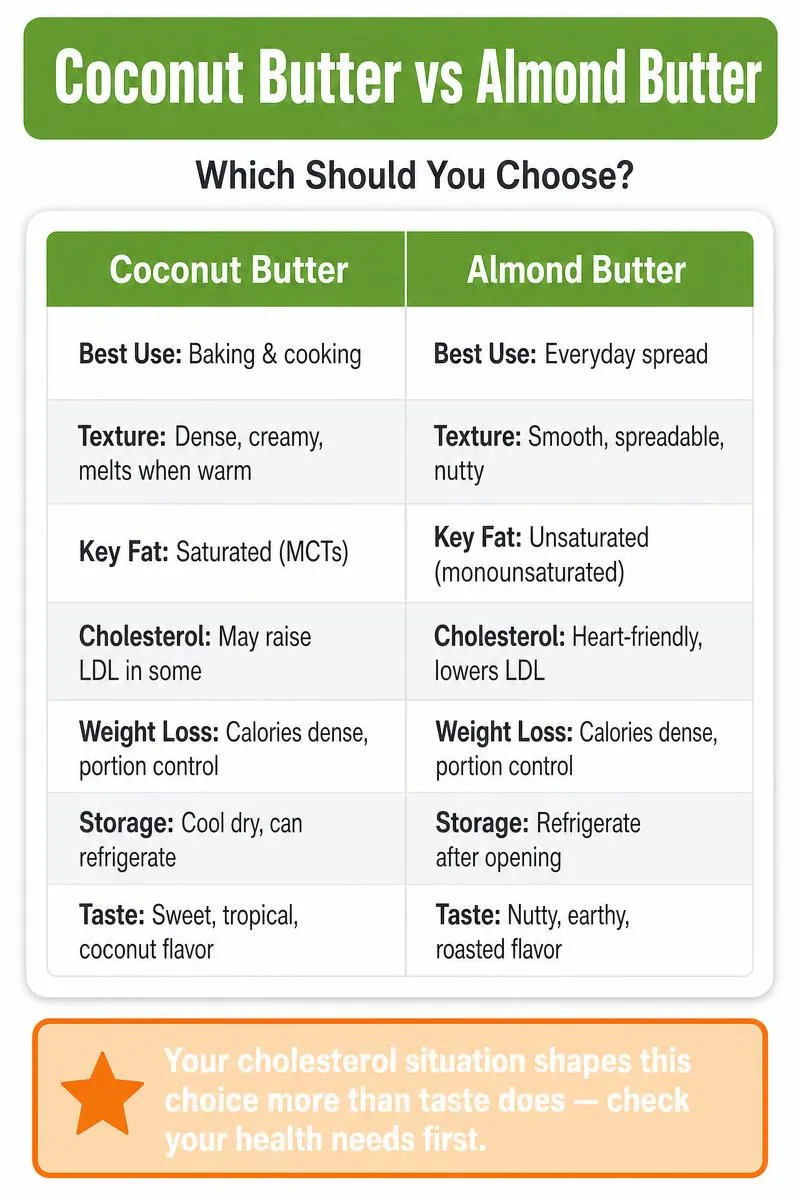
Coconut Butter Vs Almond Butter Quick Comparison
| Feature | Coconut Butter | Almond Butter |
|---|---|---|
| Best use | Baking & cooking | Everyday spread |
| Texture | Dense, creamy; melts when warm | Smooth, spreadable; nutty |
| Key fat | Saturated (MCTs) | Unsaturated (monounsaturated) |
| Cholesterol | May raise LDL in some | Heart-friendly; may lower LDL |
| Weight loss | Calorie-dense; portion control | Calorie-dense; portion control |
| Storage | Cool, dry; can refrigerate | Refrigerate after opening |
| Taste | Sweet, tropical coconut | Nutty, earthy, roasted |
What Is Coconut Butter?
Coconut butter is whole coconut flesh blended until smooth. That means it contains the meat and the oil together, unlike coconut oil, which is just the pressed fat.
It works best melted into warm dishes like oatmeal, curries, or baked desserts. The natural sweetness from the coconut flesh means you often don’t need added sugar in recipes that call for it. Coconut butter fits paleo and vegan eating plans because it’s a single-ingredient product.
Coconut butter contains very little protein compared to nut butters. Its fat is primarily saturated, specifically lauric acid, which raises questions for anyone monitoring heart health. When coconut butter cools below room temperature, it becomes stiff and difficult to spread straight from the jar.
Also Worth Checking Out
Young coconut vs mature coconut
Explains how coconut maturity changes flavor and texture, helping readers understand variations that affect coconut…
What Is Almond Butter?
Almond butter is ground almonds, plain and simple. It’s the standard peanut butter alternative for people who want a different flavor or are avoiding peanuts.
Almond butter works well for spreading on toast, blending into smoothies, or eating by the spoonful. Many brands offer no-stir versions that use a small amount of added oil to keep the butter from separating, which makes it more convenient for daily use.
Natural almond butter, the kind with just almonds and maybe salt, separates as it sits. You’ll need to stir it thoroughly before each use. Almond butter also costs more than peanut butter in most stores, which adds up if you go through jars quickly.
Coconut Butter vs Almond Butter: Nutrition and Calories
Almond butter delivers significantly more protein per serving than coconut butter. If protein intake is your priority, almond butter wins this comparison without much debate.
Coconut butter’s fat profile is the tradeoff. Its fat is mostly saturated, dominated by lauric acid and other medium-chain fatty acids. Almond butter’s fat is mostly monounsaturated, primarily oleic acid, the same fat found in olive oil.
Calorie-wise, both are calorie-dense foods. The difference in total calories per serving between the two is modest, so portion size matters more than which jar you pick.
Coconut Butter vs Almond Butter: Health Benefits and Cholesterol
If you’re asking about heart health, almond butter has the stronger case. Its monounsaturated fat profile, led by oleic acid, aligns with what cardiologists generally recommend for everyday eating. Almond butter also contains vitamin E and magnesium, both of which support nerve and muscle function.
Coconut butter’s saturated fat, mostly lauric acid, is more complicated. Some research suggests lauric acid may raise HDL cholesterol along with LDL, which keeps the ratio relatively stable. But for someone actively managing high cholesterol, most medical guidance still points toward unsaturated fat sources over saturated ones.
Some sources suggest that nut butters, including almond butter, may support gut health due to their fiber content. The evidence here is early, so treat it as a possible benefit rather than a confirmed one.
The deciding condition: if cholesterol management is part of your health picture, almond butter is the safer everyday choice. Coconut butter is fine in smaller amounts or occasional use, but almond butter is what you’d reach for daily.
You Might Also Like
Compares saturated-fat profiles and cooking stability, useful for assessing health and cooking trade-offs between…
Coconut Butter vs Almond Butter: Weight Loss
Both are calorie-dense with no built-in weight-loss advantage. What matters is how much you eat and how it fits your daily calorie target.
Almond butter’s protein content may help with satiety, meaning you feel full longer after eating it. Coconut butter’s medium-chain fatty acids have been studied for their potential to increase energy expenditure slightly, but the evidence is mixed and the effect, if real, is modest.
The winner is conditional: whichever one you can portion consistently without overeating. If a tablespoon of almond butter on toast keeps you satisfied until lunch, that’s your answer. If coconut butter’s sweetness satisfies a dessert craving with a smaller amount, that works too.
Coconut Butter vs Almond Butter: Taste and Texture
Coconut butter tastes sweet and tropical, with a firm texture when cool. Straight from the jar, it’s dense and almost fudge-like. Warm it slightly and it melts into something smooth and pourable.
Almond butter tastes nutty and roasted, with a creamy texture that spreads easily at room temperature. No-stir varieties stay soft and consistent, while natural versions have a richer flavor but require stirring to blend the separated oil back in.
If you want something that tastes like a treat, coconut butter delivers. If you want something that tastes like a familiar nut butter, almond butter is the pick.
Coconut Butter vs Almond Butter: Cooking and Baking Uses
Coconut butter shines in baked goods, desserts, and recipes where you want coconut flavor without adding liquid. It melts into warm oatmeal, thickens smoothies when blended cold, and works as a base for energy balls or vegan frostings. You can also make homemade coconut almond butter by blending both together for recipes that want both flavors.
Almond butter wins for spreading and no-cook uses. Toast, apple slices, celery, smoothies, and straight-off-the-spoon snacking all suit almond butter better. It blends smoothly into liquids without needing heat and doesn’t seize or harden when cooled.
The winner depends entirely on the recipe. Baking a paleo dessert? Coconut butter. Making a sandwich or a post-workout smoothie? Almond butter.
Keep Reading
Desiccated coconut vs coconut flakes
Covers which coconut formats work best in baking and texture swaps, practical for readers substituting or using coconut…
Which Should You Choose?
Watching cholesterol: Almond butter. Its fat profile aligns with heart-health guidance for daily use.
Baking paleo or vegan desserts: Coconut butter. Its natural sweetness and fat content replace multiple ingredients, and it fits dietary restrictions that almond butter doesn’t always cover.
Protein-rich everyday spread: Almond butter. The protein content per serving is meaningfully higher.
Cutting calories: Whichever one you can portion consistently. The jar that helps you stick to your target is the one that wins.
Torn between both: Try a coconut almond butter blend. Some brands make a combined spread, or you can blend equal parts at home for a balance of sweetness, protein, and spreadability.
FAQs About Coconut Butter and Almond Butter
Is coconut butter or almond butter healthier?
For everyday eating, almond butter is the healthier choice for most people. It offers more protein, a fat profile led by oleic acid, and useful amounts of vitamin E and magnesium. Coconut butter is fine in moderation but doesn’t match almond butter’s nutritional range.
Which is healthiest: coconut butter, almond butter, or peanut butter?
Almond butter and peanut butter are close in nutrition. Both deliver solid protein and unsaturated fat. Almond butter edges ahead with more vitamin E and magnesium. Coconut butter is the outlier with its saturated fat content and low protein, so it’s best used as a recipe ingredient rather than a daily spread.
Should I avoid coconut butter if I have high cholesterol?
Not necessarily avoid it, but limit it. Coconut butter’s lauric acid may raise both HDL and LDL, but most cardiologists recommend favoring unsaturated fats when cholesterol is a concern. Talk to your doctor about how much saturated fat fits your plan.
Which is better for weight loss?
Neither has a default weight-loss advantage. Both are calorie-dense. Almond butter’s protein may help with fullness, while coconut butter’s sweetness might satisfy cravings in smaller amounts. Pick whichever one you can portion without overeating.
Do you need to refrigerate coconut butter or almond butter?
Coconut butter does not require refrigeration. It stays stable at room temperature but will firm up when cool and soften when warm. Natural almond butter benefits from refrigeration after opening to slow oil separation and preserve freshness. No-stir almond butter varieties are usually fine at room temperature.
What ingredients should I avoid when buying them?
Check labels for added sugar, hydrogenated oils, and emulsifiers like soy lecithin if you want a clean product. The best versions of either butter contain one or two ingredients: the nut or coconut, and maybe salt.
Can you make coconut almond butter at home?
Yes. Blend unsweetened shredded coconut in a food processor until it becomes coconut butter, then add roasted almonds and continue blending until smooth. The ratio is up to you. Equal parts gives you a balance of coconut sweetness and almond flavor.
Final Thoughts
Almond butter is the everyday default. It spreads easily, delivers more protein, and its fat profile suits daily eating without much worry.
Coconut butter earns its place when you’re baking paleo or vegan desserts, or when you want coconut flavor without added sugar. If cholesterol is a concern, keep coconut butter as an occasional ingredient rather than a daily spread.
Before you buy either one, flip the jar over and read the ingredients. Skip anything with added sugar or hydrogenated oils. The best version of whichever butter you choose has just one or two ingredients on the label.