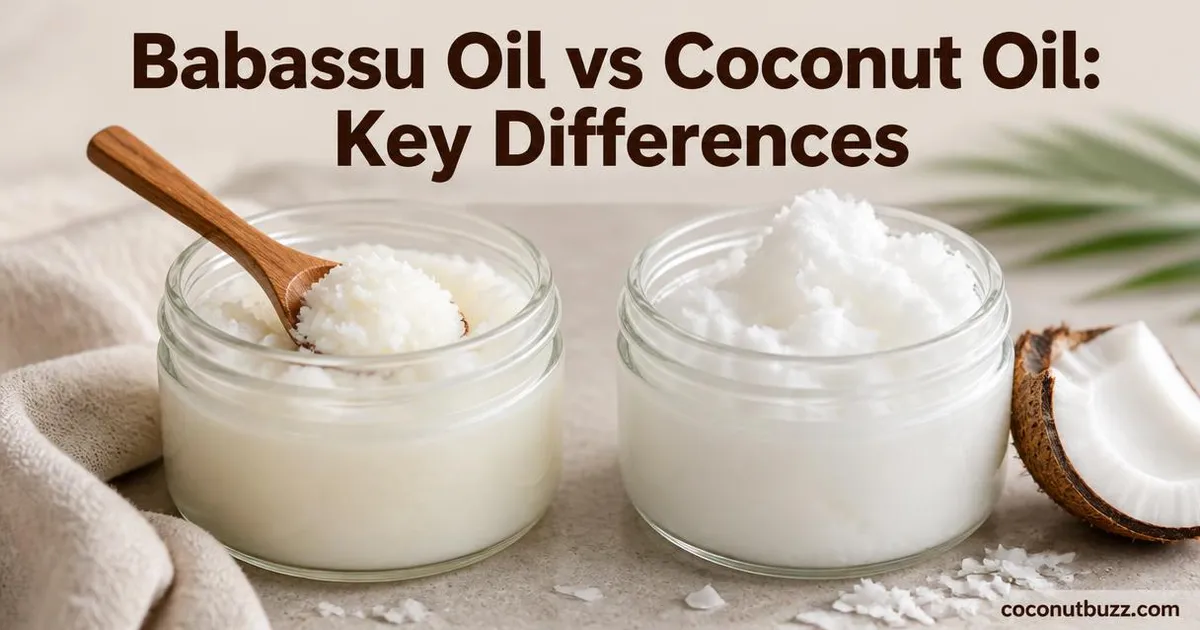
Babassu Oil vs Coconut Oil: Key Differences
Babassu oil and coconut oil feel nearly identical when you scoop them from the jar – both solid, white, and quick to melt on contact. But one absorbs into skin in minutes while the other sits on the surface much longer. One costs significantly more but leaves zero grease on your face, the other clogs some people’s pores but works in any recipe you already make.
The choice between them depends on whether you prioritize texture over budget, availability over absorption speed, and what you’re actually making with them. Smoke point matters for cooking, comedogenic rating matters for facial use, and melting behavior changes how your DIY lotion or hair mask turns out.
Key Takeaways
- Babassu oil absorbs faster and feels less greasy on skin and hair than coconut oil
- Both oils substitute for each other in DIY skincare and soap, but texture and melting behavior differ
- Smoke point and fat composition differ, affecting cooking performance
- Coconut oil wins on availability and price; babassu oil usually requires specialty suppliers
- Some sources suggest babassu oil may have a lower comedogenic rating than coconut oil
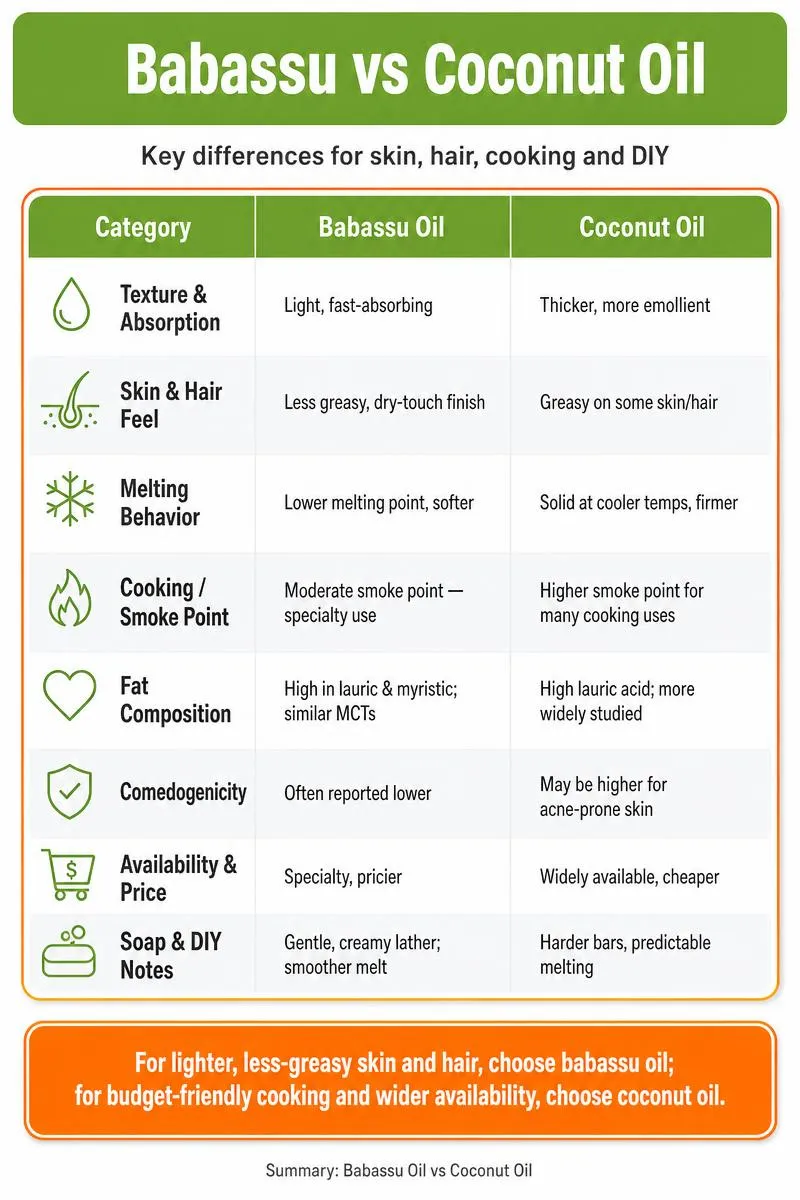
Quick Comparison: Babassu Oil Vs Coconut Oil
| Category | Babassu Oil | Coconut Oil |
|---|---|---|
| Texture & Absorption | Light, fast-absorbing | Thicker, more emollient |
| Skin & Hair Feel | Less greasy, dry-touch finish | Greasy on some skin/hair |
| Melting Behavior | Lower melting point, softer | Solid at cooler temps, firmer |
| Cooking / Smoke Point | Moderate smoke point — specialty use | Higher smoke point for many cooking uses |
| Fat Composition | High in lauric & myristic; similar MCTs | High lauric acid; more widely studied |
| Comedogenicity | Often reported lower | May be higher for acne-prone skin |
| Availability & Price | Specialty, pricier | Widely available, cheaper |
| Soap & DIY Notes | Gentle, creamy lather; smoother melt | Harder bars, predictable melting |
What Is Babassu Oil?
Babassu oil comes from the kernels of babassu palm nuts, harvested primarily in Brazil where communities have used it for generations in cooking and skin care. The oil stays solid at room temperature but melts instantly when it touches your skin, turning from a firm white paste to a clear oil on contact.
The oil works best in lightweight skincare formulas, hair conditioning treatments, and handmade soap recipes. It absorbs quickly without leaving a greasy film, making it popular in facial serums and leave-in hair products. Babassu oil can replace coconut oil in equal amounts in most DIY recipes, though the final texture will feel lighter and less occlusive.
The main drawback is availability – most grocery stores don’t stock it, so you’ll order from specialty suppliers or online retailers. That limited distribution pushes the price higher than coconut oil, sometimes noticeably more per ounce. Fewer people recognize the name, which means less brand competition and fewer bulk options for home soap makers or small-batch skincare producers.
A practical comparison of ghee and coconut oil’s properties for cooking and skin uses.
What Is Coconut Oil?
Coconut oil is extracted from dried coconut meat, produced at industrial scale across tropical regions and sold in nearly every grocery store. The refined version stays solid until a relatively low temperature, then liquefies into a clear oil that pours easily.
Cooking and baking use coconut oil most often, especially in vegan recipes that need a solid fat at room temperature. Deep hair conditioning treatments rely on its thick, occlusive texture to coat each strand. DIY skincare recipes from body butter to lip balm call for coconut oil because it’s cheap, shelf-stable for a long time, and blends easily with other ingredients.
Coconut oil’s strengths are practical: you can buy it at any supermarket, the price stays low even for organic virgin versions, and it handles high heat without breaking down. The texture works against it in some contexts – it absorbs slowly into skin, leaves a noticeable greasy layer, and some users report clogged pores or breakouts after facial application. That heavy feel helps when you want maximum moisture barrier, but becomes a problem when you need something that disappears fast.
Babassu Oil vs Coconut Oil: For Skin and Hair
Babassu oil melts on contact and sinks into skin within minutes, leaving almost no surface residue. Coconut oil takes longer to absorb and often leaves a shiny film that transfers onto clothes or pillowcases. For facial use, that difference matters – babassu oil works under makeup or sunscreen without pilling, while coconut oil can interfere with layered products.
Comedogenic ratings estimate pore-clogging potential on a scale from 0 to 5. Coconut oil is considered highly comedogenic, meaning high likelihood of clogged pores for acne-prone skin. Some sources suggest babassu oil may rate lower, though individual reactions vary widely and ratings aren’t standardized across all databases.
For scalp and hair conditioning, both oils coat the hair shaft and reduce protein loss during washing. Babassu oil rinses out more easily and leaves hair feeling lighter, which works better for fine or thin hair. Coconut oil provides heavier conditioning that benefits very dry, coarse, or chemically treated hair but can weigh down finer textures.
Winner: Babassu for lightweight facial and hair use; coconut for heavier moisture.
Babassu Oil vs Coconut Oil: For Cooking
Refined coconut oil has high heat tolerance, making it stable for most sautéing, baking, and medium-heat frying. Babassu oil has similar heat tolerance, though exact numbers vary by processing method. Both oils contain high levels of saturated fatty acids, primarily lauric acid, which resist oxidation at moderate cooking temperatures.
When melted, coconut oil turns fully liquid and pours like any vegetable oil. Babassu oil melts at a slightly lower temperature and has a somewhat thinner viscosity when liquid, but the difference won’t change how most recipes turn out. Both oils solidify baked goods and give a similar mouthfeel in raw desserts or fat bombs.
Flavor sets them apart more than heat tolerance. Virgin coconut oil adds noticeable coconut flavor to both sweet and savory dishes. Refined coconut oil tastes nearly neutral. Babassu oil carries a mild, nutty flavor that reads as less distinctly tropical – closer to a light vegetable oil than to coconut.
Winner: Condition-based; depends on desired cooking temperature and flavor.
Explore More
A closer look at how coconut oil compares to vegetable oil for everyday cooking.
Babassu Oil vs Coconut Oil: Nutrition and Health Impact
Both oils contain mostly saturated fatty acids, with lauric acid making up a significant portion of the total fat content in each. Medium-chain triglycerides appear in both oils, though the exact proportion varies by source and processing. Neither oil provides significant amounts of vitamins, minerals, or antioxidants compared to olive oil or avocado oil.
Saturated fat intake raises LDL cholesterol levels in many people, which contributes to cardiovascular disease risk according to widely cited health research. Some smaller studies suggest lauric acid may raise HDL cholesterol alongside LDL, but the net effect on heart disease risk remains debated. Both oils affect blood lipids similarly because their fatty acid profiles overlap so closely.
Allergic reactions to coconut oil are uncommon but documented, usually presenting as contact dermatitis rather than systemic allergic response. Babassu oil comes from a different botanical family and may not cross-react with coconut allergy, though anyone with tree nut or palm sensitivities should patch-test before using it on large areas of skin. Neither oil causes side effects in most users when applied topically in typical amounts.
Winner: Condition-based; personal health goals and tolerance decide.
Babassu Oil vs Coconut Oil: Soap Making and DIY Recipes
Babassu oil and coconut oil substitute for each other in equal amounts in cold process soap, lotions, balms, and body butters. Both oils saponify at similar rates and create hard bars with good lather. Babassu oil produces a slightly creamier lather and rinses clean without leaving the film that some soap makers associate with high-coconut recipes.
Final texture differs more in leave-on products. A body butter made with babassu oil melts faster on skin and absorbs within minutes, while the same recipe with coconut oil stays greasy longer and provides a heavier moisture barrier. Lip balms and salves made with babassu oil feel lighter and less waxy, which some people prefer and others find too thin for winter weather.
Cost and shelf stability favor coconut oil for bulk production. You can buy coconut oil in gallon containers at restaurant supply stores for a fraction of babassu oil’s retail price. Both oils stay stable for a long time in cool, dark storage, so shelf life won’t determine which oil to stock. Sourcing simplicity matters more – coconut oil arrives quickly from multiple suppliers, while babassu oil may require ordering from a single specialty vendor with longer lead times.
Winner: Babassu for lighter, non-greasy formulas; coconut for cost and easy sourcing.
Which Should You Choose?
- You want babassu oil if you’re making a lightweight face oil, serum, or hair conditioner that needs to absorb fast without residue. The oil works especially well for people whose skin reacts badly to coconut oil’s heavier texture or who break out from high-comedogenic ingredients. You’ll pay more and spend time finding a reliable supplier, but the finished product feels noticeably less greasy.
- You want coconut oil if you need an affordable, shelf-stable option for cooking, baking, or making large batches of body butter, soap, or lip balm. The oil handles high heat, lasts for a long time in storage, and ships from dozens of suppliers at competitive prices. Deep conditioning treatments for very dry or coarse hair benefit from coconut oil’s thick, occlusive coating that babassu oil can’t match.
- Switch from coconut oil to babassu oil if you notice clogged pores, breakouts, or a greasy film that won’t absorb after facial application. The two oils contain similar fatty acids, but the faster absorption and lower comedogenic rating may resolve skin issues that coconut oil triggered.
Related Reading
How coconut oil stacks up against baby oil for skin care and moisturization.
FAQs About Babassu Oil and Coconut Oil
Is babassu oil better than coconut oil for skin?
Babassu oil absorbs faster and leaves less grease, making it better for facial use and lightweight body moisturizers. Coconut oil works better when you need a heavy moisture barrier for very dry skin or as an occlusive layer in slugging routines.
Which oil is better for hair, babassu oil or coconut oil?
Coconut oil provides deeper conditioning for very dry, coarse, or chemically treated hair. Babassu oil works better for fine or thin hair because it rinses out easily and doesn’t weigh hair down.
Which oil penetrates skin more deeply?
Both oils contain primarily medium-chain fatty acids that penetrate the outer layers of skin. Babassu oil feels like it absorbs faster because it spreads thinner and leaves less surface residue, but the actual penetration depth is similar.
Why do some experts warn against coconut oil?
Dermatologists caution against using coconut oil on acne-prone or oily skin because its comedogenic rating suggests high likelihood of clogged pores. Cardiologists note that high saturated fat intake from any source, including coconut oil, may raise LDL cholesterol in many people.
What are the side effects of babassu oil?
Topical use causes no side effects in most people. Rare cases of contact dermatitis appear in scientific literature. Anyone with palm or tree nut allergies should patch-test before applying babassu oil to large skin areas.
Can I use babassu oil instead of coconut oil in DIY recipes?
Yes, in equal amounts in most recipes. The final product will feel lighter and less greasy. Melting temperature and saponification values are close enough that soap, lotion, and balm recipes work without formula adjustments.
What is a good substitute for babassu oil?
Coconut oil substitutes most directly because of similar melting point and fatty acid profile. For a less greasy alternative, try fractionated coconut oil or a light liquid oil like jojoba, though texture and melting behavior will change more than with coconut oil.
Is coconut oil comedogenic?
Coconut oil is considered highly comedogenic, indicating high likelihood of clogged pores. Individual skin reactions vary – some people use it without issues, while others break out from single applications.
Final Thoughts
Neither oil is universally superior; the best choice depends on your specific use case and how your skin responds. Pick babassu oil for facial skincare, lightweight moisture, and premium DIY products where fast absorption and a non-greasy finish justify the higher cost. Pick coconut oil for cooking, budget constraints, deep hair conditioning, and easy sourcing when texture matters less than price and availability.
Test a small batch of babassu oil in your favorite homemade balm or hair mask to compare results directly.
External References