Coconut Oil vs Canola Oil: Which Is Better?
Coconut oil and canola oil sit on opposite ends of the fat spectrum, yet both show up in kitchens everywhere. One comes from tropical fruit, the other from modified rapeseed plants. One carries a strong flavor and high saturated fat content, the other stays neutral and leans unsaturated.
The choice between them isn’t about finding a universal winner. These oils differ in fat composition, heat tolerance, processing intensity, and flavor profile – and those differences make each one better suited to specific cooking tasks and health priorities.
No oil wins every category.
Key Takeaways
- Coconut oil contains mostly saturated fat, while canola oil is predominantly unsaturated fat
- Canola oil handles higher cooking temperatures because of its elevated smoke point
- Virgin coconut oil goes through minimal processing compared to the refining steps canola oil requires
- Cardiologists typically recommend avoiding coconut oil due to its saturated fat raising LDL cholesterol
- Your best option depends on your cooking method, health priorities, and how much processing matters to you
Coconut Oil Vs Canola Oil Compared
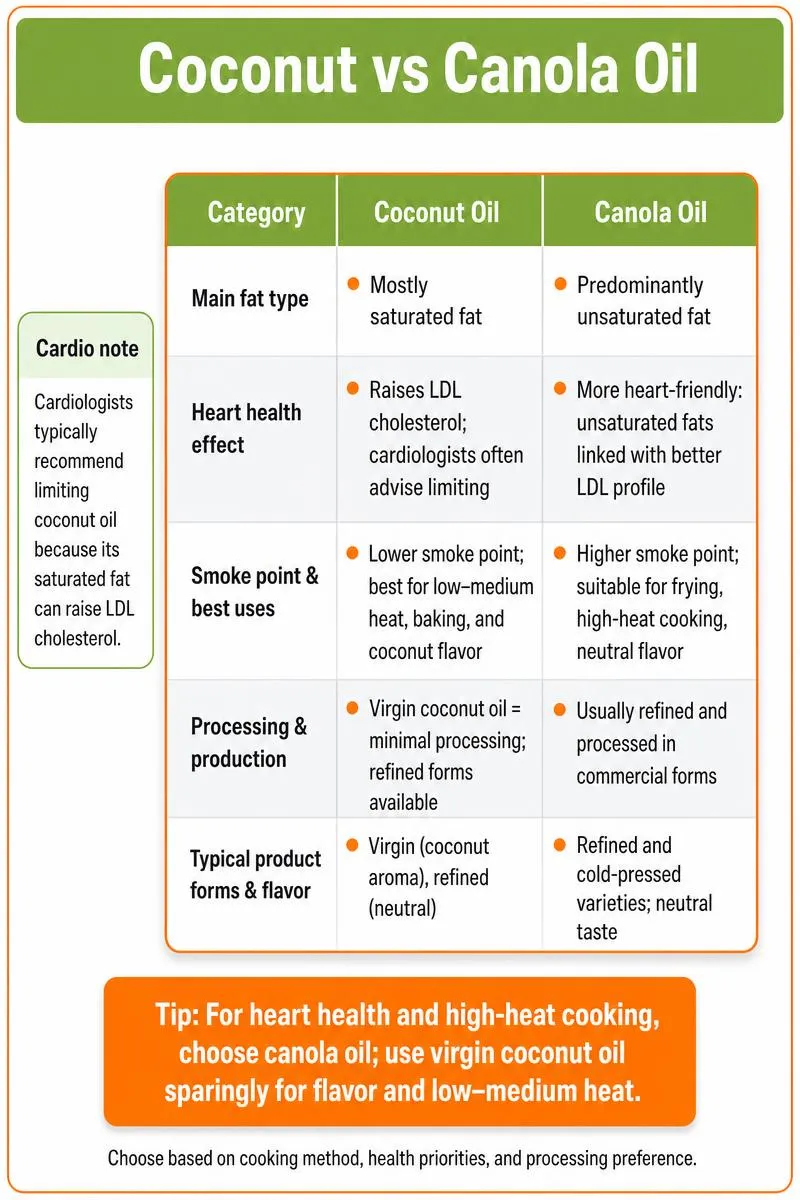
| Category | Coconut Oil | Canola Oil |
|---|---|---|
| Main fat type | Mostly saturated fat | Predominantly unsaturated fat |
| Heart health effect | Raises LDL cholesterol; cardiologists often advise limiting | More heart-friendly: unsaturated fats linked with better LDL profile |
| Smoke point & best uses | Lower smoke point; best for low–medium heat, baking, and coconut flavor | Higher smoke point; suitable for frying, high-heat cooking, neutral flavor |
| Processing & production | Virgin coconut oil = minimal processing; refined forms available | Usually refined and processed in commercial forms |
| Typical product forms & flavor | Virgin (coconut aroma), refined (neutral) | Refined and cold-pressed varieties; neutral taste |
What Is Coconut Oil?
Coconut oil is pressed from the white meat of mature coconuts. You’ll find it sold as virgin (sometimes labeled cold-pressed or unrefined) or refined, each with different flavor intensity and processing levels.
Virgin coconut oil works best for medium-heat sautéing, baking, and any recipe where coconut flavor adds to the dish – curries, granola, or quick breads. Refined versions tolerate slightly higher heat and carry almost no coconut taste.
The main strengths are stability under moderate heat, minimal processing when you choose virgin, and a distinct tropical flavor. The weaknesses are equally clear: high saturated fat content that concerns heart health experts, and a flavor strong enough to dominate delicate dishes.
Explore More
A detailed breakdown of coconut oil’s health effects and culinary uses, including fatty acid profile readers may want…
What Is Canola Oil?
Canola oil comes from rapeseed plants that were bred to reduce erucic acid, a compound found in traditional rapeseed oil. The result is a pale, nearly flavorless oil used across commercial and home kitchens.
Canola oil suits high-heat frying, roasting vegetables, and any cooking where you don’t want the oil’s flavor to register. It’s affordable, widely available, and doesn’t interfere with the taste of finished dishes.
Strengths include a high smoke point, neutral flavor, and low cost per ounce. Weaknesses center on processing – most canola oil undergoes refining, bleaching, and deodorizing – and concerns about the high omega-6 content and oxidative stability of refined seed oils.
Coconut Oil vs Canola Oil: Nutrition & Heart Health
Coconut oil is predominantly saturated fat. Canola oil flips that ratio, offering mostly monounsaturated and polyunsaturated fats with minimal saturated fat.
Saturated fat raises LDL cholesterol in many people, which is why cardiology organizations regularly advise limiting coconut oil. The American Heart Association specifically recommends replacing coconut oil with oils higher in unsaturated fats, and canola oil fits that profile.
Canola oil contains alpha-linolenic acid, an omega-3 fatty acid, though in smaller amounts than flaxseed or walnut oil. Coconut oil provides medium-chain triglycerides, which some research suggests may metabolize differently than long-chain fats, but evidence isn’t strong enough to override saturated fat concerns for people managing cholesterol.
Neither oil is universally superior. If your doctor told you to reduce saturated fat, canola oil is the safer choice. If you follow a ketogenic or paleo framework that embraces saturated fat, coconut oil may align better with your dietary approach.
Winner: Depends on whether reducing saturated fat or following a specific eating pattern matters more to you.
Coconut Oil vs Canola Oil: Cooking Performance & Smoke Point
Refined canola oil tolerates significantly higher temperatures than coconut oil. Virgin coconut oil begins to smoke at moderate cooking temperatures. Those differences determine which oil works for which cooking method.
Canola oil handles deep frying, high-heat stir-frying, and oven roasting without breaking down or smoking. Coconut oil works well for moderate sautéing, baking, and stovetop cooking that stays below medium-high heat.
Flavor also shapes performance. Canola oil disappears into the background, letting ingredients speak for themselves. Virgin coconut oil announces itself – great in Thai curry or banana bread, distracting in roasted chicken or sautéed spinach.
Refined coconut oil offers a middle ground with muted flavor and slightly better heat tolerance than virgin, but it still can’t match canola’s smoke point.
Winner: Canola oil for high-heat frying and neutral applications; coconut oil for medium-heat cooking and recipes where its flavor improves the dish.
You Might Also Like
Practical comparison of coconut cream and milk for cooking that helps readers thinking about smoke point and recipe…
Coconut Oil vs Canola Oil: Processing & Production
Virgin coconut oil is made by pressing fresh or dried coconut meat, sometimes with gentle heat to extract more oil. The oil is filtered and bottled with no chemical solvents, bleaching, or deodorizing.
Refined coconut oil starts the same way but then goes through heating, bleaching with clay or activated carbon, and deodorizing to strip flavor and extend shelf life. The process resembles what most vegetable oils undergo.
Canola oil is typically extracted using hexane, a petroleum-derived solvent, then refined, bleached, and deodorized to remove the solvent, color, and any off flavors. Cold-pressed canola oil exists but remains far less common and more expensive.
When you compare virgin coconut oil to standard canola oil, coconut oil is significantly less processed. When you compare refined coconut oil to canola oil, both go through similar industrial refining steps.
Winner: Virgin coconut oil is the least processed option; refined coconut oil and canola oil are roughly equal in processing intensity.
Which Should You Choose?
- If you regularly deep fry or cook at high temperatures, canola oil won’t smoke or break down. Coconut oil will.
- If you’re baking something delicate or cooking a dish where oil flavor shouldn’t register, canola oil stays invisible. Virgin coconut oil will announce itself.
- If your doctor recommended reducing saturated fat to manage cholesterol, canola oil aligns with standard cardiac guidelines. Coconut oil works against that goal.
- If you prioritize minimal processing and want an oil close to its source, virgin coconut oil skips the refining steps canola oil requires. Refined coconut oil offers no advantage here.
- If you’re making curry, tropical baked goods, or anything where coconut flavor adds value, coconut oil improves the finished dish. Canola oil won’t.
FAQs About Coconut Oil and Canola Oil
Why do cardiologists say to avoid coconut oil?
Coconut oil raises LDL cholesterol in most people because of its high saturated fat content. Elevated LDL is linked to increased cardiovascular risk, which is why heart health organizations recommend oils higher in unsaturated fats instead.
What is the healthiest cooking oil?
No single oil is healthiest for everyone. Extra virgin olive oil often ranks high for heart health because of its monounsaturated fats and polyphenols. Avocado oil offers similar benefits with a higher smoke point. The healthiest oil for you depends on your cooking method, health priorities, and dietary framework.
Is canola oil healthy?
Canola oil is low in saturated fat and contains omega-3 alpha-linolenic acid, which aligns with heart-healthy dietary patterns. Concerns about seed oils and processing methods exist, but major health organizations still consider canola oil a reasonable choice for most people.
What is the healthiest oil for heart health?
Olive oil and avocado oil are typically recommended for heart health because of their high monounsaturated fat content and lower saturated fat levels. Canola oil also fits cardiac guidelines better than coconut oil. Coconut oil’s saturated fat makes it a poor choice if LDL cholesterol is a concern.
What is the downside of coconut oil?
Coconut oil is very high in saturated fat – higher than most animal fats – which raises LDL cholesterol in many people. It also has a strong flavor that overpowers delicate dishes, and it begins to smoke at moderate cooking temperatures. Refined versions address the flavor issue but not the saturated fat.
Which is better for frying, coconut oil or canola oil?
Canola oil is better for frying because it tolerates higher temperatures than coconut oil. Deep frying and high-heat stir-frying require the stability canola oil provides. Coconut oil works for medium-heat sautéing but not intensive frying.
Does coconut oil or canola oil have more calories?
Both oils contain the same calories per volume because all pure fats provide identical energy. A tablespoon of either oil delivers the same caloric load. The nutritional difference lies in fat composition, not calorie count.
Explore More
Coconut nutrition and benefits
Broader nutrition overview of coconut components useful for readers wanting deeper context on heart health and nutrient…
Final Thoughts
Neither coconut oil nor canola oil dominates every situation. Canola oil handles high heat better, costs less, and aligns with standard heart health advice. Virgin coconut oil undergoes less processing and adds flavor that improves certain dishes.
Choose canola oil for everyday high-heat cooking, deep frying, and any recipe where neutral flavor matters. Choose virgin coconut oil when you want minimal processing or a distinct tropical taste in baking and curries.
If your doctor told you to limit saturated fat, canola oil is the safer pick. Test both in your most common recipe and compare how flavor and texture shift – that practical difference will tell you more than any general recommendation.
External References