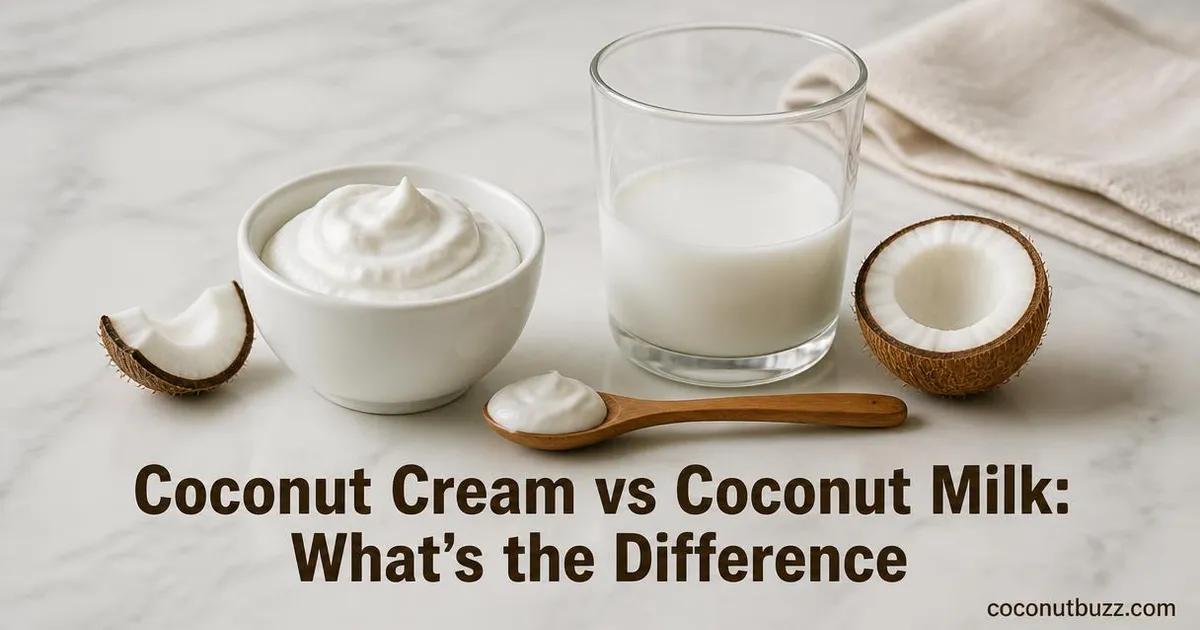
Coconut Cream vs Coconut Milk: What’s the Difference
You reach for a can of coconut something at the grocery store, and the shelf offers milk, cream, and cream of coconut – three labels that sound like variations on the same thing. They’re not. Coconut cream and coconut milk differ enough in fat content and thickness that swapping one for the other without adjusting your recipe changes whether your curry turns out silky or watery, whether your cake batter is too thick or your whipped topping refuses to hold its shape.
The short version: coconut cream is the thick, fatty layer that rises to the top when you chill coconut milk. Coconut milk is the thinner, pourable liquid you get when grated coconut flesh mixes with water. Cream of coconut is a separate product altogether – sweetened, sticky, and intended for desserts and cocktails, not for cooking.
Key Takeaways
- Coconut cream is the thicker, fat-rich layer that rises to the top of coconut milk, while coconut milk is the thinner, pourable liquid.
- They differ noticeably in texture and richness – coconut cream is thicker and tastes more concentrated.
- Coconut cream suits rich curries, whipped toppings, and Piña Coladas; coconut milk works better for lighter soups, baking, and everyday cooking.
- You can dilute coconut cream with water to replace coconut milk, but the reverse swap requires reducing other liquids in the recipe.
- Cream of coconut is a separate sweetened product mainly used for cocktails and desserts.
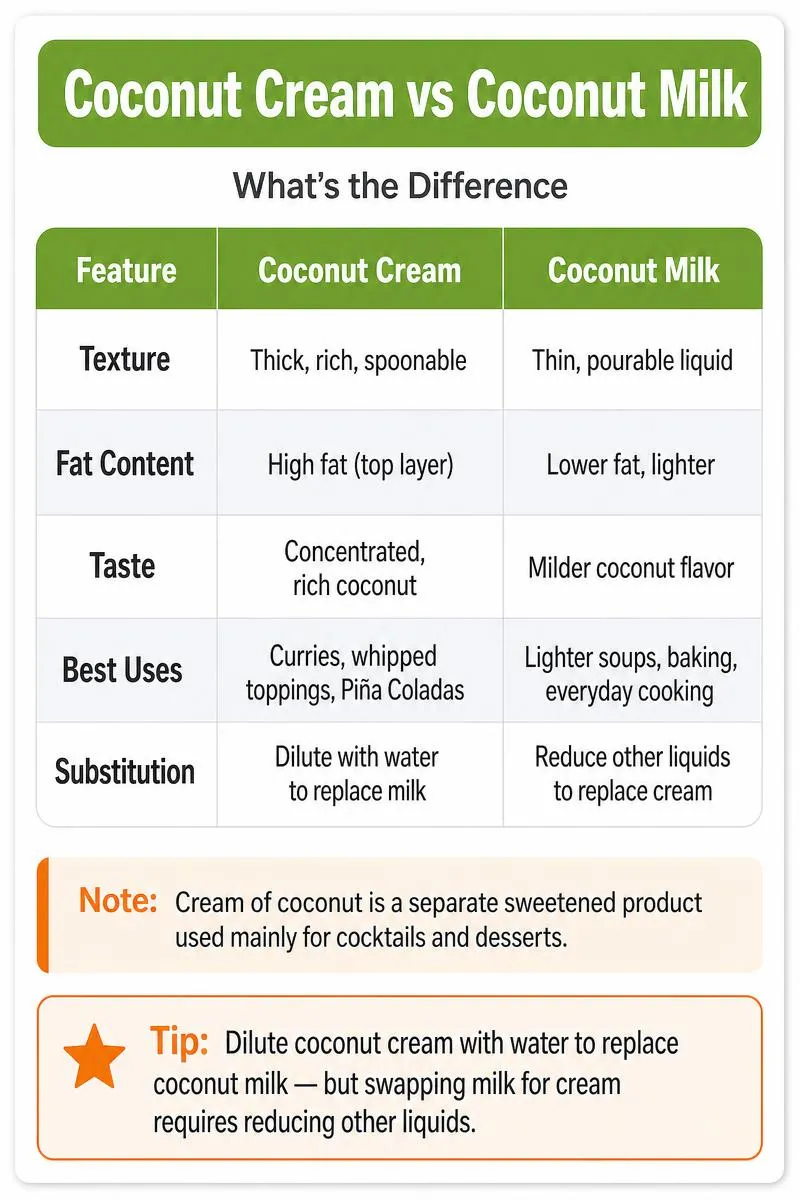
Quick Comparison: Coconut Cream Vs Coconut Milk
| Feature | Coconut Cream | Coconut Milk |
|---|---|---|
| Texture | Thick, rich, spoonable | Thin, pourable liquid |
| Fat Content | High fat (top layer) | Lower fat, lighter |
| Taste | Concentrated, rich coconut | Milder coconut flavor |
| Best Uses | Curries, whipped toppings, Piña Coladas | Lighter soups, baking, everyday cooking |
| Substitution | Dilute with water to replace milk | Reduce other liquids to replace cream |
What Is Coconut Cream?
Coconut cream is the thick, fatty layer skimmed from chilled coconut milk or pressed directly from coconut flesh with minimal water added. The high concentration of medium-chain fatty acids gives coconut cream its dense texture and rich mouthfeel – it’s thick enough to hold its shape when chilled and whip into peaks when cold.
Coconut cream works best when a recipe needs body or richness. Use it to thicken sauces, create dairy-free whipped topping, enrich curries, or blend into Piña Coladas. The fat content keeps emulsions stable and gives dishes a creamy finish that coconut milk can’t match.
The main strength is versatility – coconut cream can be thinned with water to approximate coconut milk, but you can’t easily reverse that process. The main weakness is confusion at the shelf: sweetened cream of coconut often sits right next to unsweetened coconut cream, and grabbing the wrong one turns a savory curry into a dessert by accident.
Also Worth Checking Out
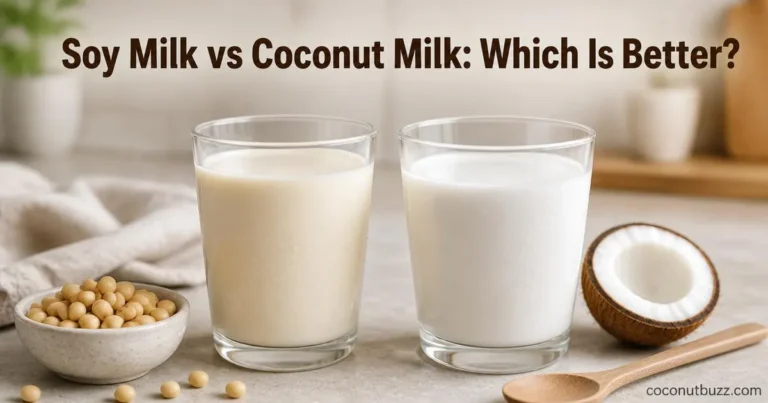
A side-by-side comparison of soy milk and coconut milk to help decide which plant milk fits different dietary needs and…
What Is Coconut Milk?
Coconut milk is a blend of grated coconut flesh and water, sold as a thin, pourable liquid. The water content dilutes the fat concentration, so coconut milk flows like dairy milk and integrates easily into batters, soups, and sauces without thickening them.
Coconut milk handles everyday tasks: soups, lighter curries, baking liquid, smoothies, coffee, and general dairy replacement. The texture is thin enough to measure and pour like regular milk, and the coconut flavor comes through without overwhelming richness. Many brands add stabilizers like guar gum or xanthan gum to prevent separation.
Coconut milk is widely available and works in both savory and sweet recipes. The downside is that it’s too thin to whip, separates when chilled unless stabilized, and lacks the fat concentration some recipes need for proper texture or emulsification.
Coconut Cream vs Coconut Milk: Taste and Texture
Coconut cream tastes more concentrated – stronger coconut flavor, richer mouthfeel, and a thickness that coats your tongue. Coconut milk tastes milder and thinner, closer to the texture of whole dairy milk but with a noticeable coconut note.
In coffee, coconut cream adds richness but can clump if the coffee is too hot or acidic. Coconut milk blends smoothly and lightens coffee without overpowering it. In curry, coconut cream gives a velvety, thick sauce that clings to vegetables and protein; coconut milk creates a lighter, brothier consistency.
For desserts, coconut cream whips into a stable topping when chilled overnight, while coconut milk remains liquid no matter how cold it gets. If you want richness, coconut cream wins. If you want drinkability or a thinner consistency, coconut milk is the better choice.
Coconut Cream vs Coconut Milk: Cooking and Baking
Thai curry traditionally uses coconut cream at the start to fry curry paste, then adds coconut milk to thin the sauce. Coconut cream’s fat content helps the paste release its aromatic compounds, while coconut milk provides the liquid volume the dish needs. If you only have coconut milk, the curry will still work but may taste less rich and coat the ingredients less thoroughly.
In soups, coconut milk integrates easily and doesn’t make the broth too heavy. Coconut cream thickens soups and works better when you want a bisque-like consistency. For baked goods, coconut milk works as a direct dairy milk replacement in most baking recipes; coconut cream is too thick and can make batter dense unless you add extra liquid.
Sauces that need stabilization – cream sauces, Alfredo-style dishes, or reduction sauces – benefit from coconut cream’s fat content, which prevents separation. Coconut milk works in lighter sauces but may break or look watery if reduced too much. Coconut cream wins for richness and stabilization; coconut milk wins for liquid-based dishes.
Also Worth Checking Out
A detailed look at how coconut milk stacks up against dairy milk in taste, uses, and nutrition for cooking and baking.
Coconut Cream vs Coconut Milk: Nutrition and Calories
Coconut cream contains more calories and fat per serving because it has less water. A typical serving of coconut cream delivers more medium-chain fatty acids and more saturated fat than the same volume of coconut milk. Coconut milk is diluted with water, so the calorie and fat density drops.
Neither is a low-calorie choice. Both are energy-dense because of the fat content, and the main difference is concentration – coconut cream packs more fat into a smaller volume. If you’re watching calorie or fat intake, coconut milk gives you coconut flavor with less concentrated fat, but it’s not objectively healthier – just less dense.
Coconut milk wins if you want less concentrated fat. Neither product is low-calorie or low-fat, and neither offers a significant nutritional advantage beyond personal preference for fat density.
Coconut Cream vs Coconut Milk: Substitutions
You can dilute coconut cream with water to mimic coconut milk. Mix roughly equal parts coconut cream and water until you reach a pourable, milk-like consistency, or adjust the ratio depending on how thick you want the result. This makes coconut cream more versatile – buy one product, thin it as needed.
Using coconut milk when a recipe calls for coconut cream is trickier. The dish will turn out thinner and less rich, so you need to reduce other liquids in the recipe or simmer the coconut milk longer to concentrate it. In whipped topping recipes, coconut milk won’t work at all – the fat content is too low to stabilize into peaks.
The most common confusion is between coconut cream and cream of coconut. Cream of coconut is sweetened, usually with added sugar and stabilizers, and intended for cocktails and desserts. If a Piña Colada recipe calls for cream of coconut and you use unsweetened coconut cream, the drink will taste flat and need extra sweetener. If a curry recipe calls for coconut cream and you use cream of coconut, the dish will taste sweet and wrong.
Which Should You Choose?
You are making a rich curry, korma, or stew that needs thickening: choose coconut cream. The fat content creates a velvety sauce and helps aromatics release their flavor.
You are baking cakes, muffins, or pancakes that require a liquid ingredient: choose coconut milk. Coconut cream is too thick and will make batter dense unless you add extra water.
You want a dairy-free whipped topping or frosting: choose coconut cream. Coconut milk lacks the fat needed to whip into stable peaks.
You are blending a Piña Colada and want richness without added sweetness: choose coconut cream. If the recipe calls for sweetness, check whether it means cream of coconut – the sweetened version.
You need an everyday non-dairy milk for cereal, smoothies, or coffee: choose coconut milk. Coconut cream is too rich for most everyday uses and doesn’t pour easily.
Worth Reading Next
Coconut yogurt vs greek yogurt
Compares coconut-based yogurt to Greek yogurt, useful if you’re exploring coconut cream or milk as dairy alternatives…
Final Verdict
Keep coconut milk on hand for everyday cooking and lighter dishes. Buy coconut cream for rich curries and whipping. If you only want to stock one product, buy coconut cream – as noted in the Substitutions section, you can thin it with water as needed.
One edge case: chill a can of full-fat coconut milk and skim the cream layer (see the FAQ below for the full method).
Try both in the same dish – the difference in how they coat and pour is immediately obvious.
FAQs About Coconut Cream and Coconut Milk
Can you substitute coconut cream for coconut milk?
Yes, if you thin it with water. Thin coconut cream with water until it pours like coconut milk – start with roughly equal parts and adjust from there. The result won’t be identical – the flavor may taste slightly richer – but it works in most recipes.
Is coconut cream healthier than coconut milk?
Neither is healthier. Coconut cream contains more fat and calories per serving because it has less water, but the nutritional profile is similar. Choose based on the fat density you want, not on health claims.
Is Thai curry made with coconut milk or cream?
Traditional Thai curry uses both. Coconut cream fries the curry paste at the start, then coconut milk thins the sauce. Some recipes use only coconut milk for simplicity, which works but tastes lighter.
Does coconut milk taste the same as coconut cream?
No. Coconut cream tastes more concentrated and richer, with a thicker mouthfeel. Coconut milk tastes milder and thinner, closer to the texture of dairy milk.
What is the best substitute for coconut cream?
Chill a can of full-fat coconut milk overnight, then scoop the solidified cream from the top. This works in most recipes that call for coconut cream, though the yield is smaller than buying coconut cream directly.
Is coconut cream anti-inflammatory?
No strong evidence supports this claim. Coconut cream contains medium-chain fatty acids, which some early research suggests may have anti-inflammatory effects, but the data is mixed and not conclusive.
How much water do you add to dilute coconut cream into coconut milk?
As mentioned above, start with equal parts water and coconut cream, then adjust the ratio depending on whether you want it thinner or thicker.
External References