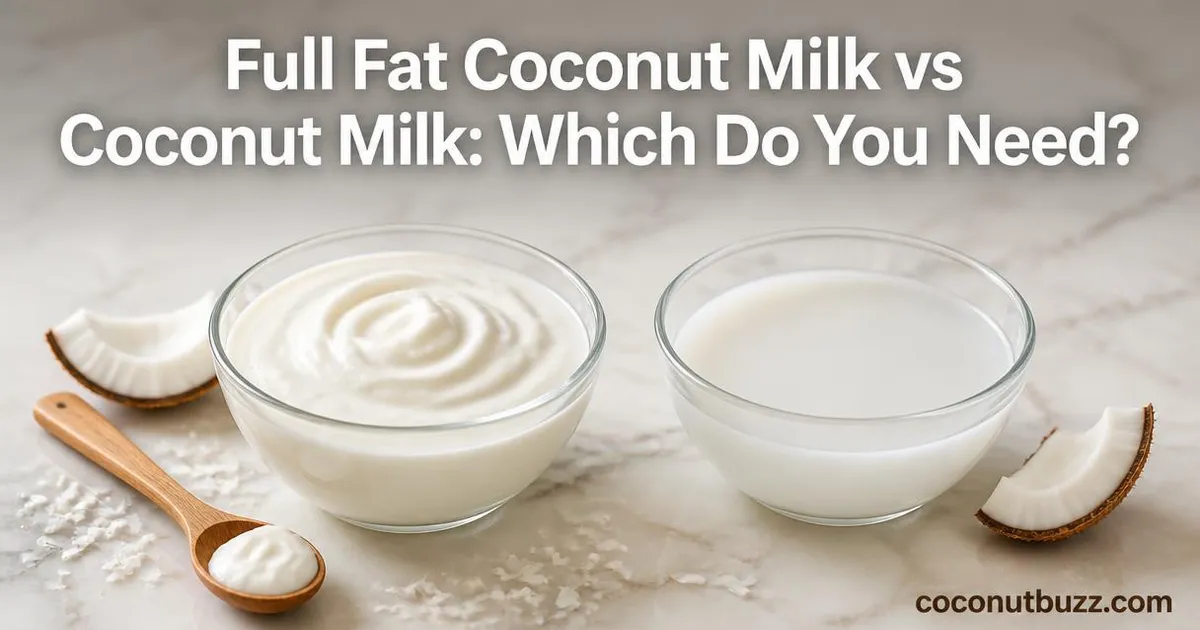
Full Fat Coconut Milk vs Coconut Milk: Which Do You Need?
You stand in front of the coconut milk section and see full fat cans, light cans, and cartons sitting side by side, all labeled ‘coconut milk.’
Coconut milk is an umbrella term. The real question is full fat versus its thinner versions. What you pick changes taste, texture, fat and calories, cooking performance, and how well the result fits your health goals.
Key Takeaways
- Coconut milk is the category; full fat is its undiluted canned form.
- Full fat wins where creaminess matters: curries, ice cream, whipped toppings.
- Light and carton suit smoothies, thin soups, drinking, and calorie limits.
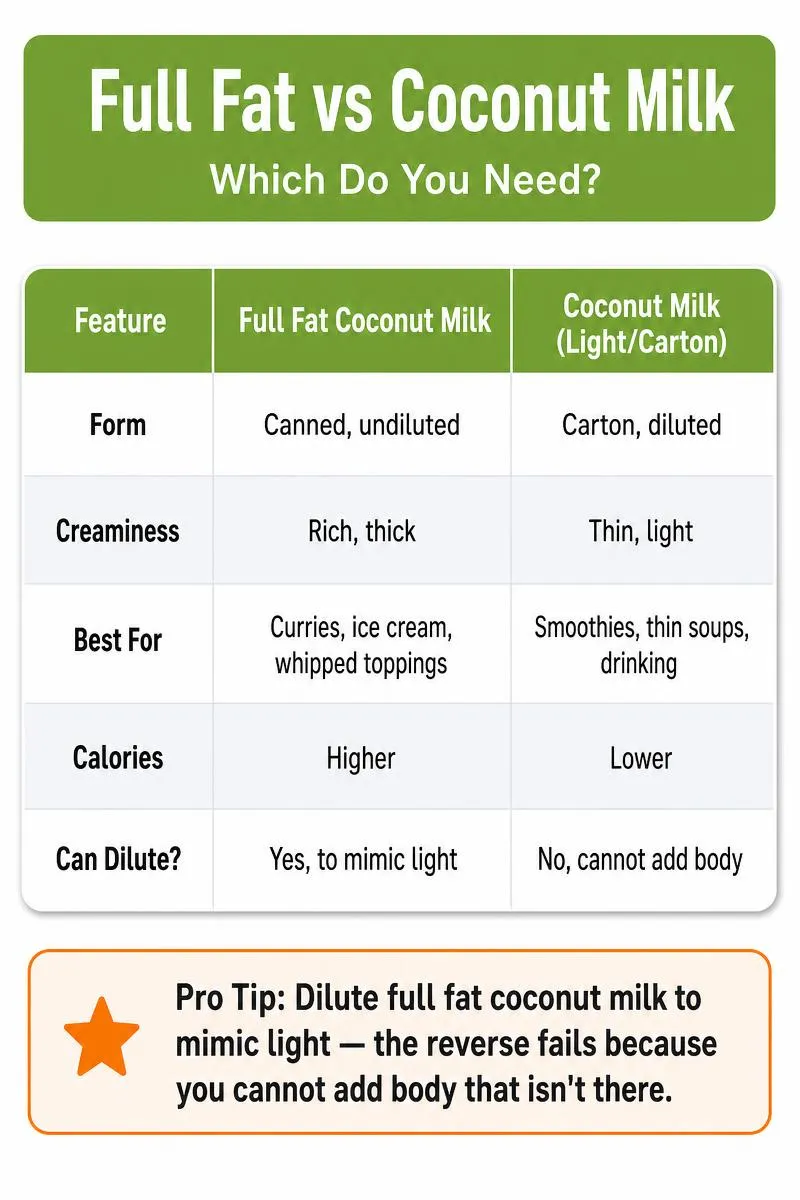
- Dilute full fat to mimic light; the reverse fails because you cannot add body that is not there.
You Might Also Like
Best coconut milk powder on amazon
Product options, benefits, and common uses for coconut milk powder you can substitute for full-fat or regular coconut…
Full Fat Coconut Milk Vs Coconut Milk Compared
| Feature | Full Fat Coconut Milk | Coconut Milk (Light/Carton) |
|---|---|---|
| Form | Canned, undiluted | Carton, diluted |
| Creaminess | Rich, thick | Thin, light |
| Best for | Curries, ice cream, whipped toppings | Smoothies, thin soups, drinking |
| Calories | Higher | Lower |
| Can dilute? | Yes — mimic light | No — can’t add body |
What Is Full Fat Coconut Milk?
Full fat coconut milk is the undiluted press of coconut meat and water. When you open a can, the thick cream layer separates from the thinner liquid below. That separation is normal, not a flaw – a quick stir brings it back together.
Full fat is the original form every lighter version derives from. Brands make light coconut milk by diluting this same product with water, and carton versions thin it further.
Best uses: rich dishes where coconut leads the flavor and texture – Thai green curry, dairy-free ice cream, coconut whipped topping, creamy sauces.
Strengths: the most concentrated coconut flavor and the thickest body of any coconut milk format.
Weaknesses: richest in fat and calories. Some sources suggest watching saturated fat intake, so portion size matters if saturated fat is a concern.
What Is Coconut Milk?
Coconut milk as a label covers full fat cans, light cans, and drinkable cartons. They all share a name but differ in thickness, flavor, and ingredients.
Light canned coconut milk is full fat diluted with water. Carton versions are thinned further and often fortified with calcium and vitamins to mimic dairy milk as a beverage.
Best uses: drinking straight, pouring over cereal, stirring into coffee. The thinner pour and milder taste work where you want liquid more than richness.
Strengths: pourable, convenient, and easy to use as an everyday drink without the heaviness of canned full fat.
Weaknesses: milder flavor that barely registers in some dishes. Carton versions often contain stabilizer gums and added vitamins, so check the ingredient list if you want a cleaner product.
Full Fat Coconut Milk vs Coconut Milk: Cooking and Baking
Full fat coconut milk wins when structure matters. It thickens curries, sets ice cream, whips into toppings, and gives body to sauces that need to cling. Light and carton versions fit where liquid matters more than richness – smoothies, oatmeal, thin soups, and anything you want pourable rather than creamy.
Swaps: dilute full fat with water to approximate light coconut milk. Going the other direction does not work. You cannot simmer light coconut milk down and expect the same body as full fat, because the fat was never there to concentrate.
Explore More
A comparison of coconut flavoring forms and how they perform in cooking and baking alongside different coconut milks.
Full Fat Coconut Milk vs Coconut Milk: Taste and Texture
Full fat coconut milk is thick, creamy, and carries a strong coconut flavor that holds its own against spices and other ingredients. The mouthfeel is closer to heavy cream than to milk.
Light and carton versions are thinner and milder. Coconut registers as a background note at best, especially in carton form. The texture pours like dairy milk.
Which version wins depends on how much coconut flavor and body the dish needs. A Thai curry wants full fat. A smoothie just wants liquid, and light does that job fine.
Full Fat Coconut Milk vs Coconut Milk: Nutrition, Calories, and Weight Loss
Full fat coconut milk has more fat and calories than any other format. Light versions are diluted, so the fat and calorie content drop accordingly. Carton versions are the lowest because they are thinned the most.
Your goal decides which one makes sense. Light coconut milk suits strict calorie targets where you want volume without the fat. Full fat fits if you use a small amount for flavor and body, since a little goes a long way.
The healthiest type is whichever has the fewest additives and matches your intended use. Check the ingredient list – brands vary enough that it tells you more than the category does.
Which Should You Choose?
- Curry, creamy sauce, or dairy-free ice cream: full fat. These dishes need the fat for structure and the coconut flavor to carry through.
- Cereal, smoothies, or drinking straight: light or carton. The pourable consistency and milder taste suit beverages and breakfast bowls.
- Tracking calories: light, or full fat in small amounts. A small amount of full fat delivers the richness of a larger portion of light.
- Dairy-free baking needing fat for structure: full fat. Cakes, custards, and frostings rely on fat for texture, and light versions can leave results thin or dry.
Also Worth Checking Out
Green coconut vs brown coconut
Explains how coconut maturity affects liquid content, flavor, and fat – helpful for understanding differences between…
FAQs About Full Fat Coconut Milk and Coconut Milk
Is full fat coconut milk the same as coconut milk?
Yes, in the sense that full fat is the undiluted canned version. ‘Coconut milk’ is the umbrella term, and full fat is the original, thickest form under that label.
Does full fat coconut milk taste like coconut?
Yes, and more strongly than any other version. The concentrated fat carries the coconut flavor, so it is prominent in curries and desserts.
Can I substitute light coconut milk for full fat?
Yes, with tradeoffs. The dish will be thinner and the coconut flavor milder. If structure matters – like in ice cream or a thick curry – the result may not set the way full fat would.
Which is healthier, full fat or light coconut milk?
It depends on your goal. Light has fewer calories and less fat, which suits calorie limits. Full fat has more medium-chain fatty acids per serving. The better choice is the one that fits how you use it and how much you consume.
Can coconut milk cause stomach upset or other downsides?
Tolerance varies from person to person. Some people handle coconut milk well, while others experience bloating or discomfort. If you are new to it, start with a small amount. Talk to a doctor if you have a known digestive condition.
How is full fat coconut milk different from coconut cream?
Coconut cream is thicker still. It has a higher ratio of coconut meat to water, so the fat content is even richer. Some recipes call for coconut cream specifically when they need maximum thickness.
Which full fat coconut milk should I buy?
Look for a can with coconut and water as the only ingredients. Avoid brands that add gums or preservatives if you want the cleanest version.
Final Thoughts
Use full fat for cooking and any recipe that needs body, structure, or strong coconut flavor. Use light or carton for drinking, smoothies, and calorie-conscious meals. One edge case worth knowing: when a recipe says ‘coconut milk’ without specifying, it usually means full fat canned.
Try both versions in one familiar recipe and taste the difference side by side.
External References