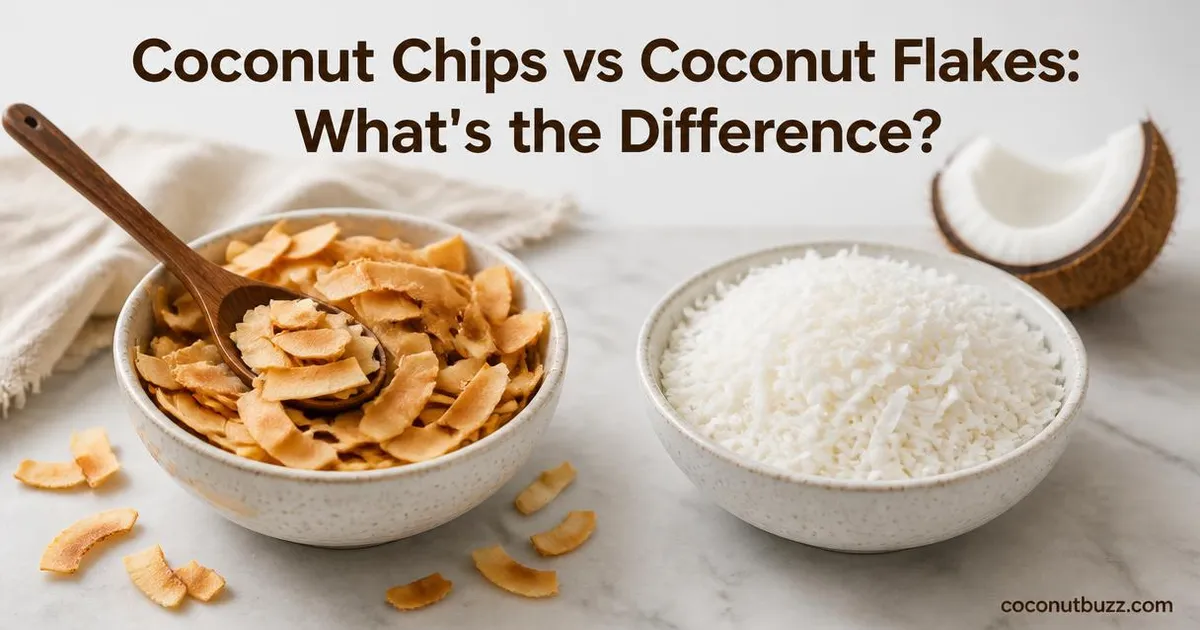
Coconut Chips vs Coconut Flakes: What’s the Difference?
You’re standing in the baking aisle holding two bags of dried coconut. One says chips, the other flakes. Same brand, similar price, same basic ingredient. The labels don’t explain what makes them different or which one you actually need.
The answer comes down to how the coconut meat is cut. That single decision changes texture, how it behaves in recipes, and whether you’ll eat it straight from the bag or fold it into batter. Neither form is better across the board, but one will fit your use better than the other.
Key Takeaways
- Chips are thick, crunchy strips cut from mature coconut meat; flakes are thin, flat shavings that soften easily
- Flakes dominate baking recipes like macaroons and cakes; chips are designed for snacking and staying crunchy on top of yogurt or oatmeal
- Both come sweetened and unsweetened, and that distinction matters more for nutrition than the form itself
- They swap in some recipes but not all: chips hold their crunch under heat while flakes soften and distribute evenly through batter
Comparing the Top Coconut Chips Vs Coconut Flakes
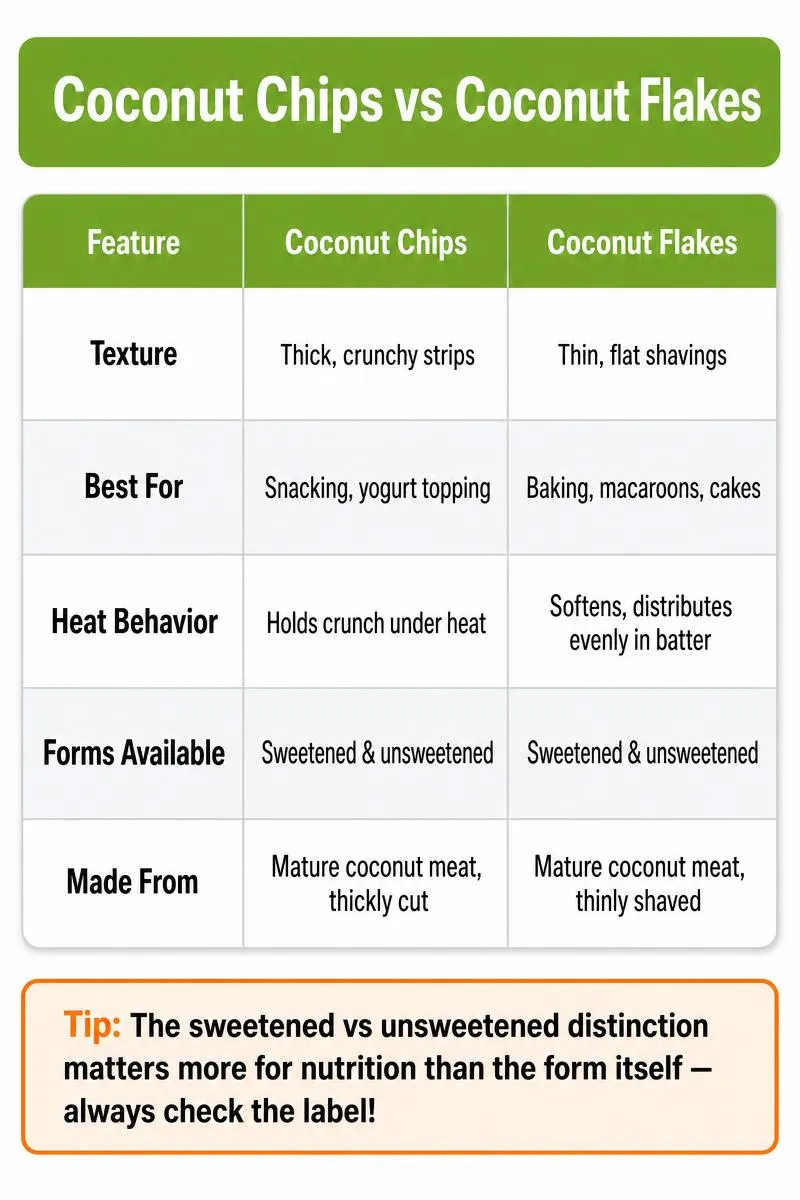
| Feature | Coconut Chips | Coconut Flakes |
|---|---|---|
| Texture | Thick, crunchy strips | Thin, flat shavings |
| Best For | Snacking, yogurt topping | Baking, macaroons, cakes |
| Heat Behavior | Holds crunch under heat | Softens; distributes in batter |
| Forms Available | Sweetened & unsweetened | Sweetened & unsweetened |
| Made From | Mature coconut meat, thickly cut | Mature coconut meat, thinly shaved |
What Are Coconut Chips?
Coconut chips are thick-cut strips or slices of mature coconut meat, usually baked or toasted until crisp. The cut is deliberate: thick enough to stay crunchy when exposed to moisture or heat, and substantial enough to eat by the handful.
They work best as a snack on their own, tossed into trail mix, stirred into granola, or scattered on top of yogurt bowls and smoothie bowls. The hearty crunch survives stirring and sitting, which makes them reliable for toppings that need to stay firm.
The trade-off is that chips are too chunky to blend evenly into batters or fold smoothly into delicate recipes. Most brands sell them sweetened, so if you want unsweetened chips, you’ll need to check the label carefully.
Related Reading
Sweetened vs unsweetened coconut
Explains how added sugar changes flavor, texture, and baking performance-helpful when choosing between sweetened or…
What Are Coconut Flakes?
Coconut flakes are thin, flat shavings of mature coconut meat, larger than shredded coconut but much thinner than chips. The flat shape helps them toast evenly and distribute through mixtures without clumping.
Bakers reach for flakes when making macaroons, layer cakes, granola bars, coatings for chicken or shrimp, and garnishes that need to look delicate. Flakes soften when they absorb moisture, which makes them easy to incorporate into dough and batter.
The downside is that flakes have little crunch on their own and overtoast quickly if you’re not watching. Like chips, most store-bought flakes come sweetened unless the package specifies otherwise.
Coconut Chips vs Coconut Flakes: Taste and Texture
Coconut chips deliver a toasted, hearty crunch that holds up when you bite down. They taste richer and more substantial, partly because the thicker cut means more toasted surface area and a slower release of coconut flavor.
Flakes offer a lighter, softer chew. They’re more delicate in flavor and texture, which makes them easier to layer into recipes without overwhelming other ingredients. When toasted, flakes turn golden and crisp but lose that crispness quickly once they cool or absorb any moisture.
If you prefer crunch that lasts, chips win. If you want something that melts into the background or softens into a batter, flakes are the better pick.
Coconut Chips vs Coconut Flakes: Best Uses
Coconut chips are built for snacking and toppings. Eat them straight from the bag, add them to trail mix, stir them into granola before baking, or pile them on top of yogurt, oatmeal, or açai bowls. They stay crunchy for hours after you add them.
Flakes belong in the mixing bowl. Use them in macaroons, fold them into cake or muffin batter, press them into the outside of energy balls, coat proteins before frying, or toast and sprinkle them over desserts. Flakes distribute evenly and soften into whatever you’re making.
Swapping works in some situations but not all. You can swap chips for flakes in granola or as a topping if you want extra crunch. You can swap flakes for chips in baking if you chop the chips smaller first. But chips won’t blend smoothly into macaroon batter, and flakes won’t stay crunchy on top of a smoothie bowl.
For baking, flakes win. For snacking, chips do.
A direct, detailed comparison of desiccated coconut and coconut flakes that clarifies size, processing, and best…
Coconut Chips vs Coconut Flakes: Nutrition
Both chips and flakes start as the same ingredient: mature coconut meat. The nutritional difference between them comes almost entirely from whether the brand adds sugar, not from the cut.
Some sources suggest that unsweetened versions of either form are the healthier pick, especially if you’re watching added sugar intake. Sweetened coconut can carry as much added sugar as a dessert ingredient, which changes how it fits into your diet.
Coconut chips get compared to potato chips because they’re both crunchy snacks sold in bags. Coconut chips contain medium-chain fatty acids instead of the vegetable oils used for frying potato chips, but sweetened coconut chips still deliver sugar that potato chips don’t. Check whether sugar or coconut is the first ingredient on the label.
Coconut Chips vs Coconut Flakes: How They’re Made
Coconut chips are cut into thick strips from the white meat of mature coconuts, then baked or toasted until dry and crisp. The thickness of the cut determines how much crunch survives after processing and packaging.
Flakes are shaved thin and flat from the same coconut meat. The thin cut allows them to dry faster and toast more evenly, but it also means they soften quickly once exposed to any moisture.
Neither form is superior, but the cut decides which uses make sense.
Which Should You Choose?
For snacking or adding to trail mix, coconut chips are the clear choice. They’re designed to stay crunchy and satisfying when eaten by the handful.
For baking macaroons, cakes, or bars, coconut flakes distribute more evenly and soften into batter without leaving chunky pockets.
For toppings on yogurt or oatmeal, coconut chips hold up longer and deliver more texture contrast.
For coatings or delicate garnish, coconut flakes toast evenly and look lighter and more elegant on a finished dish.
For less sugar, buy either form in the unsweetened version.
You Might Also Like
Covers nutrition and substitution guidance for baking-useful for readers deciding whether flakes/chips can replace or…
FAQs About Coconut Chips and Coconut Flakes
Are coconut chips and flakes the same thing?
Both are dried coconut meat, but the cut and thickness differ. Chips are thick strips designed for crunch; flakes are thin shavings that soften easily. The form you choose depends on whether you’re snacking or baking.
What do coconut chips taste like?
Coconut chips taste toasted and crunchy, with a richer coconut flavor than flakes. Flakes are milder and softer, with less pronounced toasted notes.
What are coconut chips used for?
Coconut chips work best for snacking, granola, trail mix, and crunchy toppings. They hold their texture longer than flakes and don’t soften quickly when exposed to moisture.
Are coconut chips and flakes healthy?
Both are coconut meat, so the health question comes down to sweetened versus unsweetened. Unsweetened versions skip the added sugar and work better if you’re limiting sweeteners. Sweetened versions function more like a dessert ingredient.
Are coconut chips healthier than potato chips?
Coconut chips contain medium-chain fatty acids instead of the vegetable oils used for frying potato chips. Sweetened coconut chips deliver added sugar that potato chips don’t. The comparison depends on the specific products and what you’re trying to avoid.
Can I swap coconut chips for coconut flakes in a recipe?
You can swap them in some recipes but not all. Chop chips smaller if you’re folding them into batter or dough. Don’t swap flakes for chips if you need lasting crunch. Flakes soften quickly and won’t hold up as a topping the way chips do.
What can I use instead of coconut flakes?
Shredded coconut or desiccated coconut both work as substitutes. Shredded coconut is finer and more compact, while desiccated coconut is drier and often unsweetened. Either one distributes through batter similarly to flakes.
Should sweetened coconut flakes be refrigerated after opening?
Store both sweetened and unsweetened coconut in an airtight container after opening. Refrigeration extends shelf life and keeps the coconut from absorbing moisture or turning rancid, especially in warm or humid climates.
How are flakes different from shredded or desiccated coconut?
Flakes are larger and flatter than shredded coconut, which is finely cut into thin threads. Desiccated coconut is dried more thoroughly and ground finer than flakes, giving it a drier, more powdery texture. The size and moisture level change how each one behaves in recipes.
Final Thoughts
Buy flakes if you’re baking. Buy chips if you’re snacking or topping bowls. If you only have room for one bag, choose based on which use you need more often.
Edge cases lean predictable: soft chew and even coverage point to flakes, while texture-forward uses point to chips. For health goals, sweetened versus unsweetened matters more than the form. Check that label before you buy.
External References