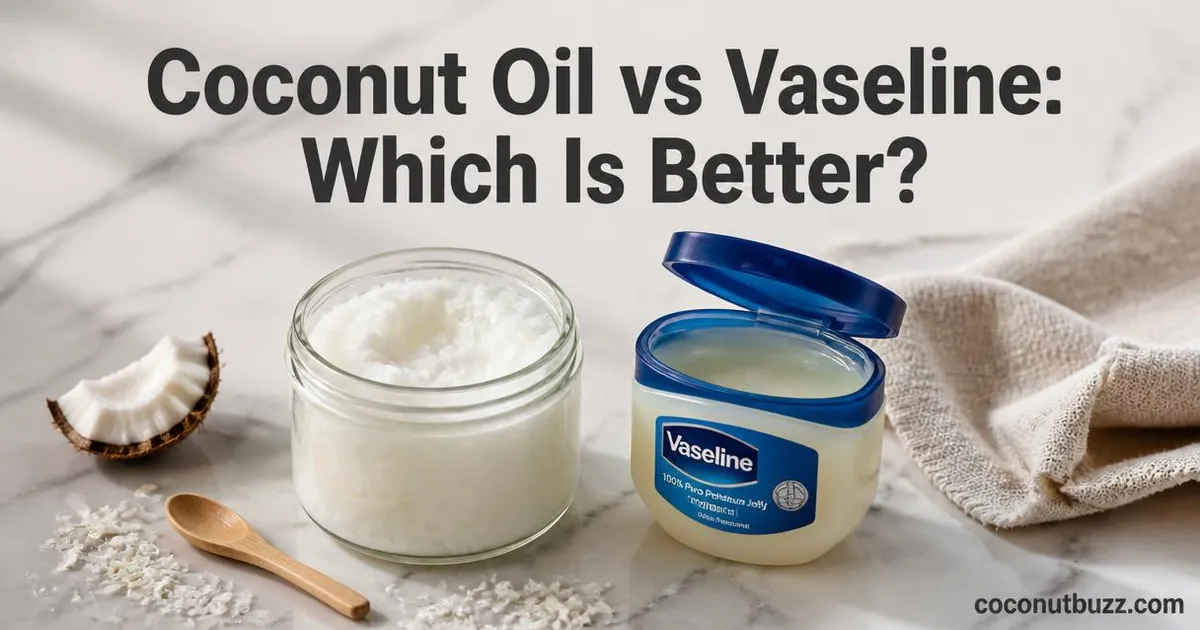
Coconut Oil vs Vaseline: Which Is Better?
Coconut oil adds moisture by delivering fatty acids your skin absorbs. Vaseline doesn’t absorb at all – it sits on top and locks in whatever hydration is already there. That single difference explains why each product excels in completely different situations, and why picking the wrong one can leave your skin either still dry or suddenly breaking out.
Key Takeaways
- Coconut oil works as an emollient that adds lauric acid and other medium-chain fatty acids to the skin; Vaseline acts as an occlusive sealant that blocks water loss without adding any moisture itself.
- For facial or acne-prone skin, Vaseline is non-comedogenic while coconut oil carries a higher comedogenic rating and may clog pores for some users.
- During eczema flare-ups, Vaseline typically provides stronger barrier protection; coconut oil may help between flares but can irritate broken skin.
- For severely dry patches, windburn, or chronic chapping, Vaseline usually outperforms as a heavy-duty barrier.
- You can layer or mix the two, but the blend should match whether you want absorption, sealing, or both.
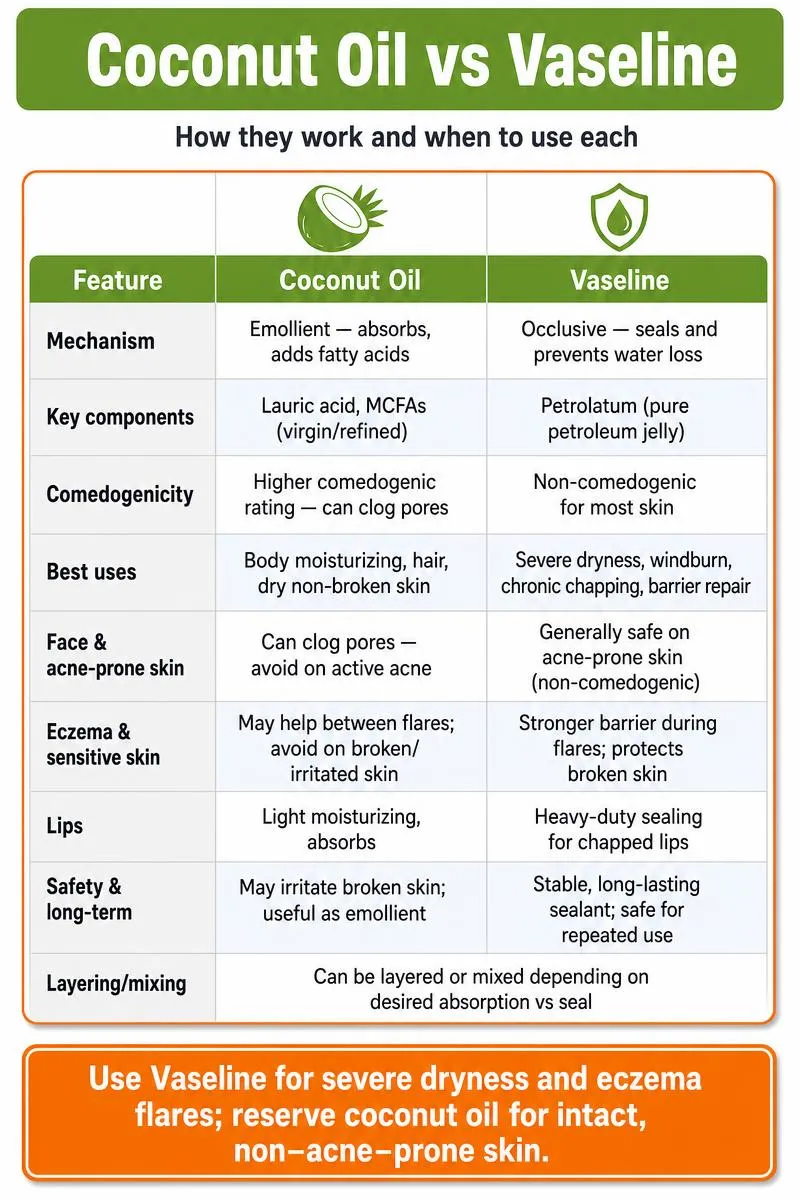
Coconut Oil Vs Vaseline Quick Comparison
| Feature | Coconut Oil | Vaseline |
|---|---|---|
| Mechanism | Emollient — absorbs, adds fatty acids | Occlusive — seals; prevents water loss |
| Key components | Lauric acid; MCFAs (virgin/refined) | Petrolatum (pure petroleum jelly) |
| Comedogenicity | Higher comedogenic rating — can clog pores | Non‑comedogenic for most skin |
| Best uses | Body moisturizing; hair; dry non‑broken skin | Severe dryness; windburn; chronic chapping; barrier repair |
| Face & acne‑prone skin | Can clog pores — avoid on active acne | Generally safe on acne‑prone skin |
| Eczema & sensitive skin | May help between flares; avoid on broken/irritated skin | Stronger barrier during flares; protects broken skin |
| Lips | Light moisturizing; absorbs | Heavy‑duty sealing for chapped lips |
| Safety & long‑term | May irritate broken skin; useful as emollient | Stable, long‑lasting sealant; safe for repeated use |
| Layering / mixing | Can be layered or mixed; absorption vs seal | Can be layered or mixed; absorption vs seal |
What Is Coconut Oil?
Coconut oil is extracted from the meat of mature coconuts. It’s solid around 76 degrees F and melts on contact with skin, which makes it easy to spread and absorb.
Best use cases include body moisturizing, DIY scrubs and balms, hair masks, and gentle makeup removal. It works across body, hair, and DIY recipes.
Coconut oil is plant-derived, absorbs relatively quickly compared to heavier oils, carries a mild natural scent, and works across both skin and hair. Lauric acid, the dominant fatty acid in coconut oil, gives it mild antimicrobial properties that some users find helpful for minor skin concerns.
The weaknesses: Coconut oil can stain fabrics if it doesn’t fully absorb. It may feel greasy on certain skin types. The comedogenic rating means it can clog pores, especially on the face. And compared to petroleum jelly, coconut oil has limited shelf stability – it can go rancid over time.
Keep Reading
Practical, skin-focused uses for coconut oil – from moisturizing to makeup removal and spot treatments.
What Is Vaseline?
Vaseline is purified petroleum jelly made from mineral oils and waxes. It’s fully occlusive, meaning it forms a physical barrier on the skin that prevents moisture from evaporating.
Best use cases include sealing moisture on very dry areas, protecting minor cuts and scrapes, preventing friction (think chafing or shoe blisters), and protecting lips from harsh weather.
Vaseline is hypoallergenic, non-comedogenic, extremely shelf-stable, and inexpensive. The physical barrier it creates is strong – almost nothing gets through it once it’s applied.
The main limitation: Vaseline doesn’t add moisture on its own. It requires damp skin underneath to actually hydrate. Apply it to dry skin and you’re just sealing in dryness. Some people also dislike the thick, sticky feel, and others prefer to avoid petroleum-derived ingredients entirely.
Coconut Oil vs Vaseline: Dry Skin and Moisturizing
The difference between these two products comes down to emollients vs occlusives – and understanding that distinction tells you which one to reach for.
Coconut oil is an emollient. The medium-chain fatty acids it contains – primarily lauric acid – penetrate the top layer of skin and soften it from within. If your skin is mildly dry and needs nourishment rather than heavy sealing, coconut oil delivers lipids that the skin actually absorbs.
Vaseline is an occlusive. It doesn’t penetrate the skin at all. Instead, it forms a waterproof layer that stops transepidermal water loss – the evaporation of moisture from your skin into the air. For severely dry or cracked skin, that sealing action usually outperforms anything that absorbs. Apply Vaseline to damp skin right after showering, and it locks that hydration in place for hours.
Winner: Vaseline for severely dry or cracked skin. Coconut oil for mildly dry skin that needs lipid nourishment.
Coconut Oil vs Vaseline: Face and Acne-Prone Skin
Your face has more sebaceous glands than the rest of your body, which means pore-clogging potential matters a lot more here.
Vaseline is non-comedogenic, meaning it won’t clog pores. Dermatologists frequently recommend Vaseline as a nighttime occlusive – applied over damp skin to seal in moisture without triggering breakouts. Even acne-prone skin typically tolerates it well.
Coconut oil carries a higher comedogenic rating. That means it has a real chance of clogging pores, especially on facial skin that’s already prone to breakouts. Some people with dry, non-acne-prone facial skin use coconut oil without issues. But if you’ve ever broken out after trying it, the comedogenic rating is likely why.
Proper application matters here. Vaseline goes on damp skin – cleanse, leave skin slightly wet, then apply a thin layer. Coconut oil, if your skin tolerates it, goes on clean dry skin in small amounts. Patch test on your jawline for a few days to see whether your pores can handle it before you commit.
Winner: Vaseline, especially for acne-prone or oily facial skin.
Related Reading
Step-by-step ways to apply and combine coconut oil with other products for face and body care.
Coconut Oil vs Vaseline: Eczema and Sensitive Skin
Eczema damages the skin barrier, and the repair strategy depends on whether you’re in an active flare or between flares.
During active eczema flares, Vaseline is often the dermatology standard. The intact barrier it creates protects compromised skin from irritants, allergens, and bacteria while preventing further water loss. Broken or weeping skin generally tolerates Vaseline better than plant oils, since it contains no potential allergens or irritants.
Between flares, coconut oil may help maintain skin suppleness and provide fatty acids that support the skin barrier. Some sources suggest that lauric acid’s antimicrobial properties may be relevant for eczema-prone skin, since bacterial colonization can worsen flares. But coconut oil can irritate broken skin directly – applying it to cracked or weeping eczema may sting and worsen inflammation.
Winner: Vaseline during active flares. Coconut oil between flares, with caution and a patch test.
Coconut Oil vs Vaseline: Lips
Lips lack sebaceous glands, so they can’t moisturize themselves. Whatever you apply has to do all the work.
For windburn, severe chapping, or cold-weather exposure, Vaseline is the stronger choice. The occlusive barrier holds up against wind and cold better than an oil that absorbs and disappears. Slather it on before heading into harsh weather and it stays put.
For daily maintenance, coconut oil works well as a lighter lip moisturizer. It absorbs into the thin lip skin and provides fatty acids rather than just sitting on top. Coconut oil also works as a natural base for DIY lip scrubs – mix it with sugar for gentle exfoliation that Vaseline can’t replicate.
Winner: Vaseline for windburn and severe chapping. Coconut oil for daily maintenance and DIY lip scrubs.
Coconut Oil vs Vaseline: Safety and Long-Term Use
The processing difference between these two products is significant, and it’s part of why people choose one over the other.
Coconut oil comes from coconut meat through pressing or expeller extraction. It’s a single-ingredient, plant-derived product. The main safety consideration is shelf life – coconut oil can oxidize and go rancid, especially if stored in heat or light. Rancid oil can cause skin irritation, so smell before you apply.
Vaseline goes through a refining process that purifies petroleum jelly into a product with no meaningful impurities. It’s inert, hypoallergenic, and won’t spoil. Some sources suggest concerns about long-term petroleum jelly use related to trace contaminants, though fully refined Vaseline is generally considered safe by regulatory standards.
If avoiding petroleum-derived ingredients matters to you, coconut oil is the clear choice. If maximum stability and zero spoilage matter more, Vaseline wins.
Also Worth Checking Out
A focused look at coconut oil’s benefits for hair, useful for readers comparing oil-based beauty uses.
Which Should You Choose?
The right pick depends on your skin type, your goals, and what you’re trying to treat.
- Acne-prone or oily facial skin: Vaseline as a nighttime occlusive on damp skin. Skip coconut oil on the face.
- All-natural, plant-based skincare preference: Coconut oil for body and hair. It delivers fatty acids, smells pleasant, and works in DIY recipes.
- Eczema or dermatitis flares: Vaseline for barrier repair during active inflammation. The inert seal protects broken skin without introducing potential irritants.
- Heavy protection for lips or hands in cold or windy weather: Vaseline. The occlusive barrier holds up against harsh conditions better than an absorbing oil.
- One product for DIY recipes, body care, and hair masks: Coconut oil. Vaseline doesn’t absorb, won’t work in scrubs, and does nothing for hair conditioning.
FAQs About Coconut Oil and Vaseline
What are the disadvantages of using coconut oil on skin?
Coconut oil can clog pores, especially on facial skin. It may feel greasy, can stain fabrics, and has limited shelf stability – it can go rancid. For people with acne-prone skin, the comedogenic rating makes it a risky choice for the face.
Can I use coconut oil as my only moisturizer?
Yes, if your skin tolerates it well. Coconut oil provides emollient fatty acids that absorb into the skin. But it doesn’t seal in moisture as effectively as an occlusive like Vaseline, so very dry skin may still feel parched. Layering Vaseline over coconut oil on damp skin gives you both absorption and sealing.
Do dermatologists recommend coconut oil for the face?
Most dermatologists are cautious about coconut oil for the face, particularly for acne-prone or oily skin. The comedogenic rating is high enough that many advise against it for facial use. Vaseline, by contrast, is frequently recommended as a facial occlusive.
Is Vaseline or coconut oil better for your face?
Vaseline is better for most faces. It’s non-comedogenic and works as a sealant over damp skin. Coconut oil is only a good facial choice for people whose skin doesn’t break out from it.
Is coconut oil good for your skin?
Yes, for body skin in particular. The medium-chain fatty acids in coconut oil – especially lauric acid – soften and nourish the skin barrier. It works best on body areas where pore-clogging isn’t a concern and where skin needs lipid replenishment rather than heavy sealing.
Is coconut oil or Vaseline better for lips?
For severe chapping and windburn, Vaseline. For daily light moisture and DIY lip scrubs, coconut oil. You can also layer them – coconut oil first for absorption, Vaseline on top to seal.
Can I mix Vaseline with coconut oil for my face?
You can, but if you’re acne-prone, the coconut oil component still carries clogging risk. A blend gives you both emollient and occlusive action, but the comedogenic properties of coconut oil don’t disappear when mixed with Vaseline. Patch test the blend on your jawline before applying it broadly.
Why do some people avoid using petroleum jelly long term?
Some sources suggest concerns about trace contaminants in less-refined petroleum jelly, though fully refined Vaseline is generally considered safe. Others simply prefer to avoid petroleum-derived ingredients for environmental or personal reasons. Coconut oil avoids both concerns but trades stability and shelf life in return.
Final Verdict
Pick coconut oil when your skin needs active moisture and lipids – body care, hair masks, mildly dry patches, DIY scrubs. Pick Vaseline when your skin needs a protective seal – severe dryness, eczema flares, windburn, or any situation where trapping existing moisture matters more than adding new moisture.
Facial acne-prone skin almost always favors Vaseline. A preference for plant-based ingredients favors coconut oil. Both are inexpensive enough to keep on hand for different situations.
One next step: patch test either product on your inner arm for 24 hours before applying it to your face or a large area of skin. That goes double for coconut oil if you’re prone to breakouts.
External References