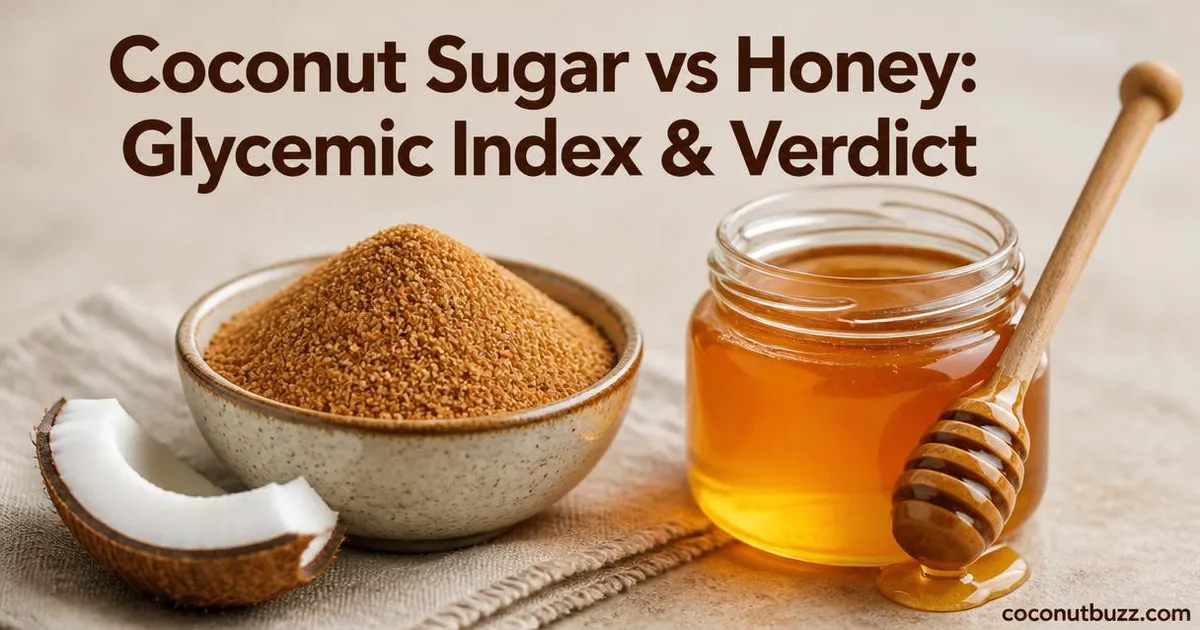
Coconut Sugar vs Honey: Glycemic Index & Verdict
One is a golden liquid made by bees. The other is a brown granule made from palm sap. Both end up sweetening your food, but they behave so differently in recipes that swapping one for the other rarely works without adjustments.
Choosing between coconut sugar and honey means weighing blood sugar impact, flavor, moisture, and dietary priorities. Coconut sugar works like dry sugar in baking. Honey adds liquid and floral sweetness. Neither belongs in unlimited quantities if you’re watching calories or managing blood sugar.
Key Takeaways
- Coconut sugar typically has a lower glycemic index than honey, but portion size matters more than the GI number for blood sugar management.
- Both retain trace minerals and antioxidants that refined sugar loses during processing.
- Honey is a liquid sweetener; coconut sugar behaves like dry granulated sugar in recipes.
- The right pick depends on whether you need moisture, a dry sugar substitute, or a vegan option.
Coconut Sugar Vs Honey Side-by-Side
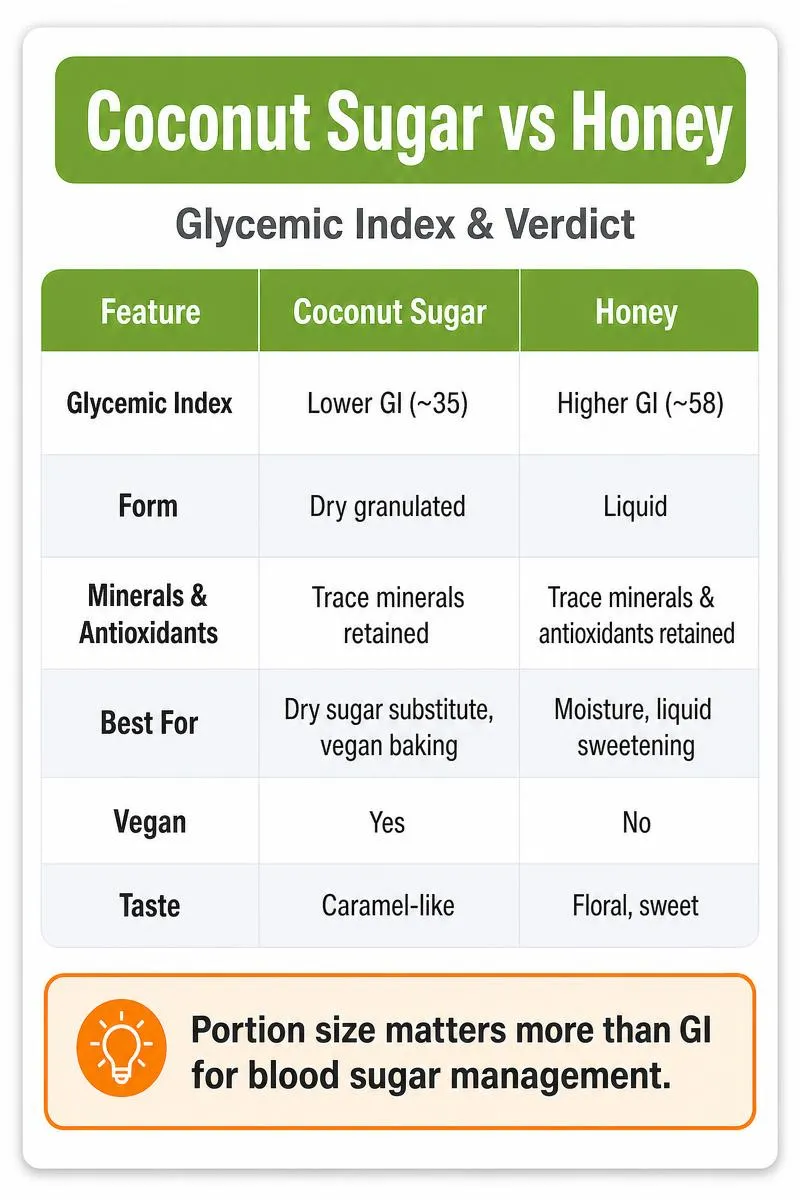
| Feature | Coconut Sugar | Honey |
|---|---|---|
| Glycemic Index | Lower GI (~35) | Higher GI (~58) |
| Form | Dry granulated | Liquid |
| Minerals & Antioxidants | Trace minerals retained | Trace minerals & antioxidants retained |
| Best For | Dry sugar substitute, vegan baking | Moisture, liquid sweetening |
| Vegan | Yes | No |
| Taste | Caramel-like | Floral, sweet |
What Is Coconut Sugar?
Coconut sugar comes from the sap of coconut palm flower buds. Farmers cut the flower stem, collect the sap, and heat the sap until the liquid evaporates. What remains is a granulated sweetener with a texture similar to brown sugar.
Coconut sugar skips the bleaching, bone char filtering, and molasses separation that white sugar goes through. The sap heats, thickens, and dries – that’s the whole process.
Coconut sugar works best for baking, coffee, and any recipe that calls for dry granulated sugar. You can substitute coconut sugar one-to-one for white or brown sugar in many recipes without changing much else.
The downside: coconut sugar doesn’t dissolve well in cold liquids. Coconut sugar is still mostly sucrose, so the calorie content runs close to regular sugar. If you’re stirring coconut sugar into iced tea or a cold smoothie, expect grit at the bottom of the glass.
Keep Reading
A side-by-side comparison of date sugar and coconut sugar – sweetness, nutrition, and substitution tips.
What Is Honey?
Honey is a natural liquid sweetener produced by bees from flower nectar. Honey’s composition shifts depending on which flowers the bees visited – clover honey tastes mild, while buckwheat honey is dark and bold.
Honey suits teas, salad dressings, marinades, and moist baked goods. The liquid form adds moisture that dry sugar can’t provide, which makes honey useful in recipes where a tender crumb matters.
Honey brings distinct floral or earthy notes depending on the variety. Those flavors can complement baked goods, glazes, and savory marinades in ways that neutral sweeteners can’t.
Honey is not vegan – bees produce honey, and some vegans avoid honey on that basis. Honey is also harder to use as a direct substitute for dry sugar since the added liquid throws off recipe ratios.
Coconut Sugar vs Honey: Glycemic Index
Coconut sugar is often cited as the lower-glycemic option. Some sources place coconut sugar’s glycemic index lower than honey’s, which means coconut sugar may raise blood glucose more gradually.
Glycemic index numbers vary by source and batch, though. Honey’s GI depends on the floral variety – some honeys sit lower on the index than others. And GI alone doesn’t tell the full story for anyone managing diabetes.
Portion control matters more than the GI number. Both sweeteners raise blood sugar, and eating less of either one does more for glucose stability than choosing the lower-GI option in larger amounts.
If you have strict blood sugar targets, talk to a clinician before using either sweetener regularly.
Coconut Sugar vs Honey: Nutrition and Antioxidants
Both coconut sugar and honey retain trace minerals that refined sugar loses during processing. Coconut sugar contains small amounts of iron, zinc, calcium, and potassium – not enough to meet daily needs, but more than what white sugar offers.
Honey carries trace enzymes and antioxidant compounds, including flavonoids and phenolic acids. The specific antioxidants in honey vary by floral source, with darker honeys generally containing more than lighter ones.
Coconut sugar also contains small amounts of inulin – a fiber that may slow how fast the sugar hits your bloodstream. Honey doesn’t contain inulin, though some honeys carry small amounts of other oligosaccharides.
Neither sweetener delivers enough minerals or antioxidants to matter nutritionally in the amounts you’d actually eat.
Also Worth Checking Out
Overview of coconut milk’s nutrition and culinary uses, including how it interacts with sweeteners in recipes.
Coconut Sugar vs Honey: Taste and Best Uses
Coconut sugar tastes like caramel and brown sugar with a hint of earthiness. Coconut sugar holds up well in baked goods, dry rubs, and coffee – anywhere you’d normally use brown sugar.
Honey tastes floral, sometimes fruity or earthy depending on the variety. Honey shines in teas, vinaigrettes, marinades, and baked goods where moisture and a distinct flavor profile are welcome.
The texture difference drives the choice more than taste. Coconut sugar behaves like dry granulated sugar, so coconut sugar measures and mixes easily into batter and dough. Honey adds liquid, which means you’ll need to reduce other liquids in a recipe to keep the balance right.
Pick coconut sugar for dry applications and caramel-like notes. Pick honey when you want moisture, floral sweetness, or a liquid sweetener for dressings and glazes.
Coconut Sugar vs Honey: Downsides and Safety
Neither supports weight loss unless you reduce overall sweetener intake.
Honey is not vegan. If you follow a plant-based diet, coconut sugar is the clear choice. Honey also carries a small risk of infant botulism – never give honey to children under one year old.
Coconut sugar comes from coconut palm, so anyone with a coconut allergy should avoid coconut sugar. Some people also avoid palm-derived products for environmental reasons, though coconut sugar production differs from palm oil farming.
Honey suits those avoiding coconut or palm products. Coconut sugar suits vegans and anyone who needs a dry sweetener without animal origins.
Which Should You Choose?
- For baking and dry rubs, coconut sugar measures and mixes like regular sugar without recipe adjustments.
- For teas, dressings, and marinades, honey dissolves easily and adds a flavor dimension that dry sugar can’t match.
- For blood sugar management, coconut sugar in moderation may have a slight edge based on glycemic index.
- For a vegan diet, coconut sugar is the straightforward choice since honey is an animal product.
- For adding moisture to baked goods, honey brings liquid that keeps cakes and quick breads tender.
Keep Reading
Practical comparison for baking and desserts where choosing between coconut cream, heavy cream, and different…
FAQs About Coconut Sugar and Honey
Is honey or coconut sugar better for you?
Neither is significantly healthier than the other. Both are calorie-dense sweeteners with trace minerals and antioxidants. The better choice depends on your recipe needs and dietary priorities – vegan, liquid vs. dry, or flavor preference.
How does the glycemic index of coconut sugar compare to honey?
Coconut sugar typically has a lower glycemic index than honey, though numbers vary by source and honey variety. Both raise blood sugar, and portion size matters more than the GI difference.
Is coconut sugar healthier than honey for diabetics?
Coconut sugar may cause a slightly slower blood sugar rise due to inulin content and a lower GI. But diabetics should treat both sweeteners the same as sugar – limit intake and consult a clinician for personalized guidance.
Can you use coconut sugar and honey interchangeably in recipes?
Not directly. Coconut sugar is dry and granulated; honey is liquid. Swapping honey for coconut sugar means adding liquid, and swapping coconut sugar for honey means reducing other liquids in the recipe.
Which is better for weight loss, coconut sugar or honey?
Neither supports weight loss in meaningful amounts. Both are calorie-dense, comparable to regular sugar. Reducing sweetener intake overall matters more than which one you choose.
What are the downsides and side effects of coconut sugar?
Coconut sugar is mostly sucrose and carries calories similar to regular sugar. Coconut sugar doesn’t dissolve well in cold liquids, and anyone with a coconut allergy should avoid it.
What is the healthiest substitute for honey?
Maple syrup is the closest liquid alternative with a similar mineral and antioxidant profile. Coconut sugar works if you need a dry substitute, though coconut sugar won’t add moisture the way honey does.
How do coconut sugar and honey compare to maple syrup?
Maple syrup is a liquid sweetener like honey, with its own antioxidant compounds including quebecol. Maple syrup offers similar trace minerals to honey and coconut sugar. Like both, maple syrup is calorie-dense and should be used in moderation.
Final Verdict
Choose coconut sugar when you need a low-glycemic dry sweetener for baking, dry rubs, or a vegan diet. Choose honey when you want moisture, floral flavor, and a liquid sweetener for teas, dressings, and marinades.
People with strict blood sugar targets should talk to a clinician before using either sweetener regularly. Both affect glucose, and individual responses vary.
The practical next step: try both in a favorite recipe and compare the texture and taste for yourself.
External References
- Effects of High Performance Inulin Supplementation on … – PMC – NIH
- The Best and Worst Sweeteners, Ranked by GI Index – Goodrx
- Coconut Sugar vs Honey: Glycemic Index, Nutrients & Verdict – Globalresourcesdirect
- report of two double-blind, randomized, controlled trials – NIH
- USDA FoodData Central – Usda
- Foods and Drinks to Avoid or Limit – Cdc