Date Sugar vs Coconut Sugar: Which Is Better?
Date sugar won’t dissolve in your coffee. Coconut sugar will caramelize in your cookies.
Both come from plants, skip the refining process that white sugar goes through, and cost more at checkout. But date sugar is literally ground-up fruit with all its fiber intact, while coconut sugar is tree sap boiled down to crystals. Your body processes them differently, and your recipes treat them differently.
The decision comes down to whether you’re optimizing for blood sugar response, fiber content, or whether the sweetener needs to melt.
Key Takeaways
- Date sugar is ground whole dates with fiber intact, while coconut sugar is evaporated sap from coconut palm flowers
- Date sugar won’t dissolve in liquids, making it unsuitable for coffee or beverages
- Coconut sugar has a lower glycemic index than date sugar, though both are lower than white sugar
- For baking, coconut sugar substitutes more easily, while date sugar works best in recipes where texture isn’t critical
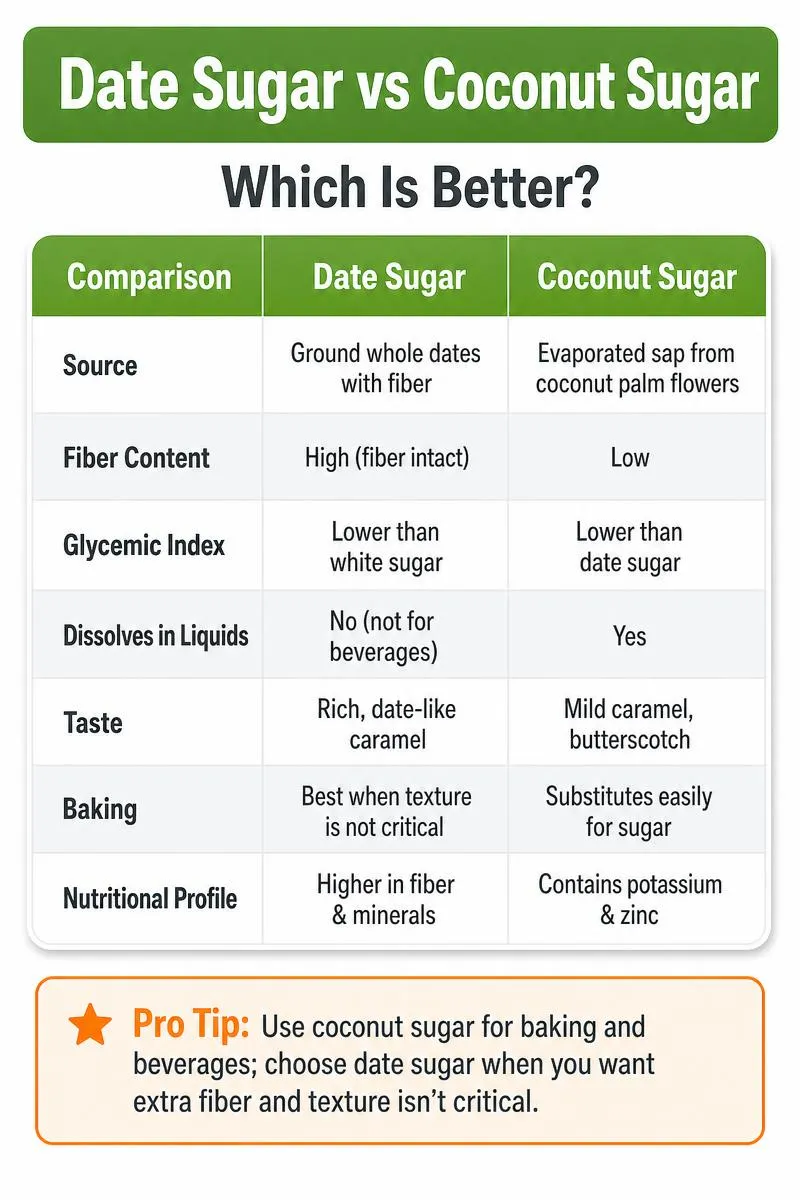
Date Sugar Vs Coconut Sugar Quick Comparison
| Comparison | Date Sugar | Coconut Sugar |
|---|---|---|
| Source | Ground whole dates with fiber | Evaporated coconut palm sap |
| Fiber Content | High (fiber intact) | Low |
| Glycemic Index | Lower than white sugar | Lower than date sugar |
| Dissolves in Liquids | No | Yes |
| Taste | Rich, date-like caramel | Mild caramel, butterscotch |
| Baking | Best when texture not critical | Substitutes easily for sugar |
| Nutritional Profile | Higher in fiber & minerals | Contains potassium & zinc |
What Is Date Sugar?
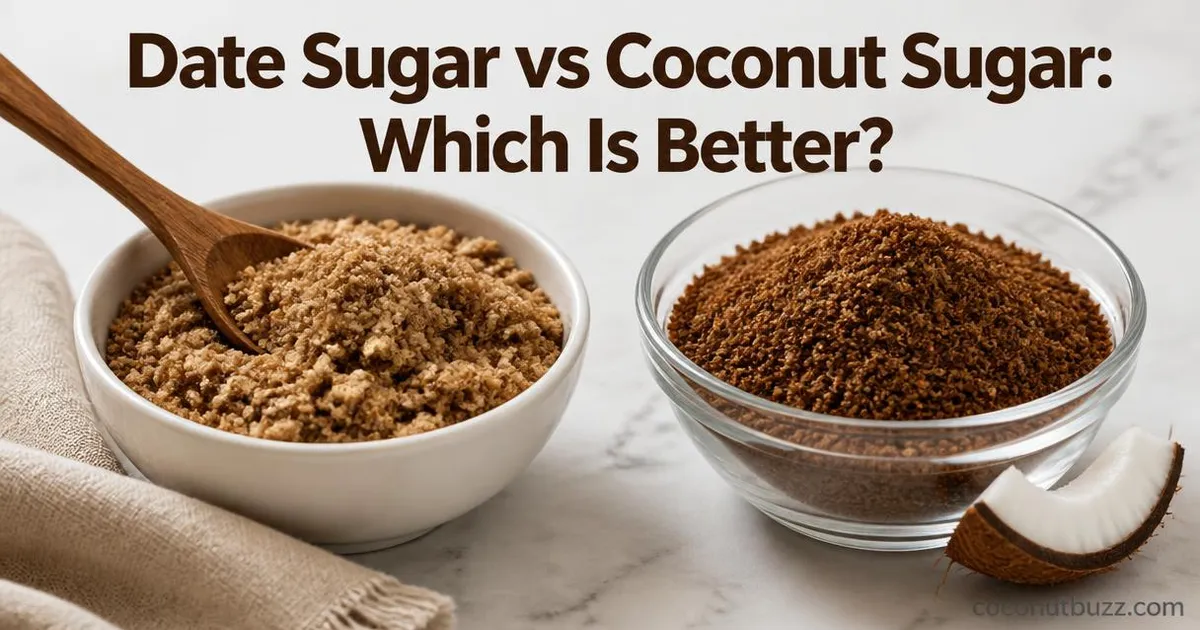
Date sugar is dehydrated dates ground into granules. Nothing gets extracted, separated, or filtered out. The fiber, potassium, magnesium, and antioxidants that exist in whole dates remain in the sugar.
The fiber creates a problem: date sugar doesn’t melt or dissolve. Drop it in hot coffee and it settles at the bottom. Try to cream it with butter and the grains stay grainy.
Bake it into a cake and you’ll get pockets of sweetness instead of even distribution. Date sugar works in oatmeal, crumbles, energy bars, and anywhere a slightly coarse texture adds character instead of ruining the dish. The potassium content exceeds what most sweeteners offer, and the magnesium and B vitamins come along because the whole fruit stays intact.
Keep Reading
A practical comparison showing how coconut sugar stacks up against familiar brown sugar in taste and baking – useful…
What Is Coconut Sugar?
Coconut sugar starts as sap tapped from coconut palm flower buds. Producers heat the sap until the water evaporates, then the remaining syrup crystallizes into granules. The process resembles how maple syrup becomes maple sugar, just with a different starting liquid.
The crystals dissolve in hot water, melt when heated, and caramelize like brown sugar. Coconut sugar contains trace amounts of iron, zinc, calcium, and inulin – a fiber that may slow how fast the sugar enters your bloodstream. The amounts are small enough that you’d need to eat absurd quantities to meet any meaningful nutritional requirement.
The flavor leans toward mild caramel without tasting like coconut. Coconut sugar tastes less sweet than white sugar, so recipes may need slight adjustments.
Date Sugar vs Coconut Sugar: Fiber Content
Date sugar delivers the full fiber load from whole dates – a meaningful amount of fiber per tablespoon. That fiber slows sugar absorption and adds satiety, but it’s also why date sugar won’t dissolve in your tea or melt into cookie dough.
Coconut sugar contains negligible fiber, similar to what you’d find in regular granulated sugar. The sap gets boiled down to concentrate the sugars, and any fiber present in the original liquid doesn’t survive in significant amounts.
If you’re choosing a sweetener specifically to increase fiber intake, date sugar wins. If you need the sugar to behave like sugar in recipes, that fiber becomes a liability.
Date Sugar vs Coconut Sugar: Glycemic Index
Coconut sugar typically has a lower glycemic index than white sugar, with the variation depending on which study you reference and how the specific batch was processed. Date sugar estimates vary widely depending on different date varieties and testing methods. Both sit lower than white sugar, which has a higher glycemic index than both.
Some sources suggest coconut sugar produces a gentler blood sugar rise, likely due to the small amounts of inulin it contains. The fiber in date sugar should theoretically slow absorption, but the wide range of glycemic index values makes it harder to predict the actual response.
For steadier glucose levels, coconut sugar appears to edge ahead, though individual responses vary enough that personal testing matters more than published averages.
Explore More
A focused side-by-side of glycemic impact and sweetness levels, which complements the article’s glycemic index section.
Date Sugar vs Coconut Sugar: Taste and Texture
Coconut sugar tastes like mild caramel with brown sugar notes. The granules dissolve smoothly in hot liquids and melt predictably when heated. You can stir it into coffee, whisk it into sauces, or use it anywhere you need the sweetener to disappear into the recipe.
Date sugar brings deeper, fruit-forward sweetness with the concentrated flavor of dried dates. The texture stays grainy no matter how long you cook it.
That graininess works in recipes where visible sweetness or a slight chew adds interest – think granola, streusel toppings, or energy bites. The winner depends on what you’re making. Coconut sugar handles liquids and smooth batters. Date sugar adds texture and works best where the grains can soften or where visible specks of sweetness belong.
Date Sugar vs Coconut Sugar: Baking Performance
Coconut sugar swaps one-to-one for white or brown sugar in most recipes. It creams with butter, dissolves into wet ingredients, and caramelizes when exposed to heat. The slightly lower sweetness level rarely causes issues unless you’re making something delicate like meringue.
Date sugar doesn’t cream with butter, won’t dissolve into batters, and can create dense or uneven results in cakes and cookies. The grains soften in recipes with enough moisture – muffins, quick breads, or anything with yogurt or mashed banana – but they never fully disappear.
Coconut sugar behaves predictably across different recipe types. Date sugar demands adjustments and works best in forgiving recipes where texture variations won’t ruin the final product.
Date Sugar vs Coconut Sugar: Nutritional Profile
Date sugar retains the vitamins and minerals from whole fruit: potassium, magnesium, and B vitamins. The potassium content particularly stands out compared to other sweeteners. The antioxidants that exist in fresh dates remain present in date sugar.
Coconut sugar offers small amounts of iron, zinc, calcium, and inulin. The mineral content exceeds what white sugar provides, but falls short of what whole dates deliver. Inulin qualifies as a prebiotic fiber that feeds beneficial gut bacteria, though the amount in a typical serving stays low.
Both contain similar calorie content to other caloric sweeteners. Neither should be considered a significant nutrient source given how much you’d actually use in recipes. Date sugar delivers more nutrient density, but the practical difference shrinks when you’re measuring in teaspoons instead of cups.
Also Worth Checking Out
A comparison highlighting nutritional differences and calorie trade-offs that pairs well with the nutritional profile…
Which Should You Choose?
If you’re managing blood sugar or diabetic, coconut sugar may offer a gentler glucose response, but portion control matters more than sweetener type. Monitor your individual response rather than relying solely on published glycemic index values.
If you want maximum fiber and whole-food nutrition, date sugar keeps you closer to eating actual fruit. The fiber slows sugar absorption and adds bulk that refined sweeteners lack.
If you’re replacing sugar in standard baking recipes, coconut sugar works without recipe adjustments. You can substitute it directly for white or brown sugar in cookies, cakes, and muffins.
If you need a sweetener for coffee or beverages, coconut sugar is your only option between the two. Date sugar will sink to the bottom and never dissolve.
If you’re making energy balls, granola, or rustic baked goods, date sugar adds nutrition and textural interest that coconut sugar can’t match.
FAQs About Date Sugar and Coconut Sugar
Is date sugar healthier than coconut sugar?
Date sugar contains more fiber and retains more nutrients from the whole fruit, but coconut sugar has a lower glycemic index. The better choice depends on whether you prioritize nutrient density or blood sugar response.
Can you use date sugar and coconut sugar interchangeably in recipes?
No. Date sugar doesn’t dissolve or melt like coconut sugar, so it only works in recipes that can handle a grainy texture. Coconut sugar behaves like brown sugar and substitutes directly in most recipes.
Does date sugar raise blood sugar as much as regular sugar?
Date sugar still raises blood sugar, though the fiber content may slow absorption compared to white sugar. The glycemic index estimates vary widely depending on date variety. Date sugar isn’t a free pass for diabetics.
What are the negatives of coconut sugar?
Coconut sugar still contains calories and carbohydrates, like any sugar. The trace minerals it offers don’t justify treating it as a health food. Coconut sugar costs significantly more than white sugar without delivering dramatic health advantages.
Which is better for baking, date sugar or coconut sugar?
Coconut sugar works better in most baking since it dissolves and behaves like brown sugar. Date sugar only works in recipes where grainy texture is acceptable – muffins, quick breads, or recipes with enough moisture to soften the grains.
Is date sugar or coconut sugar better for diabetics?
Coconut sugar typically has a lower glycemic index, but both affect blood glucose and should be used sparingly. Your individual response matters more than published averages. Consult your doctor about any sweetener.
What does date sugar taste like compared to coconut sugar?
Date sugar tastes like dried dates with deep fruity sweetness. Coconut sugar has milder caramel notes without strong coconut flavor. Date sugar brings more intense fruit character to recipes.
Can you put date sugar in coffee?
No. Date sugar won’t dissolve in liquids, so it settles at the bottom of your cup. Coconut sugar dissolves easily in hot beverages and works well in coffee or tea.
Final Verdict
Choose coconut sugar if you want a direct replacement for white or brown sugar that dissolves, bakes predictably, and offers a slightly lower glycemic response. Coconut sugar handles the widest range of recipes without forcing you to adjust techniques.
Choose date sugar if fiber content and whole-food nutrition matter more to you than convenience, and you’re using it in recipes that tolerate texture. The graininess limits where you can use date sugar, but the retained nutrients from whole fruit make it closer to eating actual dates.
Neither is a health food – both are caloric sweeteners best used sparingly. Try a small bag of each to see which fits your cooking style and taste preferences before committing to bulk purchases.
External References