Young vs Mature Coconut: What Is the Difference?
Young coconut gives you abundant, refreshing water and meat soft enough to scoop with a spoon. Mature coconut gives you thick, firm flesh meant for grating and pressing into milk. Same plant, harvested months apart – and that timing gap changes everything about how you use each one.
Most people grab whichever coconut the store has, assuming they’re interchangeable. They’re not. A recipe calling for coconut milk won’t work with a young coconut, and a young coconut’s soft meat turns to mush if you try to grate it for baking.
Key Takeaways
- Young coconut is prized for soft, spoonable meat and abundant coconut water, while mature coconut offers firm flesh best for grating and milk extraction.
- Taste and texture differences mean the two are rarely interchangeable in recipes.
- The visual difference is clear once you know what to look for: husk color, shape, and liquid amount all change as the coconut ages.
- Neither type is universally healthier; the better choice depends on whether you want to drink, eat fresh meat, or cook with coconut milk.
- A bad coconut can occur at any stage; smell and water clarity are the simplest freshness checks.
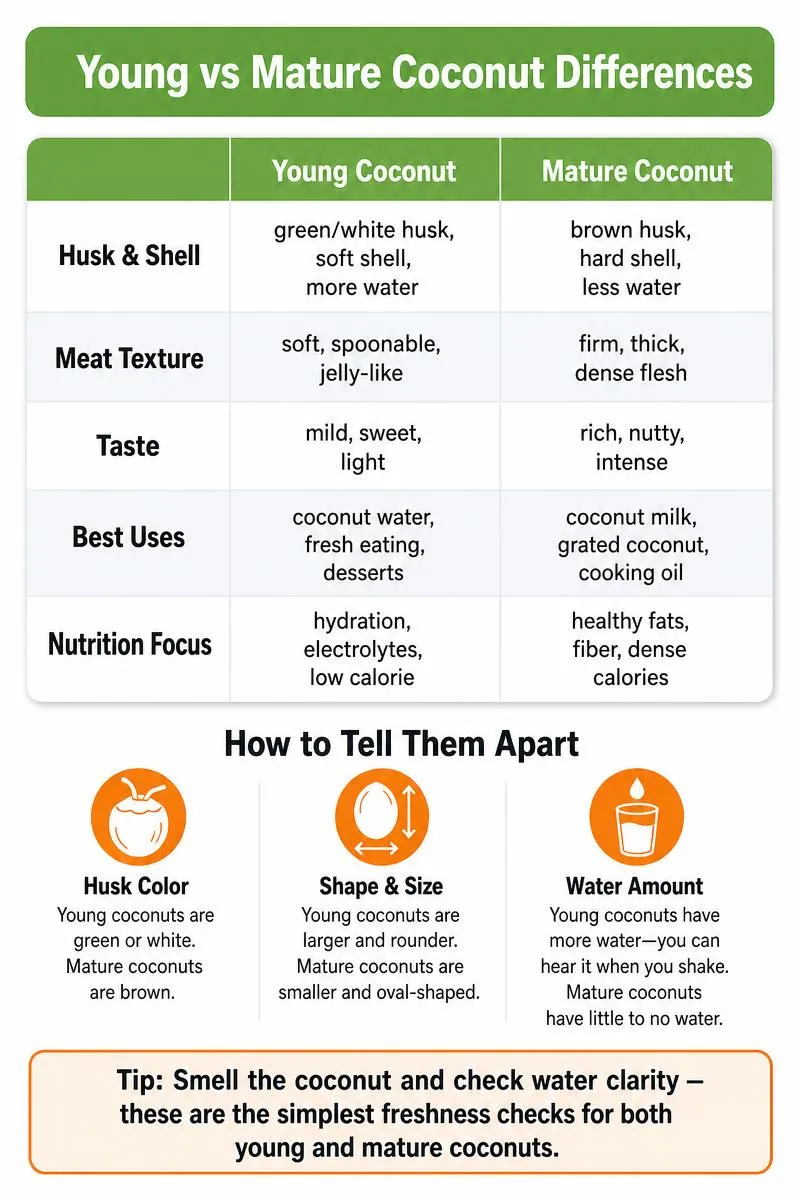
Young Coconut Vs Mature Coconut Side-by-Side
| Attribute | Young Coconut | Mature Coconut |
|---|---|---|
| Husk & Shell | Green/white husk; soft shell; more water | Brown husk; hard shell; less water |
| Meat Texture | Soft, spoonable, jelly-like | Firm, thick, dense |
| Taste | Mild, sweet, light | Rich, nutty, intense |
| Best Uses | Coconut water; fresh eating; desserts | Coconut milk; grated coconut; cooking oil |
| Nutrition Focus | Hydration, electrolytes, lower calories | Healthy fats, fiber, calorie-dense |
What Is Young Coconut?
Young coconut is harvested around 6 – 9 months, before the shell fully hardens and the meat sets firm. The flesh inside is soft, jelly-like, and sometimes translucent enough to see through.
The biggest draw is the coconut water. A young coconut holds more liquid than a mature one, and that water tastes lighter and sweeter. The soft meat scoops out easily with a spoon, which makes young coconut popular raw, in smoothies, or in delicate desserts.
Strengths:
- Abundant coconut water that’s refreshing and mildly sweet.
- Soft, spoonable meat that blends easily into smoothies and raw desserts.
- No tools required beyond a knife to crack the top.
Weaknesses:
- Less meat yield than a mature coconut.
- Too soft to grate or press for milk.
- Spoils faster due to thinner shell and higher water content.
Green coconut vs brown coconut
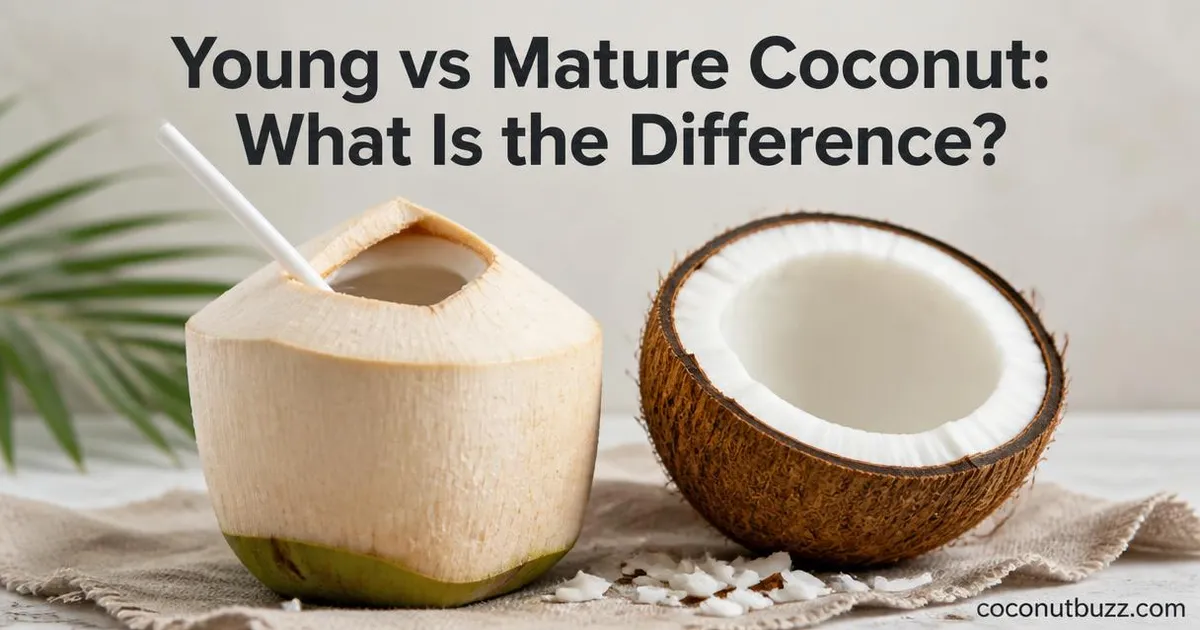
A clear comparison of green (young) and brown (mature) coconuts covering appearance, stages, and common uses.
What Is Mature Coconut?
Mature coconut is harvested after 11 – 12 months, once the husk has browned and the shell has hardened completely. The meat inside is thick, firm, and bright white – the kind you’d grate with a box grater or blend into coconut milk.
The firm flesh is what makes mature coconut the workhorse of coconut cooking. You get a high yield of grated meat per coconut, and that meat is ideal for pressing into homemade coconut milk and cream. Mature coconuts also store longer than young ones thanks to the hardened shell and lower water content.
Strengths:
- High yield of firm meat perfect for grating and pressing.
- Ideal for coconut milk and cream production.
- Longer shelf life due to hardened shell and lower water content.
Weaknesses:
- Requires tools to open – a cleaver, a drill, or a specialized cracking tool.
- Too firm to eat raw without effort.
- Less water inside, and that water is less sweet.
Young Coconut vs Mature Coconut: Taste and Texture
1. Young Coconut
Young coconut has mildly sweet, gelatinous meat that barely resists your teeth. The water is light, clean, and refreshing – more like a hydrating drink than any juice.
2. Mature Coconut
Mature coconut has a richer, nuttier flavor in the meat. That meat is dense and fibrous, with a satisfying chew that holds up in cooking. The water is thinner in flavor and less abundant.
Choose young coconut for drinking and delicate desserts where soft texture matters. Choose mature coconut for hearty cooking where the meat needs to hold its shape under heat.
Young Coconut vs Mature Coconut: Nutrition
The nutritional profiles reflect the age difference – young coconuts are mostly water, mature coconuts are mostly meat.
1. Young Coconut
Young coconut delivers more water content and naturally occurring electrolytes like potassium. The soft meat contains some fat and fiber, but the larger nutritional contribution comes from the liquid.
2. Mature Coconut
Mature coconut offers denser meat with more fat and fiber per serving. The meat contains medium-chain fatty acids, including lauric acid. More fiber means the meat fills you up faster than the softer flesh of a young coconut.
Neither is objectively superior. The better choice depends on what you’re after – hydration and electrolytes from young coconut, or fat and fiber from mature coconut.
Keep Reading
A breakdown of coconut water’s hydration and electrolyte profile compared with Pedialyte, helpful for the nutrition…
Young Coconut vs Mature Coconut: Best Uses in Cooking and Drinks
1. Young Coconut
Young coconut is best for drinking straight, blending into smoothies, making raw desserts, and adding to fruit salads. The soft meat blends easily, and the water works as a beverage on its own.
2. Mature Coconut
Mature coconut is the choice for curries, baked goods, homemade coconut milk and cream, and oil production. The firm meat grates cleanly and releases fat when pressed, which is what gives coconut milk its richness.
If your recipe calls for coconut milk or grated coconut, mature coconut is the one you need. If it calls for coconut water or soft, fresh meat, go young.
Young Coconut vs Mature Coconut: How to Tell Them Apart
1. Young Coconut
A young coconut typically has a green or pale husk and may be shaped with the top cut off for market display. The shell is thinner and lighter, and the coconut contains more liquid than a mature one.
2. Mature Coconut
A mature coconut has a brown, hairy shell and a rounded shape. The shell is hard and thick, and there’s noticeably less liquid inside.
3. Freshness Checks for Both
Both stages share one warning sign. A sour smell, cloudy water, or cracks with no liquid inside mean the coconut has spoiled. Check these before you buy, regardless of which type you’re choosing.
Which Should You Choose?
- Refreshing drink: Choose young coconut.
- Milk or curry: Choose mature coconut.
- Grated coconut: Choose mature coconut.
- Light, sweet flavor: Choose young coconut.
- Longer storage: Choose mature coconut.
Explains how coconut flour (from mature coconut meat) performs in baking and substitutions, useful when choosing which…
FAQs About Young and Mature Coconuts
Which is better, young or old coconut?
Neither is better across the board. Young coconut excels for drinking and soft meat; mature coconut excels for cooking, milk, and grated applications. The right pick depends on what you plan to make.
What type of coconut is the healthiest?
That depends on your goals. Young coconut provides more water and electrolytes like potassium; mature coconut provides more fat, including medium-chain fatty acids, and more fiber. Neither one wins on all fronts.
Which type of coconut is best for drinking?
Young coconut. The water is more abundant, lighter, and sweeter than mature coconut water.
Can you eat immature coconuts?
Yes. Immature coconuts are safe to eat – the meat is soft and gelatinous, and the water is the main attraction. Some cultures treat young coconut meat as a snack on its own, scooped straight from the shell.
What do immature coconuts look like?
Immature coconuts have a green or pale outer husk, a thinner shell, and a more oblong or tapered shape. Markets often trim them into a cone shape with the top sliced off for easy access to the water.
What are the three types of coconuts?
The three stages people usually mean are young (immature), mature, and a middle-aged stage that falls between the two. Young and mature are the two most commonly sold. Middle-aged coconuts blend traits of both – semi-firm meat with moderate water – but they’re harder to find in most markets.
Botanically, coconut palms also come in tall, dwarf, and hybrid varieties, though that classification refers to the tree rather than the fruit.
Can you plant an immature coconut?
Not reliably. An immature coconut hasn’t developed enough for the embryo to germinate. Coconuts need to be mature, with the embryo fully formed inside, to sprout into a new palm. A young coconut planted in soil would more likely rot than grow.
How can you tell if a coconut has gone bad?
Smell and water are the two quickest checks. A sour or fermented smell means it’s spoiled. Cloudy or discolored water is another red flag. Cracks in the shell with no liquid inside mean the coconut has dried out past the point of use.
When should you not eat coconut?
Skip coconut if you have a coconut allergy. People with tree nut allergies should also check with a doctor before trying coconut, since the FDA classifies coconut as a tree nut even though it’s botanically a drupe. Otherwise, coconut is fine for most people in normal food amounts.
Final Thoughts
Choose young coconut when you want hydration and soft, spoonable meat. Choose mature coconut when you need firm meat for cooking, grating, or pressing into milk and cream.
One edge case worth knowing: middle-aged coconuts exist but are harder to find in most markets. They’re worth grabbing if you spot them.
Next step: learn how to open whichever coconut you bring home safely, because the method changes depending on whether you’re dealing with a thin young shell or a hard mature one.
External References